
Trauma Bond vs Love: 12 Signs You’re Attached to Pain, Not Peace
Why Do You Miss Someone Who Keeps Hurting You?
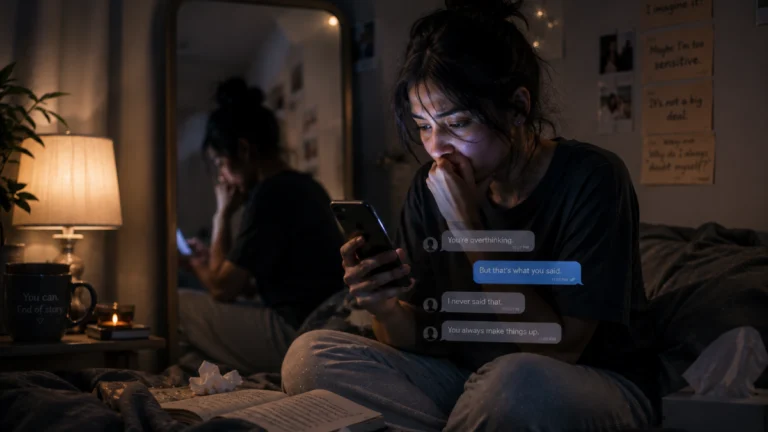
Have you ever known someone was hurting you, but still felt like you could not let them go?
Maybe they made you cry, then became the only person who could calm you down.
Maybe they disappeared, then came back softer.
Maybe they made you feel unwanted, then suddenly made you feel like the most important person in their world.
Maybe the relationship drained you, but one sweet message made you forget the pain for a moment.
And now you are stuck between two voices.
One says:
“This is hurting me.”
The other says:
“But I love them.”
It can be confusing when the same person feels like your wound and your comfort.
You may ask yourself:
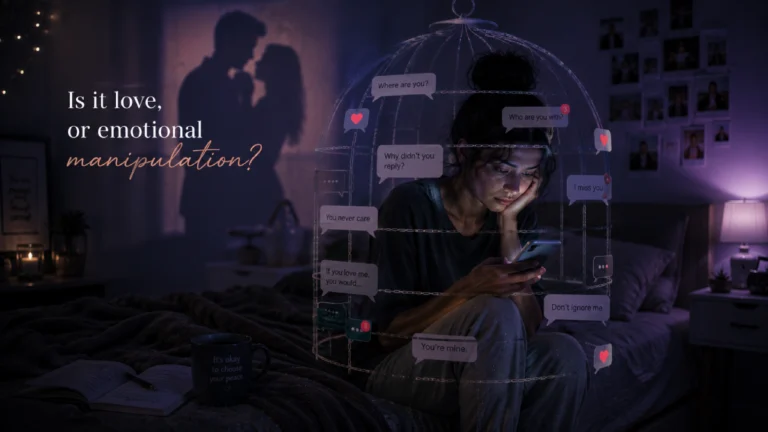
“Is this real love or a trauma bond?”
“Why do I miss someone who keeps hurting me?”
“Why does leaving feel impossible?”
“Why do the good moments feel so powerful after the bad ones?”
That is why trauma bond vs love can feel so emotionally difficult to understand.
A trauma bond can feel intense, deep, emotional, and impossible to leave.
But intensity is not always intimacy.
Sometimes intensity is your nervous system trying to survive inconsistency.
Sometimes what feels like love is actually relief.
Relief that they came back.
Relief that they apologized.
Relief that they became kind again.
Relief that the pain stopped for a while.
This blog will help you understand the difference between trauma bond and real love, signs of trauma bonding in relationships, why toxic love feels addictive, and what to do if you feel attached to someone who keeps hurting you.
Not to shame you.
Not to make you feel foolish.
But to help you see clearly.
Because sometimes the heart does not need judgment.
It needs language.
What Is a Trauma Bond?
A trauma bond is a strong emotional attachment that forms through a repeated cycle of hurt, fear, emotional withdrawal, apology, affection, relief, and hope.
It often happens in toxic or abusive relationships where painful moments are mixed with intense good moments.
This is what makes it so confusing.
The relationship is not painful all the time.
Sometimes it feels beautiful.
Sometimes they are gentle.
Sometimes they say exactly what you needed to hear.
Sometimes they become the person you always hoped they would be.
And because those moments feel real, you keep holding on.
You may think:
“They are not always like this.”
“They can be so loving.”
“Maybe the bad moments are not the real them.”
“Maybe if I just wait, the good version will stay.”
But a trauma bond does not form because everything is bad.
It often forms because the bad and good are mixed in a way that keeps your heart constantly hoping.
Simple Definition of Trauma Bonding
A trauma bond is an emotional attachment to someone who hurts you, formed through repeated cycles of pain and relief.
The cycle may look like this:
They hurt you.
You feel anxious, confused, or scared.
They pull away or blame you.
You feel desperate for repair.
They apologize, become affectionate, or promise change.
You feel relief.
Hope comes back.
Then the pattern repeats.
Over time, your body may start craving the person not only because you love them, but because their affection gives relief from the pain they helped create.
That is the knot.
They become both the person who creates emotional danger and the person who temporarily removes it.
Why Trauma Bonds Feel So Strong
Trauma bonds feel strong because they are built on emotional unpredictability.
You never fully know which version of them you will get.
The loving version.
The cold version.
The apologetic version.
The blaming version.
The distant version.
The “I cannot live without you” version.
This unpredictability keeps your nervous system alert.
You start watching for signs.
Their tone.
Their reply speed.
Their mood.
Their affection.
Their distance.
Their silence.
And when they finally become loving again, your whole body may relax.
That relaxation can feel like love.
But sometimes it is your nervous system saying:
“Finally, the danger stopped.”
Micro Takeaway
A trauma bond can make you miss the person who hurt you because your body is also chasing relief from the pain they created.
That does not make you weak.
It means the emotional cycle became powerful.
And powerful cycles need gentle, repeated clarity to break.
What Is Real Love Supposed to Feel Like?
Real love feels emotionally safe, respectful, consistent, and mutual.
It may still include conflict, misunderstanding, disappointment, and difficult conversations.
But it does not repeatedly make you feel afraid, confused, addicted, controlled, or responsible for someone else’s harmful behavior.
Real love does not mean perfection.
It means safety.
Not the kind of safety where nothing ever goes wrong.
The kind of safety where even when something goes wrong, both people care about repair.
You can speak.
You can feel.
You can ask.
You can say no.
You can be upset without fearing punishment.
You can be loved without losing yourself.
Simple Definition of Healthy Love
Healthy love is a relationship where care, respect, emotional safety, honesty, and accountability are consistent enough for both people to feel secure.
It does not keep you guessing all the time.
It does not make you earn affection by becoming smaller.
It does not use your fear of losing someone to control your behavior.
It does not make you feel like basic kindness is a reward.
Healthy love may feel less dramatic than a trauma bond.
But less drama does not mean less love.
Sometimes calm love feels unfamiliar when your heart is used to chaos.
Healthy Love Is Not Perfect, But It Is Safe Enough
In healthy love, conflict still happens.
People still get triggered.
They still make mistakes.
They may need space.
They may say things imperfectly.
But there is a difference.
Conflict leads to repair.
Boundaries are respected.
Apologies are followed by changed behavior.
You can express hurt without being punished.
You do not feel like you have to hide your needs to keep them close.
You feel more like yourself, not less.
You do not have to become emotionally obedient to receive affection.
And most importantly, love does not feel like a cycle of starvation and crumbs.
Micro Takeaway
Healthy love may not always feel dramatic, but it should not make peace feel rare.
Peace is not boring.
Peace is what love feels like when your nervous system is not constantly fighting to be chosen.
Trauma Bond vs Love: What Is the Difference?
The difference between trauma bond and love is that love is built on emotional safety, respect, consistency, and freedom, while a trauma bond is built through cycles of pain, fear, relief, apology, and emotional dependency.
Love helps you feel secure.
A trauma bond keeps you attached through uncertainty.
Love makes you feel safe enough to be yourself.
A trauma bond makes you change yourself to keep the connection alive.
Love gives peace.
A trauma bond gives relief after pain and teaches your heart to call that relief intimacy.
Answer-First Comparison
In real love, you do not have to suffer repeatedly to feel close.
In a trauma bond, closeness often comes after emotional pain.
In real love, their care is steady enough that you do not live in panic.
In a trauma bond, their affection feels powerful because it is unpredictable.
In real love, you miss them with warmth.
In a trauma bond, you miss them with anxiety.
In real love, you can breathe.
In a trauma bond, you keep waiting for the next emotional shift.
Trauma Bond vs Real Love Comparison Table
| Real Love | Trauma Bond |
| Feels emotionally safe | Feels intense but unsafe |
| Has consistent care | Has extreme highs and lows |
| Respects boundaries | Punishes boundaries |
| Builds self-trust | Makes you doubt yourself |
| Conflict leads to repair | Conflict leads to fear and relief |
| You feel free to be yourself | You shrink to keep peace |
| You feel chosen consistently | You chase the good version |
| Love feels steady | Love feels addictive |
| You miss them with warmth | You miss them with panic |
| You grow together | You lose yourself slowly |
| You feel calm after talking | You feel confused after talking |
| Apologies lead to change | Apologies restart the cycle |
| You can say no safely | Saying no triggers guilt or fear |
| Your world expands | Your world becomes smaller |
Micro Takeaway
Love should feel like emotional safety, not emotional withdrawal followed by temporary relief.
If peace only comes after pain, and affection only feels intense after distance, look closely.
The attachment may be tied to the cycle, not just the person.
Is It Love or a Trauma Bond?
This question can hurt.
Because sometimes part of you already knows the answer, but another part is not ready to let go.
Maybe you are afraid that if it is a trauma bond, it means your feelings were fake.
They were not.
Your feelings can be real, even if the relationship was not healthy.
You may have loved them deeply.
You may have cared.
You may have hoped.
You may have tried.
A trauma bond does not mean there were no real emotions.
It means the relationship created a painful attachment loop where love, fear, relief, and hope became tangled together.
Self-Check Questions
Ask yourself gently:
- Do I feel peaceful with them or anxious without them?
- Do I miss who they are, or who they become after hurting me?
- Do I feel safe expressing pain?
- Do I forgive because there is change, or because I fear losing them?
- Do I feel addicted to their attention?
- Do I keep hiding the worst parts from friends?
- Do I feel more confident or more broken since this relationship?
- Do I mistake relief after conflict for love?
- Do I keep waiting for the “old version” to return?
- Do I feel like leaving would destroy me?
- Do I feel calm in this relationship, or constantly activated?
- Do I love their consistent behavior, or their potential?
- Do I feel free to say no?
- Do I feel emotionally safer with them, or only relieved when they stop being cold?
- Do I keep explaining their behavior to myself?
- Do I feel like I am losing myself while trying to keep them?
Read your answers without attacking yourself.
These questions are not here to punish you.
They are here to help you separate love from survival.
Emotional Reassurance
If these questions hurt, take your time.
This is not about blaming yourself.
It is about understanding what your attachment may be trying to survive.
Sometimes clarity does not arrive as one dramatic answer.
Sometimes it arrives as a quiet sentence:
“I am not loved safely here.”
And that sentence can feel heartbreaking.
But it can also become the first light in the room.
Signs of Trauma Bonding in Relationships
Signs of trauma bonding in relationships include feeling unable to leave despite harm, defending the person who hurts you, craving their affection after pain, hiding the relationship’s worst moments, feeling addicted to highs and lows, blaming yourself, and feeling panic when they pull away.
These signs are not here to label you.
They are here to give shape to something that may have felt shapeless for a long time.
Because when you are inside a trauma bond, the pain often does not look like pain at first.
It looks like confusion.
Longing.
Hope.
Guilt.
Loyalty.
Fear.
And a strange pull toward someone who keeps breaking your peace.
1. You Know It Hurts, But You Still Feel Unable to Leave
You may know the relationship is damaging you.
You may see the pattern.
You may have cried over the same issue many times.
You may have promised yourself you would not go back.
But still, leaving feels impossible.
What This Looks Like
You decide to leave.
Then they apologize.
Or they send a soft message.
Or they remind you of the beginning.
Or they say they cannot live without you.
Or you suddenly remember the good times.
And your certainty starts melting.
You think:
“Maybe I should give it one more chance.”
“Maybe they finally understand.”
“Maybe I am being too harsh.”
Emotional Impact
You may feel ashamed because logic says leave, but your body still wants them.
But trauma bonds are not broken by logic alone.
Your mind can understand the danger before your emotional system feels safe enough to let go.
That gap is painful.
But it is normal.
2. You Keep Defending Them to Yourself or Others
You may explain their hurtful behavior before anyone even asks.
“They had a bad childhood.”
“They are stressed.”
“They are not always like this.”
“They love me, they just do not know how to show it.”
“They are scared of losing me.”
“They have trauma too.”
Maybe all of that has some truth.
But explanation is not the same as excuse.
What This Looks Like
You may defend them to friends.
You may soften the story.
You may leave out the worst parts.
You may protect their image because if someone else sees the pattern clearly, you may have to see it too.
That can feel terrifying.
Emotional Impact
You may protect their image because admitting the full pattern feels too painful.
Because if you admit how much it hurt, you may also have to admit how long you were surviving it.
Please be gentle with that realization.
You were not stupid.
You were attached.
3. You Feel Addicted to the Highs and Lows
The relationship may feel like an emotional rollercoaster.
But the highs are so high that they make the lows feel survivable.
They hurt you.
Then they love you intensely.
They withdraw.
Then they return.
They make you feel replaceable.
Then they make you feel chosen.
What This Looks Like
You may feel like:
- the good moments are unusually powerful
- calm feels boring
- one apology changes everything
- you crave their affection after conflict
- the relationship feels passionate because it is unpredictable
- you are always waiting for the next emotional shift
Behavior Explanation
The contrast between pain and affection makes the affection feel more intense.
A kind message after emotional distance can feel stronger than steady kindness because your body was waiting for relief.
That does not mean the love is deeper.
It may mean the emotional deprivation made the affection feel bigger.
4. You Feel Panic When They Pull Away
Their silence may feel unbearable.
Their coldness may feel like danger.
Their late reply may make your stomach drop.
Their emotional distance may make you forget why you were hurt in the first place.
Now you only want them back.
What This Looks Like
You may:
- check your phone repeatedly
- feel restless when they do not reply
- apologize just to end the silence
- send long messages
- feel unable to focus
- feel huge relief when they come back
- feel like your mood depends on their tone
Emotional Impact
Your body may treat their attention like emotional safety.
This is why their withdrawal feels so intense.
You are not only missing a person.
Your nervous system may be searching for the relief it has learned to get from them.
That is why healing often requires distance from the cycle, not just distance from the person.
5. You Blame Yourself for Their Harmful Behavior
In a trauma bond, you may start believing their behavior is your fault.
If they shouted, maybe you pushed them.
If they lied, maybe you were too insecure.
If they ignored you, maybe you were too needy.
If they flirted, maybe you were not enough.
If they hurt you, maybe you caused it.
What This Looks Like
You may think:
“If I was calmer, they would not hurt me.”
“If I was less emotional, they would not leave.”
“If I explained better, they would understand.”
“If I loved them better, they would change.”
This self-blame gives a painful illusion of control.
If it is your fault, maybe you can fix it.
But if it is their pattern, then you have to face something harder:
You cannot love someone into becoming safe.
Micro Takeaway
Reflecting on your part is healthy.
Carrying their harmful behavior is not.
You can grow without taking responsibility for the damage someone else chose to repeat.
6. You Hide the Worst Parts From People Who Care About You
Maybe you avoid telling your friends the full story.
Maybe you say, “We just had a fight,” when actually they ignored you for days.
Maybe you say, “They were upset,” when actually they insulted you.
Maybe you say, “It is complicated,” because explaining it honestly would make it sound worse than you are ready to admit.
What This Looks Like
You may hide things because:
- you fear judgment
- you do not want people to hate them
- you know people will tell you to leave
- you feel embarrassed
- you are protecting the relationship
- you are protecting the hope you still have
Emotional Impact
Secrecy can keep the bond stronger because no one else gets to mirror the full truth back to you.
When everything stays inside your head, the relationship can keep rewriting itself.
But when you tell one safe person the pattern, reality starts getting oxygen.
7. You Keep Waiting for the Beginning Version of Them
In the beginning, they may have felt perfect.
Or close to perfect.
They listened.
They cared.
They made you feel chosen.
They said things that reached the softest parts of you.
They became the person you thought you had been waiting for.
And now you keep waiting for that person to return.
What This Looks Like
You may say:
“They were not like this before.”
“I know who they really are.”
“The beginning was beautiful.”
“Maybe we can get back to that.”
The beginning may have been real.
But the present pattern is real too.
Practical Insight
Ask:
“Am I in love with their consistent behavior or the memory of how they started?”
That question may sting.
But it can open a door.
Because sometimes the beginning becomes an emotional photograph you keep holding while the present keeps hurting you.
8. You Feel Relief When They Become Kind Again
This is one of the most confusing signs.
When they become kind after hurting you, your whole body may soften.
They text.
They apologize.
They sound vulnerable.
They become affectionate.
They call you baby again.
They say they miss you.
And suddenly, you feel calm.
What This Looks Like
Their warmth after pain feels like emotional oxygen.
You may think:
“This is what I was waiting for.”
“They still love me.”
“Maybe we are okay now.”
But pause gently.
Did the relationship become safe?
Or did the pain stop temporarily?
Emotional Clarity
Relief is not always love.
Sometimes relief is what happens when pain temporarily stops.
And if you have been emotionally starving, even crumbs can feel like a feast.
You deserve more than crumbs after chaos.
9. You Confuse Anxiety With Chemistry
A trauma bond can make anxiety feel romantic.
The waiting.
The obsession.
The overthinking.
The fear.
The butterflies.
The emotional highs.
The intense longing.
It can all feel like passion.
But sometimes your body is not excited.
It is activated.
What This Looks Like
You may say:
“No one has ever made me feel this much.”
“This connection is different.”
“I feel alive with them.”
“Calm love feels boring.”
But ask yourself:
“Do I feel loved, or do I feel desperate to be chosen?”
This question is gentle but sharp.
Because love should not feel like constantly auditioning for someone’s affection.
Practical Insight
Ask:
“Do I feel safe with them, or do I feel addicted to their reassurance?”
If reassurance only comes after fear, it may not be safety.
It may be relief.
10. You Feel Like Peace Is Boring Without Them
After emotional chaos, peace can feel strange.
Maybe even empty.
You may miss the intensity.
The drama.
The constant messages.
The fight and reunion.
The feeling of being chosen again after fearing abandonment.
This does not mean you were meant for chaos.
It means your body got used to it.
What This Looks Like
Calm relationships may feel unfamiliar.
Kind people may feel less exciting.
Stable communication may feel “too easy.”
You may wonder why peace does not create the same emotional rush.
Emotional Reassurance
Peace may feel boring at first when your body is used to survival mode.
But peace is not the absence of love.
Peace is what love feels like when it is not constantly threatening to disappear.
Give your heart time to learn calm without calling it empty.
11. Your Self-Worth Depends on Their Attention
In a trauma bond, their mood can become your mirror.
If they are warm, you feel lovable.
If they are cold, you feel worthless.
If they choose you, you feel alive.
If they pull away, you feel like nothing.
What This Looks Like
Their approval decides whether you feel good enough.
Their reply decides whether you can relax.
Their affection decides whether you feel valuable.
This is exhausting.
Because your self-worth becomes tied to someone who keeps changing the emotional rules.
Emotional Impact
You may stop asking what you feel and start tracking how they feel about you.
You may stop living from your own center.
You become emotionally organized around their attention.
And slowly, your relationship with yourself becomes quieter.
12. You Feel Like You Are Losing Yourself
This is often the deepest sign.
You may not recognize yourself anymore.
Maybe you used to be confident.
Now you overthink everything.
Maybe you used to laugh easily.
Now you feel heavy.
Maybe you used to trust your feelings.
Now you need proof for every emotion.
Maybe you used to feel free.
Now you feel like every decision depends on their reaction.
Emotional Clarity
A trauma bond does not just keep you attached to them.
It slowly disconnects you from yourself.
And healing means returning to the parts of you that went quiet.
Your voice.
Your peace.
Your boundaries.
Your standards.
Your softness.
Your trust in your own feelings.
You are still there.
You may just need time to come back.
Why Does a Trauma Bond Feel Like Love?
A trauma bond feels like love because it mixes hope, fear, relief, attachment, and emotional intensity in the same loop.
The good moments feel powerful because they come after pain.
Their affection feels like rescue because their distance felt like danger.
Their apology feels like intimacy because you were desperate to feel safe again.
This emotional cycle can trick your heart.
Not because your heart is foolish.
Because your heart was trying to survive inconsistency.
Pain and Relief Become Emotionally Linked
When someone hurts you, your body feels distress.
When that same person comforts you, your body feels relief.
Over time, the person becomes associated with both pain and relief.
That creates confusion.
You may crave them when you are hurt, even if they caused the hurt.
You may want their reassurance after they made you feel insecure.
You may want their affection after they withdrew it.
This is how the cycle ties itself into a knot.
The Good Moments Feel More Powerful Because of the Bad Ones
If someone is consistently kind, kindness feels normal.
But if someone is cold, distant, or hurtful, then suddenly loving, the affection can feel intense.
The contrast makes the good moment feel bigger.
One sweet message after days of silence can feel more powerful than steady communication from someone safe.
But that does not mean the connection is deeper.
It may mean the emotional deprivation made the affection feel stronger.
Your Nervous System Starts Chasing Safety From the Same Person Who Feels Unsafe
This is one of the hardest parts.
Your nervous system may start needing their affection to calm the anxiety created by their withdrawal or harm.
So when they pull away, you panic.
When they return, you relax.
Then your body learns:
“They are the solution.”
But sometimes they are also the source of the emotional danger.
That is why leaving feels so hard.
You are not only leaving the person.
You are leaving the temporary relief they sometimes provide.
You Attach to Potential, Not Pattern
You may keep loving who they could be, not who they consistently are.
You may say:
“They can be so good.”
“They have a good heart.”
“They are just scared.”
“They will change.”
Maybe there is potential.
But potential is not safety.
Potential does not protect your nervous system.
Potential does not repair repeated harm.
Potential does not become love unless it turns into consistent behavior.
Emotional Impact Line
A trauma bond feels like love because it uses hope, fear, relief, and attachment in the same emotional loop.
It keeps you asking:
“What if they finally become the person I know they can be?”
But healing asks another question:
“What is their pattern actually doing to me?”
Can a Trauma Bond Turn Into Real Love?
This is the question many people are afraid to ask.
Because part of you may still hope.
You may wonder:
“Can we fix this?”
“Can this become healthy?”
“Can a trauma bond turn into real love if both people try?”
The honest answer is nuanced.
A trauma bond can only become healthier if the harmful cycle truly stops, accountability becomes consistent, boundaries are respected, emotional safety is rebuilt, and both people are genuinely willing to change.
Without changed behavior, a trauma bond does not become love simply because the feelings are intense.
The Honest Answer
A trauma bond cannot become healthy love just because you love them enough.
It cannot become healthy love just because they cry after hurting you.
It cannot become healthy love just because the good moments feel magical.
It cannot become healthy love if the same harmful cycle keeps repeating.
For a relationship to become healthier, the pattern must change.
Not just the mood.
Not just the apology.
Not just the affection after conflict.
The actual pattern.
What Real Change Would Need
Real change would need:
- honest accountability
- no repeated harm
- respect for boundaries
- emotional safety
- outside support or therapy if needed
- consistent behavior over time
- no punishment for honesty
- no using affection as repair without change
- no blaming you for their harmful behavior
- no gaslighting, silent treatment, or emotional manipulation
- willingness to hear your pain without turning it against you
- repair that does not depend on you shrinking yourself
Change is not:
“They were nice for three days.”
Change is:
“The harmful pattern stopped repeating.”
That is the difference.
When It Is Not Real Change
It is not real change if:
- they apologize but repeat the pattern
- they become kind only when you pull away
- they blame you for their harm
- they punish boundaries
- they refuse support
- you still feel afraid to speak honestly
- their affection returns, but their behavior does not change
- they say the right words but avoid responsibility
- you keep feeling smaller, anxious, or confused
- the relationship still depends on you forgiving faster than they grow
A trauma bond often makes temporary change feel like proof.
But proof is not intensity.
Proof is consistency.
Micro Takeaway
Intensity does not become healthy love unless safety and consistency enter the relationship.
And if safety never arrives, your love alone cannot build it for both of you.
How to Break a Trauma Bond
Breaking a trauma bond is not about becoming cold overnight.
It is not about insulting yourself into leaving.
It is not about pretending you do not miss them.
It is about understanding the cycle, creating distance from the highs and lows, rebuilding self-trust, and getting support when the bond feels stronger than your clarity.
You do not need to be perfect.
You need to become honest with yourself one layer at a time.
Step 1: Stop Judging Yourself for Being Attached
The first step is to stop attacking yourself.
Shame makes the bond stronger because it isolates you.
If you keep saying:
“I am so stupid.”
“I am weak.”
“What is wrong with me?”
You may feel even more alone.
And loneliness can pull you back toward the person.
Clear Action
Replace:
“Why am I so weak?”
With:
“What cycle trained my attachment?”
This question helps you see the pattern without turning yourself into the enemy.
You were not weak.
You were emotionally conditioned by repeated pain and relief.
That is not a character flaw.
That is something you can begin to heal.
Step 2: Write Down the Full Pattern, Not Just the Good Moments
When you miss them, your mind may remember the best parts.
Their laugh.
Their apology.
Their softness.
Their promises.
The beginning.
The chemistry.
The moments they made you feel chosen.
So you need the full truth somewhere outside your mind.
Clear Action
Track the cycle:
- What hurt me?
- What did they say after?
- Did they take responsibility?
- Did behavior change?
- How long did peace last?
- What pulled me back?
- Has this happened before?
- How did I feel after forgiving?
- What did I lose in myself?
- What do I not want to repeat?
This is not to demonize them.
It is to protect yourself from nostalgia that only remembers half the story.
Step 3: Tell One Safe Person the Truth
A trauma bond grows in secrecy.
When no one knows the full pattern, the relationship stays protected by your silence.
Maybe you hide things because you are embarrassed.
Maybe because you do not want people to judge them.
Maybe because you are not ready to hear what others may say.
But you need at least one person who knows the truth.
Clear Action
Do not only share the good version.
Share the pattern.
You can say:
“I feel attached to someone who keeps hurting me. I need support, not judgment.”
Or:
“I am scared I will go back if I keep holding this alone.”
A safe person can help you remember your clarity when longing starts rewriting the story.
Step 4: Create Emotional Distance From the Cycle
Sometimes the bond does not break because you keep feeding the cycle.
Checking their profile.
Rereading old chats.
Replying instantly.
Accepting apologies without change.
Explaining the same hurt again.
Meeting for “closure” and leaving more confused.
Emotional distance means reducing the behaviors that keep the cycle alive.
Clear Action
Reduce:
- chasing after silence
- over-explaining your pain
- immediate forgiveness after apologies
- rereading old chats
- checking their social media
- asking mutual friends about them
- responding from panic
- meeting when you know it will restart hope
Distance is not cruelty.
Distance is how your nervous system gets room to heal.
Step 5: Prepare for Withdrawal, Not Just Breakup Pain
Breaking a trauma bond can feel like withdrawal.
You may miss them intensely.
You may feel panic.
You may romanticize everything.
You may want to text them.
You may feel empty.
You may doubt your decision.
These feelings can feel like signs that you should return.
But they may simply be signs that your body is detoxing from the cycle.
Clear Action
Expect longing, panic, nostalgia, and urges to return.
When the urge hits, ask:
“Do I want them, or do I want relief?”
Then delay action.
Wait 30 minutes.
Message a safe person.
Read your full truth list.
Go for a walk.
Drink water.
Write the message in notes, not to them.
Let the wave pass before deciding anything.
Step 6: Rebuild Your Self-Trust Slowly
A trauma bond can damage your trust in yourself.
You may feel like you cannot trust your decisions because you went back before.
You may feel like your feelings are unreliable.
But self-trust can return.
Not all at once.
Through small moments where you listen to yourself again.
Clear Action
Ask:
“What did I feel before I talked myself out of it?”
This question matters especially if you experienced gaslighting, manipulation, or emotional confusion.
Maybe your first feeling was:
“This hurts.”
Then you told yourself:
“Maybe I am too sensitive.”
Maybe your first feeling was:
“This is not okay.”
Then you told yourself:
“But they love me.”
Start listening to the first honest signal again.
Step 7: Seek Professional or Trusted Support If Possible
If the relationship includes abuse, threats, stalking, coercion, violence, control, or fear, please seek support.
Do not try to break the bond alone if your safety is involved.
A trauma bond can be emotionally powerful, and unsafe relationships can become more dangerous when you try to leave.
Clear Action
Reach out to:
- a trusted friend
- a family member
- a therapist or counselor if accessible
- local support services
- emergency support if you are in immediate danger
A safety plan matters.
Support matters.
You deserve help that does not shame you for feeling attached.
Common Mistakes People Make When Confusing Trauma Bond With Love
If you have made any of these mistakes, do not use them as proof that you are weak.
Use them as information.
Trauma bonds are confusing because they do not only hurt.
They also give hope.
That is what makes them sticky.
Mistake 1: Thinking Intensity Means Depth
You may think:
“If it feels this strong, it must be love.”
But intensity can come from anxiety, fear, uncertainty, and emotional highs and lows.
Depth is different.
Depth does not require you to keep losing yourself.
Why It Is Harmful
Emotional chaos can feel deep, but depth should not destroy peace.
A connection can be powerful and still be unsafe.
A person can feel unforgettable and still not be healthy for you.
Mistake 2: Waiting Until You Stop Missing Them
You may think you cannot leave until you stop loving them or missing them.
But sometimes missing them continues for a while, even after you choose safety.
Longing is not always proof that you should return.
Emotional Consequence
You may stay because longing feels like proof of love.
But missing someone is not a relationship plan.
It is an emotion.
And emotions can be real without being instructions.
Mistake 3: Believing Their Good Side Erases the Harm
Their good side may be real.
The soft moments may be real.
Their apology may be real.
Their love may even be real in some way.
But real good moments do not cancel repeated harm.
Why It Is Harmful
Good moments can be real and the pattern can still be unsafe.
The question is not:
“Were there good moments?”
The question is:
“Was I emotionally safe consistently?”
Mistake 4: Calling Relief “Love”
This is one of the biggest traps.
They come back.
You feel calm.
They apologize.
You feel hopeful.
They become affectionate.
You feel loved.
But sometimes what you are feeling is relief.
Not safety.
Emotional Consequence
You may return because the pain temporarily stopped.
But pain stopping for a while is not the same as love becoming healthy.
Ask:
“Did I feel loved, or did I feel relieved?”
That question can save you from many cycles.
Mistake 5: Hiding the Relationship From People Who Would Tell You the Truth
Sometimes you hide the relationship because part of you already knows what people will say.
Not because they do not understand love.
But because they may see the pattern without the emotional attachment.
Reality Check
If you have to hide the worst parts, a part of you may already know they matter.
Safe love does not require you to edit the story so others can accept it.
When Should You Walk Away From a Trauma Bond?
You should consider walking away or creating serious distance if the relationship repeatedly damages your emotional safety, self-worth, boundaries, identity, or physical safety.
You do not need to stop loving them first.
You do not need to hate them.
You do not need one final dramatic incident.
You do not need to prove they are a terrible person.
You only need to admit that the relationship is costing you too much of yourself.
Clear Decision Signals
Consider walking away or creating serious distance if:
- They repeatedly hurt you and apologize without change
- You feel afraid to express pain
- You defend behavior that is damaging you
- You feel addicted to their attention
- You hide the worst parts from others
- Your self-worth is getting weaker
- They use gaslighting, silent treatment, control, or manipulation
- You feel panic when they pull away
- You no longer recognize yourself
- They punish your boundaries
- You feel more anxious than loved
- You keep shrinking to keep peace
- You feel emotionally unsafe
- The relationship includes threats, coercion, violence, stalking, or abuse
These are not small signs.
They are signs your emotional system is asking for protection.
Reality Check
You do not need to stop loving them before you choose safety.
You do not need to erase the good memories.
You do not need to prove the relationship was fake.
You may still love them.
You may still miss them.
You may still care about their pain.
And still, you can choose distance.
Sometimes the most painful truth is:
Love can exist, and the relationship can still be unsafe.
Emotional Clarity
Kabhi kabhi jo cheez pyaar lagti hai, woh actually pain ke baad milne wali relief hoti hai.
Aur relief ko love samajh lena dil ki sabse thaki hui galti hoti hai.
You are not foolish for feeling it.
You are tired.
You are attached.
You are hopeful.
You are human.
But your humanity should not become a reason to keep hurting.
Final Thoughts: Love Should Not Feel Like Withdrawal and Relief
If you are confused between trauma bond vs love, you are not foolish.
You may be emotionally attached to a cycle that gave you just enough hope to stay.
Your feelings may be real, but real feelings do not always mean the relationship is safe.
This is one of the hardest lessons.
Because we are often taught that strong feelings mean something must be meaningful.
But sometimes strong feelings mean your nervous system has been living in uncertainty for too long.
Sometimes the relationship feels unforgettable not because it was healthy, but because it kept activating the deepest parts of your fear, hope, and longing.
Healthy love does not keep you starving for peace and then call the crumbs intimacy.
It does not make you addicted to one good day after ten painful ones.
It does not make you feel like you have to lose yourself to be chosen.
Love can be passionate and still peaceful.
Deep and still safe.
Imperfect and still respectful.
Reassurance
If this blog made you emotional, breathe.
You do not have to decide everything right now.
You do not have to hate them.
You do not have to erase your feelings.
You only have to start telling yourself the truth more often.
“I miss them, but missing them does not prove they are safe.”
“I love them, but love alone cannot repair a harmful pattern.”
“I feel attached, but attachment is not the same as emotional safety.”
“I can care about them and still choose myself.”
These sentences may feel unfamiliar.
Let them sit with you.
Sometimes healing begins as one sentence you repeat until your body starts believing it.
Emotional Closure
You deserve love that does not make you feel like you are always recovering from it.
You deserve affection that does not arrive only after damage.
You deserve apologies that lead to change.
You deserve conflict that does not make you afraid.
You deserve peace that does not feel suspicious.
And most of all, you deserve to be in a relationship where love helps you become more yourself, not less.
If it is a trauma bond, that does not mean your heart was fake.
It means your heart got caught in a painful rhythm.
And slowly, gently, you can step out of that rhythm.
One truth.
One boundary.
One support system.
One no-contact day.
One honest journal page.
One moment of choosing peace over relief.
That is how you come back to yourself.
Soft CTA
If this felt familiar, you may want to read next:
- Why Is It Hard to Leave a Toxic Relationship?
- Toxic Relationship Addiction
- Healing After a Toxic Relationship
- Emotional Manipulation in Relationships
- Silent Treatment in Relationships
- Signs of a Toxic Relationship You Should Not Ignore
Because once you understand the difference between trauma bond and love, the next step is learning how to protect your peace while your heart is still catching up.
FAQs About Trauma Bond vs Love
What is the difference between trauma bond and love?
A trauma bond is built through cycles of pain, fear, relief, apology, and emotional dependency.
Love is built through safety, respect, consistency, trust, and mutual care.
A trauma bond often feels intense, addictive, and hard to leave.
Healthy love feels secure, steady, and emotionally safe enough for you to be yourself.
Can a trauma bond feel like love?
Yes, a trauma bond can feel like love because the good moments feel powerful after pain.
When someone hurts you and then becomes affectionate, the relief can feel like emotional closeness.
This does not mean your feelings are fake.
It means the relationship may be mixing attachment, hope, fear, and relief in a way that feels like love but does not feel safe.
How do I know if I am trauma bonded?
You may be trauma bonded if you feel unable to leave despite harm, defend the person who hurts you, crave their affection after pain, hide the worst parts from others, feel panic when they pull away, or feel addicted to the relationship’s highs and lows.
You may also notice that your self-worth depends on their attention and that you feel like you are losing yourself.
Is missing them proof that it was love?
No, missing someone is not always proof of healthy love.
You can miss someone because of attachment, habit, hope, trauma bonding, emotional withdrawal, or memories.
Missing them means there was emotional connection.
It does not automatically mean the relationship was safe or healthy for you.
How do I break a trauma bond?
Start by naming the cycle, writing down the full pattern, telling one safe person the truth, creating emotional distance from the highs and lows, preparing for emotional withdrawal, and rebuilding your self-trust slowly.
If the relationship includes abuse, threats, stalking, violence, coercion, or fear, seek trusted or professional support and prioritize safety.
Can a trauma bond become healthy love?
A trauma bond can only become healthier if the harmful cycle truly stops, accountability becomes consistent, boundaries are respected, and emotional safety is rebuilt.
Without changed behavior, intensity alone does not become healthy love.
Apologies, affection, and promises are not enough if the same painful pattern keeps repeating.
Why does a trauma bond feel so hard to leave?
A trauma bond feels hard to leave because your body may become attached to the cycle of pain and relief.
You may crave the person’s affection because it temporarily calms the anxiety they also helped create.
This can make leaving feel like withdrawal, even when the relationship is hurting you.
That does not mean you are weak.
It means the bond is emotionally powerful and needs support, distance, and clarity to break.