
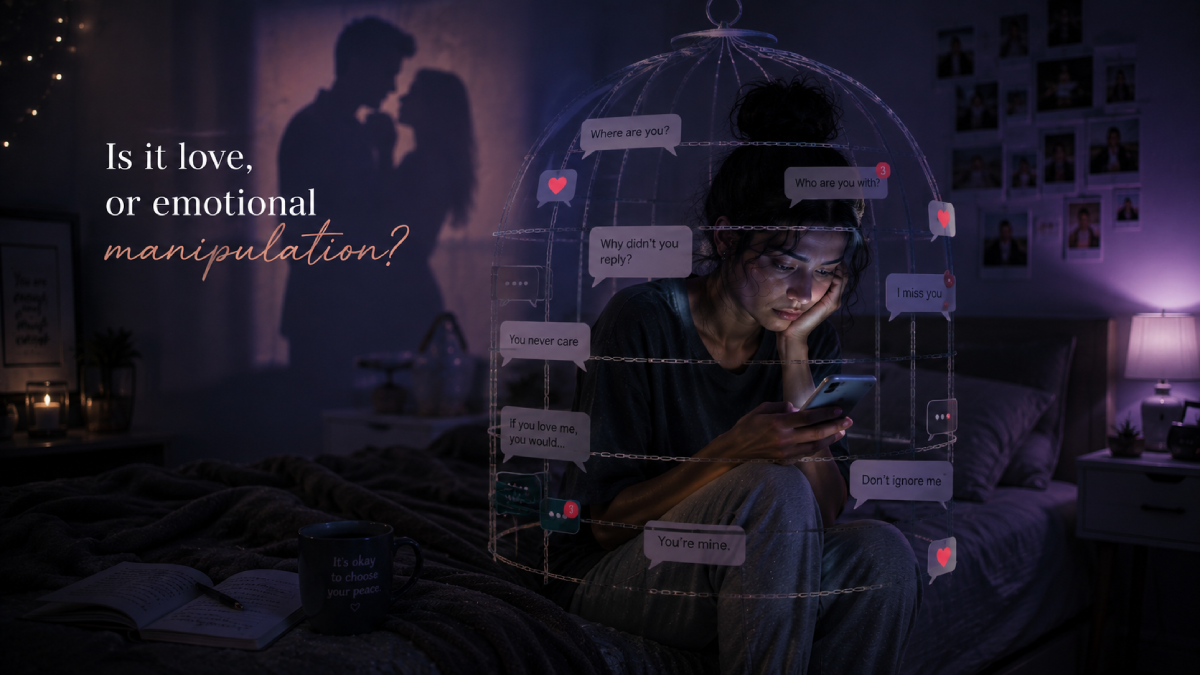
Emotional Manipulation Signs in Relationships: 11 Red Flags
11 Subtle Red Flags That Make You Doubt Yourself
Do You Feel Guilty, Confused, or “Too Sensitive” in Your Relationship?
Maybe you have noticed something strange.
You try to explain that something hurt you, but somehow the conversation ends with you apologizing.
You ask for reassurance, and suddenly you feel “needy.”
You say you need space, and they make you feel like you are abandoning them.
You bring up their behavior, but by the end of the discussion, you are questioning your tone, your memory, your timing, your feelings, and sometimes even your worth.
It can be confusing when a relationship does not look “obviously toxic” from the outside, but inside it, you constantly feel emotionally exhausted.
There may still be sweet moments.
They may still say they love you.
They may still apologize sometimes.
And that is exactly why emotional manipulation signs in relationships can be so hard to recognize.
Because emotional manipulation does not always arrive wearing cruelty. Sometimes, it comes wrapped in affection, guilt, silence, blame, insecurity, or dramatic apologies.
And if you are emotionally attached, your mind may keep asking:
“Am I overthinking?”
“Am I being too sensitive?”
“Maybe I misunderstood?”
“Maybe they are hurt too?”
“Maybe it is my fault?”
This article is here to slow everything down.
Not to scare you.
Not to label your relationship instantly.
Not to make decisions for you.
But to help you understand what may be happening emotionally, psychologically, and behaviorally, so you can finally hear your own inner voice again.
Maybe It Started With Small Things
Emotional manipulation often does not begin with one huge moment.
It usually starts quietly.
A small guilt trip.
A cold reply.
A joke that hurts, followed by “you can’t take anything lightly.”
A fight where your feelings disappear, and their pain becomes the only thing that matters.
A pattern where you keep explaining yourself, but never feel understood.
At first, you may ignore it.
You may tell yourself, “They were just upset.”
You may forgive quickly because you do not want to seem dramatic.
You may focus on their good side because you know they are not bad all the time.
And honestly, that is what makes it so emotionally complicated.
People are not always one thing.
Someone can be loving sometimes and still manipulative in the way they handle conflict, control, guilt, or emotional accountability.
That does not make your confusion foolish.
It makes your confusion understandable.
The Hard Part Is That Emotional Manipulation Does Not Always Look Cruel
When people imagine emotional manipulation, they often imagine someone shouting, threatening, or openly controlling.
But sometimes manipulation sounds softer.
It may sound like:
“You know I cannot live without you.”
“After everything I did for you, this is how you treat me?”
“You are the only person who makes me act this way.”
“I guess I am just a terrible person then.”
“You always make everything about yourself.”
“You are remembering it wrong.”
These sentences can make you pause.
Because they do not always feel like attacks at first. Sometimes they feel like pain. Sometimes they feel like vulnerability. Sometimes they feel like love asking for proof.
But slowly, you may notice something.
Their emotions always become your responsibility.
Their hurt always becomes more important than your hurt.
Their mistakes somehow become your burden to repair.
And after a while, you stop asking, “Did they hurt me?”
You start asking, “How do I say this in a way that will not upset them?”
That shift matters.
Micro Takeaway: If Love Regularly Makes You Doubt Your Reality, It Deserves Attention
A healthy relationship may have conflict.
A healthy partner may feel hurt.
A healthy conversation may be uncomfortable.
But love should not regularly make you feel mentally trapped, emotionally guilty, or afraid to speak.
If you keep feeling confused after every serious conversation, your confusion is not something to shame.
It is information.
And sometimes, your body understands a pattern before your mind is ready to name it.
What Is Emotional Manipulation in a Relationship?
Emotional manipulation in relationships is when someone uses guilt, fear, affection, silence, blame, confusion, or emotional pressure to control how you feel, behave, decide, or respond.
It is not always loud.
It is not always intentional in a calculated way.
But the impact is real.
You may start feeling like you cannot express needs without consequences. You may feel responsible for keeping the peace. You may feel like your emotions are always “too much,” while theirs are always urgent and important.
That is why recognizing the signs of emotional manipulation in a relationship is not about blaming someone instantly.
It is about noticing patterns.
Because one bad day is different from a repeated emotional system where your voice keeps getting smaller.
Simple Definition of Emotional Manipulation
Emotional manipulation in relationships means someone repeatedly influences your emotions through guilt, fear, blame, confusion, affection, withdrawal, or pressure so they can avoid accountability, control the situation, or get the response they want.
In simple words:
They may not force you directly.
But they make you feel so guilty, scared, confused, or responsible that you end up doing what they want anyway.
You say sorry when you were hurt.
You stay silent to avoid conflict.
You accept less because asking for more becomes exhausting.
You forgive before you are ready because their reaction feels heavier than your pain.
And slowly, you begin to betray yourself just to keep the relationship calm.
Emotional Manipulation vs Normal Relationship Conflict
Not every argument is manipulation.
Not every emotional reaction is toxic.
Not every partner who gets hurt is trying to control you.
This difference is important because emotionally aware people often become afraid of labeling anything as wrong. They may think, “Maybe I am the toxic one for even thinking this.”
So let’s make it clear.
Normal relationship conflict allows both people to be human.
Emotional manipulation makes one person carry the emotional weight of both people.
In normal conflict, both people may disagree, but both can speak.
In manipulation, one person’s feelings dominate the room so completely that the other person’s pain becomes invisible.
In normal conflict, someone may say, “I did not realize I hurt you. Let’s talk.”
In manipulation, they may say, “So now I am the villain? You always make me feel terrible.”
In normal conflict, boundaries may feel uncomfortable but still respected.
In manipulation, boundaries are treated like betrayal.
In normal conflict, repair happens.
In manipulation, the same wound keeps reopening, but you are expected to call it healing because they apologized dramatically.
Why This Difference Matters
This difference matters because if you mistake manipulation for normal conflict, you may spend years trying to communicate better with someone who benefits from misunderstanding you.
You may keep searching for the perfect words.
The perfect timing.
The perfect tone.
The perfect emotional softness.
But sometimes the problem is not that you are explaining badly.
Sometimes the problem is that clarity would require them to take responsibility, and confusion protects them from doing that.
That realization can hurt.
But it can also set you free.
11 Emotional Manipulation Signs in Relationships
Before we go into the signs, remember this:
One sign alone does not always define the whole relationship.
But repeated patterns matter.
If many of these feel familiar, do not rush to judge yourself. Just observe honestly.
Your clarity does not have to be dramatic.
It can be quiet.
It can begin with one simple sentence:
“Something about this pattern is hurting me.”
1. They Make You Feel Guilty for Having Boundaries
One of the most common emotional manipulation signs in relationships is guilt around boundaries.
Maybe you say you need space, and they act abandoned.
Maybe you say you are not comfortable with something, and they accuse you of not loving them enough.
Maybe you ask for respect, and they turn it into proof that you have changed.
Suddenly, your boundary is no longer about your emotional safety.
It becomes a trial where you have to prove your love.
What It Looks Like
It may sound like:
“Wow, you have really changed.”
“I guess I do not matter to you anymore.”
“If you loved me, you would not need space from me.”
“You are becoming selfish.”
“After everything I did for you, this is how you treat me?”
The painful part is that these lines may hit exactly where you are soft.
If you are someone who cares deeply, you may immediately feel guilty.
You may start explaining:
“No, I love you. I did not mean it like that. Please do not think that.”
And suddenly, the boundary disappears.
Now you are comforting them for feeling hurt by a limit you had every right to set.
Emotional Impact
Over time, this trains you to feel selfish for needing anything.
You may start asking for less.
You may stop saying no.
You may agree when your body wants to pause.
You may confuse self-abandonment with love.
And that is dangerous because a relationship should not require you to erase yourself to keep someone else emotionally comfortable.
Micro Takeaway
A healthy person may feel disappointed by your boundary.
But they do not punish you for having one.
They may need reassurance, but they will not make your self-respect feel like cruelty.
2. They Twist Your Words Until You Start Apologizing
Maybe you begin a conversation with a real hurt.
You say, “I felt ignored yesterday.”
But somehow, after ten minutes, you are apologizing for making them feel accused.
The original issue disappears.
Your pain gets pushed to the side.
Now the conversation is about their reaction to your pain.
This is a subtle but powerful manipulation pattern.
What It Looks Like
You say:
“I felt hurt when you cancelled at the last minute.”
They say:
“So now I am a terrible partner?”
You say:
“I just wanted you to understand how I felt.”
They say:
“You always make me feel like nothing I do is enough.”
Now you feel guilty.
You soften your words.
You take care of their emotions.
You may even say sorry.
And your original hurt remains untouched, sitting quietly in the corner like it was never invited into the conversation.
Emotional Impact
This pattern makes you afraid to bring things up.
Not because your feelings are wrong.
But because every conversation becomes emotionally expensive.
You have to prepare your words like a legal document.
You have to manage their tone, their mood, their reaction, their interpretation, their insecurity.
And somewhere in that process, you lose access to your own hurt.
You begin to think:
“Maybe it is easier to stay quiet.”
That silence is not peace.
It is emotional exhaustion dressed as maturity.
3. They Use Silent Treatment to Control Your Behavior
Silent treatment can feel unbearable when you are emotionally attached to someone.
They stop replying.
They become cold.
They withdraw affection.
They act distant but refuse to explain why.
And because you care, your nervous system starts panicking.
You may replay the conversation again and again. You may send multiple messages. You may apologize just to end the distance.
That is why silent treatment can become emotionally controlling.
It teaches you that disagreement may cost you connection.
What It Looks Like
They may:
Ignore your texts for hours or days after conflict.
Act cold but say “nothing” when you ask what happened.
Withdraw affection until you apologize.
Make you chase them emotionally.
Return only when you become soft, guilty, or desperate enough.
The most confusing part?
When they come back, you may feel relief.
You may think the problem is solved.
But actually, your nervous system may have just learned one thing:
“If I upset them, I might lose them.”
That fear can control your behavior more than love does.
Why It Is Harmful
Silent treatment is harmful because it turns connection into a reward and distance into punishment.
You stop focusing on what hurt you.
You start focusing on how to bring them back.
This is how emotional manipulation can quietly shift power.
The person who withdraws controls when the relationship feels safe again.
And the person who fears losing them starts surrendering their needs just to feel close again.
4. They Make You Doubt Your Memory or Reality
This is one of the most destabilizing emotional manipulation examples in relationships.
You remember something clearly.
They deny it.
You bring up what they said.
They say you misunderstood.
You explain how it made you feel.
They say you are exaggerating.
After enough repetition, you start doubting yourself before they even respond.
This can overlap with gaslighting.
And no, you do not have to use a big label immediately.
Just notice the effect.
Do you feel more clear after conversations, or more confused?
What It Looks Like
They may say:
“That never happened.”
“You are making things up.”
“You always exaggerate.”
“You are too emotional to remember properly.”
“You twist everything.”
“I never said that.”
Maybe once, it is a memory disagreement.
But when it becomes a pattern, something deeper is happening.
You may start taking screenshots.
You may reread chats.
You may ask friends, “Am I crazy?”
You may feel like you need evidence just to trust your own experience.
That is not emotional safety.
Psychology Layer
When someone repeatedly denies your reality, your mind starts looking for certainty outside itself.
You stop trusting your feelings.
You stop trusting your memory.
You stop trusting your interpretation.
And slowly, the manipulative person becomes the “authority” on what really happened.
That is one of the most painful parts.
They do not just control the argument.
They start controlling your relationship with yourself.
5. They Love Bomb You After Hurting You
This one can feel especially confusing because it does not look like manipulation at first.
It looks romantic.
After hurting you, they suddenly become soft, loving, intense, apologetic, affectionate, or dramatic.
They send long messages.
They promise change.
They call you their everything.
They may cry, panic, or say they cannot lose you.
And because you love them, the relief feels powerful.
You think, “This is the real them.”
Maybe it is.
But if the hurt keeps repeating, the apology is no longer repair.
It becomes part of the cycle.
What It Looks Like
They may:
Hurt you deeply.
Then become extremely affectionate.
Promise they will never do it again.
Give emotional speeches.
Post you, message you, call you, or act extra loving.
Make you feel guilty for still being hurt because they are “trying.”
At first, you may feel comforted.
But later, you may notice that the sweetness arrives after damage, not before accountability.
And that matters.
Emotional Impact
Love bombing after harm can make you addicted to the emotional high of reconciliation.
The pain feels terrible.
The apology feels beautiful.
The distance feels unbearable.
The reunion feels magical.
So your brain starts chasing the “good part” of the cycle.
This is why you may keep going back even when part of you knows the pattern is hurting you.
You are not weak.
You are emotionally bonded to a cycle that gives pain and comfort from the same person.
That can feel like love.
But love without consistent safety becomes emotional confusion.
6. They Turn Every Problem Into Your Fault
In a healthy relationship, both people can reflect.
In a manipulative relationship, one person always escapes responsibility.
Somehow, their anger is your fault.
Their silence is your fault.
Their disrespect is your fault.
Their emotional distance is your fault.
Even their harmful behavior becomes something you “made” them do.
This can slowly crush your confidence.
Because if everything is your fault, you start believing everything is yours to fix.
What It Looks Like
They may say:
“You made me react like this.”
“I would not have lied if you were not so suspicious.”
“I shouted because you kept pushing me.”
“I ignored you because you stress me out.”
“I hurt you because you hurt me first.”
This kind of blame-shifting is emotionally dangerous because it takes the focus away from their choice.
Yes, relationships are complex.
Yes, both people can trigger each other.
But someone being upset does not remove their responsibility for how they behave.
Emotional Impact
You may become hyper-aware of yourself.
Your tone.
Your timing.
Your facial expression.
Your words.
Your needs.
You may keep thinking:
“How do I avoid triggering them?”
But a relationship where you are constantly managing someone else’s reactions is not intimacy.
It is emotional labor with no rest.
7. They Use Your Insecurities Against You
Someone who loves you will learn your wounds gently.
Someone who manipulates you may learn your wounds strategically.
They know what scares you.
They know where you feel unworthy.
They know what makes you panic.
And during conflict, they may use those exact places to control you.
This can feel especially painful because it is not a random attack.
It is personal.
What It Looks Like
If you fear abandonment, they threaten to leave.
If you overthink, they call you unstable.
If you need reassurance, they make you beg for it.
If you have past trauma, they use it to dismiss your feelings.
If you feel insecure, they compare you to others.
They may say:
“No one else would tolerate you.”
“This is why people leave you.”
“You are too damaged.”
“You always ruin good things.”
And later, they may say they did not mean it.
But words spoken directly into someone’s wound do not disappear just because the argument ended.
Emotional Impact
This kind of manipulation can make you feel emotionally naked in unsafe hands.
You may start hiding your fears.
You may stop being vulnerable.
You may feel ashamed of needing love, reassurance, or softness.
But your insecurities are not weapons.
They are parts of you that deserved care.
8. They Make You Feel Responsible for Their Emotions
Caring about your partner’s feelings is healthy.
Being made responsible for regulating their entire emotional world is not.
There is a difference between compassion and emotional ownership.
You can care that they are hurt.
You can listen.
You can apologize when you truly did something wrong.
But you are not responsible for managing their anger, jealousy, insecurity, mood swings, or emotional reactions at the cost of your own peace.
What It Looks Like
They may say:
“If you loved me, I would not feel this way.”
“You know how anxious I get, so why would you do that?”
“You made me angry.”
“I cannot control myself when you act like this.”
“You are responsible for my pain.”
This creates a trap.
If you focus on yourself, you feel selfish.
If you focus on them, you abandon yourself.
And because you care, you may choose self-abandonment again and again.
Emotional Clarity
You can support someone’s emotions without becoming controlled by them.
A partner’s feelings deserve care.
But their feelings should not become a remote control for your behavior.
Love can ask for sensitivity.
It should not demand emotional obedience.
9. They Isolate You From Friends, Family, or Outside Opinions
Isolation does not always begin with “stop talking to them.”
Sometimes it begins with doubt.
They make your friends seem jealous.
They say your family does not understand.
They call your support system toxic.
They get upset when you share relationship problems with others.
They make you feel guilty for needing outside perspective.
Slowly, your world gets smaller.
And when your world gets smaller, their version of reality gets louder.
What It Looks Like
They may say:
“Your friends are ruining us.”
“Why do you tell everyone our private things?”
“They do not care about you like I do.”
“Your family is controlling you.”
“You should not need anyone else if we are okay.”
Of course, privacy matters in relationships.
Not every issue needs public discussion.
But there is a difference between protecting privacy and cutting you off from perspective.
A healthy partner does not need you isolated to feel secure.
Emotional Impact
When you stop talking to others, you may lose emotional mirrors.
You may stop hearing, “That is not okay.”
You may stop seeing the relationship clearly.
And when you are alone with someone who manipulates your emotions, confusion can start feeling normal.
That is why support systems matter.
Not because other people should control your relationship.
But because love should not require isolation.
10. They Use “I Was Hurt Too” to Avoid Accountability
This one sounds reasonable at first.
Because yes, both people can be hurt.
Both people can have feelings.
Both people can make mistakes.
But sometimes “I was hurt too” becomes a shield.
Instead of acknowledging what they did, they bring up their pain to avoid yours.
Now you are no longer discussing their behavior.
You are defending why you brought it up.
What It Looks Like
You say:
“When you ignored me for two days, I felt really hurt.”
They say:
“Well, I was hurt too. You do not care about that?”
You say:
“I do care. But I am talking about the silent treatment.”
They say:
“See? You only care about yourself.”
And again, the conversation shifts.
Your pain becomes selfishness.
Their accountability becomes optional.
Their hurt becomes the headline.
Micro Takeaway
Accountability is not cancelled because both people have feelings.
A healthy person can say:
“Yes, I was hurt too, but I understand that ignoring you was not okay.”
That sentence holds both truths.
Manipulation usually allows only one truth: theirs.
11. You Feel Emotionally Drained, Confused, and Smaller Than Before
Sometimes the biggest sign is not one specific behavior.
It is what the relationship is doing to you.
Maybe you used to be confident, but now you second-guess everything.
Maybe you used to speak openly, but now you edit every sentence.
Maybe you used to feel emotionally expressive, but now you feel “too much.”
Maybe you used to trust your instincts, but now you need proof for every feeling.
This matters.
Because love should stretch your heart, not shrink your self-trust.
What It Looks Like
You may notice:
You reread chats constantly.
You ask friends if you are wrong.
You feel anxious before bringing up basic needs.
You apologize quickly to avoid distance.
You feel relieved when they are kind, instead of simply safe.
You feel like you are always trying to return to the beginning of the relationship.
You miss who they were.
You miss who you were.
That last part can be the quietest heartbreak.
Emotional Impact
Emotional manipulation does not only affect the relationship.
It affects your relationship with yourself.
You may become less direct.
Less joyful.
Less trusting.
Less emotionally free.
And maybe you keep thinking, “I just need to be stronger.”
But maybe strength is not tolerating more.
Maybe strength is finally admitting:
“This pattern is hurting me.”
Why Emotional Manipulation Happens in Relationships
Understanding why manipulation happens does not mean excusing it.
It means you stop blaming yourself for everything.
Sometimes people manipulate consciously.
Sometimes they do it through learned patterns.
Sometimes they are deeply insecure.
Sometimes they fear abandonment.
Sometimes they want control.
Sometimes they avoid shame so intensely that they make everything your fault.
But whatever the reason, your pain still matters.
A reason is not a free pass.
A wound does not become permission to wound someone else.
1. Some People Use Control When They Fear Losing Power
Some people feel unsafe when they are not in control.
So when you express needs, disagree, ask questions, or set boundaries, they may feel threatened.
Instead of reflecting, they control.
They guilt-trip.
They withdraw.
They blame.
They make you prove your loyalty.
This does not always come from confidence. Sometimes it comes from fear.
But still, the result is the same:
You lose emotional freedom.
A loving relationship should not feel like you are constantly asking permission to be a full person.
2. Some Learned Manipulation as a Survival Pattern
Some people grew up in environments where honest communication was not safe.
Maybe they learned that guilt gets attention.
Silence creates power.
Anger prevents abandonment.
Victimhood avoids accountability.
Emotional pressure gets needs met.
This may explain the pattern.
But it does not make it harmless.
Someone’s past can help you understand them.
But it should not become a cage where you keep sacrificing yourself because “they had a hard life.”
Compassion without boundaries can become self-harm.
3. Some Avoid Accountability by Creating Confusion
Accountability requires emotional maturity.
It requires someone to sit with discomfort and say:
“I hurt you.”
“I was wrong.”
“I understand why that affected you.”
“I need to change this.”
For some people, that feels unbearable.
So they create confusion instead.
They bring up your past mistakes.
They question your tone.
They exaggerate your reaction.
They deny details.
They make the conversation so messy that no one can clearly see the original issue anymore.
And when things are unclear, they do not have to be accountable.
This is why clarity is powerful.
Naming the pattern breaks the fog.
4. Some Use Affection and Withdrawal to Create Dependency
This is one of the most emotionally addictive patterns.
Warmth, then coldness.
Closeness, then distance.
Love, then punishment.
Apology, then repeat.
Your nervous system starts chasing the good moments because they feel like relief after emotional pain.
You may start thinking the relationship is passionate.
But sometimes, what feels intense is actually instability.
Real love does not make you constantly earn safety.
Real love does not make affection feel like a reward for obedience.
5. Some Relationships Become a Cycle of Hurt, Relief, and Hope
This cycle can be very hard to leave.
Not because you do not know it hurts.
But because the hope is powerful.
You remember the beginning.
You remember their soft side.
You remember the promises.
You remember how they looked at you when things were good.
So after every painful moment, you wait for that version to return.
And when they do return, even briefly, it feels like proof that the relationship can be saved.
But here is the hard truth:
A good moment does not erase a repeated pattern.
Hope is beautiful.
But hope without change can keep you emotionally stuck.
Why Emotional Manipulation Feels So Confusing
If you are confused, please do not shame yourself.
Confusion is not proof that you are weak.
Confusion is often what happens when someone gives you mixed emotional signals.
They hurt you.
Then they love you.
They blame you.
Then they need you.
They make you cry.
Then they become the only person who can calm you.
This creates a deep emotional knot.
And when you are inside that knot, clarity can feel almost impossible.
Because It Is Not Always Bad All the Time
If it were always bad, you might leave faster.
But it is not always bad.
There are good conversations.
Soft apologies.
Beautiful memories.
Inside jokes.
Emotional intimacy.
Moments where they seem to understand you.
That is why you may think:
“How can this be manipulation if they also love me?”
But someone can love you in some moments and still harm you through repeated patterns.
Love is not only a feeling.
Love is also behavior.
Love is also repair.
Love is also respect when things are uncomfortable.
Because They May Also Be Loving Sometimes
This is one of the hardest truths to hold.
A person does not have to be cruel every second to be emotionally unsafe.
They may be caring sometimes.
They may be generous sometimes.
They may be vulnerable sometimes.
They may genuinely miss you.
They may genuinely fear losing you.
But love without accountability can still hurt you.
Affection does not cancel manipulation.
Sweetness does not erase emotional control.
A beautiful apology does not matter much if the same wound keeps returning with a different excuse.
Because You Keep Waiting for the “Good Version” of Them
Maybe you have seen a version of them that feels gentle, loving, emotionally open, and safe.
And now, every time they hurt you, you keep thinking:
“That is not really them.”
“The real them is the one I saw before.”
“They are just stressed.”
“They are just triggered.”
“They will come back.”
This is emotionally understandable.
But it can also keep you attached to potential instead of pattern.
The good version may be real.
But the hurtful pattern is also real.
You do not have to deny their good side to admit their behavior is damaging you.
Because Your Brain Starts Chasing Emotional Relief
After emotional pain, relief can feel like love.
When they finally reply, your body calms down.
When they finally hug you, your anxiety drops.
When they finally say sorry, your hope returns.
That relief can become addictive.
Not because you enjoy pain.
But because your nervous system starts associating them with both danger and comfort.
So even when they hurt you, you may still want them.
This does not make you foolish.
It makes you human.
But it also means you need to ask:
“Do I feel loved, or do I feel relieved that the pain has paused?”
That question can change everything.
Because You May Blame Yourself Before You Blame Someone You Love
When you love someone, your mind protects the bond.
It may search for your faults first.
Maybe I said it wrong.
Maybe I expected too much.
Maybe I am insecure.
Maybe I triggered them.
Maybe I am difficult to love.
This self-blame can feel safer than admitting someone you love is hurting you.
Because if it is your fault, maybe you can fix it.
But if it is a pattern in them, then you may have to face a painful truth.
You cannot love someone into emotional maturity.
You cannot over-explain someone into empathy.
You cannot keep abandoning yourself and call it patience forever.
What Should You Do If You Notice Emotional Manipulation?
If these signs feel familiar, you do not have to make a huge decision tonight.
Start with clarity.
Start with noticing.
Start with returning to yourself.
The goal is not to react impulsively.
The goal is to stop being emotionally pulled around by guilt, fear, confusion, or hope.
Step 1: Stop Arguing About Whether Your Feelings Are “Valid”
You do not need to prove that your feelings exist.
You do not need a courtroom-level explanation for why something hurt you.
If something repeatedly affects your peace, it deserves attention.
A manipulative dynamic often traps you in debating whether you are allowed to feel hurt.
But healing begins when you stop asking for permission to acknowledge your own pain.
Clear Action
Write down three things after difficult conversations:
What happened?
How did I feel afterward?
Did the conversation bring clarity or more confusion?
This will help you track the pattern instead of getting lost in each incident.
Sometimes the truth becomes clearer on paper because guilt cannot interrupt you there.
Step 2: Name the Pattern, Not Just the Incident
If you only focus on one incident, the conversation can become a debate.
They may say:
“That was not what I meant.”
“You are taking it wrong.”
“It only happened once.”
But when you name the pattern, you shift the focus.
You are no longer arguing over one sentence.
You are describing repeated emotional impact.
Example
Instead of saying:
“You ignored me yesterday.”
Say:
“When I bring up something painful, you often become distant or silent. Then I feel pressured to apologize just to reconnect. This pattern is hurting me.”
This is calmer.
Clearer.
Harder to twist.
And more emotionally honest.
You are not attacking their character.
You are naming what keeps happening.
Step 3: Set a Boundary With a Consequence
Boundaries are not threats.
They are instructions for how you will protect your emotional safety.
A boundary is not:
“You must change right now.”
A boundary is:
“If this continues, I will choose a response that protects me.”
This matters because emotional manipulation often makes you focus on changing the other person.
But boundaries bring the power back to your choices.
Example Boundary
“I am willing to talk about difficult things, but I will not continue a conversation where I am being blamed, mocked, or guilt-tripped. If that happens, I will pause the conversation and return when we can speak respectfully.”
Notice how specific this is.
It does not say, “Please stop being toxic.”
It says what behavior is not okay and what you will do if it happens.
That is much stronger.
Step 4: Watch Their Response to Your Boundary
The boundary is important.
But their response to the boundary is even more revealing.
Anyone can say, “I care about you.”
But emotional maturity shows up when they are asked to respect a limit.
Green Signal
A healthier response may sound like:
“I did not realize I was doing that.”
“I feel defensive, but I want to understand.”
“I need time, but I do not want to punish you.”
“I am sorry. I will work on this.”
They may not respond perfectly.
But they show willingness.
They care about impact, not just intention.
Red Signal
A manipulative response may sound like:
“Wow, now I have to follow rules?”
“You are becoming too much.”
“You are punishing me.”
“You do not love me anymore.”
“Fine, do whatever you want.”
Or they may punish you with silence, anger, coldness, or emotional withdrawal.
That tells you something important.
A person who benefits from your lack of boundaries may make you feel guilty for finally having them.
Step 5: Talk to Someone Outside the Relationship
Manipulation grows in isolation.
When everything stays inside the relationship, their version of events may become the loudest voice in your head.
You need perspective.
Not gossip.
Not drama.
Perspective.
Talk to someone emotionally grounded.
A trusted friend.
A sibling.
A counselor.
A therapist.
A support group.
Someone who will not simply say, “Leave” without listening, but also will not romanticize your pain.
You deserve a space where your emotions are not cross-examined.
Step 6: Make a Safety Plan If You Feel Threatened
If emotional manipulation includes threats, stalking, physical aggression, coercion, blackmail, or fear, the situation becomes more serious.
At that point, do not prioritize closure.
Prioritize safety.
Closure is not more important than your wellbeing.
If you feel unsafe, consider speaking to someone you trust, documenting concerning behavior, keeping important contacts accessible, and reaching out to local support services or professional help.
You do not have to handle fear alone.
And you do not have to wait until things become “bad enough” to ask for support.
Common Mistakes People Make When They Are Being Emotionally Manipulated
When you are emotionally manipulated, you may do things that look irrational from the outside.
But inside the relationship, they may feel like survival.
So this section is not here to shame you.
It is here to help you notice where your love may be turning against you.
Mistake 1: Explaining Yourself Again and Again
You may think:
“If I explain it better, they will understand.”
So you write long messages.
You soften your tone.
You give examples.
You apologize for how you said it.
You try again and again.
But sometimes the problem is not lack of explanation.
Sometimes the problem is lack of willingness.
Why It Hurts
Over-explaining can slowly teach you that your feelings are not valid unless the other person approves them.
You become stuck in emotional audition mode.
Trying to sound calm enough.
Kind enough.
Logical enough.
Perfect enough.
But love should not require a 3-page essay before someone respects your pain.
Mistake 2: Confusing Intensity With Love
Intense relationships can feel meaningful.
Big fights.
Big apologies.
Big promises.
Big emotions.
Big reunions.
But intensity is not the same as intimacy.
Sometimes intensity is just instability with better lighting.
Emotional Consequence
You may start craving the highs because the lows hurt so much.
The apology feels deeper because the wound was deeper.
The reunion feels magical because the distance felt unbearable.
But healthy love is not measured by how dramatically someone returns.
It is measured by how consistently they show up without destroying you first.
Mistake 3: Waiting for the Version of Them You Fell in Love With
You may keep remembering the beginning.
The way they listened.
The way they cared.
The way they made you feel chosen.
And every time they hurt you, you think:
“That person is still in there.”
Maybe they are.
But you are not in a relationship with memory.
You are in a relationship with repeated behavior.
Reality Check
Potential can be beautiful.
But pattern is more honest.
Someone’s best moments show what they are capable of.
Their repeated behavior shows what they are choosing.
Both matter.
But only one affects your daily emotional safety.
Mistake 4: Thinking Your Love Can Heal Their Behavior
It is natural to want to love someone through their wounds.
Especially if you understand why they are the way they are.
Maybe they had a painful past.
Maybe they struggle with insecurity.
Maybe they were betrayed before.
Maybe they do not know how to communicate.
Your compassion may be real.
But your love cannot do their inner work for them.
Emotional Consequence
You may start sacrificing yourself to prove you are different from everyone who hurt them.
You may tolerate pain because you do not want to abandon them.
You may confuse loyalty with self-erasure.
But someone can deserve compassion and still not be safe for you.
Both truths can exist.
Mistake 5: Keeping the Relationship Secret Because You Know People Will Worry
Sometimes you stop telling people the full story.
Not because you are private.
But because you already know how it sounds.
You leave out the worst parts.
You defend them before anyone criticizes them.
You say, “It is complicated.”
And yes, relationships are complicated.
But sometimes “complicated” becomes a soft word for “I am being hurt, but I am not ready to admit it.”
Reality Check
If you have to hide the truth to protect the relationship’s image, your inner self already knows something is wrong.
You do not need to expose your relationship to everyone.
But you do need at least one safe place where you can tell the truth without editing it.
When Should You Walk Away From Emotional Manipulation?
Walking away is not always simple.
Especially when you love them.
Especially when they have good sides.
Especially when they keep promising change.
Especially when part of you still hopes the relationship can become what it once seemed to be.
So instead of asking, “Do I still love them?”
Ask:
“Is this relationship still emotionally safe for me?”
Love can exist.
But safety matters too.
Walk Away If They Keep Repeating the Same Pattern After You Clearly Communicate
Everyone makes mistakes.
But repeated harm after clear communication is not confusion anymore.
If you have explained the issue calmly, directly, and repeatedly, and they still keep doing the same thing, you are not dealing with a lack of understanding.
You are dealing with a lack of change.
And at some point, repeated apologies without changed behavior become emotional noise.
Walk Away If Boundaries Make Them More Cruel
A boundary should not make someone punish you.
If your boundary leads to more guilt, anger, mockery, threats, silent treatment, or emotional withdrawal, pay attention.
That means the relationship may only feel peaceful when you are easy to control.
And that is not real peace.
That is compliance.
Walk Away If You Feel Afraid to Be Honest
If you are scared to say how you feel, something is already wrong.
You should not have to prepare for emotional punishment every time you express pain.
You should not have to choose between honesty and connection.
A loving relationship may involve hard conversations.
But it should not make truth feel dangerous.
Walk Away If You Are Losing Friends, Confidence, Sleep, or Self-Respect
Sometimes your life gives you the answer before your mind does.
Are you sleeping badly?
Are you anxious all the time?
Are you losing interest in things you loved?
Are you distancing yourself from people who care?
Are you becoming less confident?
Are you constantly trying to become “easier” to love?
Then the question is not only, “Do they love me?”
The question is:
“What is this love costing me?”
Walk Away If They Use Threats, Self-Harm Threats, or Fear to Control You
This is serious.
If someone threatens to hurt themselves, hurt you, expose you, ruin your life, or punish you if you leave, that is not love.
That is control.
You can care about someone and still refuse to be held emotionally hostage.
If this is happening, involve trusted people or professional support.
Do not carry that alone.
Final Reality Check
Love should not require you to become smaller so someone else can feel powerful.
You are allowed to choose peace even if they are hurt by your choice.
You are allowed to leave a relationship that keeps asking for your soul in the name of love.
You are allowed to stop waiting for someone to become gentle with the parts of you they keep wounding.
FAQs About Emotional Manipulation Signs in Relationships
What are the most common emotional manipulation signs in relationships?
The most common emotional manipulation signs in relationships include guilt-tripping, silent treatment, blame-shifting, gaslighting, love bombing after harm, emotional blackmail, using insecurities against you, making you responsible for their emotions, and making you feel guilty for boundaries.
You may also notice that you feel confused after arguments, afraid to speak honestly, or constantly responsible for fixing the relationship.
A simple way to notice the pattern is this:
If expressing your pain regularly ends with you comforting the person who hurt you, something is worth examining.
Is emotional manipulation the same as gaslighting?
Not exactly.
Gaslighting is one form of emotional manipulation.
Emotional manipulation is a broader pattern where someone uses guilt, fear, blame, affection, silence, or confusion to control your emotions or behavior.
Gaslighting specifically involves making you doubt your memory, perception, or reality.
For example:
Emotional manipulation may sound like:
“If you loved me, you would do this.”
Gaslighting may sound like:
“That never happened. You are imagining things.”
Both can be harmful.
Both can make you doubt yourself.
Can emotional manipulation happen without someone realizing it?
Yes, sometimes people manipulate emotionally without fully realizing it.
They may have learned these patterns from past relationships, family dynamics, insecurity, fear, or emotional immaturity.
But lack of awareness does not erase impact.
If someone keeps hurting you, dismissing you, or controlling you emotionally, the pattern still matters.
A person who truly cares will be willing to notice the impact and work on changing it.
If they use “I did not mean it” as a way to avoid change, the problem remains.
Can an emotionally manipulative person change?
Change is possible, but only if the person genuinely takes responsibility.
Not just apologizes.
Not just cries.
Not just promises.
Not just says, “I am like this because of my past.”
Real change includes self-awareness, accountability, consistent behavior, respect for boundaries, and often professional help.
If someone only changes when they fear losing you, then returns to the same pattern later, that is not stable change.
That is temporary panic.
Watch patterns, not promises.
How do I know if I am overreacting or being manipulated?
Ask yourself:
Do I feel safe expressing hurt?
Do conversations bring clarity or confusion?
Do I often apologize just to end tension?
Are my boundaries respected or punished?
Do I feel more like myself or less like myself in this relationship?
Do I need screenshots, proof, or outside validation just to trust my own feelings?
If you repeatedly feel confused, guilty, silenced, or responsible for their emotions, you may not be overreacting.
You may be responding to a pattern your heart has been trying to name.
What should I say to someone who emotionally manipulates me?
Keep it simple and pattern-focused.
You can say:
“When I bring up something that hurts me, the conversation often becomes about your hurt instead. I want us to talk without blame, guilt, or emotional punishment.”
Or:
“I care about you, but I cannot continue conversations where my feelings are dismissed or twisted. If that happens, I will pause the conversation.”
Do not over-explain.
Do not argue endlessly about your right to feel hurt.
A clear boundary is stronger than a long emotional essay.
Is silent treatment emotional manipulation?
Silent treatment can become emotional manipulation when it is used to punish, control, or make you chase connection after conflict.
Everyone may need space sometimes.
Healthy space sounds like:
“I am overwhelmed. I need some time, but I will talk to you later tonight.”
Silent treatment feels like:
Coldness.
Disappearance.
Punishment.
Uncertainty.
Emotional fear.
The difference is communication.
Space creates calm.
Silent treatment creates control.
Conclusion: You Are Not “Too Sensitive” for Wanting Emotional Safety
If you have been reading this with a heavy feeling in your chest, take a moment.
Breathe.
You do not have to solve your whole relationship right now.
You do not have to make a dramatic decision in the middle of emotional overwhelm.
But you do deserve to be honest with yourself.
If love keeps making you doubt your memory, your feelings, your boundaries, your needs, or your worth, that matters.
You are not “too sensitive” for wanting emotional safety.
You are not dramatic for noticing patterns.
You are not selfish for needing respect.
You are not weak because you stayed.
Sometimes, people stay because they are hopeful. Because they remember the good. Because they love deeply. Because they keep waiting for the person they miss to return.
But your love should not require you to disappear.
Your loyalty should not cost you your self-trust.
Your relationship should not make you feel like you are constantly negotiating for basic kindness.
Maybe today, the next step is not leaving.
Maybe today, the next step is simply admitting:
“This is hurting me, and I need to stop ignoring that.”
That sentence alone can be the beginning of clarity.
And clarity, once it enters, does not shout.
It sits quietly beside you and says:
“You are allowed to choose yourself too.”
Read Next
If this relationship feels painful but you still feel pulled back again and again, read this next:
Why Do I Keep Going Back to Someone Who Hurts Me?
It will help you understand the emotional attachment, hope cycle, and psychological reasons why leaving someone who hurts you can feel so difficult.