
Signs of a Toxic Relationship: 15 Red Flags You May Be Ignoring
Do You Feel Loved, But Also Emotionally Drained?
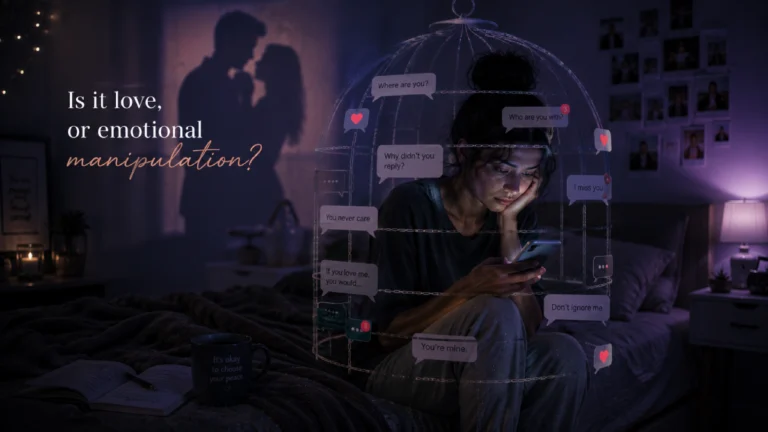
Have you ever felt like your relationship gives you love one day and anxiety the next?
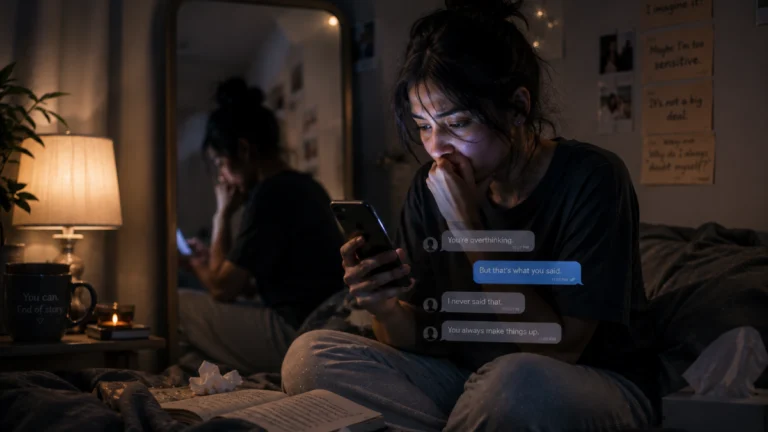
Maybe they say they love you, but you still feel scared to speak honestly. Maybe you try to explain your pain, but somehow the conversation ends with you apologizing. Maybe after every fight, you sit with your phone in your hand and think, “Am I overreacting, or is this actually hurting me?”
It can be confusing when a relationship is not bad all the time.
Some days they are sweet. Some days they make you feel chosen. Some days they talk like they understand you better than anyone else.
And then suddenly, you feel blamed, ignored, controlled, doubted, or emotionally exhausted again.
This is why recognizing the signs of a toxic relationship is not always simple. Toxic relationships do not always look like constant shouting or obvious cruelty. Sometimes they look like intense love mixed with fear. Sometimes they look like passion mixed with emotional confusion.
Sometimes they look like this:
You love them, but you do not feel peaceful with them.
You care about them, but you are slowly losing yourself.
You want the relationship to work, but deep down, you feel like something inside you is getting tired.
If that feels familiar, this blog is not here to judge you. It is here to help you see the pattern clearly.
Because sometimes the hardest part is not accepting that someone hurt you.
The hardest part is accepting that something you called love may also be damaging your self-worth.
What Is a Toxic Relationship?
A toxic relationship is a relationship where repeated patterns make you feel emotionally unsafe, controlled, blamed, drained, confused, or smaller than yourself.
It does not mean every moment is terrible.
It does not mean there was never love.
It does not mean you are weak for staying.
It simply means the relationship has started affecting your peace, identity, emotional safety, or self-respect in a harmful way.
Sometimes toxic relationship signs are loud. They show up as shouting, control, insults, threats, or constant disrespect.
But sometimes they are quiet.
They show up as overthinking before sending a message.
They show up as apologizing even when you are hurt.
They show up as feeling scared to express a basic need.
They show up as thinking, “Maybe if I explain it better, they will finally understand.”
And that is where many people get stuck.
Because toxic relationships often do not begin with pain. They begin with closeness, excitement, attention, and emotional intensity. The pain comes later, slowly, like a fog entering the room.
At first, you do not notice it.
Then one day, you realize you no longer feel like yourself.
A Simple Meaning of a Toxic Relationship
A toxic relationship is not just a relationship with arguments.
Every relationship has conflict. Every couple disagrees. Every person has flaws.
But in a healthy relationship, conflict still has respect.
In a toxic relationship, conflict often becomes emotional damage.
Here is the difference:
| Healthy Relationship | Toxic Relationship |
| You can speak honestly | You fear their reaction |
| Conflict leads to repair | Conflict leads to blame |
| Boundaries are respected | Boundaries are punished |
| You feel supported | You feel emotionally drained |
| Love feels emotionally safe | Love feels like anxiety |
| You can be yourself | You shrink to avoid problems |
| Apologies lead to change | Apologies only reset the cycle |
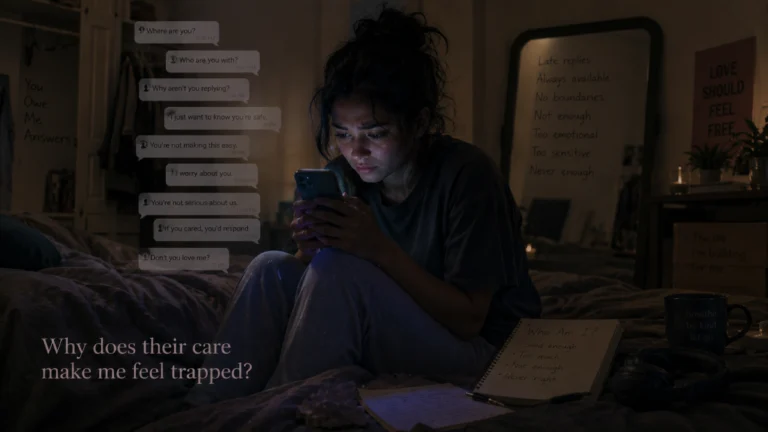
A toxic relationship often teaches you to monitor everything.
Their mood.
Their tone.
Their replies.
Their anger.
Their silence.
Their approval.
And slowly, your emotional life starts revolving around keeping them calm.
That is not love becoming deeper.
That is your nervous system learning survival.
Is a Toxic Relationship the Same as an Abusive Relationship?
Not every toxic relationship is abusive, but abuse can exist inside toxic relationships.
This distinction matters.
A toxic relationship may include unhealthy patterns like constant criticism, emotional unavailability, guilt-tripping, jealousy, poor boundaries, or repeated disrespect.
An abusive relationship includes patterns of power, control, fear, intimidation, threats, violence, coercion, isolation, or emotional harm used to dominate another person.
Sometimes emotional abuse does not look dramatic from the outside.
It may sound like:
“You are crazy.”
“No one else will tolerate you.”
“You made me do this.”
“You are nothing without me.”
“If you leave, I will ruin your life.”
“I only control you because I care.”
If your relationship includes fear, threats, physical harm, forced control, sexual pressure, stalking, or intimidation, this is beyond ordinary relationship conflict.
You deserve support, safety, and help from trusted people or professional services.
Safety Note
If you feel unsafe, please do not treat this as just a relationship problem.
If there is physical violence, threats, stalking, sexual coercion, forced isolation, financial control, or fear of what they might do, prioritize your safety first.
Talk to someone you trust. Save important documents. Create a safety plan. Reach out to a local crisis helpline or domestic violence support service in your country.
You do not have to prove that it is “bad enough” to ask for help.
If your body feels afraid, that matters.
What Are the Signs of a Toxic Relationship?
Common signs of a toxic relationship include constant criticism, emotional manipulation, controlling behavior, guilt-tripping, gaslighting, silent treatment, ignored boundaries, emotional exhaustion, fear of speaking honestly, repeated disrespect, and feeling like you are losing yourself.
But let’s go deeper than a checklist.
Because sometimes you do not just need signs.
You need language for what has been happening to you.
1. You Feel Emotionally Drained Most of the Time
Maybe you have noticed that after talking to them, you do not feel lighter.
You feel tired.
Not normal tired. Emotionally tired.
The kind of tired where your chest feels heavy, your mind keeps replaying the conversation, and you need time to recover from someone who is supposed to feel safe.
What This Looks Like
You may feel emotionally drained if:
- You overthink their mood constantly
- You feel anxious before bringing up simple things
- You feel relieved when they are finally nice again
- You feel exhausted after small disagreements
- You keep trying to “fix” the emotional atmosphere
- You feel responsible for keeping the relationship peaceful
Sometimes this happens when one person’s emotional reactions are so unpredictable that you start living on alert.
You are not just loving them.
You are managing them.
Emotional Impact
An emotionally draining relationship can slowly make you feel older inside.
You may stop laughing freely. You may stop sharing little things. You may start needing silence after every interaction because your mind is always working.
You might not even realize how much energy the relationship takes until you are away from them and suddenly feel peaceful.
Micro Takeaway
A relationship should not make peace feel like a rare reward.
2. You Are Always Afraid of Saying the Wrong Thing
In a healthy relationship, you may feel nervous during difficult conversations, but you still feel allowed to speak.
In a toxic relationship, even normal honesty can feel dangerous.
You may rehearse your words before saying them. You may delete messages many times. You may soften your pain so they do not get angry.
And after a while, you stop asking, “How do I express myself clearly?”
You start asking, “How do I say this without triggering them?”
What This Looks Like
You may notice yourself thinking:
- “They will get angry if I say this.”
- “Maybe I should just stay quiet.”
- “I do not want to start another fight.”
- “They will say I am creating drama.”
- “I should wait until they are in a good mood.”
- “Maybe my feelings are not important enough to mention.”
This is not emotional maturity.
This is emotional fear wearing a calm face.
Why It Matters
When you are afraid to speak honestly, the relationship stops being a place of connection.
It becomes a place where you perform.
You become careful instead of open. Polite instead of real. Quiet instead of emotionally present.
Aur dheere dheere, aap apni sachchai ko chhupane lagte ho, sirf relationship bachane ke liye.
But a relationship that survives only when you stay silent is not emotionally safe.
3. They Make You Feel Guilty for Having Needs
Everyone has emotional needs.
You may need consistency, respect, reassurance, time, honesty, affection, clarity, or basic kindness.
That does not make you needy.
It makes you human.
But in a toxic relationship, your needs may be treated like a burden.
What This Looks Like
When you ask for something reasonable, they may say:
- “You are too much.”
- “Nothing is ever enough for you.”
- “You always want attention.”
- “You are so sensitive.”
- “You make everything a problem.”
- “Why can’t you just be normal?”
- “You are too emotional.”
Maybe you only asked why they ignored you.
Maybe you only said their words hurt you.
Maybe you only wanted them to show up with care.
But instead of listening, they made you feel guilty for needing anything at all.
Emotional Impact
This can make you shrink your needs.
You may start telling yourself:
“I should not ask for too much.”
“I should be more chill.”
“I should stop expecting.”
“I should be happy with whatever they give.”
And slowly, you confuse emotional starvation with maturity.
You convince yourself that wanting respect is asking too much.
It is not.
Your needs are not the problem. The problem is being with someone who benefits when you stop having them.
4. Your Boundaries Are Ignored or Punished
A boundary is not a wall.
It is a line that protects your emotional safety.
It can sound like:
“I do not want to be spoken to like that.”
“I need space when conversations become disrespectful.”
“I am not comfortable sharing my passwords.”
“I cannot continue this relationship if the same hurtful pattern keeps repeating.”
In a healthy relationship, boundaries may feel uncomfortable at first, but they are respected.
In a toxic relationship, boundaries are often treated like betrayal.
What This Looks Like
They may ignore your boundaries by:
- Repeating the same behavior after you clearly said it hurts you
- Pressuring you after you said no
- Making fun of your limits
- Calling you dramatic for needing space
- Punishing you with silence
- Getting angry when you choose yourself
- Saying, “If you loved me, you would not need boundaries”
This is one of the biggest toxic relationship red flags.
Because someone who loves you may not always understand your boundary immediately, but they will care that something hurts you.
Micro Takeaway
A boundary is not disrespect.
A boundary is emotional self-protection.
And someone who only loves you when you have no boundaries may not be loving you fully. They may be loving the access they have to you.
5. They Use Silent Treatment Instead of Communication
Silence can be peaceful.
But silent treatment is not peace.
Silent treatment is when someone intentionally withdraws communication to punish, control, confuse, or make you chase them.
It is not the same as taking healthy space.
Healthy space says:
“I need time to calm down. We will talk later.”
Silent treatment says nothing, and makes you suffer inside the silence.
What This Looks Like
They may:
- Ignore your messages for hours or days
- Act cold without explaining why
- Refuse to answer simple questions
- Make you beg for communication
- Come back as if nothing happened
- Use distance to make you anxious
- Punish you emotionally until you apologize
You may start feeling desperate for a reply.
You may reread old messages. You may keep checking their active status. You may feel your whole mood depending on whether they respond.
Why It Hurts
Silent treatment can trigger abandonment fear.
It makes you feel like love can disappear at any moment.
And when they finally come back, you feel so relieved that you may forget what the silence did to you.
That relief can become addictive.
You do not feel safe.
You feel temporarily rescued.
6. You Keep Apologizing Even When You Are Hurt
This one can be very confusing.
You start the conversation with pain.
You say, “This hurt me.”
You say, “I felt ignored.”
You say, “I did not like how you spoke to me.”
But somehow, by the end, you are apologizing.
For bringing it up.
For being too sensitive.
For ruining their mood.
For not understanding their side.
For “making them angry.”
What This Looks Like
Maybe this pattern feels familiar:
You express hurt.
They become defensive.
They say you always blame them.
They bring up your past mistakes.
They accuse you of overreacting.
You start explaining.
They get more upset.
You panic.
You apologize.
The original issue disappears.
This is how emotional manipulation in relationships often works.
The focus shifts from their behavior to your reaction.
Emotional Impact
Over time, you stop trusting your own pain.
You may think:
“Maybe I should not have said anything.”
“Maybe I explained it badly.”
“Maybe I am the toxic one.”
But please remember this:
A healthy conversation does not require you to abandon your own hurt just to calm the other person down.
7. They Blame You for Their Hurtful Behavior
A person can be hurt, stressed, insecure, or triggered.
But they are still responsible for how they behave.
In a toxic relationship, responsibility often gets twisted.
They may hurt you, then make you feel responsible for the hurt.
What This Looks Like
They may say:
- “I shouted because you irritated me.”
- “I ignored you because you were being annoying.”
- “I lied because you overreact.”
- “I flirted because you do not give me enough attention.”
- “I insulted you because you pushed me.”
- “I became cold because you are too emotional.”
This is not accountability.
This is blame shifting.
They are not saying, “I hurt you, and I need to work on that.”
They are saying, “I hurt you, but you caused it.”
Why It Is Toxic
This pattern teaches you to control yourself perfectly so they do not mistreat you.
But no matter how carefully you behave, they may still find a reason.
Because the issue was never your imperfection.
The issue was their refusal to take responsibility.
Aap kitna bhi calmly samjha lo, agar samne wala accountability nahi lena chahta, toh har baat aap par hi aa kar rukegi.
8. They Control Who You Talk To or What You Do
Control does not always arrive looking like control.
Sometimes it arrives sounding like care.
“I just worry about you.”
“I do not like that friend.”
“I know what is best for you.”
“I am protective because I love you.”
“I do not want people to influence you.”
At first, it may feel intense. Maybe even romantic.
But slowly, your world starts becoming smaller.
What This Looks Like
They may try to control:
- Who you talk to
- What you wear
- Where you go
- How quickly you reply
- What you post
- Which friends you keep
- How much time you spend with family
- Whether you study, work, or grow independently
They may check your phone, question your loyalty, or make you feel guilty for having a life outside them.
Emotional Impact
Control slowly disconnects you from yourself.
You may stop making choices based on what feels right for you.
You start making choices based on what will not upset them.
And one day, you may realize you have been asking permission to exist.
Care supports your freedom.
Control reduces it.
9. Their Jealousy Feels Intense, Not Healthy
A little jealousy can happen in relationships.
People feel insecure sometimes. People need reassurance sometimes.
But toxic jealousy is different.
It does not ask for reassurance with vulnerability.
It demands control with suspicion.
What This Looks Like
They may:
- Accuse you without reason
- Check your phone
- Question every like or comment
- Get angry when you talk to someone
- Assume you are hiding something
- Make you prove your loyalty again and again
- Treat your independence like a threat
You may start feeling like you are always on trial.
No matter how loyal you are, you still have to defend yourself.
Micro Takeaway
Jealousy is not proof of love when it becomes surveillance.
Love may want reassurance.
Control wants access.
There is a difference.
10. They Make You Doubt Your Memory or Feelings
One of the most painful signs of a toxic relationship is when you start doubting your own reality.
You remember what happened.
You remember what they said.
You remember how it made you feel.
But they deny it so confidently that you begin to question yourself.
What This Looks Like
They may say:
- “That never happened.”
- “You are imagining things.”
- “You always twist everything.”
- “You are too sensitive.”
- “You are crazy.”
- “I was joking. You cannot take anything.”
- “You are making me look bad.”
- “You always create stories in your head.”
And suddenly, the conversation is no longer about what hurt you.
It becomes about whether your perception can be trusted.
Psychology Layer
This may connect to gaslighting.
Gaslighting is when someone makes you question your memory, feelings, perception, or reality. It can leave you feeling confused, anxious, guilty, and dependent on the other person’s version of events.
And the scariest part?
You may not notice it immediately.
You may just feel foggy.
You may feel like you need screenshots, proof, exact words, dates, and perfect explanations before your pain is allowed to be valid.
But pain does not need a courtroom to be real.
11. They Are Loving After Hurting You, But the Pattern Repeats
This is one of the reasons toxic relationships are so hard to leave.
They are not always cruel.
Sometimes after hurting you, they become soft again.
They apologize. They promise. They say they cannot live without you. They become the version of themselves you have been missing.
And your heart thinks, “See? They do love me.”
What This Looks Like
The cycle may look like this:
They hurt you.
You break down.
They apologize.
They become affectionate.
You feel hopeful.
Things feel good for a while.
Then the same hurt happens again.
This cycle can make you emotionally attached to their temporary kindness.
You do not just miss them.
You miss the version of them that appears after almost losing you.
Why It Feels Confusing
The loving moments are real enough to confuse you.
But the painful pattern is also real enough to harm you.
That is the emotional trap.
You keep holding on to the good moments as proof that the bad moments can change.
But consistent love is not just about what someone says after hurting you.
It is about what they stop doing because they know it hurts you.
12. You Feel Like You Are Losing Yourself
Sometimes the clearest sign is not what they do.
It is what is happening to you.
Maybe you used to be more confident. More expressive. More social. More excited about life.
But now you feel smaller.
Quieter.
More anxious.
More dependent on their mood.
Less connected to your own identity.
What This Looks Like
You may notice:
- You stopped doing things you loved
- You avoid friends because explaining is too hard
- You no longer trust your decisions
- You feel guilty when you choose yourself
- You do not recognize your emotional reactions anymore
- You keep waiting for their approval
- You feel like your entire day depends on them
This is not just relationship stress.
This is self-abandonment.
Micro Takeaway
Love should add emotional depth to your life.
It should not erase your identity.
Aap kisi se pyaar kar sakte ho, bina khud ko khoye.
And if a relationship only survives when you disappear piece by piece, it is asking for too much.
13. They Disrespect You During Conflict
Conflict is normal.
Disrespect is not.
Two people can disagree without humiliating each other. They can be upset without insulting each other. They can need space without punishing each other.
In toxic relationships, conflict often becomes a place where emotional damage happens.
What This Looks Like
They may:
- Insult you
- Mock your feelings
- Use your insecurities against you
- Threaten to leave repeatedly
- Bring up your past wounds
- Compare you to others
- Call you names
- Humiliate you during arguments
- Make jokes about things that deeply hurt you
And later, they may say:
“I was angry.”
“I did not mean it.”
“You know how I am.”
But anger does not give someone permission to damage your dignity.
Why It Is Harmful
Disrespect during conflict creates emotional unsafety.
You may stop bringing up important issues because you know the fight will hurt more than the problem.
You may start choosing silence over honesty.
Not because everything is okay.
But because speaking feels too expensive.
14. You Feel Addicted to the Highs and Lows
Toxic relationships can sometimes feel emotionally addictive.
Not because you enjoy the pain.
But because the highs feel powerful after the lows.
When someone withdraws affection, ignores you, blames you, or makes you feel unwanted, your nervous system becomes anxious.
Then when they finally show love again, your body feels relief.
That relief can feel like love.
What This Looks Like
You may feel:
- You cannot leave even though you are hurt
- The good moments feel unusually intense
- You keep chasing the early version of them
- You feel empty when they pull away
- You become attached to small signs of affection
- You keep thinking, “Maybe this time it will change”
This is where trauma bonding can begin.
You become attached not only to the person, but to the emotional cycle.
Pain. Hope. Relief. Repeat.
Psychology Layer
The inconsistency becomes the hook.
If someone was always hurtful, your mind might reject them faster.
But when hurt is mixed with affection, your brain keeps searching for the reward.
That is why leaving can feel so hard even when you know the relationship is hurting you.
You are not weak.
Your attachment system has been trained by unpredictability.
15. Your Body Feels Unsafe Before Your Mind Can Explain Why
Sometimes your body knows before your mind accepts.
You may not have the perfect words yet.
You may not be ready to call it toxic.
You may still love them.
But your body may already be reacting.
What This Looks Like
You may feel:
- Anxiety when their name appears on your phone
- Tightness in your chest before conversations
- Panic when they seem upset
- Relief when they are finally kind
- Restlessness after spending time with them
- Fear before expressing a need
- Emotional heaviness after small interactions
These signals matter.
Your body may be trying to protect you from a pattern your heart keeps rationalizing.
Emotional Impact
When your relationship becomes a place of emotional threat, your nervous system stays alert.
You may mistake that alertness for passion.
You may mistake anxiety for chemistry.
You may mistake relief for love.
But healthy love does not constantly activate fear.
It gives your body space to breathe.
Why Toxic Relationships Feel So Confusing
If you recognize some of these toxic relationship signs, you might still feel unsure.
You might think:
“But they are not always bad.”
“They have also done good things for me.”
“They had a difficult past.”
“They say they love me.”
“What if I am focusing only on the negative?”
This confusion is normal.
It does not mean the pain is fake.
It means the relationship has become emotionally complicated.
They Are Not Bad All the Time
This is one of the biggest reasons people stay.
Toxic relationships are rarely painful every second.
There are sweet moments. Deep conversations. Memories. Promises. Chemistry. Care. Emotional closeness.
And because of those good moments, you may keep questioning the bad ones.
You may think:
“If they can be so loving sometimes, maybe the hurtful version is not the real them.”
But the question is not only whether they can be loving.
The question is whether they can be consistently safe.
A few good moments do not erase a repeated pattern of harm.
You Keep Waiting for the “Old Version” of Them
Maybe in the beginning, they were different.
They made you feel special. Seen. Chosen. Understood.
Maybe they listened to you for hours.
Maybe they promised emotional safety.
Maybe they made you believe, “This is the person I was waiting for.”
And now, even when they hurt you, you keep remembering that beginning.
You are not only attached to who they are now.
You are attached to who they were when you first trusted them.
That is why letting go feels like losing a dream, not just a person.
You Start Measuring Love by Relief
This is subtle.
In a healthy relationship, love feels like warmth, consistency, trust, and emotional rest.
In a toxic relationship, love can start feeling like relief.
They replied after ignoring you.
They smiled after being cold.
They apologized after hurting you.
They held you after making you cry.
And because your body was anxious before, their kindness feels powerful.
But relief after pain is not the same as safety.
Sometimes it is only the pause between two painful cycles.
You Blame Yourself Because It Gives You Hope
This is a painful truth.
Sometimes blaming yourself feels safer than accepting that someone you love may not change.
Because if it is your fault, then maybe you can fix it.
Maybe if you become calmer, prettier, quieter, smarter, less emotional, more patient, less needy, more understanding, then they will love you properly.
So you keep improving yourself for someone who keeps repeating the same harm.
But love should not require you to become a perfect person before someone treats you with basic respect.
You are allowed to grow.
But you should not have to disappear.
What You Should Do If You See These Signs
If you see yourself in this blog, pause for a moment.
Do not rush into panic.
Do not immediately judge yourself.
Do not force yourself to make the biggest decision tonight.
Start with clarity.
When your emotions are tangled, clarity is the first act of self-respect.
Step 1: Write Down the Pattern, Not Just the Incident
One argument may confuse you.
A pattern reveals the truth.
Instead of asking, “Was this one fight toxic?”, ask:
- Does this keep happening?
- Do I feel safe expressing myself?
- Do they repair or repeat?
- Do I feel more confident or more insecure with them?
- Do I feel loved or emotionally managed?
- Am I becoming more myself or less myself?
This helps you move from emotional fog to observation.
And sometimes, seeing the pattern on paper is the moment your heart finally says, “I am not imagining this.”
Step 2: Stop Over-Explaining Your Pain
Maybe you have explained the same hurt many times.
In different words.
In softer tones.
With examples.
With tears.
With patience.
With long messages.
With “please understand me” energy.
And still, the behavior continues.
At some point, the issue may not be that you failed to explain.
The issue may be that they benefited from not understanding.
This does not mean you should stop expressing yourself forever.
It means you should notice when explanation has turned into emotional begging.
Your pain should not need a perfect presentation to be respected.
Step 3: Set One Clear Boundary
Start with one simple boundary.
Not ten.
Not a speech.
One clear line.
For example:
“I am open to talking, but I will not continue the conversation if you insult me.”
Or:
“I need honesty. If you keep hiding things and blaming my reaction, I cannot feel safe in this relationship.”
Or:
“I care about you, but I cannot keep accepting silent treatment after every conflict.”
A boundary is not about controlling them.
It is about deciding what you will no longer participate in.
What Makes a Boundary Real
A boundary is not real only because you say it.
It becomes real when you follow through.
If they insult you, you end the conversation.
If they ignore your boundary, you create distance.
If they repeat the same harm, you stop treating every apology like a fresh start.
This is hard, especially when you love them.
But emotional safety is built through actions, not only words.
Step 4: Talk to Someone Outside the Relationship
Toxic relationships often create emotional isolation.
You may feel embarrassed to explain what is happening.
You may worry people will judge you.
You may defend your partner before anyone even says anything.
But keeping everything inside your own mind can make the confusion stronger.
Talk to someone grounded.
Not someone who will pressure you blindly.
Not someone who will shame you.
Choose someone who can listen clearly and say, “Let’s look at what is actually happening.”
Sometimes, one honest conversation with a safe person can break months of emotional fog.
Step 5: Notice Actions More Than Apologies
Apologies can feel beautiful.
Especially when you have been starving for softness.
But an apology without changed behavior is not repair.
It is a reset button.
Notice:
- Do they take responsibility without blaming you?
- Do they change the behavior?
- Do they respect your boundary later?
- Do they become kinder only when you are about to leave?
- Do they repeat the same thing after promising not to?
A real apology protects you from the same wound.
A toxic apology only prepares you to forgive the next one.
Step 6: Create a Safety Plan If You Feel Afraid
If you feel afraid of their reaction, please take that seriously.
Fear changes the situation.
If leaving, confronting, or setting boundaries could put you at risk, do not handle it alone.
A safety plan may include:
- Telling someone trusted what is happening
- Keeping important documents accessible
- Saving emergency contacts
- Avoiding breakup conversations in isolated places
- Having transport or a safe place ready
- Reaching out to local domestic violence support if needed
You do not need to wait for things to become worse before protecting yourself.
Your safety matters now.
Common Mistakes People Make in Toxic Relationships
If you have made any of these mistakes, please do not use them to shame yourself.
Most people do not stay because they are foolish.
They stay because they are attached, hopeful, confused, emotionally invested, or trying to make sense of love and pain living in the same person.
Mistake 1: Thinking Love Alone Can Fix the Pattern
Love is powerful, but love alone cannot fix disrespect.
You can love someone deeply and still be harmed by them.
You can understand their pain and still admit their behavior is damaging you.
You can care about their past and still protect your future.
Why It Is Harmful
When you believe love alone can fix everything, you may keep giving more love to a pattern that actually needs accountability.
And love without accountability can become emotional self-sacrifice.
Mistake 2: Explaining the Same Pain Again and Again
Sometimes you keep explaining because you think, “Maybe they finally get it this time.”
So you try again.
Longer message.
Softer tone.
Better timing.
More examples.
But if someone repeatedly dismisses your pain, the problem may not be your explanation.
Emotional Consequence
You may begin to feel like your feelings are valid only if you explain them perfectly.
That is exhausting.
And unfair.
Your hurt does not become real only when someone approves it.
Mistake 3: Confusing Intensity With Love
Toxic relationships can feel intense.
Fast attachment.
Big promises.
Emotional highs.
Deep lows.
Breakups and reunions.
Jealousy.
Possessiveness.
Late-night crying.
Dramatic apologies.
It can feel like a movie.
But not every intense connection is a healthy connection.
Why It Is Harmful
Intensity can make you feel alive while slowly making you unstable.
Healthy love may not always feel dramatic.
Sometimes it feels calm.
Sometimes it feels predictable.
Sometimes it feels like your nervous system finally sitting down after years of standing at the door.
Mistake 4: Ignoring Your Body’s Stress Signals
Your body may speak before your mind does.
If you feel anxious, tense, heavy, or fearful around someone again and again, do not dismiss it.
That does not mean every uncomfortable feeling is proof of toxicity.
But repeated emotional stress is information.
Emotional Consequence
If you keep ignoring your body, you may start normalizing anxiety.
You may call it love.
You may call it attachment.
You may call it “our connection is just complicated.”
But sometimes your body is not confused.
It is warning you.
Mistake 5: Staying Only Because of Good Memories
Good memories are powerful.
They can make you soften.
They can make you doubt yourself.
They can make you think, “But we were so happy once.”
And maybe you were.
Maybe those moments were real.
But good memories do not cancel repeated harm.
Reality Check
Memories can be real, and the pattern can still be harmful.
Both can exist.
You do not have to hate someone to admit the relationship is hurting you.
You do not have to erase the good to choose peace.
When Should You Walk Away From a Toxic Relationship?
Walking away is not always simple.
Especially when you still love them.
Especially when they keep promising change.
Especially when your heart remembers the good version.
So instead of asking, “Do I still love them?”, ask:
“Is this relationship still emotionally safe for me?”
Because love alone is not enough reason to stay where your self-worth keeps getting damaged.
Clear Decision Signals
Consider walking away or creating serious distance if:
- They repeatedly disrespect your boundaries
- They make you fear their reaction
- They blame you for their harmful actions
- They isolate you from support
- They control your choices, friends, clothes, phone, or freedom
- They use threats, intimidation, or emotional blackmail
- They apologize but never change
- You feel emotionally unsafe most of the time
- Your self-worth is getting weaker
- You are staying because of fear, guilt, or hope, not peace
- You keep losing yourself to keep them
- You feel more anxious than loved
- You cannot speak honestly without consequences
These signals matter.
Not because one list should decide your whole life.
But because repeated emotional harm should not be romanticized.
Reality Check
A relationship does not need to be “all bad” to be unhealthy for you.
Someone does not need to be a monster for the relationship to be damaging.
You can love someone and still realize that being with them is costing you too much.
You can miss them and still choose distance.
You can remember the good and still trust the pattern.
Sometimes the bravest sentence is not “I stopped loving you.”
Sometimes it is:
“I love you, but I cannot keep losing myself here.”
Emotional Clarity
Kabhi kabhi problem yeh nahi hoti ki pyaar nahi hai.
Problem yeh hoti hai ki pyaar ke naam par aap apni peace, dignity, aur self-trust kho rahe hote ho.
And love that requires you to betray yourself again and again is not the kind of love that can carry you safely.
You deserve a relationship where your nervous system does not have to stay alert all the time.
You deserve love that does not make you feel guilty for needing respect.
You deserve emotional safety, not emotional confusion decorated with promises.
Can a Toxic Relationship Become Healthy?
This is a question many people are scared to ask because they already know the answer depends on something painful.
Not just love.
Not just potential.
Not just chemistry.
Not just history.
A toxic relationship can become healthier only when there is genuine accountability, consistent changed behavior, emotional maturity, and respect from both sides.
One person cannot heal a relationship alone.
You cannot love someone into becoming safe.
You cannot explain someone into respecting you if they are committed to avoiding responsibility.
It Depends on Accountability
A relationship can improve only if both people are willing to:
- Accept responsibility without blame shifting
- Respect boundaries without punishment
- Communicate without insults or threats
- Stop repeating harmful patterns
- Seek help if needed
- Repair instead of pretending nothing happened
- Change behavior consistently over time
The key word is consistently.
Not for two days.
Not after you cried.
Not only when you were about to leave.
Not only when they were scared of losing access to you.
Real change is visible when there is no immediate reward.
When Change Is Not Real
Change is not real if they only become kind when they fear losing you.
Change is not real if they apologize beautifully but repeat the same hurt.
Change is not real if they blame your reaction more than they examine their behavior.
Change is not real if you have to break down for them to care.
Change is not real if your boundary turns into another argument.
And maybe that is a hard truth.
But sometimes hard truth is kinder than soft confusion.
Because the longer you keep waiting for potential, the longer you may keep abandoning your present self.
Final Thoughts: You Are Not Weak for Feeling Confused
If you recognize these signs of a toxic relationship, please take a slow breath.
You are not foolish.
You are not dramatic.
You are not weak because you loved someone who hurt you.
You are not stupid because you stayed longer than you think you should have.
You are human.
And sometimes humans stay where there is hope, history, chemistry, fear, guilt, attachment, and unfinished dreams.
A toxic relationship can make you doubt your feelings, your memory, your needs, your boundaries, and even your worth.
But confusion is not a sign that your pain is fake.
Sometimes confusion is the first signal that your heart is trying to protect you from a pattern your mind is still trying to explain.
You do not need to decide everything today.
But you can start noticing.
You can start writing down the pattern.
You can start telling the truth to yourself.
You can start asking, “Do I feel safe here, or do I only feel attached?”
And maybe the answer will hurt.
But clarity often hurts before it heals.
If this felt familiar, you may want to read next:
- Emotional Manipulation Signs in Relationships
- Am I Being Gaslighted or Am I Overreacting?
- Why Do I Keep Going Back to Someone Who Hurts Me?
- How to Set Boundaries in a Toxic Relationship
- How to Heal After a Toxic Relationship
Because healing does not always begin with leaving.
Sometimes it begins with one quiet sentence:
“Something is hurting me, and I am finally ready to stop ignoring it.”
FAQs About Signs of a Toxic Relationship
What are the biggest signs of a toxic relationship?
The biggest signs of a toxic relationship include emotional exhaustion, control, guilt-tripping, manipulation, gaslighting, silent treatment, repeated disrespect, fear of speaking honestly, ignored boundaries, and feeling like you are losing yourself.
You may also notice that you keep apologizing even when you are hurt, you feel anxious around them, or your self-worth becomes weaker over time.
How do I know if my relationship is toxic or just going through a hard phase?
A hard phase usually includes stress, conflict, or emotional distance, but both people still care about respect, repair, and accountability.
A toxic relationship has repeated harmful patterns.
If the same issues keep happening, your boundaries are ignored, your feelings are dismissed, and you feel emotionally unsafe most of the time, it may be more than a rough phase.
Can a toxic person still love you?
Yes, a person may feel love, attachment, or emotional dependence and still behave in harmful ways.
But love without respect, accountability, honesty, and emotional safety can still hurt you.
The real question is not only, “Do they love me?”
The deeper question is, “Is the way they love me healthy for me?”
Why is it so hard to leave a toxic relationship?
It can be hard to leave a toxic relationship because of emotional attachment, hope, fear, guilt, trauma bonding, shared memories, low self-worth, and the cycle of hurt followed by affection.
You may not only miss the person.
You may miss the version of them that made you feel safe in the beginning.
That does not make you weak. It means your emotions are attached to both the good moments and the possibility of change.
When should I leave a toxic relationship?
You should strongly consider leaving or seeking support if you feel unsafe, controlled, repeatedly disrespected, isolated, threatened, emotionally damaged, or unable to be yourself.
If they keep apologizing but never change, if your boundaries are punished, or if your self-worth is getting weaker, those are serious signs.
You do not need to wait until you are completely broken to choose peace.