
Why Do I Get Attached So Easily? Why Small Attention Feels So Big
Why Does a Little Attention Feel So Powerful?
Have you ever started caring about someone faster than you expected?
Maybe they replied sweetly.
Maybe they remembered one small detail.
Maybe they called you pretty, handsome, cute, special, or “different.”
Maybe they texted you late at night when you were already feeling a little lonely.
Maybe they listened to you in a way people usually do not.
And suddenly, something shifted.
You were not planning to get attached.
You were not trying to make them important.
You were not sitting there thinking, “Let me emotionally invest in this person immediately.”
But your heart started doing it anyway.
You started waiting for their message.
You replayed the conversation.
You imagined possibilities.
You felt a little happy when their name appeared on your screen.
And then, when their energy changed, when they replied late, when they became dry, or when they disappeared for a while, it hurt more than you expected.
That is when the question comes quietly, usually at night:
Why do I get attached so easily?
And maybe under that question, there is another softer, more painful one:
“Why does a little attention mean so much to me?”
If this is you, please pause for a second.
You are not stupid.
You are not desperate.
You are not weak because your heart responds quickly to warmth.
Sometimes, you are not attached to the person yet.
You are attached to the version of yourself you felt around them.
The version who felt seen.
Chosen.
Wanted.
Interesting.
Beautiful.
Safe.
And when you have been emotionally hungry for a long time, even a small amount of attention can feel like a full meal.
That does not mean the feeling is fake.
It means the feeling needs to be understood carefully before you hand it your whole heart.
The “One Good Conversation” Spiral
Sometimes it begins with one good conversation.
Not a relationship.
Not a commitment.
Not a long history.
Just one conversation where someone made you feel a little less alone.
They asked the right questions.
They noticed something others missed.
They gave you a kind of attention that felt personal.
And now your mind keeps going back to it.
You think about what they said.
You remember how they made you laugh.
You imagine what it would be like if they stayed.
You start checking your phone more.
You wonder when they will text again.
You feel a little glow when they reply, and a little drop in your chest when they do not.
It can be confusing because nothing “official” has happened yet.
But emotionally, something has already started forming.
Maybe not love.
Maybe not even real attachment to who they are.
But attachment to possibility.
Attachment to the feeling.
Attachment to the hope that maybe, finally, someone sees you in the way you have been wanting to be seen.
And that is where the spiral begins.
One good conversation becomes a story.
One sweet reply becomes a sign.
One small gesture becomes “maybe this is different.”
And before reality has had time to show its truth, your heart has already started writing a future.
Why This Feels Embarrassing
This kind of fast attachment can feel embarrassing.
You may feel silly because nothing serious happened yet.
You may tell yourself, “Why am I like this?”
You may feel ashamed that someone’s attention affects your mood so much.
You may feel dramatic for missing someone you barely know.
You may think, “How can I be hurt by someone who was never even mine?”
But emotionally, it can still hurt.
Because your heart does not always wait for labels before it starts bonding.
Sometimes a person becomes important not because they gave you a relationship, but because they gave you a feeling you were starving for.
They made you feel wanted.
They made you feel noticed.
They made you feel like maybe you were finally not too much, not invisible, not hard to love.
And when that feeling disappears, it can feel like something has been taken from you.
Even if the relationship was never official.
Even if it was just a talking stage.
Even if it was only a few days or weeks.
Pain does not always measure time.
Sometimes pain measures meaning.
And for you, maybe that small connection meant more than you wanted it to.
That does not make you foolish.
It makes you human.
Micro Takeaway
Getting attached easily does not mean you are weak.
It often means your heart is responding strongly to feeling chosen, seen, or emotionally safe.
The goal is not to hate your softness.
The goal is to understand why certain people get access to it so quickly.
Why Do I Get Attached So Easily?
You may get attached easily because affection, attention, or emotional availability feels like safety, especially if love has felt inconsistent, unavailable, or hard to earn before. Quick attachment can also be linked to anxious attachment, loneliness, low self-worth, emotional hunger, romantic fantasy, or confusing intensity with real connection.
In simple words, you may get attached easily because something in you feels deeply moved when someone gives you attention, care, or emotional warmth.
Not just because they are attractive.
Not just because they text well.
Not just because you are romantic.
But because the attention may touch a place inside you that has been waiting to feel chosen.
Maybe you are not falling for the full person yet.
Maybe you are falling for how they made you feel.
And that difference matters.
Because when you get attached to a person before you truly know their pattern, you may start giving relationship-level emotional loyalty to someone who has only offered talking-stage attention.
That is where it becomes painful.
Your heart starts treating them like someone safe before their actions have proven safety.
You start imagining who they could become before observing who they consistently are.
You start trusting the feeling before checking the reality.
And when reality does not match the feeling, it hurts.
Deeply.
Getting Attached Easily Is Not Always Love
This may feel difficult to hear, but it can also free you.
Getting attached easily is not always love.
Sometimes it is attraction.
Sometimes it is emotional hunger.
Sometimes it is loneliness finding a place to rest.
Sometimes it is anxious attachment looking for reassurance.
Sometimes it is the fantasy of what someone could be.
Sometimes it is relief because, for a moment, someone made you feel less alone.
Love takes time.
Love needs reality.
Love needs consistency.
Love needs seeing someone in different moods, different moments, different situations.
Love is not only how someone makes you feel in a sweet conversation.
Love is also how they show up when things are unclear.
How they handle your boundaries.
How they respond when you ask for clarity.
How they treat you when they are busy.
How consistent they are when the initial excitement fades.
Fast feelings can be real.
But real does not always mean reliable.
A feeling can be honest and still not be enough information to build a relationship on.
That is why emotional pacing matters.
Not because you should become cold.
But because your heart deserves evidence before it invests deeply.
The Difference Between Attraction, Attachment, and Love
Sometimes we confuse attraction, attachment, and love because they can feel similar in the body.
They all can make you think about someone.
They all can make your heart react.
They all can make you want closeness.
But they are not the same.
| Feeling | What It Means | What It Needs |
| Attraction | You feel drawn to them | Time and observation |
| Attachment | You feel emotionally hooked | Safety and self-awareness |
| Love | You know them deeply and choose them consistently | Mutual effort and reality |
Attraction says, “I like them.”
Attachment says, “I feel emotionally pulled toward them.”
Love says, “I know them, I see their pattern, and I choose them with awareness.”
Attraction can happen quickly.
Attachment can happen quickly too, especially if the person touches an emotional need.
But love needs time.
Love needs more than chemistry.
Love needs more than late-night conversations.
Love needs more than “they made me feel special once.”
This is not to dismiss your feelings.
It is to protect them.
Because your feelings deserve to be guided by truth, not only by intensity.
Is Getting Attached Easily a Sign of Anxious Attachment?
It can be.
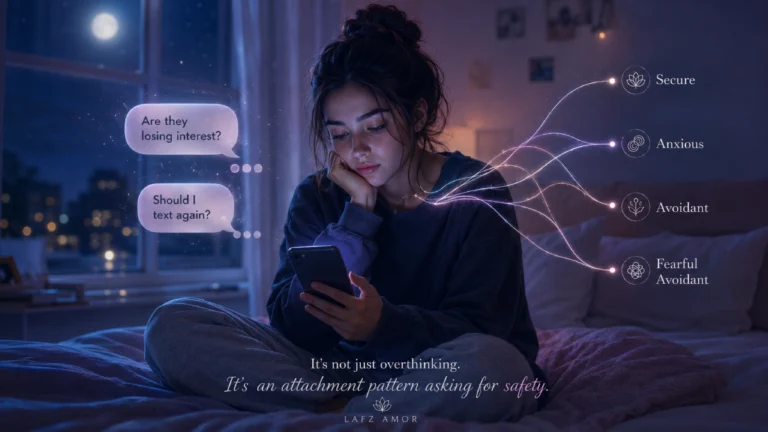
Getting attached easily can be connected to anxious attachment, especially if you often fear abandonment, need reassurance, overthink small changes, or feel emotionally unsafe when someone becomes distant.
If you have anxious attachment, you may bond quickly when someone gives you warmth because closeness feels like safety.
And when that closeness becomes uncertain, your emotional system may panic.
This is why a small delay in texting can feel huge.
This is why mixed signals can make you feel obsessed.
This is why someone’s attention can feel calming, and their distance can feel like emotional danger.
Anxious attachment often makes your heart ask:
“Do they still like me?”
“Are they losing interest?”
“Did I do something wrong?”
“Will they leave?”
“Am I too much?”
So yes, if you often wonder, “Why do I get emotionally attached so easily?”, anxious attachment may be part of the answer.
But it is not the only possible reason.
Loneliness, emotional neglect, past rejection, low self-worth, inconsistency, and unmet emotional needs can also make attachment form quickly.
The point is not to label yourself.
The point is to understand what your heart is trying to get from the connection.
Is it love?
Is it safety?
Is it validation?
Is it relief?
Is it fantasy?
That answer will tell you a lot.
Signs You Get Attached Too Fast
Getting attached too fast does not always look obvious at first.
Sometimes it looks like excitement.
Sometimes it looks like hope.
Sometimes it looks like finally feeling alive again.
But slowly, you may notice that someone you barely know has started taking up too much emotional space in your life.
Their text can change your mood.
Their silence can ruin your day.
Their small attention can make you feel chosen.
Their inconsistency can make you question your worth.
Here are the signs to notice gently.
Not to shame yourself.
But to understand your pattern before it starts controlling you.
1. You Start Imagining a Future Before You Know Their Pattern
Maybe you talked to them a few times, but your mind has already started building scenes.
What it would be like to date them.
How they would fit into your life.
How they might treat you.
How cute your relationship could be.
How different this could feel from the past.
You may not say these things out loud.
But inside, your heart starts creating a soft little movie.
And in that movie, they are consistent.
They choose you.
They understand you.
They become the version you need them to be.
The problem is not imagination.
The problem is when imagination becomes emotional investment before reality has shown enough proof.
What It Looks Like
This may look like:
- You imagine dating them seriously.
- You think about how they would fit into your life.
- You romanticize small gestures.
- You feel emotionally invested before consistency is proven.
- You imagine how they would support you.
- You start thinking of them as “different” very quickly.
- You feel disappointed when reality does not match the version in your head.
Sometimes, the future you imagine is beautiful.
But you need to ask:
“Did they actually show me this version, or did my heart create it because I wanted it so badly?”
That question can feel uncomfortable.
But it is powerful.
Why It Hurts
It hurts because you become attached to possibility before reality has shown up.
And possibility can be intoxicating.
Possibility does not disappoint you yet.
Possibility does not ignore your texts.
Possibility does not avoid clarity.
Possibility does not show mixed signals.
Possibility is perfect because it lives in your imagination.
Reality is different.
Reality shows patterns.
And patterns are where truth lives.
Micro Takeaway
Potential can feel beautiful, but consistency tells the truth.
Do not give someone a permanent place in your heart because of a temporary version they showed you.
Let time reveal them.
2. Their Attention Controls Your Mood
This is one of the clearest signs that you are getting attached too fast.
Their attention starts becoming emotional oxygen.
If they text, you feel good.
If they do not, your energy drops.
If they seem warm, you feel confident.
If they seem distant, you feel anxious.
If they compliment you, you feel special.
If they are quiet, you start questioning yourself.
And slowly, your day starts revolving around their availability.
You may still work, study, create, meet people, and do normal things.
But emotionally, a part of you stays near your phone.
Waiting.
Checking.
Hoping.
What It Looks Like
This may look like:
- Their text makes your day.
- Their silence ruins your mood.
- You feel calm only after they reply.
- You keep checking if they are online.
- You reread chats to feel close to them again.
- You feel restless when they do not respond.
- You compare their current energy to their earlier energy.
- You feel happy when they give attention and empty when they do not.
This is not just “liking someone.”
This is your emotional state becoming tied to their behavior.
And that can become painful when the person has not earned that level of emotional influence.
Why It Hurts
It hurts because your emotional stability starts depending on someone who may not have earned that place yet.
They may not even know how deeply they affect you.
They may be casually texting while you are emotionally investing.
They may be enjoying attention while you are building attachment.
They may be inconsistent because they are not serious, while your heart is already taking them seriously.
That gap can hurt.
Because you are not only waiting for a reply.
You are waiting to feel okay.
Micro Takeaway
Attention feels good, but it should not become your emotional oxygen.
Someone can matter to you without becoming the only reason your day feels lighter.
3. You Feel Deeply Hurt by Someone You Barely Know
This one can feel especially confusing.
Because logically, you know you did not know them deeply.
Maybe you only talked for a few days.
Maybe you never met properly.
Maybe it was a situationship.
Maybe they were never officially yours.
Maybe they never promised anything.
But when they stop texting, pull away, or act uninterested, it hurts like something real ended.
You may feel embarrassed by the intensity of your pain.
You may think, “Why am I hurt like this? We were nothing.”
But emotionally, it did not feel like nothing.
It felt like hope.
And when hope breaks, it can hurt even without a relationship label.
What It Looks Like
This may look like:
- They stop texting, and you feel heartbroken.
- They act distant, and you feel rejected.
- You miss them intensely after a short connection.
- You feel embarrassed by how much it affects you.
- You keep checking their social media.
- You replay moments that felt special.
- You wonder what you did wrong.
- You feel like you lost something, even though it was never fully yours.
This is common when you get attached to the emotional possibility of someone.
You may not be grieving the actual relationship.
You may be grieving what you thought it could become.
Why It Hurts
It hurts because your attachment may be to the emotional hope they created, not the actual relationship.
Maybe they made you feel like love could be simple.
Maybe they made you feel seen after a long time.
Maybe they gave you a version of attention that felt rare.
Maybe they awakened a part of you that had been quiet for too long.
So when they leave or change, it feels like that part goes quiet again.
That is painful.
Even if they were not “official.”
Micro Takeaway
Sometimes you are grieving the version of them your heart created.
And sometimes you are grieving the version of yourself who felt wanted around them.
Both griefs deserve gentleness.
4. You Ignore Red Flags Because the Good Feeling Is Too Strong
Fast attachment can make you protective of the fantasy.
You may notice red flags, but explain them away.
They are inconsistent, but you focus on the sweet moments.
They avoid clarity, but you tell yourself they are just scared.
They give mixed signals, but you believe the connection is special.
They disappear, but you remember the time they were warm.
This happens because the good feeling becomes powerful.
You do not want to lose it.
You do not want to admit that someone who made you feel special may not be emotionally safe.
So your mind starts negotiating with reality.
“Maybe they are busy.”
“Maybe they are bad at texting.”
“Maybe they are hurt from the past.”
“Maybe they like me but are scared.”
“Maybe I just need to be patient.”
Maybe.
But maybe they are also not showing consistency.
And that matters.
What It Looks Like
This may look like:
- They are inconsistent, but you focus on their sweet moments.
- They avoid clarity, but you keep hoping.
- They give mixed signals, but you explain them away.
- You confuse chemistry with compatibility.
- You ignore how anxious they make you feel.
- You defend them to yourself.
- You wait for the version of them that showed up in the beginning.
- You keep choosing hope over evidence.
This is where fast attachment can become risky.
Because the heart starts protecting the story instead of protecting you.
Why It Hurts
Fast attachment can make you protect the fantasy before you protect yourself.
You may become loyal to someone’s potential.
You may keep waiting for their best version to return.
You may accept confusion because the beginning felt meaningful.
But the beginning is not the full truth.
The pattern is.
A person is not only who they are when they are trying to impress you.
They are also who they become when clarity, consistency, effort, and emotional responsibility are needed.
Micro Takeaway
The way someone makes you feel once matters less than how they treat you repeatedly.
One sweet moment is not enough evidence for deep trust.
Let consistency speak louder than chemistry.
5. You Feel Chosen When Someone Gives Basic Attention
This sign is tender.
Because if care has felt rare, basic attention can feel huge.
Someone remembers your favorite song.
Someone asks if you ate.
Someone notices your mood.
Someone replies with warmth.
Someone compliments you sincerely.
Someone listens without rushing you.
And your heart feels deeply touched.
You may think, “No one does this for me.”
You may feel like this person is different.
You may start attaching because the attention feels intimate.
But sometimes, what felt extraordinary was actually basic kindness.
And that realization can hurt.
Not because kindness is meaningless.
Kindness matters.
But basic attention should not automatically become proof of love.
What It Looks Like
This may look like:
- They remember your favorite song, and it feels huge.
- They call you beautiful, and you replay it all day.
- They ask if you ate and you feel emotionally attached.
- Basic kindness feels rare and powerful.
- You feel special because they notice small things.
- You start trusting them because they gave warmth early.
- You feel deeply moved by simple care.
If you have not received consistent care, small care can feel overwhelming.
Your heart may say, “This is what I have been waiting for.”
But before you attach deeply, pause.
Ask whether the care is consistent.
Ask whether it comes with respect.
Ask whether it exists beyond moments of charm.
Why It Hurts
When care has felt scarce, even small attention can feel like proof of love.
This does not mean your reaction is silly.
It means your heart may be emotionally hungry.
And when the heart is hungry, crumbs can feel like a feast.
But you deserve more than crumbs.
You deserve a full pattern of care.
Not just occasional sweetness.
Not just attention when it is convenient.
Not just affection when they want access to you.
Micro Takeaway
Basic attention can feel intense when your heart has been emotionally hungry.
Receive it.
Enjoy it.
But do not confuse it with commitment until consistency proves it.
Why You Get Attached So Quickly: The Psychology Layer
Now let’s go deeper.
Because “I get attached too easily” is not really the full story.
The real question is:
“What is happening inside me when someone gives me attention?”
Fast attachment usually has emotional logic behind it.
It may come from anxious attachment.
It may come from loneliness.
It may come from unmet needs.
It may come from old inconsistency.
It may come from low self-worth.
It may come from romantic fantasy.
It may come from confusing intensity with safety.
And when you understand the psychology, you stop seeing yourself as “desperate.”
You start seeing the pattern.
That is where healing begins.
Reason 1: Attention Feels Like Proof That You Matter
Sometimes you attach quickly because someone’s attention gives you a temporary sense of worth.
Their interest makes you feel seen.
Their compliments make you feel beautiful.
Their curiosity makes you feel important.
Their replies make you feel remembered.
Their desire makes you feel chosen.
And if you have been feeling invisible, unwanted, replaceable, or emotionally overlooked, that attention can feel powerful.
Not because the person is necessarily right for you.
But because they are touching a part of you that wants confirmation:
“I matter.”
“I am lovable.”
“I am worth choosing.”
“I am not invisible.”
And for a little while, their attention gives you that feeling.
So you attach.
Not only to them.
But to the proof they seem to give.
Emotional Impact
You may not only miss the person.
You may miss who you felt like when they wanted you.
That is why their absence hurts so much.
Because when they leave or pull away, it can feel like they took that version of you with them.
The confident version.
The wanted version.
The glowing version.
But please remember this:
They did not create your worth.
They only reflected a small piece of ik to you.
Your worth was already there.
Their attention just made it easier for you to feel it.
Reason 2: You May Have Anxious Attachment
Anxious attachment can make people bond quickly because closeness feels like safety.
If you have anxious attachment, you may feel emotionally activated when someone shows interest.
You may crave connection, reassurance, and consistency.
You may fear rejection or abandonment.
You may start caring quickly because the connection gives you emotional relief.
And once you feel that relief, you do not want to lose it.
This is why you may get attached after one deep conversation.
Or after someone gives you steady attention for a few days.
Or after someone makes you feel emotionally safe for a moment.
Your heart may rush because uncertainty feels dangerous.
It wants to secure the bond quickly.
It wants to know, “Will you stay?”
Emotional Impact
Your heart may rush because waiting feels unsafe.
If love has felt unpredictable before, patience can feel scary.
You may want clarity quickly.
You may want reassurance quickly.
You may want commitment quickly.
Not because you are trying to control someone.
But because your emotional system struggles with uncertainty.
This is why healing anxious attachment is not about shaming your need for closeness.
It is about learning to slow down without feeling abandoned by the slow pace.
Reason 3: Loneliness Can Make Small Connection Feel Huge
Loneliness changes the emotional size of attention.
When you have been emotionally alone for a long time, one warm conversation can feel like rain after a drought.
Someone asks how you are, and it feels intimate.
Someone remembers your words, and it feels rare.
Someone texts you consistently for a few days, and it feels like emotional rescue.
This is not because you are weak.
It is because loneliness makes connection feel more intense.
When your emotional life has been dry, even a little warmth feels like a season changing.
And sometimes, you may mistake that relief for love.
You may think, “They are special.”
But maybe the deeper truth is:
“Not feeling alone felt special.”
That is an important distinction.
Emotional Impact
Sometimes you are not falling for the person.
You are falling for the feeling of finally not feeling alone.
And that feeling is valid.
But it is not always enough information to decide someone is safe, compatible, or emotionally available.
Loneliness can make the wrong person feel like home if they arrive at the right empty moment.
That is why you need slowness.
Not because your feelings are wrong.
But because lonely hearts can attach before reality is clear.
Reason 4: You Attach to Potential Instead of Pattern
Potential is beautiful.
It is also dangerous when you treat it like reality.
Maybe they could be caring.
Maybe they could become consistent.
Maybe they could love you deeply.
Maybe they could heal.
Maybe they could change.
Maybe they are just scared.
Maybe they are just busy.
Maybe they are different underneath.
But the question is:
What are they actually showing you repeatedly?
Fast attachment often happens when you fall in love with possibility before pattern.
You see the little signs.
Their sweetness.
Their depth.
Their charm.
Their vulnerability.
Their good moments.
And you build a whole emotional story around who they could become.
But relationships are not built on potential alone.
They are built on repeated behavior.
Emotional Impact
Hope can become painful when it asks you to ignore reality.
And sometimes, the hardest thing is not losing the person.
It is losing the fantasy of who you hoped they were.
That fantasy may have comforted you.
It may have given you something to look forward to.
But your heart deserves a person, not just a possibility.
Someone’s potential is not enough reason to keep abandoning your peace.
Reason 5: Uncertainty Creates Emotional Intensity
Mixed signals can make attachment stronger.
This sounds strange, but emotionally it happens a lot.
When someone is consistent, your body can relax.
When someone is inconsistent, your body keeps searching.
You wonder what changed.
You chase clarity.
You wait for the next good moment.
You remember their warmth.
You fear their distance.
You become emotionally focused on solving them.
This creates intensity.
And intensity can be mistaken for love.
A hot-and-cold person can become addictive because they give you both pain and relief.
They make you anxious, then they calm the anxiety.
They disappear, then they return.
They confuse you, then they make you feel special again.
And slowly, your attachment grows not from safety, but from uncertainty.
Emotional Impact
If someone is hot and cold, your attachment may grow from anxiety, not safety.
That does not mean your feelings are fake.
It means the relationship dynamic may be feeding the attachment.
So ask yourself:
“Do I feel attached because this person is consistently good for me?”
Or:
“Do I feel attached because I am trying to win back the version of them that made me feel chosen?”
The answer matters.
Reason 6: You Confuse Emotional Availability With Destiny
When someone listens to you, validates you, understands you, or makes space for your feelings, it can feel rare.
Especially if you are used to people dismissing you.
So when someone finally feels emotionally available, your heart may label it as destiny.
“This is different.”
“They understand me.”
“I have never felt this seen.”
“They get me.”
And maybe they do, in that moment.
But emotional availability at the beginning is not the same as long-term compatibility.
Someone can be emotionally present for a conversation and still not be ready for a relationship.
Someone can validate your feelings and still be inconsistent.
Someone can understand your pain and still not know how to love you steadily.
A safe moment is meaningful.
But a safe moment is not always a safe person.
Emotional Impact
A safe moment is not always a safe person.
Let that sit gently.
You can appreciate the moment without handing over your whole heart.
You can enjoy someone’s warmth while still observing their pattern.
You can feel moved by connection without rushing to call it fate.
This is emotional maturity.
Not coldness.
What Should You Do When You Get Attached Too Easily?
If you get attached easily, the answer is not to become emotionless.
Please do not turn your softness into an enemy.
You do not need to become cold.
You do not need to stop caring.
You do not need to punish yourself for having a heart that feels deeply.
You need to slow down the emotional handover.
That means you can feel something without immediately giving it full access to your peace.
You can like someone without building a future.
You can enjoy attention without making it proof of love.
You can stay open while still protecting yourself.
That is the balance.
Soft heart.
Clear eyes.
Step 1: Slow Down the Story Your Mind Is Building
When you get attached fast, your mind may start building a story before enough reality exists.
They are different.
They understand me.
This could be serious.
Maybe this is finally it.
I can see us together.
What if this works?
What if they are the one?
There is nothing wrong with hope.
But hope needs pacing.
Before you believe the whole story, pause and ask what you actually know.
Clear Action
Ask yourself:
- What do I actually know about this person?
- What am I imagining?
- What have they consistently shown?
- Am I attached to them or the possibility?
- Do I know their values or only their texting style?
- Have I seen how they handle conflict?
- Have they shown consistency over time?
- Am I feeling safe, or am I feeling excited?
These questions do not kill romance.
They protect you from giving fantasy the same power as reality.
Emotional Reassurance
You do not have to kill the feeling.
You only have to stop giving fantasy the same power as reality.
You are allowed to like someone.
You are allowed to feel hopeful.
You are allowed to enjoy the spark.
Bas itna yaad rakho: your heart deserves evidence before deep emotional investment.
Step 2: Look for Pattern, Not Potential
Potential asks, “What could they become?”
Pattern asks, “What are they repeatedly showing?”
Fast attachment usually loves potential.
Secure attachment watches pattern.
That is the shift.
Instead of asking, “Could they be good for me?”
Ask, “Are they actually good for me in repeated behavior?”
Someone can say beautiful things.
Someone can have deep conversations.
Someone can make you feel special.
But are they consistent?
Do they respect clarity?
Do they disappear when things get real?
Do they only give attention when it is convenient?
Do they treat you with care when they are not trying to impress you?
These questions matter.
Clear Action
Observe:
- Do they show up consistently?
- Do their words match actions?
- Do they respect clarity?
- Do they disappear after intimacy?
- Do they only give attention when convenient?
- Do they make you feel calm or constantly confused?
- Do they take responsibility when they hurt you?
- Do they communicate clearly, or keep you guessing?
Do not only observe how they make you feel.
Observe how they behave.
Feelings can be intense.
Patterns are informative.
Emotional Reassurance
Consistency is kinder than chemistry that keeps confusing you.
Chemistry may open the door.
Consistency decides whether someone should stay inside your emotional life.
Step 3: Keep Your Life Bigger Than Their Attention
When you start getting attached, your world can shrink around the person.
Their reply becomes the event of the day.
Their silence becomes the mood of the day.
Their attention becomes the emotional center.
This is where you need to gently bring yourself back to your own life.
Not as a game.
Not to make them chase you.
Not to look “busy.”
But because your life deserves to remain yours.
No person should become the whole sky before they have even proven they can hold a little weather with you.
Clear Action
Before checking their message again, do one thing that belongs to your life:
- Work
- Walk
- Journal
- Friend call
- Content creation
- Exercise
- Sleep
- Prayer or meditation
- A small routine
- Cleaning your space
- Reading something calming
- Cooking or eating properly
This sounds simple, but it is powerful.
Every time you return to your own life, you teach your nervous system:
“I can like someone and still belong to myself.”
That is secure energy.
Emotional Reassurance
Your world should not shrink around someone who has not yet earned that much emotional space.
You can care about them.
But please do not abandon your own life to wait at the door of theirs.
Step 4: Ask for Clarity Earlier, Not Desperately Later
Sometimes we avoid asking for clarity because we are afraid of the answer.
So we wait.
We guess.
We overthink.
We try to decode.
We hope they will make it obvious.
But the longer you wait in confusion, the more attached you may become.
Then, by the time you ask, you are not asking from calm.
You are asking from panic.
That is why earlier clarity is kinder.
Not immediate pressure.
Not heavy interrogation.
Just simple honesty.
Clear Action
Use simple scripts:
“I like talking to you, but I prefer clarity. What are you looking for right now?”
Or:
“I enjoy this connection, but I do not want to build expectations if we are not on the same page.”
Or:
“I am not asking for pressure. I just like knowing where things are going emotionally.”
Or:
“I like consistency, so I prefer honest communication instead of mixed signals.”
These sentences are not needy.
They are clear.
And clarity protects your heart from silent confusion.
Emotional Reassurance
Clarity is not neediness.
Clarity protects your heart from silent confusion.
The right person may not always have the exact answer you want, but they will respect the honesty of the conversation.
And if someone avoids every attempt at clarity, that avoidance is also information.
Step 5: Learn to Sit With the Feeling Without Chasing Relief
When attachment gets triggered, your body may want quick relief.
Text them.
Check if they are online.
Post something so they notice.
Reread the chat.
Ask a friend what their message means.
Send one more “casual” message.
But quick relief can strengthen the attachment loop.
Every time you chase relief, your nervous system learns, “I cannot handle this feeling unless they respond.”
Healing means slowly teaching yourself:
“I can feel this and not act immediately.”
This is hard.
But it is possible.
Clear Action
When you feel the urge to chase:
- Pause for 20 minutes.
- Write what you want to send.
- Do not send immediately.
- Ask what you need: reassurance, clarity, distraction, rest, or truth.
- Breathe slowly.
- Move your body.
- Drink water.
- Ask, “Will this action help me or just calm me for five minutes?”
- Respond from calm, not panic.
You are not ignoring the feeling.
You are learning to hold it.
That is different.
Emotional Reassurance
You can feel attached without letting the attachment control your next action.
You can miss someone without chasing them.
You can want a reply without begging for one.
You can feel anxious without making anxiety the author of your next message.
This is how you start becoming emotionally safer with yourself.
Step 6: Build Secure Attachment Habits
Secure attachment is not about becoming cold.
It is not about pretending you do not care.
It is not about never feeling anxious.
Secure attachment means you can feel deeply without losing yourself completely.
It means you can like someone and still observe them.
You can want closeness and still respect reality.
You can ask for clarity without shame.
You can walk away from inconsistency without making it a statement about your worth.
You can move slowly without shutting your heart.
That is the goal.
Clear Action
Practice:
- Self-soothing
- Direct communication
- Slower emotional pacing
- Choosing consistency
- Not romanticizing mixed signals
- Respecting your own boundaries
- Letting people prove themselves over time
- Keeping your routines alive
- Asking for clarity without panic
- Believing patterns more than promises
You do not build secure attachment in one day.
You build it through repeated moments where you choose truth over fantasy, calm over panic, and self-respect over emotional hunger.
Emotional Reassurance
You do not need to become cold.
You need to become emotionally safer with yourself.
There is a version of you that can love deeply without rushing.
That can feel attraction without surrendering peace.
That can care without self-abandoning.
That version is not far away.
It begins with one slower choice.
Common Mistakes People Make When They Get Attached Easily
When you get attached easily, you may try to protect yourself in ways that actually hurt you more.
You may shame yourself.
You may rush the connection.
You may ignore inconsistency.
You may pretend not to care.
You may try to become emotionless.
But healing does not come from self-punishment.
It comes from understanding what you are doing and choosing something gentler, wiser, and more protective.
Let’s look at the common mistakes with honesty.
Mistake 1: Calling Yourself Desperate
Many people who get attached easily call themselves desperate.
But that word is cruel.
It reduces your emotional hunger into an insult.
Maybe you are not desperate.
Maybe you are under-loved.
Maybe you are tired of being emotionally alone.
Maybe you are craving consistency.
Maybe you are used to people giving little, so little feels huge.
Maybe you have a heart that responds quickly to warmth because warmth has not always stayed.
That deserves understanding.
Not name-calling.
Why It Is Harmful
Calling yourself desperate turns emotional hunger into shame.
And shame does not help you slow down.
It makes you hide.
It makes you pretend.
It makes you accept less because you think wanting more is embarrassing.
But your need for love is not embarrassing.
Your need for care is not shameful.
The pattern may need healing.
But the need itself is human.
Emotional Consequence
You may hide your needs instead of understanding them.
And hidden needs do not disappear.
They become anxiety.
They become fantasy.
They become attachment to people who give you small signs of care.
So instead of saying, “I am desperate,” try saying:
“I am emotionally hungry, and I need to learn how to feed myself with care, not just wait for someone else to do it.”
That is a kinder truth.
Mistake 2: Confusing Fast Feelings With Real Love
Fast feelings can be beautiful.
They can feel exciting, soft, hopeful, and alive.
But they are not always love.
Sometimes they are attraction.
Sometimes they are relief.
Sometimes they are fantasy.
Sometimes they are your attachment system waking up.
Sometimes they are the feeling of being chosen after feeling unseen for too long.
And if you call it love too quickly, you may start giving too much too soon.
Too much loyalty.
Too much emotional access.
Too much patience.
Too many excuses.
Too much waiting.
Why It Is Harmful
Love needs time, truth, consistency, and reality.
If you skip those, you may fall for a version of someone that has not been tested by real life.
You may love their attention, not their character.
You may love their potential, not their pattern.
You may love the feeling, not the full person.
That is why fast attachment can hurt so much.
Because the feeling is real, but the foundation is not strong.
Emotional Consequence
You may give relationship-level loyalty to someone who gave you only talking-stage attention.
And that is painful.
Because your heart starts waiting for commitment from someone who only gave conversation.
Your loyalty deserves a place where it is matched.
Not imagined.
Mistake 3: Ignoring Inconsistency Because the Beginning Felt Special
The beginning can be powerful.
Maybe they were sweet.
Maybe they replied quickly.
Maybe they made an effort.
Maybe they made you feel important.
Maybe the conversation felt rare.
So when they start becoming inconsistent, you hold onto the beginning.
You think:
“But they were so different at first.”
“But I know they can be caring.”
“But maybe they are just going through something.”
“But that connection was real.”
Maybe it was real.
But the beginning is not the whole relationship.
People can be wonderful in the beginning and inconsistent later.
The beginning shows possibility.
The pattern shows truth.
Why It Is Harmful
The beginning shows possibility.
Patterns show truth.
If you keep chasing the old version of someone, you may ignore who they are being now.
And the present version is the one you are actually in a relationship with.
Not the first-week version.
Not the late-night-call version.
Not the sweet-message version.
The current pattern.
That is what matters.
Emotional Consequence
You keep chasing the old version of them instead of accepting the present version.
And this keeps you stuck in hope.
Hope can be beautiful.
But when hope keeps asking you to ignore repeated hurt, it becomes a cage.
Mistake 4: Letting Their Attention Decide Your Worth
When someone’s attention decides your worth, your self-esteem becomes unstable.
If they choose you, you feel valuable.
If they ignore you, you feel unwanted.
If they compliment you, you feel beautiful.
If they pull away, you feel not enough.
This gives too much power to someone who may not even know how deeply they affect you.
They may be casual.
You may be emotionally invested.
They may be inconsistent.
You may be making their inconsistency mean something about your value.
But someone’s ability to see your worth is not the same as your worth.
Some people cannot value what is in front of them.
Some people enjoy attention without offering care.
Some people are emotionally unavailable.
Some people are confused.
Some people are simply not your people.
Their behavior is information about compatibility and capacity.
Not a final verdict on your lovability.
Why It Is Harmful
It gives too much power to someone who may not even know how deeply they affect you.
Your worth starts rising and falling with their mood.
That is too heavy.
No talking-stage person should hold that much authority over your self-image.
Emotional Consequence
You feel high when they choose you and worthless when they do not.
That emotional swing can become addictive.
But you deserve a more stable relationship with yourself.
A kind of self-worth that does not collapse every time someone fails to show up.
Mistake 5: Trying to Detach by Becoming Emotionless
After getting hurt, you may decide:
“That’s it. I will not feel anymore.”
“I will not care.”
“I will become cold.”
“I will never get attached again.”
It makes sense.
Pain can make coldness look safe.
But emotional shutdown is not healing.
It is protection.
Sometimes necessary for a while, but not a place to live forever.
You do not need to become emotionless to stop getting attached too easily.
You need discernment.
You need pacing.
You need self-trust.
You need to learn who deserves access to your emotional depth.
Your softness is not the enemy.
The lack of protection around your softness is the problem.
Why It Is Harmful
Emotional shutdown is not healing.
It may stop pain temporarily, but it can also block healthy love.
You may start rejecting good people because you are afraid of repeating old hurt.
You may become distant when someone is actually safe.
You may confuse numbness with strength.
But numbness is not peace.
Peace still lets you feel.
It just does not let feelings destroy you.
Emotional Consequence
You may protect yourself from pain, but also block yourself from healthy love.
And deep down, you do not want to become someone who feels nothing.
You want to become someone who feels deeply and chooses wisely.
That is the real healing.
When Should You Walk Away?
Getting attached easily does not mean you should stay with everyone you care about.
This is important.
Your feelings may be real.
But real feelings are not always a reason to stay.
Sometimes attachment tells you where you are emotionally invested.
It does not always tell you where you are safe.
So when do you walk away?
Not because you are trying to be harsh.
But because your heart needs protection.
Walk Away When They Keep You Emotionally Hungry
If someone gives small attention but no consistency, your attachment may keep growing while your safety keeps shrinking.
They text when they feel like it.
They are sweet when it is convenient.
They disappear when things require clarity.
They give enough to keep you hoping, but not enough to make you feel secure.
That kind of connection can make you emotionally hungry.
And hunger can make small crumbs feel valuable.
But you deserve more than emotional crumbs.
If someone repeatedly gives you attention without consistency, ask yourself:
“Am I being loved, or am I being kept emotionally available?”
That question may sting.
But it can save you.
Walk Away When They Avoid Clarity
Clarity is not pressure.
Clarity is basic emotional respect.
If you ask respectfully what they want and they keep you confused, that confusion may be the answer.
Someone who wants something real may still need time.
But they will not keep using vagueness to keep access to you.
If every attempt at clarity becomes:
“Let’s not label it.”
“Why are you overthinking?”
“Just go with the flow.”
“I don’t know, but I like you.”
“We’ll see.”
Then you need to ask whether “flow” is actually just confusion with better branding.
You can be patient with uncertainty for a while.
But do not build a home inside it.
Walk Away When You Are Attached to Potential, Not Reality
This one requires honesty.
Are you attached to how they treat you now?
Or who they could become?
Are you attached to their consistent care?
Or their rare good moments?
Are you attached to their character?
Or the future you imagined?
Are you attached to the person?
Or the possibility?
If you are more in love with who they could be than how they actually treat you, pause.
Potential can make you wait for someone who is not arriving.
And sometimes the most loving thing you can do for yourself is stop dating someone’s imagined future and look at their present pattern.
Walk Away When You Keep Losing Yourself
If your sleep, focus, self-worth, and peace depend on their attention, the connection may be costing too much.
Love should affect you.
But it should not erase you.
If you cannot work properly because they did not reply.
If you cannot sleep because they became distant.
If you cannot feel good about yourself unless they validate you.
If you keep abandoning your routines, friends, creativity, studies, work, health, or peace for someone inconsistent, something is wrong.
Not with your heart.
With the amount of power this connection has been given.
Walk away when staying requires you to keep disappearing from yourself.
Reality Check
Getting attached easily does not mean every person deserves access to your heart.
Your feelings may be real, but real feelings still need wise decisions.
You can care and still slow down.
You can miss someone and still choose distance.
You can feel attached and still admit, “This is not good for me.”
That is not weakness.
That is emotional maturity.
Final Thoughts: You Are Not Weak, Your Heart Is Looking for Safety
Maybe you get attached easily because attention has felt rare.
Maybe you attach fast because being chosen feels like relief.
Maybe you care quickly because your heart has been waiting for someone to finally stay.
Maybe one sweet message feels powerful because you have spent too long feeling unseen.
Maybe you are not desperate.
Maybe you are just tired of connections that make you feel invisible.
But your softness is not the problem.
Your heart is not the enemy.
Your ability to care deeply is not something you should destroy.
The problem begins when you give deep emotional access to people who have not shown deep emotional consistency.
Tum weak nahi ho.
Tumhara dil bas connection ko seriously leta hai.
And honestly, there is something beautiful about that.
But now, that beautiful heart needs protection.
Not walls so high no one can enter.
Not coldness.
Not emotional games.
Just wisdom.
A little slowness.
A little observation.
A little self-respect.
A little pause before your heart starts building a home in someone who only offered a window.
You can learn to slow down.
Not to punish yourself.
Not to become emotionally unavailable.
Not to act like you do not care.
But to protect the part of you that loves deeply.
Because that part deserves someone consistent.
Someone clear.
Someone emotionally safe.
Someone who does not make small attention feel like a miracle because their care is steady enough to become normal.
Until then, let people show you who they are over time.
Let consistency matter more than chemistry.
Let reality speak louder than fantasy.
Let your life stay bigger than one person’s attention.
And when you start asking, “Why do I get attached so easily?”, answer yourself gently:
“Because I want love to feel safe. And now I am learning how to choose safety, not just intensity.”
That is healing.
Not becoming cold.
Becoming clear.
Read Next
If this blog helped you understand your emotional pattern, read these next:
- Anxious Attachment in Relationships
- Anxious vs Avoidant Attachment
- How to Become Secure in Relationships
Start with the one that feels closest to your current pain.
If you get anxious when someone pulls away, read about anxious attachment.
If you keep getting stuck with emotionally distant people, read about anxious vs avoidant attachment.
If you are tired of feeling emotionally controlled by attention, read about becoming secure in relationships.
Because healing does not mean you stop feeling.
It means you start choosing where your feelings are safe to live.