Anxious Attachment Signs in Relationships: Why You Panic
Do You Feel Anxious Even When the Relationship Seems Fine?
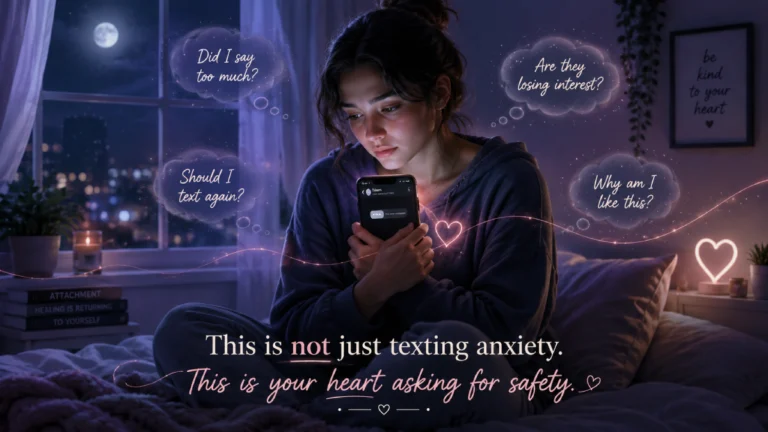
Have you ever felt calm one moment, and then completely anxious after one late reply?
Maybe they did not say anything wrong.
Maybe they were just busy.
Maybe nothing actually happened.
But still, your mind starts running.
“Why are they replying differently?”
“Did I do something wrong?”
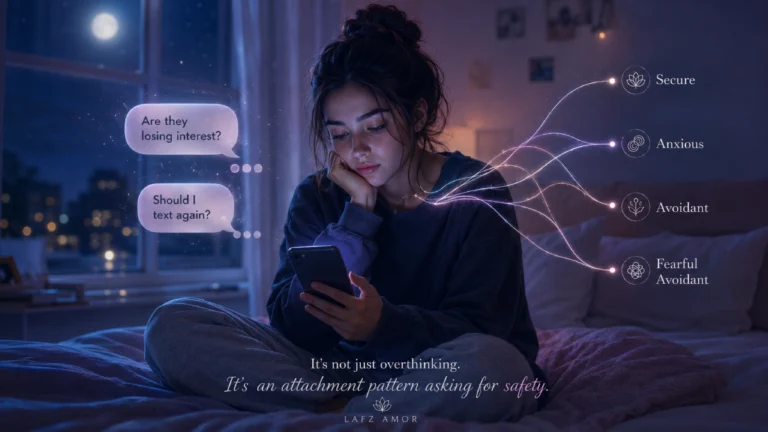
“Are they losing interest?”
“Why do I feel this scared over one message?”
And the hardest part is, you may already know you are overthinking.
You may tell yourself, “Relax, it is not that deep.”
But your body does not relax.
Your chest feels tight. Your mood drops. You keep checking your phone. You replay the last conversation. You look for small signs that something has changed.
It can feel confusing when a relationship is technically “fine,” but emotionally, you do not feel fine at all.
This is where understanding anxious attachment signs in relationships can help.
Not because you need another label to judge yourself with.
But because sometimes, the moment you understand what is happening inside you, the shame becomes a little softer.
You stop thinking, “Why am I like this?”
And start asking, “What is my fear trying to tell me?”
Maybe one small change in their tone changes your whole mood
Maybe you have noticed this pattern.
They reply with “okay” instead of “okayyy.”
They do not use the same emoji.
They seem a little less excited.
They say they are tired, but your mind hears, “They are tired of me.”
A small shift becomes a whole emotional storm.
And then you start trying to solve the mystery.
You reread chats.
You check when they were last online.
You wonder whether you should text again or wait.
You compare today’s energy with yesterday’s energy.
Inside, it may feel like you are not just waiting for a message.
You are waiting for proof that you still matter.
That is the emotional weight of anxious attachment.
A simple delay can feel like distance.
A quiet mood can feel like rejection.
A need for space can feel like the beginning of abandonment.
And if this happens to you, it does not automatically mean you are weak, dramatic, or “too much.”
It may mean your nervous system has learned to treat emotional uncertainty like danger.
The confusing part is that you know you are overthinking, but you still cannot stop.
This is one of the most painful parts of anxious attachment.
You can be self-aware and still feel anxious.
You can understand that they may be busy and still feel abandoned.
You can know your reaction is bigger than the situation and still not be able to calm down.
You can tell yourself, “I should not need this much reassurance,” and still desperately want them to say, “We are okay.”
That inner conflict can feel exhausting.
Because one part of you wants to be mature, calm, and secure.
But another part of you is scared.
Scared they will leave.
Scared they will change.
Scared you will become attached and then be abandoned.
Scared that if you do not notice the signs early, you will get hurt again.
Anxious attachment does not always look loud from the outside.
Sometimes it looks like quietly checking your phone while pretending you are fine.
Sometimes it looks like typing a message, deleting it, then typing it again.
Sometimes it looks like saying “I’m okay” when your entire body is asking, “Please don’t leave.”
Micro Takeaway
Anxious attachment is not simply “being needy.”
It is often your nervous system trying to feel safe in a relationship that feels uncertain.
And once you understand that, you can begin to respond to yourself with more compassion and more clarity.
What Is Anxious Attachment in Relationships?
Anxious attachment in relationships is a pattern where love feels deeply important, but emotional distance feels threatening.
You may crave closeness, consistency, and reassurance.
But when your partner becomes quiet, busy, unavailable, or emotionally unclear, your mind may quickly move into fear.
You may start imagining rejection before it happens.
You may feel abandoned even when the person has not left.
You may need reassurance, not because you want to control them, but because your body is trying to calm itself through their response.
In simple words:
Anxious attachment means your emotional safety can become strongly connected to how available, affectionate, and consistent the other person feels.
Simple meaning of anxious attachment
Anxious attachment often shows up when closeness feels necessary for emotional peace.
When things are good, you may feel deeply connected, loving, and invested.
But when there is distance, even normal distance, your anxiety may rise quickly.
A late reply may feel personal.
A changed tone may feel dangerous.
A cancelled plan may feel like rejection.
A partner needing space may feel like they are slowly leaving.
It is not always logical.
But emotionally, it feels very real.
Anxious attachment is often linked to earlier experiences of inconsistency, rejection, emotional neglect, abandonment, or relationships where love felt unpredictable.
Maybe affection was available sometimes, but not always.
Maybe you had to earn attention.
Maybe you learned to scan people’s moods to feel safe.
Maybe someone important left without proper emotional closure.
So now, in adult relationships, your mind may try to protect you by noticing every small change.
It thinks it is helping.
But sometimes, it turns love into a full-time emotional investigation.
Anxious attachment is not the same as being needy
Let’s say this clearly.
Wanting reassurance is not wrong.
Wanting consistency is not wrong.
Wanting emotional clarity is not wrong.
Wanting to feel chosen, loved, and safe in a relationship is not wrong.
You are not “too much” for wanting love to feel steady.
But anxious attachment becomes painful when your emotional peace depends completely on someone else’s attention, replies, mood, affection, or availability.
That is when love starts feeling less like connection and more like survival.
You are not just enjoying the relationship.
You are constantly checking whether it is still safe.
And that can drain you.
It can also put pressure on the relationship, because instead of asking for calmness, you may start asking for panic.
There is a difference between:
“I need emotional consistency in love.”
And:
“If they do not reply right now, I cannot breathe emotionally.”
The first is a healthy need.
The second is an attachment wound asking for safety.
Both deserve compassion.
But they need different kinds of care.
Quick featured snippet answer
Anxious attachment signs in relationships include fear of abandonment, overthinking texts, needing frequent reassurance, feeling emotionally unsafe during distance, people-pleasing, jealousy, difficulty trusting love, and panic when a partner pulls away.
11 Anxious Attachment Signs in Relationships
Before you read these signs, pause for a moment.
This list is not here to make you feel exposed.
It is here to help you understand your emotional patterns without shame.
You may relate to some signs strongly and others only a little. That is okay.
Attachment patterns are not always boxes. Sometimes they are emotional fingerprints.
1. You overthink every text, reply time, and tone change
What this looks like
Maybe you notice everything.
How long they took to reply.
Whether their message felt warm or dry.
Whether they used your nickname or not.
Whether they said “goodnight” the same way.
Whether they watched your story but did not reply.
You may reread old chats to compare their energy.
You may start asking yourself, “Were they more interested before?”
And suddenly, one small message becomes emotional evidence.
A simple “hmm” feels cold.
A delayed reply feels suspicious.
A shorter text feels like the start of distance.
This is one of the most common anxious attachment signs in relationships, especially in modern dating where so much emotional security gets filtered through screens.
Why it happens
Texting gives anxious attachment a lot to analyze.
There is timing.
Tone.
Frequency.
Emojis.
Typing speed.
Seen status.
Online status.
For someone with anxious attachment, these tiny signals can feel like emotional clues.
Your brain may be trying to predict abandonment before it happens.
It is almost like your mind says:
“If I notice the change early, maybe I can stop the pain.”
But the problem is, not every change means danger.
Sometimes a late reply is just a late reply.
Sometimes a dry text is tiredness.
Sometimes silence is not rejection.
But when your attachment system is activated, your fear may speak louder than the facts.
Emotional impact
You are not just waiting for a reply.
You are waiting for relief.
Your phone becomes more than a device. It becomes a tiny emotional weather station.
One message and the day feels bright.
One silence and everything feels heavy.
That is not because you are silly.
It is because your nervous system has started using their response as proof of safety.
Micro takeaway
Texting anxiety is often anxious attachment trying to find certainty through small digital signals.
The goal is not to stop caring.
The goal is to stop letting every notification decide your emotional worth.
2. You need constant reassurance that they still love you
What this looks like
You may often ask:
“Do you still love me?”
“Are we okay?”
“Are you mad at me?”
“Are you losing feelings?”
“Do you really want me?”
Sometimes you may not ask directly.
Instead, you may test.
You may become quiet and see if they notice.
You may pull away to check if they chase.
You may ask indirect questions to see how much they care.
And when they reassure you, you feel better.
For a while.
Then the fear comes back.
Why it happens
When love has felt inconsistent before, reassurance can become emotional oxygen.
You may not be asking because you want to annoy them.
You may be asking because uncertainty feels unbearable.
Your mind may be trying to close the gap between what you fear and what you need to hear.
But reassurance can become a loop.
Anxiety rises.
You ask for reassurance.
They comfort you.
You feel calm.
Then another trigger appears.
The anxiety returns.
This cycle can feel frustrating because you may think, “Why can’t I just believe them?”
But anxious attachment often struggles to trust safety when fear has been practiced for years.
Emotional impact
You may feel embarrassed about needing reassurance.
You may worry they will get tired of you.
So now you need reassurance about needing reassurance.
That is the spiral.
And it can feel lonely, because you are not only scared of losing the person.
You are also scared that your fear itself will push them away.
Micro takeaway
Reassurance is not bad.
But if reassurance is the only thing that calms you, your inner safety also needs attention.
You deserve love from them, yes.
But you also deserve a relationship with yourself where panic is not always in charge.
3. You feel scared when your partner needs space
What this looks like
Your partner says:
“I need some time alone.”
“I am busy today.”
“I just want to relax.”
“I need space.”
And suddenly, your stomach drops.
You may understand that space is normal.
But emotionally, it feels like rejection.
You may think:
“They are getting bored.”
“They are pulling away.”
“They do not want me anymore.”
“This is how it starts.”
“They will leave slowly.”
You may try to close the distance quickly.
Text more.
Ask questions.
Seek reassurance.
Become upset.
Try to fix a problem that may not even exist.
Why it happens
Anxious attachment can make distance feel dangerous.
If closeness is where you feel safe, then space may feel like a threat.
Even healthy space can activate old fears.
This does not mean you are incapable of respecting someone’s independence.
It means your nervous system may interpret distance as abandonment before your logical mind gets a chance to respond.
Emotional impact
Their space feels like your abandonment.
And that is a painful place to live from.
Because relationships need both closeness and breathing room.
But when space feels unsafe, you may start seeing normal independence as emotional withdrawal.
Micro takeaway
Someone needing space does not always mean they are leaving.
But your fear deserves care, not shame.
The healing question is:
“Can I let them have space without abandoning myself in the waiting?”
4. You become hyper-aware of small emotional shifts
What this looks like
You notice everything.
Their voice sounds different.
Their replies feel slower.
Their excitement feels less.
Their hugs feel shorter.
Their attention seems divided.
Their social media activity feels suspicious.
You may sense changes other people would miss.
And sometimes, you may be right.
But sometimes, your anxiety may turn small neutral things into big emotional warnings.
This can make relationships feel like constant scanning.
You are not just being present.
You are monitoring.
Why it happens
Hyper-awareness often comes from learning that emotional safety depends on noticing changes quickly.
Maybe in the past, someone’s mood affected how they treated you.
Maybe love felt unpredictable.
Maybe you had to read between the lines because people did not communicate clearly.
So now your mind watches closely.
It tries to protect you by staying alert.
But constant alertness can become exhausting.
It keeps your body in a state of “something might go wrong.”
Emotional impact
You may feel emotionally tired even when nothing major has happened.
Because your nervous system is working in the background all the time.
Reading.
Checking.
Predicting.
Preparing.
It is not peace.
It is emotional surveillance.
Micro takeaway
Hyper-awareness is often a survival habit, not emotional weakness.
But you do not have to live like every small shift is a warning siren.
5. You feel like you love harder than the other person
What this looks like
You may feel like you are always the one who cares more.
You initiate more.
You wait more.
You forgive more.
You worry more.
You notice more.
You try harder.
Even when they love you, it may not feel like enough.
Because your anxiety keeps measuring.
“Would they do for me what I do for them?”
“Do they miss me as much as I miss them?”
“Do they feel this deeply too?”
“Why am I always the one affected more?”
This can create a quiet ache.
You may love them, but also feel emotionally alone in that love.
Why it happens
Anxious attachment can create a deep hunger for emotional proof.
You may give more because giving feels like a way to secure closeness.
You may think:
“If I love them enough, maybe they will stay.”
“If I am understanding enough, maybe they will choose me.”
“If I make myself valuable enough, maybe they will not leave.”
But love should not feel like an audition.
Emotional impact
Over time, you may start feeling resentful.
Not because you do not love them.
But because you are tired of feeling like your heart is always reaching first.
That kind of emotional imbalance can quietly break you.
Micro takeaway
Loving deeply is beautiful.
But losing yourself to feel chosen is not love’s highest form.
It is fear wearing devotion’s clothes.
6. You fear being abandoned even when there is no clear proof
What this looks like
Everything may seem okay.
They may still be with you.
They may still care.
They may still show up.
But your mind prepares for loss anyway.
You may imagine the breakup before it happens.
You may feel scared when things are too good.
You may think:
“What if they change?”
“What if they find someone better?”
“What if I get too attached and then they leave?”
“What if I am happy now only to be hurt later?”
This kind of fear can steal joy from the present.
Even when love is here, your mind is already grieving a possible ending.
Why it happens
Fear of abandonment is one of the strongest anxious attachment signs in relationships.
It may come from past experiences where people left, changed, disappeared, rejected you, or made love feel unstable.
Your brain remembers emotional pain.
So when you start caring deeply, it may try to prepare you.
Not because it wants to ruin your happiness.
But because it does not want you to be surprised by pain again.
Emotional impact
You may struggle to enjoy love because you are busy protecting yourself from losing it.
That is a heartbreaking way to love.
The person may be sitting beside you, but emotionally, you are already imagining the empty chair.
Micro takeaway
Sometimes your body reacts to the past while your present is still unfolding.
That does not make your fear fake.
It means it needs gentleness and reality-checking.
7. You people-please to avoid conflict or rejection
What this looks like
You may say yes when you want to say no.
You may hide your hurt because you do not want to seem difficult.
You may apologize even when you are not wrong.
You may avoid asking for your needs because you fear they will leave.
You may accept less than you want because something feels better than nothing.
On the outside, you may seem understanding.
But inside, you may feel unseen.
Why it happens
For someone with anxious attachment, conflict can feel dangerous.
A disagreement may not feel like a normal relationship moment.
It may feel like the beginning of rejection.
So you try to stay lovable.
You become easy.
Agreeable.
Flexible.
Low-maintenance.
But sometimes, what you call being “chill” is actually self-abandonment.
Why it is harmful
People-pleasing can keep the relationship peaceful on the surface, but emotionally painful underneath.
Because your real feelings do not disappear.
They collect.
They become resentment.
Sadness.
Emotional exhaustion.
Quiet disappointment.
You may keep the person close, but lose closeness with yourself.
Micro takeaway
Being loved for your silence is not the same as being loved for who you are.
A healthy relationship should have room for your needs, not just your patience.
8. You feel jealous or threatened easily
What this looks like
You may feel triggered by their ex.
Their attractive friend.
A new follower.
Their online activity.
Them liking someone’s post.
Them being emotionally open with another person.
Even if nothing clearly wrong is happening, jealousy may rise quickly.
You may compare yourself.
“Are they better than me?”
“Would my partner choose them?”
“Am I replaceable?”
“Why did they laugh like that with them?”
This jealousy may embarrass you.
You may not want to feel it.
But it still appears.
Why it happens
In anxious attachment, jealousy is often less about control and more about fear of replacement.
You may not simply want to restrict your partner.
You may be trying to feel secure that your place in their life is safe.
But jealousy can become harmful when fear starts creating stories without enough evidence.
Emotional consequence
You may start comparing yourself to people who are not even competing with you.
And that slowly damages your confidence.
You stop seeing yourself clearly.
You see yourself through the fear of being left.
Micro takeaway
Jealousy is often a signal.
Not always a truth.
Ask yourself:
“Is this person actually threatening my relationship, or is this touching my fear of not being enough?”
9. You struggle to trust calm love
What this looks like
This one can feel strange.
You may say you want healthy love.
But when love is calm, consistent, and respectful, you may feel confused.
You may wonder:
“Do I really like them?”
“Why is there no intensity?”
“Is something missing?”
“Why am I not obsessed?”
“Is this boring, or is this safe?”
If you are used to emotional highs and lows, calm love can feel unfamiliar.
And unfamiliar can feel wrong.
Why it happens
Anxious attachment can confuse intensity with connection.
If past relationships were full of uncertainty, chasing, waiting, and emotional highs, your brain may have learned that love should feel consuming.
So when someone is steady, your nervous system may not recognize it immediately.
It may even search for problems because peace feels suspicious.
Emotional impact
You may reject safe love because it does not activate the same emotional chaos.
Not because you are broken.
But because your body may need time to learn that calmness is not emptiness.
Sometimes peace feels boring only because your nervous system is used to storms.
Micro takeaway
Healthy love may not always feel like a movie scene.
Sometimes it feels like not having to earn someone’s affection every day.
10. You panic when they pull away, even slightly
What this looks like
When they become distant, you may feel an urgent need to fix it.
You may send more messages.
You may ask what happened.
You may apologize even if you do not know what for.
You may try to become more loving, more available, more understanding.
You may feel unable to focus on anything else.
Their distance becomes the center of your emotional world.
And the more they pull away, the more you want to pull them closer.
Why it happens
Anxious attachment often creates a chase response.
When closeness feels threatened, your system tries to restore connection quickly.
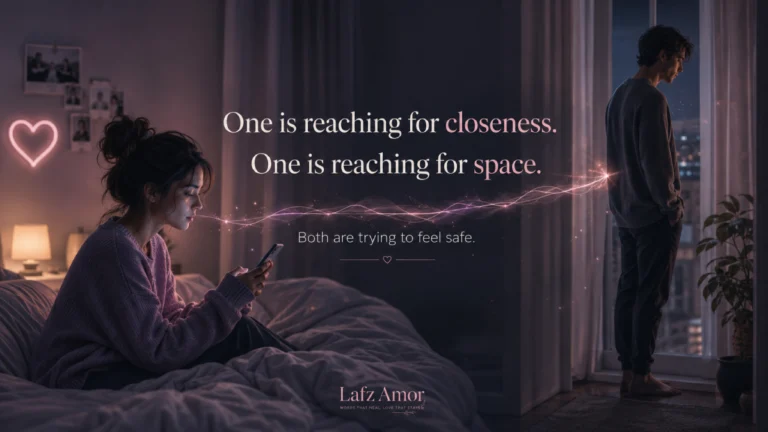
This can happen especially in anxious-avoidant dynamics.
One person seeks closeness to feel safe.
The other seeks distance to feel safe.
Then both people trigger each other.
The anxious person feels abandoned.
The avoidant person feels pressured.
The anxious person chases more.
The avoidant person withdraws more.
And the relationship becomes a push-pull cycle.
Emotional impact
This can feel addictive.
Not because the relationship is healthy.
But because the relief after reconnection feels so powerful.
When they finally come back, your body feels calm again.
And that calm can feel like love.
But sometimes, it is just relief after emotional panic.
Micro takeaway
The more someone’s distance controls your nervous system, the more important it becomes to ask:
“Is this connection giving me love, or only relief from anxiety?”
11. You lose yourself when you are emotionally attached
What this looks like
Your whole mood may start depending on the relationship.
If they are affectionate, you feel worthy.
If they are distant, you feel empty.
If they reply warmly, your day improves.
If they seem off, your confidence collapses.
You may stop focusing on your own life.
Your routines shift.
Your hobbies fade.
Your friendships become secondary.
Your goals feel less important.
The relationship becomes your emotional center.
Maybe even your identity.
Why it happens
Anxious attachment can make love feel like home, safety, and survival at the same time.
So when you get attached, your emotional system may organize itself around the person.
Their behavior becomes your signal.
Their affection becomes your proof.
Their attention becomes your medicine.
But no one person can safely carry your whole sense of self.
That is too much weight for any relationship.
Why it matters
Love should matter deeply.
But it should not become the only place where you feel valuable.
When your whole self-worth lives inside someone else’s response, you become emotionally homeless every time they are unavailable.
Micro takeaway
A healthy relationship should add to your life.
It should not erase you from it.
Why Anxious Attachment Happens: The Psychology Layer
If you relate to these anxious attachment signs in relationships, you may feel tempted to blame yourself.
You may think:
“I am too sensitive.”
“I ruin everything.”
“I should be more secure.”
“Why can’t I just relax?”
But anxious attachment usually does not appear from nowhere.
It often grows from emotional experiences that taught your nervous system to stay alert.
Let’s understand the deeper layer gently.
1. Inconsistent love can create emotional uncertainty
What this means
When love feels unpredictable, the nervous system learns to watch closely.
Maybe someone important in your life was warm sometimes and distant other times.
Maybe affection depended on their mood.
Maybe you had to behave perfectly to receive care.
Maybe attention came and went without explanation.
So you learned to scan.
“Are they happy with me?”
“Are they upset?”
“Will they leave?”
“What changed?”
This pattern can continue in romantic relationships.
Even when your partner is not doing anything terrible, your body may still be looking for signs that love is about to disappear.
Relationship example
Your partner becomes quiet after a long day.
They are tired.
But your nervous system reads it as:
“They are pulling away.”
So instead of thinking, “They need rest,” you feel panic.
This is how old emotional learning can shape present-day reactions.
Emotional clarity
Your anxiety may not be about this one moment only.
It may be about every past moment where emotional distance meant pain.
That does not mean the fear is always accurate.
But it does mean it deserves compassion.
2. Past abandonment can make present distance feel dangerous
What this means
If you have been abandoned, rejected, replaced, ghosted, betrayed, or emotionally left before, your body may remember.
Even if your mind says, “This person is different,” your nervous system may say, “We have seen this before.”
That is why a small distance can feel huge.
A delayed reply does not feel like a delay.
It feels like the first chapter of being left again.
Emotional line
Sometimes you are not only afraid of losing this person.
You are afraid of feeling that old pain again.
That is why your reaction may feel bigger than the situation.
You are not only responding to what happened today.
You may also be responding to what once broke something inside you.
Practical insight
When you feel activated, ask:
“Is this fear about what is happening right now, or what I am afraid will happen again?”
That one question can create a little space between your past and your present.
Not full peace immediately.
But enough room to breathe.
3. Mixed signals can activate anxious attachment
What this means
Mixed signals are emotional chaos for anxious attachment.
One day they are warm.
The next day they are distant.
Then they come back sweetly.
Then they disappear again.
This creates confusion.
Your brain starts trying to decode them.
“Which version is real?”
“Do they care or not?”
“Are they scared or uninterested?”
“Should I wait or leave?”
Hot and cold behavior can make anxious attachment stronger because your emotional system keeps chasing the warm version.
The loving version.
The available version.
The version that made you feel chosen.
Why it becomes addictive
When affection is inconsistent, every loving moment feels powerful.
Not because it is always healthy.
But because it gives relief after uncertainty.
This creates a reward cycle.
Pain.
Waiting.
Anxiety.
Then affection.
Then relief.
And the relief can feel like deep love.
But sometimes, what feels like chemistry is actually your nervous system reacting to unpredictability.
Emotional clarity
If someone’s love constantly makes you anxious, confused, and hungry for proof, do not only ask, “Why am I so attached?”
Also ask:
“What kind of emotional pattern is this relationship training my body to accept?”
4. Low self-worth can make love feel like proof of value
What this means
When your self-worth is fragile, someone’s attention can feel like evidence that you are lovable.
Their affection becomes proof.
Their reply becomes validation.
Their interest becomes identity.
So when they pull away, it may not only feel like losing them.
It may feel like losing your sense of worth.
You may think:
“If they do not choose me, maybe I am not enough.”
That is a heavy belief to carry.
And it can make relationships feel terrifying.
Emotional consequence
Their distance may not just feel disappointing.
It may feel like a verdict.
Like your whole value is being judged through their behavior.
But someone’s inconsistency is not the measurement of your worth.
Their inability to love you steadily does not mean you are unlovable.
It may mean they are unavailable, unsure, immature, overwhelmed, avoidant, or simply not the right person for your emotional needs.
Practical insight
When you feel your worth dropping because of someone’s response, pause and say:
“Their behavior is information about the relationship. It is not the final truth about me.”
That line matters.
Because anxious attachment often turns relationship signals into self-worth conclusions.
5. An avoidant partner can intensify anxious attachment
What this means
An avoidant partner may care about you, but still struggle with closeness, vulnerability, emotional conversations, or consistency.
They may pull away when things get serious.
They may need a lot of space.
They may avoid difficult talks.
They may come close and then become distant.
They may feel overwhelmed by emotional intensity.
For someone with anxious attachment, this can feel deeply triggering.
Your system wants closeness to feel safe.
Their system wants distance to feel safe.
So both people may be trying to protect themselves, but hurting each other in the process.
Relationship example
You feel them pulling away.
You ask, “Are we okay?”
They feel pressured and withdraw.
You feel abandoned and ask again.
They feel overwhelmed and become colder.
Now both people are scared, but expressing fear differently.
You chase.
They distance.
You panic.
They shut down.
Internal linking opportunity
This is where you can naturally link to your next cluster blog:
If this pattern feels familiar, you may want to read about the anxious and avoidant relationship cycle, because this dynamic can make love feel addictive, confusing, and emotionally exhausting.
How Anxious Attachment Affects Your Relationship
Anxious attachment does not only affect how you feel.
It can affect how you communicate, how you trust, how you react, how you choose partners, and how safe love feels inside your body.
And sometimes, the most painful part is that you may deeply want a healthy relationship, but your fear keeps pulling you into patterns that create more insecurity.
Let’s look at how it can show up.
It can turn love into constant emotional monitoring
Instead of enjoying the relationship, you may start analyzing it.
You notice every shift.
Their tone.
Their timing.
Their affection.
Their energy.
Their mood.
Their patterns.
You may feel like you are always collecting emotional data.
Is this still safe?
Are they still here?
Are they changing?
Are they pulling away?
This can make love feel exhausting.
Not because you do not care.
But because you care while feeling unsafe.
Example
You are on a call with them.
Instead of enjoying the conversation, part of your mind is checking:
“Do they sound bored?”
“Are they distracted?”
“Did they laugh less?”
“Are they talking to me out of habit?”
“Do they still feel connected?”
So even a normal conversation becomes emotionally loaded.
You are not only hearing words.
You are listening for reassurance.
It can make communication feel like emotional testing
Sometimes, anxious attachment makes you ask questions that have a deeper question underneath.
You may ask:
“Do you miss me?”
But what you really mean is:
“Please tell me I still matter.”
You may ask:
“Are you busy?”
But what you really mean is:
“Please tell me you are not avoiding me.”
You may ask:
“Are we okay?”
But what you really mean is:
“Please calm this fear before it becomes too big.”
There is nothing wrong with wanting clarity.
But when communication becomes emotionally testing, the relationship can start feeling tense.
Because the other person may feel like every answer has to repair your fear.
And you may feel hurt when their answer is not warm enough to calm you.
It can create pressure for both partners
The anxious partner may feel unsafe.
The other partner may feel responsible for constantly proving love.
This can create pressure on both sides.
You may feel:
“I just need them to reassure me.”
They may feel:
“No matter what I say, it is never enough.”
This does not mean your needs are wrong.
It means the relationship needs healthier emotional tools.
You need ways to express fear without panic.
They need ways to offer consistency without feeling controlled.
And both people need enough emotional maturity to understand what is actually happening.
Because often, the fight is not really about the text.
It is about safety.
What You Should Do If You Notice These Signs
If you see yourself in these anxious attachment signs, breathe for a second.
This is not the part where you shame yourself into becoming “secure” overnight.
Healing does not happen through self-criticism.
It happens through awareness, practice, better choices, and safer emotional patterns.
Here are practical steps that actually meet the emotional reality of anxious attachment.
Step 1: Name the trigger before reacting
Clear action
Before sending another text, asking another question, or spiraling deeper, pause and name the trigger.
Ask yourself:
“What exactly triggered me?”
Was it:
- A late reply?
- A dry text?
- A cancelled plan?
- A change in tone?
- Them needing space?
- Seeing them online but not replying?
- Feeling less affection than usual?
The more specific you are, the less overwhelming the anxiety becomes.
Anxiety loves fog.
Clarity gives it shape.
Why this helps
When you name the trigger, you stop treating the whole relationship like it is in danger.
Instead of “They do not love me,” you can say:
“I feel triggered because they replied differently today.”
That is still uncomfortable.
But it is more manageable.
You are no longer drowning in a nameless fear.
You are identifying the emotional spark.
Emotional reassurance
Your trigger does not make you bad.
It gives you information.
Not always information about them.
Sometimes information about your wound.
Step 2: Separate facts from fear
Clear action
Make two columns in your notes app or journal.
| Facts | Fear Story |
| They replied after 3 hours | They are losing interest |
| They said they were busy | They are avoiding me |
| They sounded tired | They do not love me anymore |
| They asked for space | They are planning to leave |
| They liked someone’s post | I am being replaced |
This exercise may look simple, but it can be powerful.
Because anxious attachment often blends facts and fear so tightly that they feel like the same thing.
Why this helps
A fact is what actually happened.
A fear story is what your mind believes it means.
Both feel real.
But they are not equally reliable.
A late reply is a fact.
“They are losing interest” may be true, but it may also be your fear filling in the silence.
This does not mean you ignore your intuition.
It means you do not let panic become the only narrator.
Emotional reassurance
Your fear may feel real, but not every fear is a fact.
You can respect your feelings without obeying every anxious thought.
Step 3: Self-soothe before seeking reassurance
Clear action
Before asking them to reassure you, try to calm your body first.
Not to silence yourself.
Not to pretend you do not need anything.
But to avoid communicating from panic.
Try this:
- Put your phone down for 10 minutes
- Take slow breaths
- Drink water
- Write the message you want to send, but do not send it yet
- Ask, “What am I needing right now?”
- Do one grounding activity.
- Remind yourself, “I can feel anxious and still respond wisely”
This creates a pause between fear and action.
And that pause is where healing begins.
Why this matters
If you ask for reassurance while your body is in panic, no answer may feel like enough.
They may say, “I love you,” and your mind may still ask, “But are you sure?”
Self-soothing helps your nervous system come down enough to actually receive reassurance.
Without it, reassurance can leak through the cracks.
Emotional reassurance
Self-soothing does not mean you stop needing people.
It means you do not abandon yourself while needing them.
You are allowed to want comfort.
But you can also become someone who offers comfort inward first.
Step 4: Communicate needs clearly, not indirectly
Weak communication
“You never care about me.”
This may come from pain, but it can sound like blame.
And blame often makes people defensive.
Healthier communication
Try saying:
“I feel anxious when communication suddenly changes. Can we talk about what kind of communication feels realistic for both of us?”
Or:
“When I do not hear from you for long periods without context, I start feeling emotionally unsure. I am not asking you to be available all the time, but some clarity helps me feel safer.”
This is not clingy.
This is emotionally honest.
Why this works
Clear communication tells the truth without attacking.
It lets you express your need while also respecting the other person’s reality.
You are not saying:
“Regulate my entire nervous system for me.”
You are saying:
“This is what helps me feel connected. Can we find something healthy for both of us?”
That is mature.
That is brave.
That is very different from emotional testing.
Step 5: Build emotional safety outside the relationship too
Clear action
This step matters more than people realize.
If your whole emotional world depends on one person, every small shift in that person will feel massive.
So you need more anchors.
Not because your partner does not matter.
But because they cannot be your entire emotional universe.
Build anchors like:
- Friendships
- Journaling
- Movement
- Creative projects
- Career goals
- Therapy or counseling
- Self-care routines
- Spiritual practices if they feel meaningful
- Time away from your phone
- Hobbies that make you feel like yourself again
Why this matters
When you have a fuller life, one person’s response still matters, but it does not control everything.
You can miss them without losing yourself.
You can feel triggered without collapsing.
You can love them without making them your only source of stability.
Emotional reassurance
Your partner can be important without becoming your only emotional oxygen.
And honestly, love feels healthier when you are not gasping for safety all the time.
Step 6: Watch their behavior, not only your anxiety
Clear action
This is very important.
Do not assume every anxious feeling means you are the problem.
Ask yourself:
- Are they generally consistent?
- Do they repair after conflict?
- Do they respect my feelings?
- Do they communicate clearly?
- Do they disappear often?
- Do they make me feel confused about commitment?
- Do they shame me for having needs?
- Do they give affection and then withdraw it without explanation?
Your attachment style matters.
But their behavior matters too.
Why this matters
Sometimes people with anxious attachment blame themselves for reacting to genuinely inconsistent love.
They say:
“I am just anxious.”
But maybe the person is actually unreliable.
Maybe they are giving mixed signals.
Maybe they are emotionally unavailable.
Maybe they are using distance as control.
Maybe they enjoy being wanted but do not want to show up.
Healing anxious attachment does not mean becoming calm in unhealthy situations.
Emotional reassurance
Not every anxious feeling is irrational.
Sometimes your anxiety is not asking you to overthink.
Sometimes it is asking you to pay attention.
The skill is learning the difference.
Common Mistakes People Make With Anxious Attachment
Healing anxious attachment is not only about what to do.
It is also about what to stop doing, gently.
Not from shame.
From self-protection.
Mistake 1: Calling yourself “needy” instead of understanding your need
Why it is harmful
When you call yourself needy, you shame the part of you that wants safety.
And shame does not heal anxiety.
It makes it hide.
You may start pretending you are okay when you are not.
You may stop asking for what you need.
You may act detached to seem “cool.”
But inside, the fear keeps growing.
Emotional consequence
You may end up emotionally alone inside the relationship.
Not because the other person definitely cannot support you.
But because you are too ashamed to let your real needs be seen.
Better way
Instead of saying:
“I am so needy.”
Try:
“I am feeling activated because I need reassurance, consistency, or clarity.”
That shift is small, but powerful.
It turns shame into information.
Mistake 2: Asking for reassurance again and again without building self-trust
Why it is harmful
Reassurance can help.
But repeated reassurance without inner work can become a cycle.
You feel anxious.
They reassure you.
You calm down.
A new trigger comes.
You need reassurance again.
The problem is not that you need comfort.
The problem is that you may not believe comfort unless it comes from them.
That gives one person too much power over your emotional state.
Emotional consequence
You may become dependent on their response to feel okay.
And if they are unavailable, your whole emotional system may crash.
That is painful.
For you, especially.
Better way
Ask for reassurance when you genuinely need it.
But also ask:
“What can I practice so my peace does not fully depend on their answer?”
This is not about becoming cold.
It is about becoming steady.
Mistake 3: Chasing someone who keeps giving mixed signals
Why it is harmful
Mixed signals are dangerous territory for anxious attachment.
They keep you emotionally hooked.
Because every time you are ready to detach, they come back with warmth.
A sweet message.
A memory.
A little affection.
A promise.
A “I miss you.”
And suddenly, your hope wakes up again.
You tell yourself, “Maybe this time it will be different.”
But if the pattern stays the same, hope can become a trap.
Emotional consequence
You may mistake emotional unpredictability for chemistry.
You may think the highs are proof of love.
But sometimes the highs only feel high because the lows are so painful.
Better way
Do not only ask, “Do they care?”
Ask:
“Can they love me consistently enough for my nervous system to feel safe?”
Because care without consistency can still hurt.
Mistake 4: Ignoring your standards because you fear losing them
Why it is harmful
Anxious attachment can make you negotiate against yourself.
You may accept behavior that hurts you because the thought of losing them feels worse.
You may lower your standards and call it patience.
You may excuse emotional unavailability and call it understanding.
You may stay in confusion and call it love.
But every time you abandon your standards to keep someone, you teach yourself that your needs are less important than their presence.
Emotional consequence
You stay attached, but slowly lose self-respect.
And that creates a deeper pain.
Because now you are not only afraid of losing them.
You are also losing yourself.
Better way
Write down your non-negotiables when you are calm.
Not when you are triggered.
Not when you miss them.
Not when they are finally being sweet again.
When you are calm, ask:
“What kind of love actually feels safe for me?”
Then listen to that version of you.
Mistake 5: Trying to become “low maintenance” to be loved
Why it is harmful
A lot of anxiously attached people try to become easier to love.
They ask for less.
Feel less.
Need less.
Say less.
Expect less.
They try to become someone who never makes the other person uncomfortable.
But love that requires you to erase your needs is not emotional safety.
It is emotional performance.
Emotional consequence
You may be in a relationship but still feel deeply lonely.
Because the person may love the version of you who asks for nothing.
But the real you is still waiting to be met.
Better way
You do not need to become emotionally invisible to be chosen.
The right relationship may still require patience and growth.
But it will not ask you to disappear.
When Anxious Attachment Is Not the Only Problem
This section matters.
Because many people read about anxious attachment and start blaming themselves for everything.
They think:
“If I feel anxious, I must be the issue.”
No.
Anxious attachment can make you overthink.
But that does not mean every concern is irrational.
Sometimes your anxiety is not coming from nowhere.
Sometimes the relationship is actually inconsistent, confusing, or emotionally unsafe.
Sometimes your anxiety is a response to real inconsistency
If someone is loving one day and cold the next, your anxiety may rise.
If someone avoids commitment but keeps acting romantic, your anxiety may rise.
If someone disappears and returns like nothing happened, your anxiety may rise.
If someone gives you affection only when they fear losing access to you, your anxiety may rise.
This does not mean your reactions are always perfect.
But it does mean the environment matters.
A nervous system cannot feel safe in a relationship that keeps creating emotional uncertainty.
Your anxiety may be responding to real red flags if they:
- Disappear without explanation
- Give affection only when they want something
- Avoid every serious conversation
- Make you feel guilty for having needs
- Use silence as punishment
- Keep you confused about commitment
- Flirt with others and call you insecure
- Break promises repeatedly
- Make you feel emotionally unstable all the time
- Tell you that you are “too sensitive” whenever you ask for clarity
- Come close only when you start pulling away
- Make you feel like basic respect is too much to ask
If these patterns are present, the answer is not only “heal your attachment style.”
The answer may also be:
“Stop trying to become secure inside a relationship that keeps making you unsafe.”
That is a hard truth.
But sometimes emotional clarity has to be kind and honest at the same time.
When to Walk Away
Walking away is not always easy for someone with anxious attachment.
Even when you know something hurts, leaving can feel terrifying.
Because attachment does not detach just because logic understands.
Your heart may still hope.
Your body may still crave their presence.
Your mind may still replay the good moments.
So this section is not here to push you into a quick decision.
It is here to help you see when staying may be costing too much.
Walk away if love constantly feels like emotional survival
A relationship can have problems and still be healthy.
But if you constantly feel anxious, unwanted, replaceable, ignored, or emotionally unsafe, something needs to change.
Love should not feel like you are always trying to earn your place.
You should not have to live in a constant state of:
“Are we okay?”
“Do they still want me?”
“Will they leave?”
“What did I do wrong?”
If the relationship rarely gives you peace, your nervous system may be telling you something important.
Not every love is meant to be survived.
Some love is meant to be outgrown.
Walk away if they shame you for needing emotional clarity
A caring partner may not always understand your anxiety perfectly.
They may need time.
They may have limits.
They may not know exactly what to say.
That is human.
But they should not mock your feelings.
They should not punish you for needing clarity.
They should not call you crazy for asking where you stand.
They should not use your vulnerability against you.
There is a difference between someone saying:
“I care about you, but I need us to find a healthier way to talk about this.”
And someone saying:
“You are too much. This is why no one can deal with you.”
The first has room for growth.
The second creates shame.
And shame is not a safe place to heal.
Walk away if you are doing all the healing while they keep hurting you
Healing anxious attachment does not mean becoming better at tolerating emotional neglect.
Read that again slowly.
Because many emotionally aware people fall into this trap.
They learn about attachment styles.
They start journaling.
They practice self-soothing.
They communicate better.
They try to regulate themselves.
But the other person keeps disappearing, lying, avoiding, blaming, or giving mixed signals.
At some point, self-work cannot replace mutual effort.
You cannot heal a relationship alone.
You can heal yourself.
But the relationship needs two emotionally responsible people.
Walk away if the relationship keeps activating your wounds but never supports your growth.h
Some relationships trigger you and help you grow.
Others trigger you and keep you trapped.
The difference is repair.
Does the person care when they hurt you?
Do they try to understand?
Do they make changes?
Do they communicate?
Do they show consistency over time?
Or do they only apologize when you are ready to leave?
A relationship does not need to be perfect to be healthy.
But it should not constantly make you feel unsafe, unwanted, or replaceable.
Reality check
You can love someone and still recognize that the relationship is not emotionally safe for you.
You can miss someone and still choose peace.
You can understand their wounds and still stop letting those wounds injure you.
That is not cold.
That is self-respect returning home.
Can Anxious Attachment Be Healed?
Yes.
Anxious attachment can be healed.
But healing does not mean you become emotionless.
It does not mean you stop caring.
It does not mean you never need reassurance again.
It means your fear no longer drives every reaction.
It means love can matter without becoming your whole identity.
It means you can feel triggered and still pause.
It means you can ask for clarity without begging.
It means you can choose people based on consistency, not just chemistry.
It means you slowly become safer inside yourself.
Yes, but healing does not mean becoming emotionless
Some people think secure attachment means not needing anyone.
That is not true.
Secure love still needs connection.
Still wants affection.
Still values reassurance.
Still feels hurt sometimes.
Still cares deeply.
The difference is that secure attachment does not panic at every small distance.
It does not immediately turn silence into abandonment.
It does not confuse inconsistency with passion.
It does not sacrifice self-worth to keep someone close.
Healing means you still have feelings, but your feelings do not always take over the steering wheel.
You still love.
But you do not disappear inside love.
Secure attachment is built through repeated emotional safety
Secure attachment grows through repetition.
Not one perfect moment.
Repeated safety.
You learn security through:
- Choosing consistent people
- Practicing emotional regulation
- Communicating honestly
- Building self-worth
- Having boundaries that you actually honor
- Letting healthy love feel unfamiliar at first
- Not chasing people who keep you emotionally starving
- Repairing after conflict
- Creating a life that supports you outside romance
Over time, your nervous system starts learning:
“I can be close without losing myself.”
“I can love without panicking.”
“I can need reassurance without depending on it completely.”
“I can survive uncertainty.”
“I can choose myself even when I am attached.”
That is healing.
Not becoming numb.
Becoming free.
Conclusion: You Are Not Too Much for Wanting Safe Love
If you relate to these anxious attachment signs in relationships, you may feel a little exposed right now.
Maybe a few lines felt too familiar.
Maybe you saw yourself in the late replies, the reassurance-seeking, the fear of space, the overthinking, the quiet panic.
Take a breath.
You are not broken.
You may have learned to love from fear.
You may have learned that people leave, change, disappear, or become inconsistent.
You may have learned to scan for danger before danger arrives.
You may have learned to hold on tightly because letting go once hurt too much.
But your attachment pattern is not your final identity.
It is a map.
A map showing where love has felt unsafe.
A map showing where your nervous system asks for care.
A map showing what needs healing, not what makes you unlovable.
You are not too much for wanting reassurance.
You are not weak for wanting consistency.
You are not dramatic for wanting emotional safety.
But you also deserve to build a love where you do not have to panic to feel close.
You deserve a relationship where communication does not feel like begging.
Where affection does not feel like a reward.
Where space does not feel like punishment.
Where you can be honest about your needs without feeling ashamed.
And most importantly, you deserve to become safe inside yourself too.
Not because people will never leave.
But because even if someone does, you will not lose yourself completely.
If you often feel pulled toward people who give mixed signals, read this next:
Why Do I Chase Emotionally Unavailable People?
It will help you understand why unavailable love can feel so hard to leave, even when it keeps hurting you.