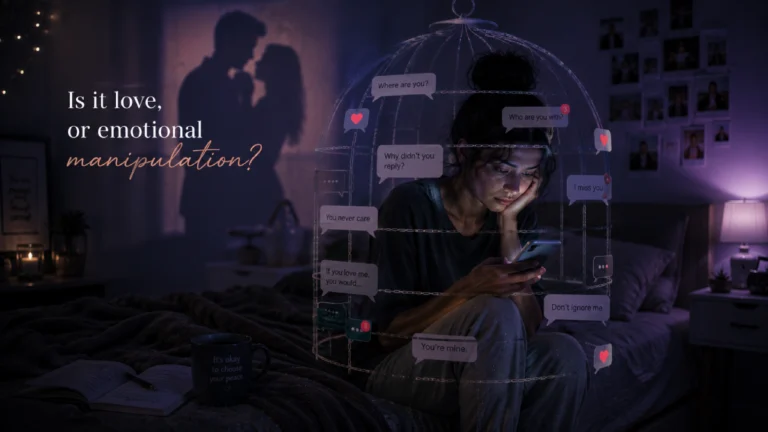

Why Is It Hard to Leave Toxic Relationship?
You may know it hurts, but knowing the truth is not always enough to untangle the attachment.
Why Do You Stay When You Know It Hurts?
Have you ever known a relationship was hurting you, but still felt unable to leave?
Maybe you promised yourself, “I am done this time.”
Maybe you blocked them.
Maybe you cried, journaled, talked to a friend, and finally felt clear.
Maybe you listed every reason this relationship was damaging your peace.
And then one message came.
One apology.
One memory.
One lonely night.
One soft voice saying, “I miss you.”
And suddenly, everything became confusing again.
You may ask yourself:
“Why can’t I leave when I know this is toxic?”
“Why do I keep going back?”
“Why do I miss someone who hurts me?”
“Why does leaving feel like losing myself?”
This is why the question “why is it hard to leave toxic relationship” carries so much shame.
Because from the outside, people may say:
“Just leave.”
“Block them.”
“You deserve better.”
“Why are you still there?”
And maybe you know all of that.
Maybe you know you deserve better.
Maybe you know the relationship is unhealthy.
Maybe you know the pattern keeps repeating.
But knowing something is harmful does not instantly break the emotional attachment.
Your mind may understand the truth, but your heart may still be tied to the hope.
Your body may still crave their attention.
Your nervous system may still panic when they pull away.
Your memories may still replay the good version.
And your guilt may still whisper:
“What if leaving hurts them?”
So if leaving feels hard, it does not mean you are weak.
It may mean the relationship has tied love, fear, guilt, hope, relief, and emotional dependency into one painful knot.
This blog will help you understand why it is hard to leave a toxic relationship, why you may keep going back, what trauma bonding has to do with it, and how to begin leaving emotionally without blaming yourself.
Because the goal is not to shame you into leaving.
The goal is to help you understand the cycle clearly enough to stop calling yourself the problem.
Why Is It Hard to Leave a Toxic Relationship?
It is hard to leave a toxic relationship because love, fear, guilt, hope, emotional dependency, trauma bonding, manipulation, and the cycle of hurt followed by affection can all become emotionally tangled. You may know it is unhealthy, but your body may still crave the relief, apology, or good version of the person.
That is the painful truth.
Leaving is not always one clean decision.
Sometimes leaving feels like fighting against your own emotions.
One part of you says:
“This is damaging me.”
Another part says:
“But what if they change?”
One part remembers the pain.
Another part remembers the way they held you after the pain.
One part wants peace.
Another part wants one more apology to finally mean something.
This is why toxic relationships can feel so hard to leave.
You are not only leaving the person.
You may also be leaving the fantasy, the future, the good memories, the apology cycle, the emotional highs, and the hope that everything you endured will finally turn into love.
Answer-First Explanation
A toxic relationship can become difficult to leave when the emotional pattern keeps giving you just enough hope to stay.
They hurt you.
Then they apologize.
They disappear.
Then they come back.
They make you feel unwanted.
Then they make you feel chosen.
They break your peace.
Then they become the person you run to for comfort.
And slowly, your heart starts confusing relief with love.
Not because you are foolish.
Because relief after pain can feel extremely powerful.
When someone creates emotional panic and then becomes soft again, your body may feel rescued.
But rescue is not the same as safety.
The Painful Truth
Leaving can feel like withdrawal from many things at once:
- their attention
- their apology
- the good version of them
- the future you imagined
- the emotional highs
- the belief that they may finally change
- the routine of waiting for them
- the identity you had inside the relationship
- the relief that came after every painful cycle
This is why leaving may feel harder than people expect.
You are not just saying goodbye to someone who hurt you.
You are saying goodbye to the version of the relationship you kept hoping would finally arrive.
That grief is real.
Micro Takeaway
You are not weak for finding it hard to leave.
You may be attached to a cycle that gave you just enough hope to stay.
And when you understand the cycle, you can start loosening it without attacking yourself.
Why Can’t I Leave a Toxic Relationship Even When I Know It’s Bad?
Maybe you have said this to yourself many times:
“I know this is bad for me. So why am I still here?”
That question can feel humiliating.
Because it makes you feel like your logic is broken.
But often, the problem is not that you do not know.
The problem is that knowing and emotionally detaching are different processes.
You can know someone is hurting you and still love them.
You can know the relationship is toxic and still miss their voice.
You can know the pattern is wrong and still feel panic when they pull away.
You can know you deserve better and still feel guilty for leaving.
This is not weakness.
This is emotional complexity.
1. Trauma Bonding Makes the Attachment Feel Stronger Than Logic
A trauma bond can form when pain and relief keep coming from the same person.
They hurt you, then comfort you.
They make you anxious, then become affectionate.
They withdraw, then return.
They break your heart, then become the only person who seems able to soothe it.
This creates a painful emotional loop.
Emotional Recognition
You may understand the relationship is toxic, but still feel panic at the thought of losing them.
You may think:
“I know they hurt me, but I still want them.”
“I know I should leave, but I feel empty without them.”
“I know they are bad for my peace, but when they come back, I feel alive again.”
That is what makes trauma bonding so confusing.
Your attachment does not always follow your logic.
Psychology Layer
Trauma bonding can make leaving feel emotionally dangerous because your body may associate the person with both pain and relief.
So when you leave, you are not only losing the pain.
You are also losing the temporary comfort they sometimes gave after causing that pain.
This is why your body may crave them after they hurt you.
Not because the relationship is healthy.
But because the emotional cycle became familiar and powerful.
2. You Keep Remembering Their Good Version
One of the hardest parts of leaving a toxic relationship is that the person is not always hurtful.
Sometimes they are soft.
Sometimes they are funny.
Sometimes they know exactly how to make you feel special.
Sometimes they apologize in a way that feels genuine.
Sometimes they become the person you first fell for.
And that version is hard to release.
Emotional Recognition
You may not be attached only to who they are now.
You may be attached to who they were in the beginning.
The beginning version.
The careful version.
The version that made promises.
The version that made you feel chosen.
The version that made you think:
“This is different.”
So when the relationship becomes painful, you keep waiting for that version to return permanently.
Practical Insight
Ask yourself:
“Am I missing their consistent behavior, or the version they show when they fear losing me?”
This question may hurt.
But it can help you separate the pattern from the promise.
The good version may be real.
But the harmful pattern is real too.
And healing begins when you stop letting rare softness erase repeated pain.
3. The Apology Cycle Keeps Resetting Your Hope
An apology can feel like emotional oxygen when you have been waiting to be understood.
They say:
“I am sorry.”
“I will change.”
“I did not mean to hurt you.”
“I cannot lose you.”
And suddenly, the pain starts feeling meaningful.
You think:
“Maybe this time they understand.”
“Maybe the relationship can still become better.”
“Maybe I should not give up.”
Emotional Recognition
One apology can make months of pain feel like it may finally mean something.
This is why leaving becomes so difficult.
The apology does not only soothe the present wound.
It revives the future you imagined.
It makes you believe the pain had a purpose.
It gives the relationship another chance to become what you hoped it would be.
Micro Takeaway
An apology without changed behavior is not healing.
It is a reset button for the same cycle.
Real change is not proven by tears.
It is proven by consistent behavior when the relationship is no longer at risk.
4. You Feel Guilty for Leaving
Sometimes you do not stay because you are happy.
You stay because you feel guilty.
Maybe they say they need you.
Maybe they say everyone leaves them.
Maybe they cry when you try to go.
Maybe they remind you of everything they did for you.
Maybe they say:
“You are giving up on us.”
“You never really loved me.”
“I knew you would leave like everyone else.”
And suddenly, leaving feels cruel.
Even if staying is hurting you.
Emotional Recognition
You may feel responsible for their pain, loneliness, healing, or reaction.
You may think:
“What if they break down?”
“What if I hurt them?”
“What if they cannot handle it?”
“What if I am abandoning them?”
This guilt can become a chain.
Especially if you are empathetic.
Especially if you are used to taking care of people emotionally.
Practical Insight
You can care about someone’s pain without staying inside a relationship that keeps damaging you.
Read that again.
You can care and still leave.
You can feel sad for them and still choose yourself.
You can understand their wounds and still refuse to keep becoming one of them.
5. You Fear Being Alone More Than Being Hurt
Sometimes familiar pain feels less frightening than unknown peace.
That sentence may feel strange, but emotionally, it is very real.
If the relationship has become your emotional world, leaving may feel like falling into emptiness.
Even if the relationship hurts, at least it is familiar.
At least you know the rhythm.
The fight.
The apology.
The silence.
The return.
The hope.
The repeat.
Emotional Recognition
You may fear being alone more than being hurt.
You may think:
“What if no one loves me like this again?”
“What if I cannot handle the loneliness?”
“What if I regret leaving?”
“What if this was my only chance at love?”
Toxic relationships can shrink your sense of possibility.
They can make you feel like this person is your whole emotional universe.
But that is often the effect of being consumed by the relationship, not proof that you cannot live beyond it.
Psychology Layer
Your body may choose what feels familiar, not what is healthiest.
If chaos has been familiar for a long time, peace may feel empty at first.
But unfamiliar does not mean wrong.
Sometimes peace feels strange only because your nervous system has forgotten what safety feels like.
6. Your Self-Worth Has Been Worn Down
A toxic relationship can slowly make you feel smaller.
At first, you may fight back.
You may question things.
You may say, “This is not okay.”
But after repeated blame, silent treatment, gaslighting, guilt, criticism, or emotional confusion, you may start doubting yourself.
You may begin to believe:
“Maybe I am too much.”
“Maybe no one else will love me.”
“Maybe this is all I deserve.”
“Maybe I caused this.”
Emotional Recognition
You may start believing this is the kind of love you deserve.
This is one of the saddest effects of toxic love.
It does not always trap you with force.
Sometimes it traps you by lowering your belief in what you are allowed to ask for.
You stop expecting tenderness.
You stop expecting consistency.
You stop expecting safety.
You become grateful for small kindness after big hurt.
Practical Insight
A relationship that lowers your self-worth also makes leaving harder.
Because the less worthy you feel, the more impossible it feels to choose yourself.
Healing begins when you start questioning that inner voice:
“Is this really what I deserve, or is this what the relationship trained me to accept?”
7. You Keep Hoping They Will Finally Change
Hope can keep people inside toxic relationships for a long time.
Not because they are blind.
But because they have seen glimpses.
A kind moment.
A real apology.
A vulnerable confession.
A week of better behavior.
A promise.
A memory.
And those glimpses can feel like proof that the relationship can still become safe.
Emotional Recognition
You may stay for the future version of them, not the present pattern.
You may think:
“They have potential.”
“They are not bad inside.”
“They just need time.”
“They will change when they realize how much they are hurting me.”
Maybe they do have potential.
But potential is not safety.
Potential does not protect your peace.
Potential does not repair repeated harm.
Reality Check
Potential is not safety.
Consistent behavior is.
You cannot build your emotional life around who someone might become while ignoring who they keep choosing to be.
8. Emotional Manipulation Makes You Doubt Yourself
If someone repeatedly blames you, gaslights you, guilt-trips you, or twists your feelings, leaving becomes harder.
Because now you are not only leaving the relationship.
You are also trying to figure out whether you are allowed to trust your own pain.
They may say:
“You are overreacting.”
“You always make me the villain.”
“You are too sensitive.”
“You are the toxic one.”
“You are giving up too easily.”
Suddenly, your clarity becomes foggy.
Emotional Recognition
If they blame, gaslight, guilt-trip, or twist your feelings, you may question whether leaving is “too harsh.”
You may think:
“What if I am wrong?”
“What if I misunderstood everything?”
“What if I am the problem?”
This is why emotional manipulation is so damaging.
It does not only hurt you.
It makes you doubt whether you are allowed to name the hurt.
Internal Link Opportunity
This section should internally link to:
Emotional Manipulation in Relationships
Suggested anchor text:
emotional manipulation in relationships
or
how emotional manipulation makes you doubt yourself
9. You Are Emotionally Addicted to Relief
Sometimes you do not miss the full relationship.
You miss the relief.
The relief when they finally reply.
The relief when they stop being cold.
The relief when they apologize.
The relief when they hold you after making you feel unsafe.
The relief when the relationship feels okay for a few days.
That relief can become addictive because it arrives after emotional pain.
Emotional Recognition
Their kindness after pain may feel like love, but sometimes it is relief.
You may think:
“When things are good, they are so good.”
But ask yourself:
“Do the good moments feel good because they are truly safe, or because they arrive after emotional fear?”
That difference matters.
Micro Takeaway
Sometimes you do not miss the relationship.
You miss the moment the pain temporarily stopped.
And once you understand that, you can begin separating love from relief.
Why Do I Keep Going Back to a Toxic Relationship?
You may keep going back to a toxic relationship because the relationship creates a cycle of pain, distance, apology, affection, hope, and temporary relief. The good moments feel powerful because they come after hurt, and that emotional contrast can make leaving feel extremely difficult.
This does not mean you are weak.
It means the cycle is doing what cycles do.
It repeats until something interrupts it.
And the first interruption is awareness.
The Cycle That Pulls You Back
Toxic relationships often do not pull you back through constant cruelty.
They pull you back through contrast.
Pain followed by softness.
Distance followed by affection.
Fear followed by reassurance.
A fight followed by a beautiful apology.
That is what makes it confusing.
If it were always painful, clarity might come faster.
But because there are good moments, your heart keeps asking:
“What if the good version is the real one?”
The Toxic Relationship Cycle
| Stage | What Happens | How It Hooks You |
| Pain | They hurt, ignore, blame, or disrespect you | You feel anxious and confused |
| Distance | They pull away or become cold | You panic and want repair |
| Apology | They say sorry or become emotional | Hope returns |
| Affection | They become loving again | You feel relief |
| Calm | Things feel better temporarily | You think it changed |
| Repeat | The same pattern returns | You feel stuck again |
This cycle can make leaving feel like a betrayal of the good moments.
But leaving is not betrayal.
Sometimes leaving is refusing to keep paying for small moments of affection with your emotional safety.
Emotional Impact Line
The cycle keeps you hoping because every return feels like proof that the good version still exists.
But a good version that only appears after damage cannot become the foundation of your peace.
What Makes Toxic Relationships Feel Addictive?
Toxic relationships can feel addictive because the emotional pattern keeps your nervous system activated. The relationship becomes less about steady love and more about waiting for the next sign that you are still wanted.
You may become addicted to their attention.
Their apology.
Their return.
Their good mood.
Their reassurance.
Their temporary softness.
And slowly, the relationship becomes your emotional weather.
When they are warm, you feel okay.
When they are cold, you collapse inside.
That is not love becoming deep.
That is emotional dependence becoming exhausting.
Intermittent Affection Feels More Powerful Than Steady Love
Steady love may feel calm.
Intermittent affection feels intense.
If someone is consistently kind, kindness feels normal.
But if someone is distant, cold, or hurtful, then suddenly loving, their affection can feel unusually powerful.
It feels like winning something back.
Their attention becomes a reward.
Their warmth becomes relief.
Their apology becomes hope.
This emotional contrast can make toxic love feel unforgettable.
But unforgettable does not always mean healthy.
Relief Starts Feeling Like Love
When the pain stops, your body relaxes.
When they come back, you breathe.
When they apologize, you soften.
When they hold you, you feel safe again.
But maybe the safety is temporary.
Maybe it is only the absence of immediate pain.
This is why toxic love can become confusing.
You may call it love because it feels intense.
But sometimes it is your body saying:
“Finally, the threat is gone for now.”
Relief is powerful.
But relief is not the same as peace.
Anxiety Can Feel Like Chemistry
The waiting.
The checking.
The overthinking.
The fear.
The butterflies.
The craving.
The emotional highs.
It can feel romantic.
But sometimes chemistry is actually anxiety wearing perfume.
You may think:
“No one has ever made me feel this much.”
But ask yourself:
“Do I feel loved, or do I feel activated?”
“Do I feel chosen, or do I feel desperate to be chosen?”
“Do I feel safe, or do I feel addicted to their reassurance?”
These questions are not easy.
But they are honest.
The Relationship Becomes Your Emotional Weather
In a toxic relationship, their mood may decide your mood.
Their reply decides your day.
Their affection decides your worth.
Their silence decides your anxiety.
Their apology decides your hope.
That is a painful way to live.
Because your emotional center is no longer inside you.
It is in their hands.
And if their love is inconsistent, your whole inner world becomes unstable.
Micro Takeaway
Toxic love can feel addictive because it teaches your body to chase emotional relief instead of recognizing peace.
And healing often begins when you stop asking:
“How do I get them back?”
and start asking:
“How do I get myself back?”
Common Mistakes People Make When Trying to Leave
Leaving a toxic relationship is already difficult.
Shaming yourself makes it harder.
So let’s name these mistakes gently.
Not to judge you.
To help you recognize the traps that keep pulling people back.
Mistake 1: Waiting Until You Stop Loving Them
Many people think they cannot leave because they still love the person.
But sometimes love remains even after safety is gone.
You may still care.
You may still miss them.
You may still remember the good.
You may still want them to be okay.
That does not mean you must stay.
Why It Is Harmful
If you wait until you stop loving them, you may stay far longer than your peace can survive.
Leaving does not always mean love disappeared.
Sometimes it means self-respect finally arrived.
You can love someone and still know the relationship is harming you.
Mistake 2: Believing One Apology Means Real Change
One apology can feel like everything you waited for.
Especially if they say the right words.
Especially if they cry.
Especially if they sound sincere.
Especially if they promise this time will be different.
But one apology is not a changed pattern.
Emotional Consequence
You may confuse relief with repair.
Repair means the behavior changes.
Relief means the pain stops for a while.
A toxic relationship often gives relief without repair.
That is why the same wound keeps returning.
Mistake 3: Trying to Get Closure From the Person Who Hurt You
You may want one final conversation.
One clean explanation.
One honest apology.
One moment where they finally say:
“You were right. I hurt you.”
But sometimes the person who hurt you cannot give you the closure you need.
They may blame you again.
They may confuse you again.
They may make you feel guilty again.
They may pull you back again.
Why It Is Harmful
You may reopen the cycle while searching for one final explanation.
Closure may not come from their honesty.
Sometimes closure comes from your acceptance of the pattern.
You may need to say:
“I know what happened to me, even if they never admit it.”
Mistake 4: Shaming Yourself for Going Back
Maybe you have gone back before.
Maybe more than once.
Maybe you feel embarrassed.
Maybe you think:
“I should know better by now.”
But shame rarely helps someone leave.
Shame isolates.
And isolation often makes the toxic relationship feel like the only place to return.
Emotional Consequence
Shame isolates you and makes support harder to accept.
Instead of saying:
“I am stupid for going back.”
Try saying:
“The cycle is strong, and I need more support to break it.”
That is not weakness.
That is honesty.
Mistake 5: Hiding the Pattern From Safe People
Toxic relationships often survive in secrecy.
Not because you want to lie.
But because telling the full truth can feel humiliating.
You may not want people to judge you.
You may not want them to hate your partner.
You may not want to hear, “Leave.”
So you hide the worst parts.
Reality Check
If you hide the worst parts, a part of you may already know they matter.
Tell one safe person.
Not everyone.
Just one person who can hold the truth without shaming you.
Support can become the rope you hold while your emotions are still pulling you backward.
How to Emotionally Leave a Toxic Relationship
Emotionally leaving often begins before physically leaving.
It begins when you stop denying the pattern.
It begins when you stop treating one good moment as proof of permanent change.
It begins when you stop blaming yourself for someone else’s repeated harm.
It begins when you start choosing small moments of truth over the comfort of hope.
You do not have to do everything perfectly.
You only have to begin.
Step 1: Stop Calling Yourself Weak
The first step is to change the question.
Instead of asking:
“Why can’t I leave?”
Ask:
“What is keeping me emotionally attached?”
This question removes shame and invites clarity.
Maybe it is trauma bonding.
Maybe it is fear.
Maybe it is guilt.
Maybe it is hope.
Maybe it is loneliness.
Maybe it is low self-worth.
Maybe it is the apology cycle.
Once you know what is holding you, you can begin loosening it.
Step 2: Write Down the Full Pattern
When you miss them, your mind may remember the sweet parts.
That is normal.
But you need the full truth.
Clear Action
Track the cycle:
- What hurt me?
- What did they do after?
- Did they take responsibility?
- Did the behavior change?
- What made me forgive?
- How long did peace last?
- Has this happened before?
- What did I lose in myself?
This is not to demonize them.
It is to stop nostalgia from editing the story.
Step 3: Make a “Why I Need Distance” List
Create a note for the moments when you want to go back.
Call it:
“Why I Need Distance.”
Write:
- what kept repeating
- how you felt during the worst moments
- what you kept forgiving
- what you are afraid will happen again
- what peace would look like
- what your future self deserves
Read it when one apology makes you forget the full pattern.
Your clear self needs to speak to your craving self.
Step 4: Tell One Safe Person the Truth
Do not only share the good version.
Share the pattern.
You can say:
“I feel stuck in a relationship that hurts me. I need support, not judgment.”
Or:
“I keep going back, and I am embarrassed, but I want to understand the cycle.”
A safe person can help you remember what happened when your emotions start romanticizing it.
Sometimes clarity needs company.
Step 5: Create Distance From the Emotional Cycle
Distance does not only mean physical distance.
It also means emotional and digital distance.
Clear Action
Reduce:
- checking their profile
- rereading old chats
- replying from panic
- chasing after silence
- over-explaining your pain
- meeting for “closure” when it restarts hope
- treating one soft message as proof of change
If no contact is possible and safe, it may help.
If no contact is not possible, low contact with clear limits may be necessary.
The goal is to stop feeding the cycle.
Step 6: Prepare for Withdrawal
You may miss them.
You may want to text.
You may feel empty.
You may doubt yourself.
You may remember the good version.
You may feel like you cannot breathe through the longing.
These feelings can be intense.
But they are not always instructions to return.
Sometimes they are withdrawal from an emotional cycle.
Clear Action
When the urge to go back rises, try:
- delaying action for 30 minutes
- texting a safe friend
- reading your full pattern list
- drinking water
- walking outside
- journaling the urge
- asking, “Do I want them, or do I want relief?”
The urge may still hurt.
But you are teaching your body that you can survive it.
Step 7: Seek Support If Safety Is Involved
If there are threats, violence, stalking, coercion, intense control, or fear, leaving may require planning and support.
Do not treat safety like a small detail.
If someone has shown unsafe behavior, leaving privately or suddenly may not always be safe.
Clear Action
If safety is involved:
- tell a trusted person
- make a safety plan
- avoid meeting alone if you feel afraid
- keep important documents accessible if needed
- reach out to local support services
- contact emergency help if you are in immediate danger
You do not have to prove the relationship is “bad enough” before asking for help.
If you feel afraid, that matters.
When Should You Seek Help Leaving a Toxic Relationship?
You should seek help leaving a toxic relationship if you feel unsafe, threatened, emotionally trapped, isolated, controlled, or unable to stop returning to a harmful cycle.
Help does not mean you failed.
Help means the situation is heavy enough that you should not have to carry it alone.
Clear Decision Signals
Seek support if:
- You feel afraid of their reaction
- They threaten you or themselves
- They stalk, control, or monitor you
- They isolate you from support
- They use violence or intimidation
- They force, pressure, or coerce you
- You feel unable to stop contacting them
- You feel emotionally unsafe
- You keep returning to a harmful cycle
- Your mental health is declining
- You feel trapped or hopeless
- You feel like you cannot trust your own reality
- You are scared to tell people the truth
- You are afraid they will punish you for leaving
If any of these feel familiar, please take them seriously.
You deserve support.
Reality Check
Leaving does not have to be done alone.
Sometimes strong does not mean leaving immediately with no fear.
Sometimes strong means making a plan.
Sometimes strong means telling someone.
Sometimes strong means admitting:
“I need help.”
That sentence can be life-changing.
Emotional Clarity
Kabhi kabhi strong hona ka matlab turant leave kar dena nahi hota.
Kabhi kabhi strong hona ka matlab hota hai safe plan banana, help lena, aur apne aap ko blame karna band karna.
You are allowed to leave carefully.
You are allowed to leave slowly.
You are allowed to leave with support.
You are allowed to protect yourself without explaining everything perfectly.
Final Thoughts: Leaving Is Hard Because the Bond Is Complicated
If it is hard to leave a toxic relationship, it does not mean you are weak.
It means the relationship may have tied love, fear, guilt, hope, and relief into one emotional knot.
You may be grieving the person.
The good version.
The apology.
The future.
The routine.
The relief.
The idea that maybe everything you endured would one day become worth it.
That is a lot to untangle.
So please stop asking:
“What is wrong with me?”
Start asking:
“What cycle am I finally ready to understand?”
Because once you understand the cycle, you can stop mistaking your attachment for proof that the relationship is safe.
Reassurance
You do not have to stop loving them before you choose yourself.
You do not have to hate them before you protect your peace.
You do not have to erase the good memories.
You do not have to prove that every moment was bad.
You only need to recognize what the relationship is repeatedly doing to you.
If it is making you smaller, anxious, guilty, afraid, confused, and emotionally dependent on temporary kindness, that matters.
Your peace matters.
Your safety matters.
Your future self matters.
Emotional Closure
Leaving may feel hard because you are not only leaving the pain.
You are also leaving the relief.
The hope.
The good version.
The future you imagined.
The identity you had while trying to keep the relationship alive.
That is why it hurts.
Not because you are weak.
Because you are human.
But being human does not mean you must keep suffering.
You can care about them and still choose distance.
You can miss them and still not return.
You can love them and still admit the relationship is not safe for you.
And maybe today, you do not make one huge decision.
Maybe today, you only tell yourself the truth:
“This is hard because the bond is complicated. But complicated does not always mean healthy.”
That truth can be the beginning.
Soft CTA
If this felt familiar, you may want to read next:
- Trauma Bond vs Love
- Toxic Relationship Addiction
- Healing After a Toxic Relationship
- Emotional Manipulation in Relationships
- Silent Treatment in Relationships
- Signs of a Toxic Relationship You Should Not Ignore
Because once you understand why leaving feels hard, the next step is learning how to return to yourself without shame.
FAQs About Why It Is Hard to Leave a Toxic Relationship
Why is it hard to leave a toxic relationship?
It is hard to leave a toxic relationship because emotional attachment, trauma bonding, fear, guilt, hope, manipulation, and the cycle of hurt followed by affection can make leaving feel emotionally overwhelming.
You may know the relationship is unhealthy, but still feel attached to the person, the good version, the apology, or the relief after pain.
That does not mean you are weak.
It means the bond is complicated.
Why do I keep going back to a toxic relationship?
You may keep going back because the relationship creates a cycle of pain, distance, apology, affection, relief, and hope.
The good moments can feel powerful because they come after hurt.
This emotional contrast can make you believe things are finally changing, even when the same pattern keeps returning.
Is it trauma bonding if I can’t leave?
It may be trauma bonding if you feel attached to someone who repeatedly hurts you, defend their behavior, feel panic when they pull away, crave their affection after pain, or keep returning despite knowing the relationship is harmful.
Trauma bonding can make leaving feel like emotional withdrawal.
Support, distance, and clarity can help break the cycle.
Can you love someone and still need to leave?
Yes.
You can love someone and still recognize that the relationship is damaging your emotional safety, self-worth, or peace.
Love alone does not make a relationship healthy.
A relationship also needs respect, consistency, accountability, safety, and changed behavior.
Sometimes leaving is not proof that you stopped loving them.
It is proof that you started protecting yourself too.
How do I start leaving emotionally?
Start by naming the pattern, writing down the full truth, reducing contact with the cycle, telling one safe person, and preparing for emotional withdrawal.
Ask yourself:
“What is keeping me emotionally attached?”
Then begin creating small moments of distance from that attachment.
You do not have to do everything perfectly.
Small acts of clarity matter.
Why do I miss someone who hurt me?
You may miss someone who hurt you because of attachment, memories, trauma bonding, loneliness, hope, or emotional withdrawal from the highs and lows.
Missing them does not prove the relationship was healthy.
It means your emotions are still connected to the person or the cycle.
You can miss someone and still choose not to return to what hurt you.
What if I feel guilty for leaving a toxic relationship?
Feeling guilty for leaving does not automatically mean you are doing something wrong.
You may feel guilty because you care about them, fear hurting them, or have been made responsible for their emotions.
You can care about someone’s pain without staying in a relationship that keeps damaging you.
Self-protection is not cruelty.
When should I get help leaving a toxic relationship?
Seek help if you feel unsafe, afraid, threatened, controlled, stalked, isolated, coerced, or unable to stop returning to a harmful cycle.
You should also seek support if your mental health is declining or you feel trapped.
Leaving does not have to be done alone.
Support can help you make safer, clearer decisions.