
Signs You’re in a Trauma Bond, Not Love: Why It Feels So Hard to Leave
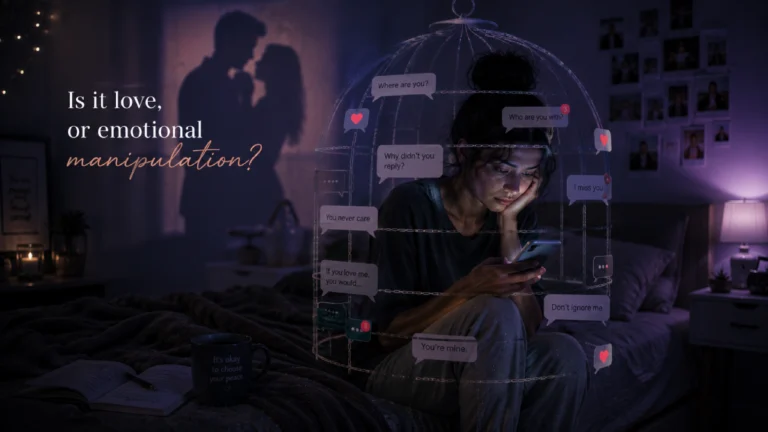
Does This Feel Like Love, or Does It Feel Like You Can’t Let Go?
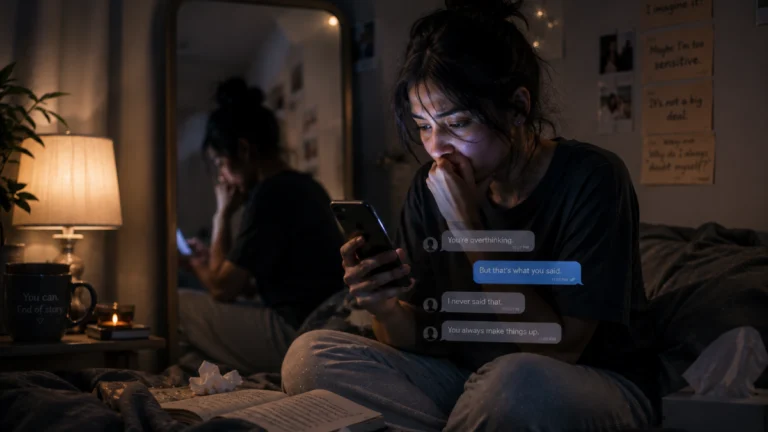
Have you ever known someone was hurting you, but still felt panicked at the thought of losing them?
Maybe they make you cry, but when they become soft again, your whole body relaxes.
Maybe they disrespect you, disappear, blame you, or make you feel small, but one apology from them makes you question everything.
Maybe you have promised yourself, “This time I am done.”
But then they message.
They cry.
They say they miss you.
They become gentle again.
They remind you of the version of them you fell for.
And suddenly, leaving feels impossible.
It can be confusing when the same person who hurts you also feels like the only person who can calm you down.
One part of you knows something is wrong.
Another part of you keeps hoping the good version of them will finally stay.
You may ask yourself:
“Is this love or a trauma bond?”
“Why do I feel so attached to someone who hurts me?”
“Why can’t I leave a toxic relationship even when I know I should?”
“Why do I keep going back after everything?”
“Why does their affection feel so powerful after they have caused me pain?”
If these questions feel familiar, please pause for a moment.
You are not stupid.
You are not weak.
You are not addicted to pain because you enjoy suffering.
Sometimes a harmful relationship creates an emotional cycle where pain, fear, affection, apology, hope, and relief get tangled together.
And when that happens, the bond can feel like love.
But it may not be safe love.
This blog is here to help you understand the signs you’re in a trauma bond, not love, and why it can feel so hard to leave.
This is not here to diagnose you. It is here to help you notice patterns with more honesty and less shame.
And if you feel unsafe, threatened, controlled, stalked, isolated, or afraid of how someone may react if you leave or create distance, please involve a trusted person, counselor, local helpline, or emergency support. Your safety matters more than any relationship label.
For now, let’s begin gently.
Because sometimes the first step is not leaving immediately.
Sometimes the first step is finally admitting:
“This does not feel like peace. This feels like survival.”
Micro Takeaway
Love should not make you feel emotionally addicted to the person who keeps hurting you.
A deep connection can be intense.
A trauma bond can be intense too.
The difference is that healthy love gives your nervous system safety.
A trauma bond keeps your nervous system waiting for relief.
Quick Answer: What Are the Signs You’re in a Trauma Bond?
Signs you’re in a trauma bond include feeling addicted to someone who hurts you, defending their harmful behavior, craving their affection after they cause pain, feeling anxious when they pull away, repeatedly going back after promising yourself you are done, and confusing relief after conflict with love. A trauma bond is not healthy love. It is attachment formed through cycles of harm, fear, hope, and intermittent affection.
You may be trauma-bonded if the relationship feels emotionally powerful but unsafe.
You may feel like you cannot breathe without them, even though they are the reason you feel emotionally breathless.
You may know they hurt you, but still feel desperate for their comfort.
That is one of the most painful contradictions of trauma bonding.
The person becomes both the wound and the bandage.
You Feel Addicted to Their Affection After They Hurt You
Maybe their affection feels strongest after a fight.
They hurt you, ignore you, insult you, blame you, or make you feel unwanted.
You reach a breaking point.
Then suddenly, they become soft.
They apologize.
They cry.
They hold you.
They say they cannot lose you.
They remind you of the beginning.
And your anger melts into hope.
Not because the pain disappeared.
But because the relief feels so intense.
Their apology feels like oxygen after emotional suffocation.
Their sweetness feels more powerful because it comes after fear.
This is one reason trauma bonds can feel addictive.
You are not only attached to affection.
You are attached to the relief that comes after pain.
And relief can feel like love when your heart has been starving for safety.
You Keep Going Back Even After Promising Yourself You’re Done
Maybe you have left emotionally many times.
In your mind, you have ended it.
You told yourself:
“This is the last time.”
“I cannot keep doing this.”
“I deserve better.”
“I am done explaining my pain.”
And maybe you meant it.
But then they return.
Or you miss them.
Or they become loving again.
Or your body panics at the thought of losing them.
So you go back.
Then afterward, you feel confused and ashamed.
“Why did I do that?”
“Why can’t I stay away?”
“Why do I keep choosing someone who hurts me?”
Please understand this carefully:
Going back does not mean you are weak.
It may mean the emotional cycle has trained your body to seek comfort from the same person who causes distress.
Leaving feels logical.
Returning feels emotional.
That is why trauma bonding can be so difficult to break.
You Defend Them Even When Their Behavior Hurts You
Maybe your friends only know part of the story.
You may say:
“They are not always like this.”
“They had a difficult childhood.”
“They are stressed.”
“They love me, they just do not know how to show it.”
“They did not mean it.”
“I also made mistakes.”
“It was not that bad.”
And maybe some of these things feel true.
People are complicated.
Hurtful people can also have pain.
Someone can have trauma and still cause trauma.
But here is the important part:
Understanding why someone behaves badly does not mean you have to keep accepting harm.
Empathy is beautiful.
But if your empathy for them keeps making you abandon yourself, it has become dangerous for your healing.
You can understand their wounds without making your own invisible.
You Feel Anxious Without Them, Even Though They Cause the Anxiety
This is one of the most confusing signs of trauma bonding in a relationship.
They cause you stress.
But when they are gone, you feel more anxious.
Their silence makes you panic.
Their distance makes you unstable.
Their affection calms you down.
Their approval feels like emotional medicine.
So your body starts believing:
“I need them to feel okay.”
Even if they are the reason you do not feel okay.
This can feel like love because the pull is so strong.
But healthy love does not usually make you feel emotionally unsafe in someone’s absence and temporarily relieved only in their presence.
A trauma bond can make the unsafe person feel like the only safe place.
And that is why it can be so hard to explain to people who have not lived it.
Trauma Bond vs Love: What’s the Difference?
It can be hard to tell the difference between trauma bond and love when the feelings are intense.
Because trauma bonding does not always feel cold or empty.
There may be real affection.
Real memories.
Real chemistry.
Real moments of tenderness.
Real tears.
Real longing.
That is what makes it confusing.
If the relationship were only painful, leaving might feel easier.
But when pain is mixed with beauty, your heart keeps searching for the beauty and minimizing the pain.
So let’s make the difference clearer.
Healthy Love Feels Safe, Not Addictive
Healthy love can still have conflict.
No relationship is perfect.
People misunderstand each other.
People hurt each other unintentionally.
People need repair.
People grow.
But in healthy love, conflict does not make you feel like you are constantly losing yourself.
You are not always afraid.
You are not always walking on emotional glass.
You are not always waiting for the next mood shift.
You are not always wondering which version of them you will get today.
Here is a simple comparison:
| Healthy Love | Trauma Bond |
| Feels emotionally safe | Feels emotionally intense and unstable |
| Conflict leads to repair | Conflict leads to fear, blame, or emotional collapse |
| You can be yourself | You monitor yourself to avoid upsetting them |
| Affection is consistent | Affection often comes after pain or distance |
| You feel respected | You feel controlled, confused, or small |
| You grow together | You lose yourself trying to keep them |
| You feel calmer over time | You feel more anxious over time |
| Love feels like care | Love feels like survival |
| Apologies lead to changed behavior | Apologies become part of the repeated cycle |
| You can express needs | Your needs become a problem |
A trauma bond often feels powerful because your emotions are constantly activated.
Your heart does not get to rest.
So every soft moment feels huge.
Every apology feels meaningful.
Every affectionate message feels like proof.
But healthy love is not proven by how relieved you feel when the pain stops.
Healthy love is shown by how safe you feel before the pain begins.
Love Does Not Require You to Abandon Yourself
Love can require patience.
Love can require compassion.
Love can require difficult conversations.
Love can require growth.
But love should not require you to disappear.
If you have to stop speaking honestly to keep peace, something is wrong.
If you have to ignore your needs to avoid their anger, something is wrong.
If you have to make yourself smaller, quieter, more agreeable, less alive, or less expressive just to keep them close, something is wrong.
A relationship should not turn your personality into a survival strategy.
You should not have to study someone’s mood like weather before deciding whether your feelings are allowed.
You should not have to become easy to love by becoming hard to recognize.
Emotional Impact Line
If you only feel loved after surviving pain, your heart may be attached to relief, not safety.
Read that slowly.
Because sometimes the “best” moments in a trauma bond are not actually proof of love.
They are proof that your nervous system finally got a break.
Signs of Trauma Bonding in a Relationship
Now let’s look at the signs more deeply.
Not as a checklist to frighten you.
As a mirror to help you understand what may be happening inside the relationship.
If several of these feel painfully familiar, try not to jump into shame.
Just notice.
Clarity is not punishment.
Clarity is protection.
1. You Feel Pulled Back After Every Apology or Soft Moment
Maybe the cycle looks like this:
They hurt you.
You cry.
You explain.
You decide you cannot do this anymore.
They suddenly become loving.
They apologize.
They promise change.
They remind you how much they need you.
And then your anger softens.
You think:
“Maybe they finally understand.”
“Maybe this time will be different.”
“Maybe they were just scared.”
“Maybe I should give it one more chance.”
This is one of the clearest signs you’re in a trauma bond.
Not because forgiveness is bad.
Forgiveness can be beautiful when there is real accountability and change.
But in a trauma bond, apology becomes part of the cycle.
Pain.
Apology.
Hope.
Calm.
Repeat.
The apology gives you enough relief to stay, but not enough change to make the relationship safe.
Why This Keeps You Stuck
When affection arrives after pain, it can feel more powerful than steady affection.
Your brain starts waiting for the next good version of them.
The sweet version.
The apologetic version.
The version who seems to finally understand.
The version who makes you believe the relationship can still become what you imagined.
That waiting becomes attachment.
You are not only attached to who they are.
You are attached to who they become after they hurt you.
Micro Takeaway
The apology may soothe the wound, but it does not heal the pattern unless behavior truly changes.
A sincere apology is not just emotional.
It is behavioral.
It shows up later, when they are upset again.
When they are stressed again.
When you say no again.
When you express pain again.
If the same harm repeats, the apology was not repair. It was relief.
2. You Confuse Relief With Love
This one is very important.
Maybe they ignore you, then finally reply, and your whole body calms down.
Maybe they insult you, then comfort you, and suddenly you feel close again.
Maybe they pull away, then come back, and the return feels intoxicating.
Maybe they make you anxious for days, then one affectionate moment makes you forget how much you suffered.
That feeling can be intense.
But intensity is not always love.
Sometimes it is relief.
Relief says:
“They are back.”
“They still care.”
“I am not losing them.”
“I can breathe again.”
After emotional pain, relief can feel almost romantic.
But a relationship should not repeatedly hurt you just so the calm moments feel magical.
Emotional Insight
Relief after emotional pain can feel like love because your nervous system finally gets a break.
This is why safe love may feel strange at first after a trauma bond.
Safe love does not create the same panic-relief cycle.
It may feel calmer.
Quieter.
Less dramatic.
Less consuming.
And if you are used to emotional chaos, calm may feel unfamiliar.
But unfamiliar does not mean boring.
Sometimes unfamiliar means healthy.
3. You Keep Hoping Their “Good Side” Will Stay
Maybe there is a version of them you love deeply.
The version from the beginning.
The version who was kind.
The version who made you feel chosen.
The version who said all the right things.
The version who held you after hurting you.
The version who made you believe the pain was temporary.
So you keep waiting for that version to stay.
You tell yourself:
“This is who they really are.”
“The hurtful version is just their trauma.”
“They are not bad, they are wounded.”
“If I love them enough, the good version will come back.”
But the hard truth is this:
The good version is also part of them.
But so is the version that hurts you.
You cannot build a safe relationship with someone’s potential while surviving their pattern.
It is not enough that they can be loving sometimes.
The question is:
Can they be loving consistently, especially when things are difficult?
Because love is not only what someone does when they are afraid to lose you.
Love is also what they do when they are angry, insecure, stressed, disappointed, or not getting their way.
4. You Feel Responsible for Their Emotions
Maybe you feel like their mood is your responsibility.
If they are angry, you feel guilty.
If they are sad, you feel responsible.
If they withdraw, you wonder what you did wrong.
If they explode, you replay your words to see how you “caused” it.
Slowly, you start managing them.
You avoid certain topics.
You soften your truth.
You apologize even when you are hurt.
You become careful with your tone.
You give up needs because needs create conflict.
This is not emotional closeness.
This is emotional monitoring.
You are not relaxing in the relationship.
You are managing emotional weather.
And the longer you do this, the more you may lose touch with your own feelings.
Their emotions become the emergency.
Your emotions become the inconvenience.
That is not love.
That is survival inside the relationship.
5. You Minimize or Hide What They Do to You
Maybe you do not tell your friends the full story.
You leave out the worst parts.
You say:
“It was just a fight.”
“They were stressed.”
“It sounds worse than it was.”
“You don’t understand them like I do.”
“They apologized after.”
Sometimes you hide details because you do not want others to judge them.
But sometimes, deep down, you hide details because you know people who love you would be worried.
That is important.
If you have to protect someone’s image by hiding your pain, the relationship may not be emotionally safe.
You should not have to edit your reality so other people do not see the pattern clearly.
A painful relationship often becomes more powerful in secrecy.
Because when no one knows the full truth, the cycle has more room to continue.
6. You Feel Like You Can’t Leave, Even When You Know You Should
This is one of the most painful signs.
Your mind knows.
It knows you are tired.
It knows you are hurt.
It knows this relationship is draining you.
It knows the pattern has repeated too many times.
But your body panics at the thought of leaving.
You may feel sick.
Empty.
Terrified.
Restless.
Desperate to contact them.
Unable to imagine life without them.
This does not mean the relationship is healthy.
It means the bond has become deeply wired.
Sometimes your nervous system mistakes separation from the person as danger, even when staying with them is what keeps hurting you.
That is why people in trauma bonds often say:
“I know I should leave, but I can’t.”
They are not lying.
They are describing a real internal conflict.
Emotional Impact Line
A trauma bond can make the unsafe person feel like the only safe place.
And that is why you need compassion, not shame.
Shame says, “Why can’t you just leave?”
Compassion says, “This bond is powerful. Let’s build safety and support step by step.”
7. You Feel Empty or Panicked When They Pull Away
When they pull away, your whole system reacts.
You cannot focus.
You check your phone.
You feel abandoned.
You feel like you did something wrong.
You replay the last conversation.
You wait for their mood to change.
Their attention becomes your emotional regulator.
If they are warm, you feel okay.
If they are cold, you collapse inside.
This is not because you are needy.
It may be because the relationship has trained your body to depend on their affection for relief.
Their presence becomes emotional medicine.
But if the same person regularly creates the distress they later soothe, your system gets trapped in the cycle.
You start needing them not because they are safe, but because they control the emotional switch.
8. You Keep Blaming Yourself for Their Harmful Behavior
Maybe you think:
“Maybe I triggered them.”
“Maybe I should have stayed calm.”
“Maybe I asked too much.”
“Maybe I made them angry.”
“Maybe I should be more understanding.”
“Maybe they act this way because they love me too much.”
Please be careful here.
Self-reflection is healthy.
But self-blame is different.
Self-reflection says, “What can I learn?”
Self-blame says, “Their harmful behavior is my fault.”
No one is perfect in relationships. You may have things to learn too.
But someone else’s cruelty, control, manipulation, threats, disrespect, or repeated emotional harm is not your responsibility to excuse.
You can take responsibility for your actions without taking responsibility for their harmful choices.
9. You Lose Yourself Trying to Keep the Relationship Alive
A trauma bond can slowly shrink you.
Maybe you stop seeing friends because they do not like your partner.
Maybe you stop sharing your real feelings because it creates conflict.
Maybe you stop doing things you love because your emotional energy is always spent on the relationship.
Maybe you become quieter.
More anxious.
More apologetic.
More careful.
More dependent.
Less confident.
Less yourself.
At some point, the relationship becomes something you are constantly trying to keep alive, even if you are disappearing inside it.
That is not a small thing.
Love should not require your self-erasure.
A relationship should not survive by turning you into a softer, smaller, more silent version of yourself.
10. The Relationship Feels Like a Cycle, Not a Safe Place
This is often the clearest sign.
The relationship does not truly move forward.
It loops.
The cycle may look like this:
- Tension
- Hurt
- Apology or affection
- Hope
- Calm
- Repeat
At first, you may believe every apology is a new beginning.
But after the same cycle repeats enough times, it becomes hard to deny the pattern.
The calm phase may feel beautiful.
But if it always leads back to the same wound, it is not safety.
It is a pause.
Reality Check
If the relationship keeps returning to the same wound, the soft moments may be part of the cycle, not proof that the cycle is ending.
This is difficult to accept because the soft moments may feel real.
And they may be real.
But real moments do not always mean a safe relationship.
A person can mean an apology and still repeat the harm.
That is why patterns matter more than emotional intensity.
Why Trauma Bonding Feels Like Love
If trauma bonding were obvious, people would leave sooner.
But it often feels confusing because the emotions are intense and the attachment feels deep.
You may genuinely care about them.
You may have beautiful memories.
You may feel strong chemistry.
You may believe they need you.
You may feel like nobody else understands the connection.
That is why it can feel like love.
But several psychological patterns can make a trauma bond feel stronger than healthy attachment.
1. Intermittent Reinforcement Makes Affection Feel More Powerful
When affection is inconsistent, your brain starts chasing it.
If someone is loving all the time, your body can relax.
But if someone is loving sometimes and hurtful other times, your body stays alert.
You start waiting for the next good moment.
When will they be sweet again?
When will they text normally again?
When will they choose me again?
When will they become the person I miss?
Because the reward is unpredictable, it starts feeling more valuable.
This is why a small loving gesture from them may feel more powerful than consistent kindness from someone else.
Not because their love is better.
Because your nervous system has been starving for it.
Unpredictable affection can make the bond feel addictive.
Your heart starts treating the good moments like proof that the pain is worth surviving.
2. Your Nervous System Starts Chasing Relief
A trauma bond can make your body associate the person with relief.
First, the relationship creates stress.
Then the person gives affection.
Your body calms down.
So your nervous system learns:
“When I am in pain, I need them.”
But the painful part is that they may be part of why you are in pain.
This creates an emotional knot.
They make you anxious, then soothe you.
They hurt you, then hold you.
They withdraw, then return.
They create fear, then offer reassurance.
Your body starts craving the reassurance so strongly that it forgets to question why the fear keeps happening.
This is why you may feel attached even when the relationship is damaging you.
You are not chasing love only.
You may be chasing the nervous system relief that follows emotional distress.
3. The Beginning May Have Felt Like Intense Love
Many trauma bonds begin with intensity.
Maybe they made you feel seen quickly.
They said the right things.
They gave deep attention.
They made the connection feel rare.
They made you feel chosen in a way you had been craving.
The beginning may have felt like magic.
And later, when the relationship became painful, you kept trying to get back to that beginning.
You thought:
“That version was real.”
“We can get back there.”
“They are not always like this.”
“If we fix this, it can be beautiful again.”
This is why the early phase matters so much.
Your heart keeps using the beginning as evidence.
But beginnings are not enough.
A relationship is not defined only by how someone wins your heart.
It is defined by how they treat your heart after they have it.
4. Fear of Loss Can Feel Like Passion
Sometimes what feels like passion is actually panic.
The fear of losing someone can make emotions feel huge.
You may feel jealous, anxious, desperate, obsessed, or unable to think clearly.
Your body may interpret that intensity as love.
But safe love does not usually keep you in a constant state of emotional emergency.
Safe love may still be exciting.
But it does not make you feel like you are always fighting for your place.
If the relationship makes you feel like you must constantly earn love, prove loyalty, prevent abandonment, or calm someone else’s mood, that is not passion.
That is survival.
And survival can become familiar.
So familiar that peace feels strange.
5. You May Be Attached to Potential, Not Reality
Potential is powerful.
You may see who they could become.
More gentle.
More accountable.
More emotionally mature.
More loving.
More consistent.
You may believe in their healing.
You may believe your love can help them change.
But potential is not the same as reality.
Potential does not comfort you after repeated harm.
Potential does not create safety.
Potential does not repair the damage.
Potential is a possibility.
Reality is the pattern you are living inside.
You can care about who someone could become and still admit who they are currently being is hurting you.
That is not betrayal.
That is honesty.
Does Being Trauma Bonded Mean You Don’t Love Them?
This question needs tenderness.
Because when people hear “trauma bond,” they may feel like someone is saying their feelings are fake.
But your feelings may be real.
You may love them.
You may care deeply.
You may miss them.
You may have moments that mattered.
You may have tenderness for them.
You may remember beautiful parts of the relationship.
A trauma bond does not mean none of your feelings were real.
It means the relationship may also include a harmful attachment cycle that makes it harder to leave, think clearly, or protect yourself.
Both can be true.
You can love someone and still be harmed by the relationship.
You can feel attached and still not be safe.
You can care and still need distance.
Your Feelings Can Be Real Even If the Bond Is Unhealthy
Sometimes people stay because they think, “But I love them.”
And maybe you do.
But love alone does not make a relationship healthy.
Love is not a free pass for repeated harm.
Love cannot replace accountability.
Love cannot make control acceptable.
Love cannot turn fear into safety.
Your feelings being real does not mean the relationship is good for you.
That sentence may hurt.
But it can also protect you.
Because sometimes the question is not, “Do I love them?”
Sometimes the question is:
“Is this love safe for me?”
Attachment Is Not the Same as Safety
You can be deeply attached to someone who hurts you.
Attachment explains the pull.
Safety tells you whether the relationship is healthy.
This distinction matters.
Because if you confuse attachment with safety, you may think:
“I feel like I need them, so they must be my person.”
But needing someone emotionally does not always mean they are good for you.
Sometimes it means your nervous system has linked them with survival, comfort, familiarity, or relief.
The strength of the attachment does not prove the health of the bond.
A cage can feel familiar too.
That does not make it a home.
Ask Yourself What the Bond Is Costing You
Use these questions gently.
Not to attack yourself.
To bring reality into the room.
| If You Feel This | Ask Yourself |
| “I can’t live without them” | Do I feel safe, or dependent? |
| “They love me after fights” | Do they repair, or repeat? |
| “They had a hard past” | Am I excusing harm? |
| “They need me” | Am I confusing love with responsibility? |
| “The good moments are amazing” | Are they consistent enough to build a life on? |
| “No one understands them like I do” | Am I using empathy to ignore my own pain? |
| “Leaving feels impossible” | Do I need support instead of more self-blame? |
Sometimes the clearest answer comes when you stop asking, “Do I love them?” and start asking, “What is this love costing me?”
If it is costing your peace, identity, safety, friendships, self-respect, sleep, confidence, or emotional stability, that cost matters.
What to Do If You Think You’re in a Trauma Bond
If you are reading this and feeling seen, you may also feel scared.
That is understandable.
Realizing a bond may not be healthy can shake you.
You do not need to make every decision today.
But you do need to start choosing clarity.
Small safe steps matter.
Step 1: Name the Pattern Without Shaming Yourself
Start with this sentence:
“This may be a trauma bond, and that does not mean I am weak.”
Say it slowly.
Because shame keeps people stuck.
Shame says:
“How could you let this happen?”
“Why did you stay?”
“Why did you go back?”
“What is wrong with you?”
But clarity says:
“This pattern is powerful.”
“My attachment makes sense.”
“I can understand this without blaming myself.”
“I can take one safe step.”
Naming the pattern helps you stop romanticizing the confusion.
It gives language to something that may have felt impossible to explain.
And sometimes, language is the first little lantern in a very dark room. 🕯️
Step 2: Write Down the Full Cycle, Not Just the Good Moments
When you are emotionally attached, your mind may focus on the good.
The apology.
The soft voice.
The affectionate message.
The beautiful beginning.
The moment they cried.
The promise that sounded real.
So write down the whole cycle.
Ask yourself:
What usually happens before the conflict?
What do they do when they hurt me?
What do they say afterward?
Do they take responsibility, or blame me?
How long does the change last?
What keeps repeating?
What do I feel during the calm phase?
What do I feel before the next painful moment?
This helps because trauma bonds often survive through emotional editing.
You remember the good moments clearly but blur the repeated harm.
A full-cycle list brings your memory back into balance.
Not to make you hate them.
To help you stop abandoning yourself.
Step 3: Tell One Safe Person the Full Truth
Choose one safe person.
Not the most dramatic person.
Not the person who will shame you.
Not someone who will force you before you are ready.
Choose someone calm, grounded, trustworthy.
Tell them more of the truth than you usually tell.
Tell them the parts you soften.
The parts you hide.
The parts that make you feel embarrassed.
The parts you are afraid will make them say, “Leave.”
You can even say:
“I am not ready for pressure. I just need someone to help me stay honest.”
This matters because secrecy protects the cycle.
When you are alone with the relationship, the emotional logic of the bond becomes louder.
A safe outside perspective can help you remember reality when your heart starts negotiating again.
Step 4: Create Emotional and Digital Distance Where Safe
Distance can help weaken a trauma bond.
But safety matters.
If the person is not dangerous, you can start with emotional and digital distance.
Reduce late-night conversations.
Stop rereading apologies.
Mute triggers.
Avoid emotional calls when you are vulnerable.
Do not reply immediately when you are panicking.
Do not use their messages as your emotional medicine.
If no contact feels impossible right now, begin with smaller limits.
Maybe no calls after midnight.
Maybe no rereading old chats.
Maybe no responding during conflict.
Maybe no checking their profile for seven days.
Small distance is still distance.
And distance gives your nervous system a chance to breathe without their immediate influence.
Safety Note
If the person is controlling, threatening, violent, stalking you, monitoring you, isolating you, or may react dangerously to distance, do not make sudden moves alone.
In that case, involve trusted support.
This may include a close friend, family member, counselor, domestic violence support service, legal support, or emergency help depending on your situation.
Safety planning matters.
You do not have to prove the relationship is “bad enough” before you deserve help.
If you feel afraid, that fear deserves attention.
Step 5: Stop Treating Apologies as Change
This is one of the hardest but most important steps.
Apologies can feel powerful.
Especially when you have been waiting to be understood.
But an apology is not the same as change.
Track behavior, not words.
Ask:
What changed after the apology?
Did the same harm repeat?
Did they take responsibility without blaming me?
Did they respect my boundaries afterward?
Did I feel safer after weeks, not just hours?
Did their actions become consistent?
Did they seek real help or only promise?
Did they repair the damage or only calm me down?
Words can create hope.
Patterns reveal truth.
If the apology feels beautiful but the behavior stays harmful, you are not healing the relationship.
You are restarting the cycle.
Step 6: Rebuild Your Sense of Self Outside the Relationship
A trauma bond can slowly make the relationship the center of your emotional world.
Your mood depends on them.
Your day depends on them.
Your decisions depend on them.
Your confidence depends on them.
Your peace depends on whether they are kind today.
So healing means rebuilding a life where they are not the center.
Start with small acts of self-return.
Reconnect with one friend.
Return to one hobby.
Write your non-negotiables.
Notice where you became smaller.
Make one choice that belongs only to you.
Wear something because you like it.
Listen to music that does not belong to them.
Spend one evening without checking their mood.
The goal is not to become independent overnight.
The goal is to remember:
“I exist outside this bond.”
That sentence may feel small.
But it is a doorway.
Step 7: Get Professional or Crisis Support If You Feel Unsafe
If this relationship involves emotional abuse, physical abuse, sexual coercion, threats, stalking, isolation, financial control, intimidation, or fear, please consider reaching out for support.
A therapist, counselor, domestic violence helpline, crisis service, or trusted local support can help you think clearly and safely.
You do not need to have perfect proof.
You do not need to wait until things get worse.
You do not need to explain why you stayed.
You deserve support because you are hurting and because your safety matters.
And if you are in immediate danger, contact local emergency services or someone you trust who can help you get to safety.
Common Mistakes That Keep Trauma Bonds Strong
These mistakes are common.
They do not mean you are foolish.
They mean the bond has emotional hooks.
Seeing the hooks helps you loosen them.
Mistake 1: Waiting for the Good Version to Stay
Maybe you keep thinking:
“If the good version stayed, everything would be okay.”
So you wait.
Through the hurt.
Through the confusion.
Through the blaming.
Through the silence.
Through the apologies.
You wait for the version of them that made you fall in love.
Why Is It Harmful?
It keeps you attached to potential instead of reality.
You are not making decisions based on the pattern.
You are making decisions based on the hope that the pattern will finally disappear.
Emotional Consequence
You keep surviving the painful version while waiting for the loving version.
And that survival takes pieces of you.
Mistake 2: Explaining Away Harm Because of Their Trauma
Maybe they had a hard past.
Maybe they were hurt before.
Maybe they struggle emotionally.
Maybe they have wounds that explain some of their behavior.
That can be true.
But their trauma does not cancel your pain.
Someone’s past may explain their reactions, but it does not give them permission to keep hurting you.
Why Is It Harmful?
Understanding someone’s pain does not erase your own.
If your compassion always moves toward them and never back toward yourself, you become emotionally unprotected.
Emotional Consequence
You may abandon yourself while trying to rescue them.
And one day, you may realize you were so busy understanding their wounds that you ignored your own bleeding.
Mistake 3: Confusing Jealousy or Panic With Love
A trauma bond can make emotions feel huge.
You may feel panicked when they leave.
Jealous when they talk to someone else.
Desperate when they ignore you.
Obsessed when they become distant.
Because the feeling is intense, you may think it must be love.
But intensity can come from fear too.
Why Is It Harmful?
It makes emotional instability feel romantic.
You may start believing that calm love is not real love because it does not create the same rush.
Emotional Consequence
Safe love may start feeling boring because chaos became familiar.
But peace is not boring.
Peace is what your nervous system may have forgotten it deserved.
Mistake 4: Keeping the Relationship Secret
Maybe you do not tell people what is really happening.
You protect the relationship.
You protect their image.
You protect yourself from hearing what you already know.
But secrecy is dangerous in harmful emotional cycles.
When no one knows the full story, the relationship becomes a private world where the pattern can keep repeating.
Why Is It Harmful?
Secrecy protects the cycle.
It removes outside perspective.
It makes the relationship feel like something only you two understand.
Emotional Consequence
You lose outside perspective and become easier to manipulate.
When you are isolated with the pattern, their version of reality can start feeling louder than your own.
Mistake 5: Believing You Need One Final Conversation for Closure
You may think:
“If I just explain it once more, they will understand.”
“If they apologize properly, I can move on.”
“If we have one last talk, I will feel free.”
Sometimes closure conversations help.
But with a harmful person, one final conversation can become another doorway back.
They may cry.
They may blame you.
They may promise.
They may twist the story.
They may give just enough affection to restart hope.
Why Is It Harmful?
A harmful person may use the conversation to pull you back.
Not always consciously.
But the result can still be the same.
Emotional Consequence
You may leave more confused, guilty, or hopeful than before.
Sometimes closure is not a conversation with them.
Sometimes closure is the decision to stop asking someone who hurt you to also be the person who frees you.
When Should You Walk Away or Seek Help Immediately?
This section matters because some relationships are not just confusing.
They are unsafe.
And when safety is involved, emotional advice is not enough.
You need support.
You need planning.
You need people who can help you stay grounded and protected.
Walk Away Emotionally If the Pattern Keeps Repeating
One mistake can be repaired.
A repeated pattern needs honesty.
If they keep hurting you, apologizing, calming you down, and then doing it again, the problem is not that you are not patient enough.
The problem is that the pattern has not changed.
An apology without changed behavior is not repair.
Repeated harm is not an accident forever.
At some point, the pattern becomes the truth you need to listen to.
Seek Help If You Feel Afraid of Their Reaction
Fear is a serious signal.
If you are afraid to leave, block, disagree, say no, express feelings, meet friends, or tell the truth because of how they may react, please take that seriously.
Love should not make you afraid of someone’s response.
You may need support if you think:
“They will hurt themselves if I leave.”
“They will hurt me if I leave.”
“They will ruin my reputation.”
“They will stalk me.”
“They will threaten me.”
“They will punish me emotionally.”
“They will make my life impossible.”
Do not handle fear alone.
Fear needs witnesses.
Fear needs planning.
Fear needs support.
Seek Help If They Control, Threaten, Isolate, or Monitor You
These are serious red flags:
They control who you talk to.
They check your phone.
They track where you go.
They isolate you from friends or family.
They threaten you.
They use guilt to keep you from leaving.
They pressure you sexually.
They control money, movement, clothing, or communication.
They make you feel unsafe saying no.
This is not passion.
This is not protection.
This is not “they love me too much.”
Control is not love wearing armor. It is harm wearing perfume.
You deserve support if this is happening.
Seek Help If You Feel Like You Are Losing Yourself
Sometimes there is no dramatic event.
Just slow disappearance.
You stop laughing the same.
You stop telling the truth.
You stop seeing people.
You stop trusting yourself.
You stop recognizing your own needs.
You become someone who is always waiting, explaining, apologizing, calming, fixing, proving.
If your life has shrunk around keeping them calm, that matters.
If you feel like you are losing yourself, that is not a small emotional issue.
That is your inner self asking to be rescued.
Reality Check
Love should not require you to become smaller, quieter, or more afraid just to keep someone close.
If the relationship only survives when you disappear, it is not love protecting you.
It is the bond consuming you.
How Long Does It Take to Break a Trauma Bond?
Breaking a trauma bond can take time.
Not because you are weak.
Because the bond was built through repetition.
Your nervous system learned the cycle.
Pain.
Hope.
Fear.
Relief.
Attachment.
Apology.
Return.
Healing also takes repetition.
Distance.
Truth.
Support.
Self-trust.
Safety.
New routines.
Choosing yourself again.
You may not feel free immediately.
That does not mean you are failing.
It means your system is learning something new.
It Takes Time Because the Bond Was Built Through Repetition
You did not become attached in one day.
So detaching may not happen in one day either.
Your body may still crave them.
Your mind may still romanticize them.
Your heart may still remember the good moments.
You may still feel tempted to check, text, explain, or return.
That does not erase progress.
Progress is when you notice the pull and pause.
Progress is when you tell one safe person the truth.
Progress is when you stop treating one apology like a full transformation.
Progress is when you remember the whole cycle, not just the soft part.
Progress is when you choose one protective action even while missing them.
Signs the Trauma Bond Is Weakening
The trauma bond may be weakening when:
- You stop romanticizing every apology
- You see the pattern more clearly
- Their silence controls you less
- You tell the truth to safe people
- You stop blaming yourself automatically
- You choose distance even when you miss them
- You feel moments of peace without them
- You stop believing their good side cancels the harm
- You trust your own memory more
- You stop needing them to validate your pain
- You start asking, “What do I need?” instead of only “How do I keep them?”
These signs may come slowly.
But each one matters.
Because each one means your inner world is becoming less controlled by the cycle.
Healing Means Choosing Safety Over the Emotional High
The goal is not instant detachment.
The goal is slowly trusting peace more than intensity.
At first, peace may feel empty.
You may miss the emotional highs.
You may miss the apology.
You may miss the dramatic closeness.
You may miss being pulled back in.
That does not mean peace is wrong.
It means chaos became familiar.
Healing is when your body slowly learns:
“Calm is not absence. Calm is safety.”
And one day, you may realize that the thing you once called boring was actually the thing your heart needed most.
Final Thought: If It Feels Like Love but Keeps Breaking You, Pause
If this blog felt personal, take a breath.
You do not have to decide your entire life in this moment.
But you do deserve to be honest with yourself.
A trauma bond can make leaving feel emotionally impossible because pain and affection become tangled.
It can make the person who hurts you feel like the only person who can heal you.
It can make you chase the apology, the soft version, the beginning, the potential, the relief.
But love should not keep breaking you.
Love should not make you afraid to speak.
Love should not make you shrink.
Love should not require you to keep surviving the same wound for a few moments of tenderness.
You are not weak for feeling attached to someone who hurt you.
You are not foolish for hoping the good version would stay.
You are not broken because leaving feels hard.
But your confusion deserves care.
Your pain deserves support.
Your safety deserves priority.
And your future deserves a version of love that does not feel like emotional survival.
So if it feels like love but keeps breaking you, pause.
Look at the pattern.
Tell the truth to yourself gently.
And take one safe step toward yourself.
Not all at once.
Just one.
Then another.
Then another.
Because healing from a trauma bond is not about suddenly becoming cold.
It is about slowly remembering that your peace is not too much to ask for.
Read Next
If this blog helped you understand what you are feeling, you may also want to read:
- Why Do I Miss My Ex Even When I Know They Were Bad for Me?
- Signs You’re Not Over Your Ex Yet and What Your Heart Is Really Trying to Tell You
- How to Stop Thinking About Someone After a Breakup
- How to Leave a Toxic Relationship When You Still Love Them
Start with the one that feels closest to your situation today.
And please remember: if you feel unsafe, controlled, threatened, or afraid, do not rely on reading alone. Reach out to someone safe. You deserve support that exists outside the cycle.