
Need Reassurance in Relationship? How to Ask clearly
Why Do You Keep Needing Reassurance From Them?
You need reassurance in relationship. Have you ever asked, “Are we okay?” even though they already told you everything was fine?
Maybe they replied a little differently.
Maybe their tone felt colder than usual.
Maybe they took longer to text back.
Maybe they said they were busy, but your mind still started searching for hidden meaning.
And suddenly, you were not just waiting for a reply.
You were waiting to feel safe again.
You may know logically that one dry text does not always mean something is wrong. You may even tell yourself, “Relax, they are probably busy.”
But emotionally, your body does not relax.
Your heart starts asking questions your mind cannot easily silence.
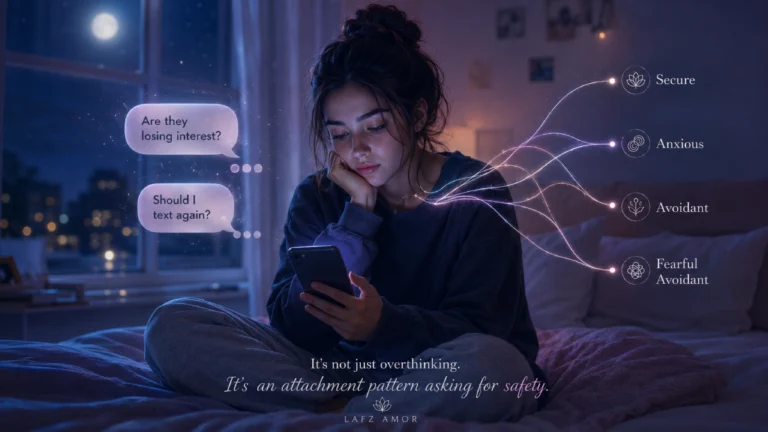
“Are they losing interest?”
“Did I do something wrong?”
“Are they mad at me?”
“Do they still love me?”
“Are we still okay?”
This is where the need for reassurance in a relationship can feel confusing.
Because part of you knows reassurance is normal. Everyone wants to feel loved, chosen, and emotionally secure.
But another part of you may feel ashamed.
You may think, “Why do I need them to say it again?”
“Why can’t I just believe them?”
“Why do I feel calm only after they reassure me?”
“Am I needy?”
Let’s be gentle here.
Needing reassurance in a relationship is not always neediness.
Sometimes it is your heart asking, “Am I still safe here?”
And that question deserves understanding.
Not shame.
The “Are We Okay?” Spiral
The spiral usually starts with a small emotional shift.
They seem distant.
You feel unsafe.
You ask for reassurance.
They say, “Yes, we are okay.”
For a moment, your body softens.
Your chest feels lighter.
Your mind stops racing.
You feel connected again.
But after some time, the fear returns.
Maybe they take longer to reply again.
Maybe their energy changes again.
Maybe they seem distracted.
And now you need reassurance again.
This can become a painful loop.
You ask.
You feel relief.
The fear returns.
You ask again.
You feel ashamed.
Then the shame makes everything heavier.
You may start thinking, “I am too much.”
But the truth is often deeper.
You may not be asking because you want drama.
You may be asking because uncertainty feels emotionally unsafe.
And when something feels unsafe, your system looks for proof that the connection is still there.
Why This Feels Embarrassing
Needing reassurance can feel embarrassing because it makes you feel exposed.
You are not just asking, “Are we okay?”
You are quietly asking:
“Do I still matter to you?”
“Are you still choosing me?”
“Am I safe with you?”
“Will you leave if I need too much?”
That is vulnerable.
And vulnerability can feel scary, especially if you have been made to feel needy, dramatic, clingy, or too sensitive before.
Maybe someone dismissed your feelings in the past.
Maybe someone made you feel ashamed for needing clarity.
Maybe someone said, “You overthink too much,” instead of helping you feel emotionally safe.
So now, even when you need reassurance, you judge yourself for needing it.
You may ask, then regret asking.
You may feel relief, then shame.
You may want comfort, but also fear looking weak.
That inner tug-of-war can be exhausting.
Because you are not only dealing with relationship anxiety.
You are also fighting the belief that your emotional needs are wrong.
They are not.
Your need for reassurance is not the enemy.
The real question is what that need is trying to tell you.
Micro Takeaway
Reassurance is not the problem.
The real question is whether reassurance is supporting safety or becoming the only source of safety.
Healthy reassurance helps love feel warmer.
But if reassurance becomes the only thing keeping you emotionally okay, your heart may be asking for deeper safety.
Is It Normal to Need Reassurance in a Relationship?
Yes, it is normal to need reassurance in a relationship. Healthy reassurance helps partners feel loved, emotionally safe, chosen, and connected. It becomes a concern when you need constant reassurance, when reassurance only calms you briefly, or when your relationship feels secure only after repeated confirmation from your partner.
Everyone needs reassurance sometimes.
Even secure people.
Even emotionally mature people.
Even people who are confident and independent.
Love is not a place where nobody needs anything.
A healthy relationship includes emotional confirmation.
A kind message after a difficult conversation.
A soft “we are okay” after conflict.
A warm “I love you” when the day feels heavy.
A clear “I am not leaving, I just need some space” when one person feels overwhelmed.
That kind of reassurance is not weakness.
It is emotional care.
The problem begins when reassurance stops feeling like support and starts feeling like survival.
When one sentence calms you for five minutes, but the fear returns.
When you cannot enjoy your day until they confirm they still care.
When you ask the same question repeatedly, but no answer truly settles you.
When your partner’s reassurance becomes the only bridge between you and panic.
That is when reassurance becomes more than a normal need.
It becomes a signal.
A signal that something inside you, or something inside the relationship, does not feel safe enough yet.
Healthy Reassurance vs Constant Reassurance
| Healthy Reassurance | Constant Reassurance |
| Helps you feel connected | Temporarily stops panic |
| Can be asked calmly | Often asked from fear |
| Builds emotional trust | Creates repeated checking |
| Exists with self-soothing | Replaces self-soothing |
| Strengthens the bond | Can exhaust both partners |
Healthy reassurance says:
“I care about you.”
“We are okay.”
“I hear you.”
“I know this felt scary, but I am here.”
Constant reassurance often says something deeper:
“I am scared again.”
“I do not feel safe unless you prove it.”
“I know you said it, but my body does not believe it.”
“I need you to calm something inside me that keeps coming back.”
Neither makes you bad.
But they are different.
Healthy reassurance builds connection.
Constant reassurance may show that your fear needs more than another answer.
It may need healing.
It may need consistency.
It may need emotional regulation.
It may need a safer relationship pattern.
Reassurance Is a Normal Emotional Need
You are not weak for wanting reassurance.
You are not childish for wanting your partner to say, “I love you.”
You are not dramatic for wanting clarity after conflict.
You are not asking for too much when you want emotional warmth in a relationship.
People need reassurance because love is vulnerable.
When you care about someone, their emotional presence matters.
Their words matter.
Their actions matter.
Their consistency matters.
Sometimes life gets stressful.
Sometimes conflict happens.
Sometimes one person feels distant.
Sometimes old fears get triggered.
Reassurance helps partners reconnect.
It says, “Even though this moment feels uncertain, the bond is still here.”
That is healthy.
That is human.
That is part of emotional intimacy.
When Reassurance Starts Becoming Painful
Reassurance starts becoming painful when it does not last.
You ask, they answer, and for a few minutes you feel okay.
Then your mind starts again.
“But what if they only said that to calm me?”
“What if they change their mind?”
“What if they are hiding something?”
“What if they care less than before?”
This can feel like emotional thirst.
No matter how much reassurance comes, the fear returns.
That usually means the need is not only about reassurance.
It may be about anxious attachment.
Past hurt.
Relationship inconsistency.
Fear of abandonment.
Lack of trust.
Low emotional safety.
Or a partner whose actions do not match their words.
If their reassurance says “we are okay,” but their behavior keeps making you feel unwanted, of course the reassurance will not settle you.
Words cannot heal a pattern that actions keep reopening.
Why Do I Need Reassurance in My Relationship?
If you keep needing reassurance in a relationship, it does not mean there is something wrong with you.
It means there is something underneath the need.
The reassurance request is often the surface.
Underneath, there may be fear.
A memory.
A wound.
A pattern.
A relationship dynamic that keeps you unsure.
So instead of asking, “Why am I so needy?”
Ask:
“What part of me does not feel safe right now?”
That question will take you much closer to the truth.
Reason 1: You May Have Anxious Attachment
Anxious attachment can make reassurance feel extremely important.
If you have anxious attachment, distance may feel threatening.
A late reply may feel like rejection.
A dry tone may feel like emotional withdrawal.
A request for space may feel like abandonment.
So reassurance becomes a way to feel safe again.
You may ask:
“Do you still love me?”
“Are we okay?”
“Are you mad at me?”
“Did I do something wrong?”
And once they reassure you, your body calms down.
But if the deeper fear is not healed, the calm may not last.
The anxiety returns, and you may need reassurance again.
Emotional Impact
You are not asking because you want drama.
You are asking because your body wants proof that love is still there.
This does not make your need wrong.
It simply means your fear needs deeper safety than one sentence can provide.
Micro Takeaway
Anxious attachment does not make your need wrong.
It means your fear needs deeper safety.
And that safety may come from both places: your partner’s consistency and your own self-soothing.
Reason 2: Past Hurt Made You Sensitive to Distance
Sometimes you need reassurance because your past taught you that distance means danger.
Maybe someone once changed suddenly.
Maybe someone became cold before leaving.
Maybe someone cheated, lied, ghosted, or disappeared without explanation.
Maybe someone made you feel loved one day and unwanted the next.
So now, when your current partner’s tone changes, your body reacts quickly.
It says:
“This is how it started last time.”
Even if the current person is not the past person, your nervous system may not know that yet.
It remembers the emotional pattern.
A small change in tone can feel like the beginning of loss.
A delayed reply can feel like the start of abandonment.
A quiet mood can feel like rejection.
You are not reacting only to today.
You may be reacting to every old moment that felt similar.
Emotional Impact
A small change in tone can feel like the beginning of loss.
That does not mean your fear is always accurate.
But it does mean your fear has history.
Be gentle with yourself.
A wound does not stop hurting just because the situation looks small from the outside.
Micro Takeaway
Your reaction may be bigger than the moment because the moment reminds your body of old pain.
Healing means learning to ask:
“Is this happening now, or does this remind me of what happened before?”
Reason 3: Your Partner’s Inconsistency Keeps Triggering You
This part is important.
Sometimes the need for reassurance is not only coming from your anxiety.
Sometimes the relationship itself is creating insecurity.
If your partner is hot and cold, vague, avoidant, emotionally distant, dishonest, or inconsistent, you may keep needing reassurance because their behavior keeps making you feel unsafe.
They say they care, but their actions feel unclear.
They say nothing is wrong, but their energy keeps shifting.
They say they want you, but avoid commitment.
They reassure you, then repeat the same behavior that triggered you.
In that case, your need for reassurance may not be irrational.
It may be a response to real instability.
This is why you should not automatically blame yourself.
Sometimes your anxiety is an old wound.
Sometimes it is information about the current relationship.
Sometimes it is both.
Emotional Impact
You may not be insecure for no reason.
You may be trying to feel safe in an unclear dynamic.
And if a relationship keeps making you feel confused, reassurance may never feel like enough.
Because the real issue is not the sentence.
It is the pattern.
Micro Takeaway
Not every need for reassurance is irrational.
Sometimes inconsistency creates anxiety.
So ask not only, “Why do I need reassurance?”
Also ask, “What is their behavior repeatedly making me feel?”
Reason 4: You Depend on Their Response to Feel Okay
When your emotional safety depends only on their response, reassurance becomes emotional oxygen.
If they reply warmly, you can breathe.
If they reply dryly, your heart drops.
If they say “I love you,” you feel safe.
If they forget to say it, you spiral.
If they reassure you, your whole mood improves.
If they do not, your day feels ruined.
This kind of dependency can feel scary because your peace no longer feels fully yours.
It sits in their phone.
Their mood.
Their timing.
Their tone.
Their attention.
And when someone else’s availability controls your nervous system, love starts feeling unstable.
Not because love is bad.
But because your safety has moved too far outside of yourself.
Emotional Impact
Their attention lifts you.
Their distance drops you.
And over time, that can make you feel powerless inside the relationship.
You may love them, but you also feel emotionally controlled by their responses.
Micro Takeaway
Love can affect your mood, but it should not fully control your worth.
The goal is not to stop caring.
The goal is to build enough inner steadiness that one message does not decide your entire emotional state.
Reason 5: You Were Taught That Needs Are “Too Much”
Some people need reassurance, then immediately feel ashamed for needing it.
This often happens when emotional needs were dismissed in the past.
Maybe people called you sensitive.
Maybe they said you overreacted.
Maybe they ignored your feelings.
Maybe they punished you for asking for comfort.
Maybe past partners made you feel needy for wanting basic clarity.
So now, you ask for reassurance and then hate yourself for asking.
You may think:
“I should not need this.”
“I am too much.”
“They will get tired of me.”
“I should be easier to love.”
But needs are not the problem.
Shame around needs is the problem.
When you shame your need for reassurance, the need does not disappear.
It becomes more anxious.
More hidden.
More desperate.
Emotional Impact
You may ask for reassurance, then hate yourself for needing it.
That is a painful double wound.
First, you feel unsafe.
Then, you punish yourself for wanting safety.
No wonder it feels heavy.
Micro Takeaway
Having emotional needs does not make you too much.
But hiding them can make love feel unsafe.
You do not need to become need-less.
You need to learn how to express needs clearly and choose people who can handle them with care.
Signs You May Be Seeking Reassurance From Anxiety, Not Clarity
Reassurance can be healthy.
But sometimes, reassurance-seeking becomes anxiety trying to calm itself.
The difference matters.
When you ask for clarity, you are trying to understand.
When you ask from anxiety, you are trying to make fear stop immediately.
Both are human.
But they need different responses.
Clarity may need a conversation.
Anxiety may need grounding, self-soothing, and pattern awareness.
Let’s look at the signs.
1. You Ask the Same Question Again and Again
Maybe you ask:
“Do you still love me?”
“Are you mad at me?”
“Are we okay?”
“Did I do something wrong?”
They answer.
You feel calm.
Then the fear returns.
So you ask again.
Not because you did not hear them.
But because the reassurance did not fully land.
This is common with anxious attachment and relationship anxiety.
The question repeats because the fear underneath has not been soothed.
What It Looks Like
You may ask:
- “Do you still love me?”
- “Are you sure?”
- “Are we okay?”
- “Are you losing feelings?”
- “Did I annoy you?”
- “Are you mad?”
- “Promise you are not leaving?”
- “Do you still want this?”
Sometimes you ask directly.
Sometimes you ask indirectly.
Sometimes you test.
Sometimes you reread their answer, trying to feel it again.
Why It Hurts
The answer helps briefly, but the fear returns.
And when the fear returns, you may feel frustrated with yourself.
You may think, “They already reassured me. Why am I still scared?”
Because reassurance may have answered the question, but not healed the fear underneath.
Micro Takeaway
Repeated reassurance may mean the deeper fear has not been soothed yet.
Instead of only asking again, pause and ask:
“What am I afraid will happen if they do not reassure me right now?”
That answer will show you the wound beneath the question.
2. You Feel Calm Only After They Reply
If your peace returns only when they reply, reassurance may have become your emotional regulator.
Their response becomes the thing that tells your body whether you are safe.
That can feel very intense.
When they reply warmly, you feel loved.
When they delay, you feel rejected.
When they explain, you feel calm.
When they go quiet, you feel abandoned.
Your mood rises and falls with their attention.
What It Looks Like
Your mood may change based on:
- How fast they reply
- How warmly they respond
- Whether they use affectionate words
- Whether they say goodnight
- Whether they seem interested
- Whether they reassure you first
- Whether they are online but not texting you
This can be exhausting because your nervous system is always waiting for an external signal.
You are not just living your day.
You are emotionally checking the weather of the relationship.
Why It Hurts
Your peace becomes dependent on someone else’s availability.
And no person can be available perfectly all the time.
Even loving partners get busy.
Tired.
Distracted.
Stressed.
Quiet.
If every change feels like danger, you will keep needing reassurance to survive ordinary relationship moments.
Micro Takeaway
Reassurance should support your safety, not become the only place safety exists.
You deserve reassurance from love.
But you also deserve steadiness within yourself.
3. You Do Not Fully Believe Their Reassurance
Sometimes your partner reassures you.
They say they care.
They say nothing is wrong.
They say they are not leaving.
But you still feel unsure.
You start looking for hidden signs.
Their tone.
Their timing.
Their body language.
Their online status.
Their energy.
You do not fully believe the reassurance because your body is still expecting pain.
This is especially common if words have failed you before.
If someone in the past said “I love you” and still left, lied, cheated, or changed, reassurance may not feel safe by itself.
You may need behavior.
Consistency.
Time.
Repeated emotional evidence.
What It Looks Like
They say they care, but you still look for hidden signs that they may leave.
You may think:
“They are only saying that.”
“They feel pressured.”
“They will change later.”
“They are hiding something.”
“They care now, but what if they stop?”
The reassurance reaches your ears, but not your nervous system.
Why It Hurts
Words cannot settle you if your body is still expecting pain.
This is why you may need more than verbal reassurance.
You may need patterns that make the words believable.
Micro Takeaway
Sometimes you need consistency, not just another sentence.
A loving sentence matters.
But repeated loving behavior builds trust.
4. You Test Them Instead of Asking Directly
When reassurance feels too vulnerable to ask for directly, you may start testing.
You go quiet to see if they notice.
You pull away to see if they chase.
You ask indirect questions.
You create small tests of love.
You may not do this to manipulate them intentionally.
Sometimes testing comes from fear.
You want proof that they care without having to risk saying, “I need reassurance.”
But tests often create confusion.
The other person may not understand what is happening.
They may feel pushed, controlled, or unfairly measured.
And you may still not feel safe.
What It Looks Like
You may:
- Go quiet to see if they notice
- Pull away to see if they chase
- Ask indirect questions
- Create small tests of love
- Delay replying to see if they care
- Act upset but say “nothing” when they ask
- Post something hoping they will react
The real need is reassurance.
But the method becomes indirect.
That makes the connection less clear.
Why It Hurts
Tests create insecurity, even in caring relationships.
A partner may care about you, but repeated testing can make them feel like they are always failing an invisible exam.
And for you, testing rarely gives lasting peace.
Even if they pass the test, another test may come later.
Micro Takeaway
Testing love often creates the fear you were trying to prevent.
Try asking directly instead.
It is scary, but it is cleaner.
And healthy love needs clarity more than guessing games.
5. You Feel Ashamed After Asking for Reassurance
You ask.
They reassure you.
You feel relief.
Then shame arrives.
“Why am I like this?”
“I should not have asked.”
“They must think I am needy.”
“I am ruining everything.”
This shame can make the reassurance cycle heavier.
Because now you need reassurance about the reassurance.
You may want them to tell you they are not annoyed.
That you are not too much.
That they still love you even after you asked.
And then the loop grows.
What It Looks Like
You ask, feel relief, then think, “Why am I like this?”
You may apologize repeatedly.
You may say, “Sorry, I know I am annoying.”
You may start hiding your anxiety.
You may promise yourself not to ask again, then feel worse when the fear returns.
This is not healing.
This is fear plus self-attack.
Why It Hurts
Shame makes the need feel even heavier.
A normal emotional need becomes a personal failure in your mind.
And once you believe your needs are shameful, you either suppress them or express them from panic.
Neither helps.
Micro Takeaway
The goal is not to shame the need.
The goal is to understand what the need is asking for.
Your need for reassurance may be saying:
“I want to feel safe.”
“I want clarity.”
“I am scared of being abandoned.”
“I need consistency.”
“I need to know this relationship is not one-sided.”
Listen to the message underneath the request.
How to Ask for Reassurance in a Relationship Without Feeling Needy
You are allowed to ask for reassurance.
Let that sentence sit for a moment.
You do not have to earn the right to need comfort.
You do not have to be perfectly secure before you can be loved.
You do not have to pretend you are fine when you feel unsure.
The goal is not to never ask for reassurance.
The goal is to ask in a way that is clear, honest, and grounded.
Not from accusation.
Not through testing.
Not by attacking.
Not by begging.
But by naming what you feel and asking for what you need.
Step 1: Name the Feeling Before You Ask
When you name the feeling, you reduce the emotional fog.
Instead of jumping straight into fear, you create a softer entry.
You are not saying, “You are doing something wrong.”
You are saying, “This is what I am feeling.”
That distinction matters.
It makes the conversation safer.
For you and for them.
Clear Action
Say:
“I feel a little anxious right now.”
“I feel unsure because communication felt different today.”
“I am feeling triggered, and I want to ask clearly instead of assuming.”
“I know this may be my fear coming up, but I need a little clarity.”
This is honest without blaming.
It also helps you take responsibility for your emotional experience while still asking for support.
Emotional Reassurance
Naming the feeling helps you ask from honesty, not panic.
You are allowed to say what is happening inside you.
You do not have to hide your fear until it turns into a bigger reaction.
Step 2: Ask for the Specific Reassurance You Need
Vague reassurance requests can create confusion.
“Do you even care?” may be what fear says.
But the real need may be:
“Can you tell me we are okay?”
“Can you explain why your energy changed?”
“Can you remind me where we stand?”
“Can you reassure me that you are just busy, not pulling away?”
The more specific you are, the easier it becomes for your partner to respond helpfully.
Clear Action
Instead of saying:
“Do you even care?”
Try:
“Can you reassure me that we are okay?”
Instead of:
“You are acting weird.”
Try:
“Can you tell me if you are just busy or if something changed?”
Instead of:
“I feel like you are leaving.”
Try:
“Can you remind me where we stand?”
Specific reassurance is not needy.
It is emotionally clear.
Emotional Reassurance
Specific reassurance is easier to receive and easier for your partner to give.
You do not need to make your partner guess what would help.
You can say it gently.
Step 3: Avoid Blame-Based Reassurance Requests
When fear takes over, reassurance requests can turn into accusations.
“You never care about me.”
“You always do this.”
“You are ignoring me.”
“You make me feel unwanted.”
Maybe these statements come from real pain.
But they can make the other person defensive.
And once they get defensive, you may feel even less reassured.
This does not mean you should hide hurt.
It means you should express hurt in a way that keeps the door open for understanding.
Clear Action
Replace:
“You never care about me.”
With:
“When communication changes suddenly, I feel anxious. Can we talk about what happened?”
Replace:
“You are ignoring me.”
With:
“I noticed we have not talked much today, and I started feeling unsure. Are we okay?”
Replace:
“You always pull away.”
With:
“I notice distance comes up after emotional conversations. I want to understand what happens for you.”
This protects the conversation from becoming a battlefield.
Emotional Reassurance
You can ask for emotional safety without turning fear into accusation.
Your fear deserves a voice.
But it does not have to speak in a way that attacks the person you want closeness with.
Step 4: Receive the Reassurance Slowly
Asking for reassurance is one skill.
Receiving it is another.
Sometimes your partner reassures you, but your anxiety wants to ask again immediately.
It wants more proof.
More certainty.
More emotional confirmation.
But part of healing is learning to let reassurance land.
Not forcing yourself to believe it instantly.
Just letting it stay for a moment before asking again.
Clear Action
After they reassure you, pause and repeat:
“They gave me clarity. I can let this land before asking again.”
Or:
“I received reassurance. Now I can breathe and watch the pattern.”
Or:
“My fear wants more proof, but I can give this reassurance some time.”
This helps you build trust slowly.
Not blind trust.
Just the ability to receive support without immediately pushing it away.
Emotional Reassurance
Receiving reassurance is also a skill.
Especially if you are used to love changing suddenly.
Be patient with yourself.
Your nervous system may need time to believe safety.
Step 5: Pair Reassurance With Self-Soothing
Reassurance from your partner can help.
But if it is not paired with self-soothing, you may keep needing more and more from them.
Self-soothing teaches your body:
“I can receive support, and I can also support myself.”
This is important because no partner can regulate every fear for you.
Even a loving partner has limits.
Even a caring partner cannot be your only source of emotional safety.
That does not mean you are alone.
It means safety should become shared, not one-sided.
Clear Action
After asking for reassurance, do one grounding action:
- Breathe
- Journal
- Walk
- Drink water
- Put phone away
- Return to your routine
- Stretch your body
- Listen to calming music
- Write the reassurance down
- Remind yourself of consistent actions, not just words
This helps your body absorb the reassurance instead of immediately searching for the next proof.
Emotional Reassurance
Your partner can support your safety, but your body also needs to learn safety from you.
This is not about needing less love.
It is about becoming safer inside love.
How to Stop Needing Constant Reassurance
If you need constant reassurance, the goal is not to shame yourself into silence.
The goal is to understand the cycle and build deeper safety.
You do not stop needing reassurance by pretending you do not care.
You stop needing constant reassurance by learning what triggers the need, soothing the fear underneath it, and choosing relationships where consistency makes reassurance easier to believe.
Let’s make this practical.
Step 1: Identify the Trigger Behind the Need
Before asking for reassurance, pause and ask:
“What triggered me?”
Was it a late reply?
A dry tone?
Them needing space?
A conflict?
A memory?
A change in routine?
Seeing them active online?
Feeling like they are less affectionate?
The reassurance request usually sits on top of a trigger.
If you identify the trigger, you understand the fear more clearly.
Clear Action
Ask:
- What happened?
- What did I fear?
- What story did my mind create?
- What reassurance am I trying to get?
- Is this a one-time moment or a repeated pattern?
- Am I afraid of losing them, disappointing them, or not being enough?
This slows the spiral.
You stop asking from pure panic and start asking from awareness.
Emotional Reassurance
The reassurance request is usually sitting on top of a deeper fear.
Find the fear, and you can respond more wisely.
Step 2: Separate Feeling From Fact
An anxious mind often turns feelings into facts.
You feel abandoned, so it feels like they are abandoning you.
You feel unwanted, so it feels like they do not care.
You feel insecure, so it feels like something is definitely wrong.
But a feeling can be real without being the whole truth.
That is where feeling vs fact helps.
Clear Action
Use this table:
| Feeling | Fact | Secure Response |
| They are leaving | They replied late | Wait, observe, ask calmly |
| They do not care | Their tone changed | Check pattern, not panic |
| I am too much | I asked for clarity | Needs are not shameful |
This is not about dismissing your feelings.
It is about giving them context.
For example:
Feeling: “They are pulling away.”
Fact: “They replied late today.”
Secure response: “I can wait, care for myself, and ask calmly if this becomes a pattern.”
That is emotional clarity.
Emotional Reassurance
Your feeling is real, but it may not be the full truth.
You can respect your emotion without handing it full control.
Step 3: Build a Reassurance Bank
When you are triggered, your brain may forget all the evidence of safety.
It may only remember fear.
That is why a reassurance bank can help.
A reassurance bank is a saved collection of real evidence that your relationship has care, consistency, and repair.
Not fantasy.
Not excuses.
Real evidence.
Clear Action
Save real evidence:
- Kind messages
- Consistent actions
- Repairs after conflict
- Times they showed care
- Moments they chose you clearly
- Times they came back after space
- Times they listened to your feelings
- Times their actions matched their words
When anxiety rises, read the evidence before asking again.
This does not mean you ignore red flags.
It means you give your nervous system access to real safety data.
Emotional Reassurance
Your brain may forget safety when triggered, so give it evidence to return to.
But remember:
A reassurance bank only works if the relationship has real evidence of safety.
If the bank is empty, that tells you something too.
Step 4: Watch Patterns Instead of Asking Repeatedly
Sometimes, instead of asking the same question again and again, you need to observe the pattern.
If they say, “I care,” do their actions show care?
If they say, “We are okay,” do they repair after conflict?
If they say, “I am not leaving,” do they communicate when they need space?
If they say, “You matter,” do they treat you like you matter consistently?
Repeated reassurance cannot replace repeated behavior.
Words are important.
But patterns are what make words believable.
Clear Action
Ask once clearly. Then observe:
- Do their actions match their reassurance?
- Do they show consistency?
- Do they repair?
- Do they respect your needs?
- Do they become clearer over time?
- Do you feel safer over time?
- Do they keep repeating the same hurtful pattern?
This helps you avoid getting stuck in a loop of asking and asking while ignoring what behavior is showing you.
Emotional Reassurance
Repeated reassurance cannot replace consistent behavior.
If their actions are safe, let the pattern support you.
If their actions are unsafe, do not force yourself to believe words that behavior keeps contradicting.
Step 5: Choose Emotionally Safe Relationships
You will naturally need less reassurance in relationships that feel emotionally safe.
Not because you stop needing love.
But because the relationship gives you repeated evidence that love is steady.
Emotionally safe relationships do not require you to guess everything.
They do not leave you wondering where you stand every week.
They do not punish you for asking for clarity.
They do not make reassurance feel like begging.
They offer consistency.
Repair.
Honesty.
Warmth.
Respect.
Clear Action
Look for partners who offer:
- Clarity
- Warmth
- Consistency
- Repair
- Emotional honesty
- No hot-and-cold games
- Respect for emotional needs
- Space with communication
- Actions that match words
This does not mean you need a perfect partner.
Perfect people do not exist.
But you do need someone whose pattern helps your nervous system feel safer, not more confused.
Emotional Reassurance
You need less reassurance when the relationship itself feels safer.
The right relationship does not remove every insecurity.
But it does not keep feeding them either.
Common Mistakes People Make With Reassurance in Relationships
When reassurance becomes emotionally charged, people often make mistakes.
Not because they are bad.
Because fear is loud.
And when fear gets loud, quick relief can look like the best option.
But some habits can make the reassurance cycle more painful.
Let’s look at them gently.
Mistake 1: Calling Yourself Needy for Wanting Reassurance
This is one of the most common mistakes.
You need reassurance, then immediately shame yourself.
“I am needy.”
“I am too much.”
“I am insecure.”
“They will get tired of me.”
But wanting reassurance is not automatically neediness.
It is a normal emotional need.
The issue is not the need itself.
The issue is whether the need is being expressed clearly, received respectfully, and supported by deeper safety.
Why It Is Harmful
Calling yourself needy turns a normal emotional need into shame.
And shame makes you hide.
When you hide your need, it may come out later as anxiety, testing, resentment, or emotional panic.
Emotional Consequence
You may hide your needs until they come out as anxiety.
A gentler sentence is:
“I need reassurance right now. Let me understand why.”
That sentence creates space for healing.
Mistake 2: Asking From Panic Instead of Clarity
When reassurance is asked from panic, it may come out as accusation.
“Do you even care?”
“Why are you acting like this?”
“You are going to leave me, aren’t you?”
“You never make me feel secure.”
The pain underneath may be real.
But panic can make the request harder to hear.
Your partner may become defensive.
Then you may feel even more unsafe.
The spiral grows.
Why It Is Harmful
Panic can turn a simple reassurance request into accusation, testing, or pressure.
And then the conversation becomes about the delivery, not the need.
Emotional Consequence
Your partner may become defensive, and you may feel even more unsafe.
Try to pause before asking.
Even one minute can soften the tone.
Ask from the part of you that wants connection, not the part of you that wants emergency proof.
Mistake 3: Using Reassurance as the Only Coping Tool
If reassurance is your only coping tool, you may become dependent on someone else’s response to feel okay.
This is painful because you lose access to your own emotional ground.
Your partner’s answer becomes your calm.
Their delay becomes your panic.
Their warmth becomes your worth.
Their distance becomes your fear.
That is too much power for one person to hold.
Even someone loving cannot carry your entire nervous system.
Why It Is Harmful
It keeps your safety completely outside of you.
And when safety lives only outside of you, you feel helpless when the other person is unavailable.
Emotional Consequence
You feel okay only when someone else calms you.
The healthier path is shared safety.
They reassure.
You self-soothe.
They communicate.
You regulate.
They show consistency.
You observe reality.
Both parts matter.
Mistake 4: Ignoring Relationship Inconsistency
Sometimes people focus only on their anxiety and ignore what the relationship is doing.
They think:
“I just need to heal.”
“I am the insecure one.”
“I should stop needing reassurance.”
But what if the relationship is genuinely inconsistent?
What if your partner lies, disappears, avoids clarity, gives mixed signals, or repeats hurtful behavior?
Then your need for reassurance may not be just insecurity.
It may be a response to instability.
Why It Is Harmful
Sometimes you keep asking for reassurance because their behavior keeps creating doubt.
If you only blame yourself, you may ignore the pattern that keeps triggering you.
Emotional Consequence
You blame yourself for anxiety that may be responding to real instability.
Healing does not mean gaslighting yourself into calm.
It means seeing clearly.
Your triggers matter.
Their patterns matter too.
Mistake 5: Staying Where Reassurance Is Mocked
A caring partner may not always know how to reassure you perfectly.
They may feel tired sometimes.
They may need to learn.
They may need boundaries too.
That is human.
But if someone mocks your need for reassurance, calls you dramatic, laughs at your need for clarity, or makes you feel pathetic for wanting emotional safety, that is not okay.
Shame does not create secure love.
It creates fear.
Why It Is Harmful
A partner who shames your need for emotional safety may deepen your insecurity.
Instead of helping you feel safe, they make you feel wrong for needing safety.
Emotional Consequence
You start believing your needs are the problem.
But the problem may be that you are asking for care in a place that keeps punishing vulnerability.
When Should You Walk Away?
Needing reassurance does not mean you should leave.
And needing reassurance does not mean you should stay.
The answer depends on the pattern.
Is your partner caring but learning?
Or dismissive and harmful?
Is your anxiety mostly an old wound?
Or is their behavior repeatedly creating uncertainty?
Are you both trying to build safety?
Or are you begging for emotional basics?
These questions matter.
Walk Away When They Shame You for Needing Reassurance
A caring partner may not always know what to say.
But they will not mock your need for clarity or emotional safety.
They may say:
“I want to reassure you, but I also want us to work on this together.”
They may say:
“I care about you. I need a little space, but we are okay.”
They may say:
“I do not always know how to respond, but your feelings matter.”
That is different from:
“You are too needy.”
“You always ruin things.”
“You are so insecure.”
“No one else would deal with this.”
If reassurance is met with cruelty, pay attention.
You should not have to feel ashamed for wanting to feel safe.
Walk Away When Their Behavior Keeps Creating the Need for Reassurance
If they repeatedly lie, disappear, give mixed signals, or avoid clarity, your need for reassurance may be a response to real instability.
In that case, asking for reassurance again and again may not solve the problem.
Because the problem is not that you need too much.
The problem may be that they offer too little consistency.
If someone keeps creating doubt, then gets annoyed that you feel doubtful, that is unfair.
You deserve more than words that soothe you temporarily while actions keep hurting you repeatedly.
Walk Away When You Are Begging for Basic Emotional Security
There is a difference between asking for reassurance and begging for basic emotional security.
Asking sounds like:
“Can you reassure me we are okay?”
Begging sounds like:
“Please care about how much this hurts me.”
“Please stop disappearing.”
“Please tell me where I stand.”
“Please treat my feelings like they matter.”
If you are begging for emotional basics, pause.
A relationship should not make you feel like you have to plead for care.
You may need healing, yes.
But you also need a relationship that does not make emotional safety feel impossible.
Walk Away When Reassurance Never Comes With Changed Behavior
Words are not enough if behavior keeps repeating the same wound.
If they say, “We are okay,” but keep avoiding repair, something is missing.
If they say, “I care,” but keep disappearing, something is missing.
If they say, “You matter,” but keep dismissing your needs, something is missing.
If they say, “I will change,” but the pattern never changes, something is missing.
Reassurance without behavior is a temporary bandage.
It cannot heal a repeated cut.
Reality Check
Needing reassurance does not make you too much.
But staying where your emotional safety is repeatedly ignored can slowly make you lose yourself.
You can work on your anxiety and still require care.
You can practice self-soothing and still need consistency.
You can be understanding and still walk away from emotional neglect.
Both can be true.
Final Thoughts: You Are Not Needy for Wanting to Feel Safe
Needing reassurance in a relationship does not mean you are weak, dramatic, or impossible to love.
It means something inside you wants to feel safe, chosen, and emotionally held.
And honestly, that need is human.
We all want to know that love is still there after conflict.
We all want to feel remembered when distance appears.
We all want someone to say, “I care,” and mean it with both words and actions.
But reassurance should not become something you beg for.
It should be part of a relationship where care, clarity, consistency, and self-soothing work together.
Your partner can reassure you.
You can also learn to soothe yourself.
Your partner can show consistency.
You can also learn to watch patterns instead of chasing repeated proof.
Your partner can comfort you.
You can also learn to stop treating every fear as a fact.
That is healing.
Not needing anything.
Not becoming cold.
Not pretending you are fine.
Just becoming safer.
Tum zyada nahi ho.
Tum bas yeh jaana chahte ho ki pyaar abhi bhi safe hai.
And that need deserves understanding, not shame.
So the next time you want to ask, “Are we okay?” pause gently.
Ask yourself:
“What am I really afraid of right now?”
“What do I need: reassurance, clarity, consistency, or self-soothing?”
“Is this fear coming from me, from them, or from the pattern between us?”
That is where emotional clarity begins.
Not in judging your need.
But in listening to it wisely.
Read Next
If this blog helped you understand your need for reassurance, read these next:
- Anxious Attachment in Relationships
- How to Heal Anxious Attachment
- How to Become Secure in Relationships
If you often panic when your partner feels distant, start with anxious attachment.
If reassurance helps only for a little while, read how to heal anxious attachment.
If you want to build a calmer, safer way to love, read how to become secure in relationships.
Because healing does not mean you stop needing reassurance.
It means reassurance becomes part of love, not the only thing keeping love from feeling unsafe.