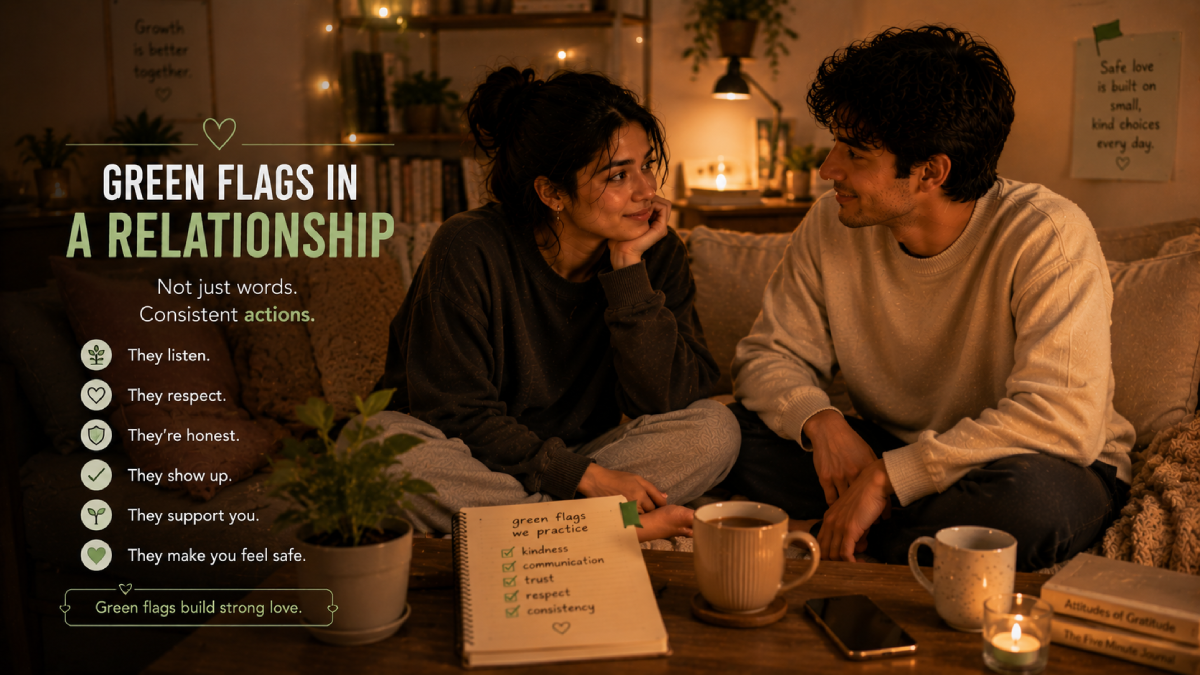
Green Flags in a Relationship: 17 Safe Love Signs
What Are Green Flags in a Relationship?
Green flags in a relationship are the signs that love is emotionally safe, respectful, consistent, honest, and healthy for both people.
They are the moments that make your heart feel calmer, not more confused.
They are not just cute texts, romantic dates, or someone saying the right thing once.
A real green flag is a pattern.
It is how someone treats you when they are tired.
How they respond when you are hurt.
How they handle your boundaries.
How they repair after conflict.
How safe you feel being your real self around them.
Maybe you searched for green flags in a relationship because you are tired of only hearing about red flags.
Maybe you already know what unhealthy love looks like.
Maybe you know what it feels like to overthink, chase, wait, doubt, decode messages, and wonder where you stand.
But now you want to know something softer:
“What does safe love actually look like?”
And that question matters.
Because sometimes, when you are used to confusing love, healthy love can feel unfamiliar.
Not wrong.
Just new.
Green flags are signs that love feels emotionally safe, not confusing
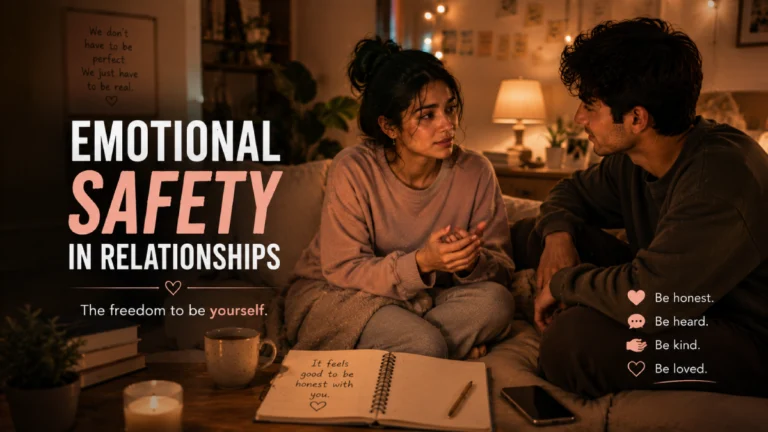
One of the biggest green flags in a relationship is emotional safety.
It means you can speak honestly without feeling like you are risking the whole relationship.
You can say, “That hurt me,” without preparing for punishment.
You can say, “I need reassurance,” without feeling ashamed.
You can say, “I need space,” without being guilt-tripped.
Emotionally safe love does not make you feel like every feeling has to be perfectly edited before it is shared.
It gives your emotions room to breathe.
And no, this does not mean your partner will always respond perfectly.
Healthy love is not perfect love.
But it does mean your feelings are not treated like an inconvenience, a weakness, or a problem to shut down quickly.
They show up in patterns, not only special moments
A green flag is not one sweet message after days of confusion.
It is not one apology after repeated hurt.
It is not one deep conversation followed by the same old behavior.
Green flags show up in patterns.
They show up when someone keeps their word.
When they listen again and again.
When they repair after conflict.
When they respect your no even when it disappoints them.
When they are kind not only when things are easy, but also when things are uncomfortable.
That is where real safety is built.
Not in the one perfect moment.
In the repeated emotional pattern.
A green flag is not perfection; it is consistent emotional care
A healthy partner will still make mistakes.
They may say the wrong thing sometimes.
They may misunderstand you.
They may need space.
They may have emotional blind spots.
But the difference is this:
They care about the impact.
They care enough to listen.
They care enough to repair.
They care enough to grow.
A green flag is not someone who never hurts you.
A green flag is someone who does not ignore the hurt they caused.
Quick answer for featured snippet
Green flags in a relationship are positive signs that a relationship is emotionally safe, respectful, honest, consistent, supportive, and healthy for both people.
Micro takeaway
Green flags are not just cute gestures.
They are repeated behaviors that help your heart feel safe.
Why Green Flags Can Feel Strange If You Are Used to Red Flags
It can be confusing when someone treats you well, but your heart does not immediately relax.
Maybe they are consistent, but you still feel suspicious.
Maybe they communicate clearly, but you keep waiting for distance.
Maybe they are calm and kind, but a part of you wonders, “Is this boring?”
If you have been through unstable love before, green flags may not feel exciting at first.
They may feel strange.
Because your heart may be used to love feeling like anxiety.
Waiting.
Chasing.
Proving.
Decoding.
Hoping.
Recovering after emotional damage.
So when love finally feels calmer, your nervous system may not know what to do with it.
Calm love may feel unfamiliar when chaos felt normal
If your past relationships were full of emotional highs and lows, calm love can feel suspicious.
You may think:
“Why am I not obsessing?”
“Why am I not scared all the time?”
“Why does this feel too simple?”
“Is there no spark?”
“Am I settling?”
But sometimes calm does not mean empty.
Sometimes calm means safe.
Sometimes your heart is not bored.
It is just not panicking.
Emotional impact
You may mistake peace for boredom if your heart learned love through anxiety.
Aur kabhi-kabhi sukoon boring nahi hota.
Kabhi-kabhi sukoon pehli baar mil raha hota hai.
Consistency can feel suspicious after emotional inconsistency
If affection used to come and go, consistency may feel hard to trust.
You may wait for the switch.
The coldness.
The sudden distance.
The “I’m busy” that feels different.
The shift in tone.
The moment where everything changes.
When someone is steady with you, your mind may still scan for danger because it remembers what happened before.
That does not mean you are ungrateful.
It means part of you is still learning that love does not always have to disappear.
Psychology layer
If affection used to be unpredictable, steady love may feel too good to trust at first.
So instead of forcing yourself to trust immediately, observe the pattern.
Does their care stay steady over time?
Do their actions match their words?
Do they remain respectful when things are not going perfectly?
That is where trust slowly builds.
You may overlook green flags because they feel less intense
Unstable love can create emotional intensity.
The waiting feels intense.
The uncertainty feels intense.
The relief after they come back feels intense.
The apology after hurt feels intense.
The small affection after distance feels powerful because you were emotionally starving for it.
But intensity is not always intimacy.
Sometimes it is anxiety.
Healthy love may not create the same emotional highs because it is not keeping you in fear.
It may feel softer.
Quieter.
Steadier.
But that does not make it less real.
Behavior explanation
Unstable love often creates emotional highs that safe love does not need to create.
Safe love does not have to make you suffer first so affection feels meaningful later.
You may need to relearn what safe love actually looks like
If you have mostly known confusing love, green flags may not feel obvious.
You may understand red flags faster than safe patterns.
You may know when something hurts.
But not know what real care looks like.
That is not your fault.
A lot of people learn love through survival before they learn love through safety.
So this article is not just a checklist.
It is a gentle reminder of what your heart is allowed to receive.
Micro takeaway
Sometimes a green flag does not feel exciting at first.
Sometimes it feels peaceful.
And peaceful love can still be deeply romantic.
17 Green Flags in a Relationship
Green flags in a relationship are not about finding a perfect person.
They are about noticing patterns of emotional maturity.
A person can be attractive, funny, charming, and exciting, but still not emotionally safe.
A real green flag is deeper than chemistry.
It shows you that this person can love with care, not just intensity.
1. You feel emotionally safe with them
This is one of the biggest green flags in a relationship.
Emotional safety means you can be real without constantly protecting yourself.
You do not have to hide your feelings.
You do not have to pretend you are okay.
You do not have to make your needs sound smaller.
You do not feel like one vulnerable moment will make them see you differently.
With the right person, honesty may still feel scary sometimes, but it does not feel dangerous.
What this looks like
You can express hurt, needs, fears, and boundaries without fear of punishment or mockery.
You can say:
“I felt hurt.”
“I need reassurance.”
“I am scared.”
“I do not feel okay.”
“I need this boundary respected.”
And they may not always know the perfect response, but they do not shame you for having feelings.
Why this matters
Emotional safety makes honesty, vulnerability, and deeper intimacy possible.
Without it, people start hiding.
And love cannot grow deeply where people are emotionally hiding.
Reflection question
Do I feel safe being emotionally real with this person?
2. Their actions match their words
Anyone can say they care.
A green flag is when their behavior makes you feel cared for.
They do not only say, “I’m here for you,” and then disappear when you need them.
They do not only say, “I respect you,” and then dismiss your boundaries.
They do not only say, “I’ll do better,” and then repeat the same hurt with no real effort.
Their love has evidence.
What this looks like
They do not only say they care; their behavior shows consistency, respect, and effort.
If they promise to call, they try.
If plans change, they communicate.
If they hurt you, they repair.
If they say you matter, their actions make you feel considered.
Why this matters
Trust is built through repeated behavior, not emotional speeches.
Words may comfort you for a moment.
Patterns tell you the truth over time.
Reflection question
Do I trust their pattern, or only their promises?
3. They communicate clearly instead of keeping you guessing
A person who communicates clearly does not make you decode everything.
You do not have to keep asking yourself:
“What did that mean?”
“Are they upset?”
“Are they losing interest?”
“Why did their tone change?”
“Should I ask or will I sound needy?”
Clear communication is a green flag because it protects emotional safety.
It does not leave your mind stuck in confusion.
What this looks like
They are honest about feelings, plans, effort, intentions, and difficult topics.
They tell you when they need space instead of disappearing.
They communicate changes instead of letting you overthink.
They are not perfect, but they do not make confusion the normal language of the relationship.
Why this matters
Clear communication helps you feel emotionally considered.
You do not feel like you are begging for basic clarity.
Reflection question
Do I feel informed and considered, or constantly confused?
4. They respect your boundaries without guilt-tripping you
A major green flag is someone who respects your “no.”
Not only when it is easy for them.
But also when your boundary disappoints them.
Because real respect is not proven when your boundary benefits the other person.
It is proven when your boundary requires them to adjust.
What this looks like
You can say no, ask for space, or express discomfort without being pressured or punished.
You can say:
“I need some alone time.”
“I am not comfortable with that.”
“I cannot do this today.”
“I need us to slow down.”
And they do not turn your boundary into proof that you do not love them.
Why this matters
Boundaries allow love to stay respectful.
Without boundaries, love can slowly turn into pressure, resentment, or emotional exhaustion.
Reflection question
Are my boundaries respected even when they are inconvenient?
5. Conflict does not turn cruel
Every relationship has conflict.
But in a healthy relationship, conflict does not become a place where people try to hurt each other.
A green flag is someone who can be upset without becoming cruel.
They do not insult you.
They do not threaten you.
They do not humiliate you.
They do not use your insecurities against you.
They do not turn one disagreement into an attack on your whole character.
What this looks like
Disagreements do not become insults, threats, humiliation, silent punishment, or character attacks.
Even when emotions are high, there is still a basic respect underneath.
The conversation may be hard.
But it does not feel emotionally unsafe.
Why this matters
How someone treats you during conflict reveals emotional maturity.
Sweetness during good moments is easy.
Kindness during stress is a deeper green flag.
Reflection question
Do disagreements feel difficult but still respectful?
6. They repair after hurting you
A green flag is not someone who never makes mistakes.
A green flag is someone who cares when they hurt you.
They do not expect you to “just get over it.”
They do not say sorry only to end the conversation.
They do not act like time alone will magically heal what needed care.
They repair.
What this looks like
They can apologize, take responsibility, clarify misunderstandings, and try to do better.
They can say:
“I understand why that hurt.”
“I got defensive.”
“I should have listened.”
“I am sorry.”
“What can I do differently next time?”
And then they try to show change.
Why this matters
Repair helps trust return after conflict because the hurt is not ignored or minimized.
Without repair, even small hurts can collect and become emotional distance.
Reflection question
Do they repair, or do they expect me to move on without care?
7. You feel heard, not just replied to
There is a difference between someone replying to you and someone actually hearing you.
A person may respond quickly but still miss your emotional meaning.
They may answer your words while ignoring your feelings.
A green flag is someone who listens deeper.
They care about what you meant, not only what you said.
What this looks like
They listen to understand the emotional meaning behind your words, not just to defend themselves.
If you say, “I felt ignored,” they do not only say, “I was busy.”
They try to understand what being ignored felt like for you.
Why this matters
Feeling heard helps the relationship feel emotionally safe, especially during difficult conversations.
Sometimes being understood is what softens the heart.
Reflection question
Do they understand my feelings, or only respond to my words?
8. You can be yourself without performing
A real green flag is feeling like you do not have to constantly act.
You do not have to act cooler than you are.
Less emotional than you are.
More perfect than you are.
More available than you are.
Less needy.
Less sensitive.
Less human.
You can exist naturally.
What this looks like
You do not have to act cooler, calmer, happier, less needy, or more perfect to stay loved.
You can be silly.
Quiet.
Emotional.
Ambitious.
Confused.
Soft.
Independent.
You can be a full person, not a carefully edited version of yourself.
Why this matters
A healthy relationship should not make you perform for love.
It should make you feel safe enough to be real.
Reflection question
Am I more myself with them, or less?
9. They support your growth instead of controlling you
A green flag is someone who wants you to grow, not shrink.
They support your dreams.
They encourage your healing.
They respect your friendships.
They are not threatened by your confidence.
They do not need you to become smaller so they can feel secure.
This kind of love feels freeing.
What this looks like
They encourage your goals, friendships, healing, confidence, and individuality.
They do not guilt-trip you for having a life.
They do not make your growth feel like betrayal.
They do not turn your independence into a problem.
Why this matters
A healthy partner does not need to make you smaller to feel secure.
Real love wants to see you become more yourself, not less.
Reflection question
Does this relationship help me grow without losing myself?
10. They are consistent, not hot and cold
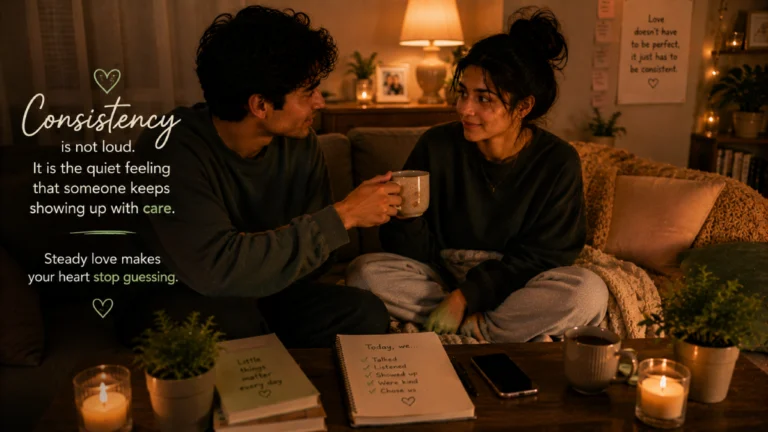
Consistency is not boring.
Consistency is emotional safety.
A green flag is someone whose care does not disappear randomly.
They do not make you feel loved one day and invisible the next.
They do not create confusion and then call you dramatic for reacting to it.
They do not return warmly only when you start pulling away.
Their love has steadiness.
What this looks like
Their care does not disappear randomly or return only when you pull away.
They may have busy days.
They may need space.
They may have stress.
But they communicate in a way that does not leave you emotionally abandoned.
Why this matters
Consistency helps your nervous system feel secure instead of constantly alert.
Your heart does not have to stay on duty, checking for signs of distance.
Reflection question
Do I feel steady with them, or emotionally on edge?
11. They take accountability without making everything your fault
Accountability is attractive in a quiet, powerful way.
A person who can say, “I see how that affected you,” is emotionally safer than someone who always has an excuse.
A green flag is someone who can reflect on their impact.
Even when they did not mean to hurt you.
Because intention matters, but impact matters too.
What this looks like
They can say, “I see how that affected you,” instead of only defending their intention.
They do not turn every concern back onto you.
They do not make you regret bringing it up.
They do not need to be innocent in every conversation.
Why this matters
Accountability turns mistakes into growth instead of repeated emotional harm.
Without accountability, the same wound keeps reopening.
Reflection question
Can they admit impact without turning the conversation against me?
12. They make you feel calm, not constantly anxious
A green flag is someone whose presence brings more calm than confusion.
This does not mean you will never feel anxious.
Your own past, fears, and attachment patterns may still show up.
But the relationship itself should not constantly keep you in emotional survival mode.
You should not always be decoding.
Chasing.
Waiting.
Panicking.
Trying to figure out whether you still matter.
What this looks like
You do not spend most of the relationship decoding texts, tone, distance, or mixed signals.
Their care feels steady enough that your mind can rest.
Their communication is clear enough that you do not have to create stories to fill the silence.
Why this matters
Healthy love gives emotional stability, not constant uncertainty.
Your heart deserves love that does not always make it brace for impact.
Reflection question
Does this connection feel peaceful, or does it keep me in survival mode?
13. They respect your individuality
In a healthy relationship, closeness does not become control.
You can love someone and still have your own life.
Your own pace.
Your own friendships.
Your own goals.
Your own way of processing emotions.
A green flag is someone who understands that love does not mean ownership.
What this looks like
You can have your own friends, dreams, opinions, routines, and emotional pace.
You do not feel guilty for being independent.
You do not feel watched.
You do not feel like your freedom is a threat to the relationship.
Why this matters
Healthy love creates closeness without emotional ownership.
You can be deeply connected and still remain your own person.
Reflection question
Do I feel loved and free at the same time?
14. They are kind when they are upset
This is a very underrated green flag.
Many people are kind when they are getting what they want.
But how do they act when they are disappointed?
When plans change?
When you disagree?
When they are stressed?
When you set a boundary?
Kindness during conflict shows emotional maturity.
What this looks like
Even during frustration, they try not to insult, shame, threaten, or intentionally hurt you.
They may need a pause.
They may express anger.
They may say, “I am upset.”
But they do not try to emotionally destroy you.
Why this matters
Kindness during stress reveals emotional maturity more than sweetness during easy moments.
A person’s reaction during discomfort often tells you whether they can love safely.
Reflection question
How do they treat me when things are not going their way?
15. They make space for your feelings
A green flag is someone who does not make every vulnerable moment about their discomfort.
You can be sad without them saying, “Why are you like this?”
You can be anxious without them calling you dramatic.
You can be hurt without them immediately centering how accused they feel.
They can sit with your emotions.
Not perfectly.
But with care.
What this looks like
They do not make every vulnerable moment about their discomfort.
They may ask:
“What do you need right now?”
“Do you want advice or comfort?”
“Can you help me understand?”
“I am here.”
These simple responses create emotional safety.
Why this matters
Emotional support means your feelings are not treated as a burden.
You are allowed to need softness sometimes.
Reflection question
When I open up, do I feel comforted or corrected?
16. They show effort in small everyday ways
Grand gestures are beautiful.
But everyday effort is where safe love lives.
The check-in.
The remembered detail.
The honest update.
The soft apology.
The small adjustment.
The way they make time.
The way they show care even when no one is watching.
A green flag is not only how they love you on special days.
It is how they show up on ordinary days.
What this looks like
They check in, remember what matters, follow through, make time, and show care consistently.
They do not only appear when things are exciting.
They are present in the simple rhythm of the relationship.
Why this matters
Small consistent effort creates emotional trust.
It tells your heart, “I do not have to beg for care here.”
Reflection question
Do I feel cared for in ordinary moments, not just special ones?
17. You feel loved without losing yourself
This may be the biggest green flag.
You can love them and still remain you.
You do not disappear.
You do not shrink.
You do not silence every need.
You do not abandon your values.
You do not become a version of yourself built only to keep someone close.
Healthy love does not ask you to betray yourself.
What this looks like
You can belong to the relationship without abandoning your self-worth, voice, or identity.
You can be close without being consumed.
You can compromise without self-erasing.
You can care deeply without forgetting yourself.
Why this matters
The biggest green flag is love that makes you feel both connected and free.
Pyaar woh nahi jo aapko khud se door kar de.
Healthy love woh hai jahan aap kisi ke kareeb aakar bhi apne aap se jude rehte ho.
Reflection question
Can I love them and still remain me?
Green Flags vs Basic Decency: Know the Difference
This part is important.
Because if you have been hurt before, basic decency can feel like a miracle.
Someone not cheating may feel like a green flag.
Someone not insulting you may feel like a green flag.
Someone replying respectfully may feel like a green flag.
And yes, those things matter.
But they are not the full picture.
Basic decency is the minimum.
Green flags go deeper.
Basic decency is the minimum, not the whole relationship
Basic decency means someone is not actively harming you.
That matters.
But a relationship also needs emotional safety, connection, maturity, repair, and mutual effort.
Someone can be “not toxic” and still not be emotionally available.
Someone can be polite and still not know how to hold your feelings.
Someone can be nice and still not be compatible with your emotional needs.
Example
They do not cheat, insult, or control you.
That matters, but it does not automatically mean deep compatibility.
You deserve more than “at least they do not hurt me badly.”
You deserve love that actively feels safe.
Green flags are repeated signs of emotional maturity
Real green flags are not just about being nice.
They are about emotional maturity.
Can they handle hard conversations?
Can they repair?
Can they respect boundaries?
Can they stay kind when they are upset?
Can they take accountability?
Can they support your individuality?
These are deeper signs.
Example
They repair after conflict, respect your boundaries, and make consistent effort over time.
That is more than basic decency.
That is emotional reliability.
Someone can be “nice” and still not be emotionally safe for you
This is a hard truth.
Someone may be nice to everyone.
They may be polite.
They may be liked by your friends.
They may never do anything obviously terrible.
But you still may not feel emotionally safe with them.
Maybe they avoid difficult conversations.
Maybe they dismiss your feelings.
Maybe they do not repair after conflict.
Maybe they are consistent practically, but emotionally unavailable.
Nice matters.
But emotionally safe matters more.
Emotional clarity
Nice behavior should not make you ignore missing emotional intimacy, accountability, or consistency.
A person can be good in many ways and still not be good for your heart in the way you need.
What to Do When You Notice Green Flags
When you notice green flags in a relationship, do not rush into fantasy.
But also do not sabotage safety just because it feels unfamiliar.
You do not have to ignore your fears.
You do not have to trust blindly.
You simply need to observe with clarity.
Let love show you its pattern.
Step 1: Let yourself receive healthy love slowly
If safe love feels unfamiliar, give yourself time.
You do not have to fully trust it on day one.
You do not have to force yourself to feel secure immediately.
But you can allow yourself to notice:
“This feels different.”
“This feels calm.”
“This person seems consistent.”
“This moment felt safe.”
Let your heart collect evidence slowly.
Clear action
Notice the green flag without immediately testing it or doubting it.
You can be cautious without becoming closed.
You can be observant without creating unnecessary fear.
Step 2: Watch for consistency over time
One sweet moment is not enough.
One good apology is not enough.
One respectful conversation is not enough.
Watch the pattern.
Do they keep showing up?
Do they stay kind during stress?
Do they respect boundaries repeatedly?
Do their words and actions continue matching?
Do they repair more than once?
Consistency over time is where green flags become trustworthy.
Clear action
Do not judge by one sweet moment; observe the repeated emotional pattern.
A real green flag becomes stronger with time.
Step 3: Communicate appreciation
When someone does something emotionally safe, name it.
Not in a performative way.
Just honestly.
You can say:
“I felt really safe when you listened without interrupting.”
“I appreciated how you respected my boundary.”
“It meant a lot that you came back to repair.”
“I felt cared for when you communicated clearly.”
This helps build a healthier emotional culture in the relationship.
Clear action
Tell them when their behavior makes you feel safe, respected, or loved.
Appreciation reinforces the kind of love you both want to build.
Step 4: Notice how your body feels around them
Your body often gives quiet information.
Do you feel calm?
Do you feel guarded?
Do you feel like you can breathe?
Do you feel like you are performing?
Do you feel emotionally warm?
Do you feel tense after every interaction?
This does not mean your body is always perfectly accurate.
Anxiety from the past can show up in safe places too.
But your body still gives clues worth noticing.
Clear action
Ask whether your body feels calm, guarded, anxious, peaceful, or pressured.
Then ask:
“Is this feeling coming from this relationship, or from what I have experienced before?”
That question can create powerful clarity.
Step 5: Keep your standards healthy, not fantasy-based
Green flags do not mean the relationship will always feel perfect.
There will still be misunderstandings.
There will still be uncomfortable conversations.
There will still be moments where both people need to grow.
Do not expect a healthy person to never make mistakes.
Expect willingness.
Expect respect.
Expect repair.
Expect emotional care.
Emotional reassurance
Healthy love is not perfect.
It is emotionally safe, respectful, and willing to grow.
That is enough to build something real.
Common Mistakes People Make With Relationship Green Flags
Recognizing green flags sounds simple, but emotions can complicate it.
Sometimes people dismiss green flags because they feel too calm.
Sometimes they overvalue one green flag because they are desperate for hope.
Sometimes they confuse intensity with safety.
So let’s clear up the common mistakes.
Mistake 1: Thinking one green flag fixes every red flag
A person can have good qualities and still hurt you repeatedly.
They may be kind sometimes.
They may apologize sometimes.
They may be affectionate sometimes.
They may have beautiful moments.
But one green flag cannot erase a repeated pattern of emotional harm.
The whole pattern matters.
Why this is harmful
A few good moments should not erase repeated emotional harm.
If you keep using rare softness to survive regular pain, your heart will stay confused.
A green flag should not be used as evidence against your own hurt.
Mistake 2: Calling healthy consistency boring
If you are used to emotional chaos, consistency may not feel exciting at first.
You may miss the rush.
The chase.
The uncertainty.
The relief after fear.
But that rush is not always love.
Sometimes it is your body responding to instability.
Healthy consistency may feel quiet, but quiet can be beautiful.
Why this is harmful
It can make you reject emotional safety because your heart is used to uncertainty.
Before calling it boring, ask:
“Is this actually boring, or am I just not anxious?”
Mistake 3: Confusing love bombing with green flags
Love bombing can look like green flags at first.
Constant attention.
Big promises.
Intense affection.
Fast commitment.
Perfect words.
But green flags are steady.
Love bombing is often intense and rushed.
A real green flag respects your pace.
It does not pressure you into emotional closeness before trust has had time to grow.
Why this is harmful
Intensity at the start is not the same as long-term emotional safety.
Do not only ask, “How much are they giving?”
Ask, “Does this feel respectful, steady, and safe?”
Mistake 4: Settling for basic kindness because past love was worse
When you have been hurt before, someone doing the bare minimum can feel extraordinary.
They reply.
They do not insult you.
They are not openly controlling.
They are not as bad as someone from your past.
That may feel like relief.
But relief is not always compatibility.
You are allowed to want emotional depth too.
Why this is harmful
Better than before does not always mean emotionally healthy enough.
You deserve more than a relationship that is simply less painful than your last one.
Mistake 5: Ignoring how you feel in your body
Your mind can justify many things.
But your body often notices emotional patterns.
Do you feel peaceful around them?
Or tense?
Do you feel seen?
Or small?
Do you feel free?
Or carefully edited?
Do you feel safe after conversations?
Or more confused?
Your body is not the only source of truth, but it deserves attention.
Why this is harmful
Your body may notice emotional safety or emotional danger before your mind explains it.
Do not ignore the quiet signals.
They often know before your logic catches up.
When Green Flags Are Missing: Reality Check
This section is not here to make you panic.
It is here to help you see clearly.
Not every missing green flag means the relationship is hopeless.
Some relationships can grow.
Some people can learn.
Some patterns can improve.
But if the core signs of emotional safety, respect, consistency, and repair are repeatedly missing, that matters.
You feel afraid to express normal needs
If asking for basic emotional care feels scary, something is not safe yet.
You should not have to rehearse normal needs like you are preparing for rejection.
You should not feel guilty for wanting clarity, respect, reassurance, or kindness.
Your boundaries are dismissed or punished
If your “no” creates guilt, anger, silent treatment, or pressure, that is not a green flag.
Healthy love respects limits.
It does not punish you for having them.
Their affection is inconsistent or conditional
If they only show warmth when you behave exactly how they want, love starts feeling conditional.
If affection appears and disappears unpredictably, your nervous system may stay anxious.
Safe love does not make you work constantly to keep care alive.
Conflict regularly turns into emotional harm
If disagreements become insults, threats, humiliation, punishment, or emotional withdrawal, the relationship does not feel safe.
Conflict is normal.
Emotional damage is not.
You feel less like yourself over time
Pay attention to who you are becoming.
Are you more confident?
More peaceful?
More honest?
More emotionally open?
Or are you quieter, smaller, more anxious, more guarded, more afraid to speak?
A relationship should not require you to lose yourself to keep it alive.
Clear decision signal
If love only feels good when you ignore your needs, it may not be emotionally safe love.
Emotional clarity
A real green flag should not make you abandon yourself to keep the relationship alive.
If keeping love means losing yourself, something important is missing.
Final Answer: What Are the Real Green Flags in a Relationship?
The real green flags in a relationship are not only romantic gestures.
They are the repeated signs that your heart is safe with someone.
They show up in emotional safety, consistency, respect, repair, accountability, honest communication, and the freedom to be yourself.
A green flag is not just someone saying, “I care.”
It is someone making care visible through behavior.
Emotional safety
You feel safe being honest, vulnerable, and emotionally real.
You do not feel punished for having feelings.
Consistency
Their care does not disappear randomly.
You do not have to chase clarity or decode where you stand.
Respect for boundaries
Your no is respected.
Your space is respected.
Your comfort matters.
Honest communication
They communicate clearly instead of keeping you stuck in confusion.
Hard conversations feel possible, not terrifying.
Conflict repair
They care about repairing after hurt.
They do not expect you to move on without emotional care.
Accountability
They can admit impact.
They can take responsibility.
They can grow instead of only defending themselves.
Kindness during difficult moments
They try to stay respectful even when upset.
Their frustration does not become cruelty.
Freedom to be yourself
You can love them without disappearing.
You can belong without losing your voice.
You can feel close and still remain you.
Emotional closure
Green flags in a relationship are not just cute gestures.
They are signs that love is safe enough for honesty, steady enough for trust, and respectful enough for you to remain yourself.
A real green flag does not make you beg for emotional safety.
It does not make you confuse anxiety with passion.
It does not make you shrink to be loved.
It feels calm.
It feels kind.
It feels steady.
It feels like your heart does not have to keep fighting for a place it already deserves.
Aur shayad healthy love ka sabse beautiful green flag yahi hota hai — aap kisi ke saath hote hue bhi apne aap se door nahi hote.
You feel loved.
You feel safe.
You feel free.
And slowly, your heart learns that love does not always have to feel like chaos to be real.
Soft CTA
If you want to understand these signs in a deeper way, read next:
Signs of a Healthy Relationship: 15 Green Flags You May Not Recognize Yet
It will help you see the bigger pattern behind safe love, emotional maturity, respect, communication, and the quiet kind of relationship where your heart can finally rest.