
Fearful Avoidant Attachment: Why You Want Love but Push It Away
Why Does Love Feel Safe and Scary at the Same Time?
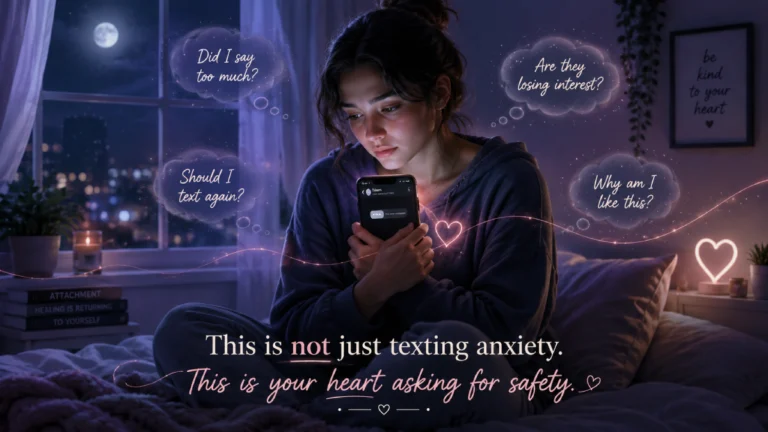
Have you ever wanted someone close, but the moment they actually got close, something inside you panicked?
Maybe you missed them when they were distant.
You wanted their message.
You wanted reassurance.
You wanted to feel chosen.
But when they finally came closer, when they became consistent, when they started showing real interest, your body did not fully relax.
Instead, something inside you became alert.
You started questioning them.
You wondered if they were being honest.
You felt overwhelmed by the closeness you had been craving.
You wanted love, but receiving it did not feel as simple as you imagined.
It can be confusing when your heart says, “Please come closer,” and another part of you says, “No, this is dangerous.”
This is the emotional contradiction of fearful avoidant attachment.
Love feels deeply wanted.
But not fully safe.
You may crave closeness and fear it at the same time.
You may want reassurance, but struggle to believe it.
You may miss someone when they are gone, then feel trapped when they stay.
You may push people away, then feel heartbroken when they actually leave.
And if you have lived this pattern, you may have asked yourself:
“Why am I like this?”
“Why do I ruin things?”
“Why do I want love but run from it?”
“Why can’t I just trust someone good to me?”
Before you judge yourself, pause.
This pattern is not random.
It is not drama for no reason.
It is not proof that you are impossible to love.
Fearful avoidant attachment often forms when love has been connected with both longing and danger.
A part of you wants connection.
Another part is trying to protect you from pain.
Dono sach ho sakte hain.
And healing begins when you stop fighting yourself and start understanding what each part is trying to do.
The Push-Pull Feeling
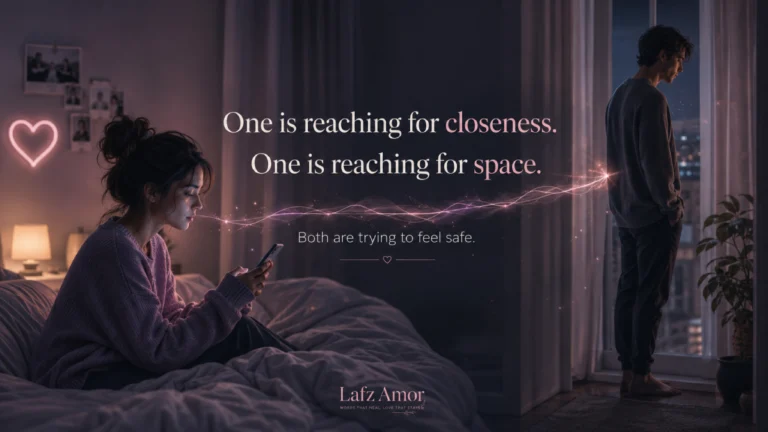
Fearful avoidant attachment can feel like being pulled in two directions at once.
One part of you wants closeness.
The other part fears closeness.
One part wants to be reassured.
The other part does not fully trust reassurance.
One part wants someone to stay.
The other part may test them, push them away, or act distant before they can hurt you.
You may feel anxious when someone pulls away.
But avoidant when they come closer.
You may chase when you feel abandoned.
But withdraw when you feel emotionally exposed.
This push-pull pattern can be exhausting because you are not only reacting to the other person.
You are also reacting to your own fear.
Maybe you text them because you miss them.
Then when they reply warmly, you suddenly feel overwhelmed.
Maybe you want them to define the relationship.
Then when they do, you feel pressure.
Maybe you want someone emotionally available.
Then when they are available, you start looking for reasons not to trust it.
You may feel like your own heart keeps changing the rules.
But underneath the changing reactions, there is usually one deeper need:
Safety.
You want love to feel safe.
But part of you is not convinced that it will.
Why This Feels So Emotionally Exhausting
Fearful avoidant attachment can make you feel like you are constantly fighting two inner voices.
One voice says:
“Please do not leave.”
The other says:
“Do not let them get too close.”
One says:
“I want to be loved.”
The other says:
“If you trust this, you will get hurt.”
One says:
“Ask for reassurance.”
The other says:
“Do not look needy.”
One says:
“Stay.”
The other says:
“Run before they disappoint you.”
This inner conflict can make relationships feel emotionally tiring even when the other person has not done anything terrible.
You may feel triggered by distance and triggered by closeness.
And that is the hardest part.
With anxious attachment, distance often feels unsafe.
With avoidant attachment, closeness often feels unsafe.
With fearful avoidant attachment, both can feel unsafe at different times.
When someone pulls away, you panic.
When someone comes closer, you panic differently.
This can make you feel ashamed.
But shame does not help.
Shame only makes the pattern hide deeper.
What helps is understanding that your reactions may be protection strategies.
Not always healthy.
Not always fair to the other person.
But understandable.
Your nervous system may be asking:
“Can I want this and still be safe?”
That is the question at the center of fearful avoidant attachment.
Micro Takeaway
Fearful avoidant attachment is not random confusion.
It is often your heart wanting love while your nervous system prepares for danger.
You are not broken because you have mixed reactions.
But you are responsible for learning how to respond to those reactions with more awareness, honesty, and care.
What Is Fearful Avoidant Attachment?
Fearful avoidant attachment is an insecure attachment style where a person deeply wants closeness but also fears intimacy, rejection, abandonment, or being hurt. It often creates a push-pull pattern in relationships, where someone seeks connection, then withdraws when the connection starts feeling emotionally risky.
In simple words, fearful avoidant attachment means love can feel both comforting and threatening.
You may want emotional closeness.
But when closeness becomes real, you may feel unsafe.
You may want someone to choose you.
But once they do, you may start doubting their intentions.
You may want stability.
But stability may feel unfamiliar, even suspicious.
You may want to be held.
But being held can also feel like losing control.
This attachment style is sometimes described as a mix of anxious and avoidant patterns.
The anxious side fears abandonment.
The avoidant side fears intimacy.
So the person may swing between chasing closeness and creating distance.
That is why fearful avoidant attachment in relationships can feel so confusing.
Not just for the partner.
For the person experiencing it too.
Is Fearful Avoidant Attachment the Same as Disorganized Attachment?
Fearful avoidant attachment is often connected with disorganized attachment because both involve conflicting needs for closeness and protection.
The person wants connection.
But connection also feels unsafe.
This creates a confusing internal system.
The heart reaches out.
The body pulls back.
The mind looks for proof.
The fear prepares an escape route.
In adult relationships, fearful avoidant attachment may show up as wanting intimacy, but not trusting it.
Someone may crave love deeply, but also expect love to hurt them eventually.
They may test people.
They may pull away.
They may become suspicious of consistency.
They may feel drawn to intense or unavailable partners because healthy calmness feels unfamiliar.
This is why the fearful avoidant pattern can look contradictory from the outside.
But inside, it often makes emotional sense.
If love has ever felt unsafe, the body may treat closeness as both desire and danger.
Fearful Avoidant Attachment Is Not “Drama”
Fearful avoidant attachment is sometimes misunderstood as drama, mixed signals, or emotional instability.
But that is too shallow.
From the outside, it may look confusing.
A person wants closeness, then withdraws.
They ask for reassurance, then doubt it.
They miss someone, then avoid them.
They want commitment, then feel trapped.
But inside, the experience may be even more confusing.
They may genuinely want love.
They may genuinely care.
They may genuinely feel fear.
They may not be trying to hurt anyone.
But this is important:
A pattern can be understandable and still need responsibility.
Fearful avoidant attachment can explain why someone pushes and pulls.
It does not excuse hurtful behavior.
It does not excuse testing people cruelly, disappearing without care, manipulating reassurance, or creating emotional chaos.
Understanding the pattern should lead to more honesty.
Not more excuses.
Healing means learning how to say:
“I am scared,” instead of disappearing.
“I need space,” instead of sabotaging.
“I want reassurance,” instead of testing.
“I feel overwhelmed,” instead of pushing someone away.
That is how the pattern begins to soften.
Micro Takeaway
Fearful avoidant attachment explains the pattern, but it does not mean you are doomed to repeat it forever.
A pattern is not a prison.
It is a map.
And once you can see the map, you can begin choosing a different road.
Fearful Avoidant Attachment Signs in Relationships
Fearful avoidant attachment signs can be hard to recognize because they do not always look the same.
Sometimes you may look anxious.
Sometimes avoidant.
Sometimes both in the same week.
Sometimes both in the same conversation.
You may want love intensely, then question it intensely.
You may seek closeness, then feel overwhelmed by the very closeness you asked for.
That does not mean you are fake.
It means your attachment system may be moving between two fears:
Fear of being abandoned.
Fear of being emotionally unsafe inside closeness.
Let’s look at the common signs with emotional clarity.
1. You Want Closeness but Feel Scared When You Get It
This is one of the clearest signs of fearful avoidant attachment.
You want someone to come closer.
You want them to text.
You want them to choose you.
You want them to show effort.
You want them to make you feel safe.
But when they actually do, something inside you does not fully relax.
You may feel overwhelmed.
You may start questioning whether you really like them.
You may become irritated by their attention.
You may suddenly want space.
You may feel suspicious of their consistency.
It can feel confusing because you were literally asking for closeness.
But when closeness arrives, your body may interpret it as emotional risk.
What It Looks Like
This may look like:
- You miss someone deeply when they are distant.
- You feel anxious when they come closer.
- You want intimacy but feel trapped by it.
- You feel safer wanting love than actually receiving it.
- You feel excited about someone, then suddenly doubtful.
- You crave commitment, then panic when commitment becomes real.
- You want someone to stay, but start pushing them away once they do.
This can make you question your own feelings.
“Do I like them or not?”
“Do I want this or not?”
“Why was I anxious when they were distant, but uncomfortable when they got close?”
The answer may be that closeness is touching both your longing and your fear.
Why It Happens
Closeness may feel comforting and threatening at the same time.
If love has been unpredictable, painful, controlling, rejecting, or emotionally unsafe before, your system may not trust closeness easily.
Even if the person in front of you is kind, your body may still prepare for danger.
It may think:
“What if I trust them and they hurt me?”
“What if I need them and they leave?”
“What if I lose myself?”
“What if this is safe now, but becomes painful later?”
So your system reacts before reality has fully proven danger.
It tries to protect you early.
Emotional Impact
You may feel confused because the thing you want also triggers fear.
This can create guilt.
You may think you are leading people on.
You may feel frustrated with yourself.
You may wonder why you cannot just receive love normally.
But please remember:
Wanting love and feeling scared of love can exist together when love has not always felt safe.
This does not make you impossible to love.
It means your system needs to learn safety slowly.
Micro Takeaway
Wanting love and fearing love can exist inside the same heart.
The healing is not to hate either part.
The healing is to listen, slow down, and stop letting fear make every decision.
2. You Push People Away Before They Can Hurt You
Fearful avoidant attachment can make you push people away before they get the chance to hurt you.
This may not always be obvious.
You may start acting distant.
You may create conflict.
You may suddenly focus on their flaws.
You may end things before they become too real.
You may test them to see if they will stay.
You may say you need space when what you really feel is fear.
Pushing away can feel like control.
If you leave first, you do not have to feel abandoned.
If you create distance first, you do not have to wait for them to disappoint you.
If you reject the connection first, you do not have to risk being rejected.
But the relief may not last.
After the distance, regret can arrive.
And then you miss them.
What It Looks Like
This may look like:
- You become distant when things get serious.
- You end things before they can leave.
- You test their patience.
- You create conflict when closeness feels too vulnerable.
- You suddenly feel irritated by someone you liked.
- You look for reasons the relationship will not work.
- You pull away after a very intimate or emotional moment.
- You feel relief after creating distance, then sadness later.
This pattern can hurt both people.
The other person may feel confused or rejected.
And you may feel trapped between relief and longing.
Why It Happens
Pushing away can feel like control when emotional vulnerability feels risky.
If being close to someone feels like giving them power to hurt you, pushing them away may feel protective.
Your fear may say:
“End it before they do.”
“Do not let them matter too much.”
“Find the flaw.”
“Create distance.”
“Make sure you are not the one left waiting.”
This is not healthy, but it is understandable.
The system is trying to avoid helplessness.
It would rather choose pain than be surprised by it.
Emotional Impact
You may feel relief at first, then regret later.
The relief comes because distance lowers the fear.
But the regret comes because your longing was real too.
You did want connection.
You just did not know how to feel safe inside it.
That is the grief of fearful avoidant attachment.
You may push away the very thing you wanted, then miss it when it is gone.
Micro Takeaway
Sometimes pushing someone away is not lack of love.
It is fear trying to stay in control.
But healing means learning that control is not the same as safety.
3. You Crave Reassurance but Struggle to Believe It
You may deeply want reassurance.
You want someone to tell you they care.
You want to know they are not leaving.
You want confirmation that the connection is real.
But when they reassure you, another part of you may not fully believe it.
You may think:
“They are only saying that.”
“What if they change their mind?”
“What if they are lying?”
“What if they mean it now but not later?”
So reassurance helps for a moment.
Then doubt returns.
This can be painful for you and confusing for the other person.
They may say, “I already told you I care.”
And you may think, “I know, but I still do not feel safe.”
What It Looks Like
This may look like:
- You ask if they care.
- They reassure you, but doubt returns.
- You test their love.
- You feel suspicious when someone is consistent.
- You need proof, then question the proof.
- You ask for clarity, then distrust the answer.
- You feel calm briefly, then anxious again.
- You look for hidden meanings even in kind words.
This can make you feel emotionally tired.
Because you are not only asking for reassurance.
You are fighting the part of you that does not trust reassurance.
Why It Happens
Your system may want safety but not fully trust safety when it appears.
If people in the past said one thing and did another, words may feel unreliable.
If love changed suddenly before, reassurance may feel temporary.
If someone once promised to stay and left anyway, your body may not trust promises easily.
So when someone says, “I am here,” your mind may answer:
“For now.”
This does not mean you are ungrateful.
It means trust may need repeated consistency, not just one comforting sentence.
Emotional Impact
You may feel like no amount of reassurance truly settles you.
This can create shame.
You may think, “Why can’t I just believe them?”
But trust is not always a decision.
Sometimes trust is built through repeated experiences of safety.
That means reassurance helps, but patterns heal.
Words matter.
Behavior makes them believable.
Micro Takeaway
Reassurance helps the moment, but deeper healing helps you believe safety longer.
You do not have to shame yourself for needing reassurance.
But you can learn to ask clearly, receive slowly, and watch consistency over time.
4. You Feel Drawn to Intense or Unavailable Relationships
Fearful avoidant attachment can make emotionally intense relationships feel magnetic.
You may feel drawn to people who are unavailable, inconsistent, mysterious, or hard to fully reach.
Not because you want pain.
But because unpredictability may feel familiar.
Calm love may feel strange.
Steady affection may feel suspicious.
A consistent person may feel “boring” at first.
But someone hot-and-cold may activate your whole emotional system.
You think about them more.
You feel more alive.
You feel the highs and lows.
You may confuse that intensity with chemistry.
But sometimes the relationship that activates you most is not the relationship that loves you best.
What It Looks Like
This may look like:
- Calm love feels unfamiliar.
- Hot-and-cold people feel magnetic.
- You confuse anxiety with chemistry.
- You feel more alive in uncertain relationships.
- You feel bored with emotionally steady people.
- You chase unavailable people, then feel hurt by their distance.
- You feel attached to people who make you question where you stand.
- You feel safest in longing, not receiving.
This is especially common in modern dating.
Situationships, mixed signals, late-night texts, inconsistent effort, and undefined connections can intensify attachment wounds.
The uncertainty becomes the spark.
But sparks can burn.
Why It Happens
Intensity may feel familiar if love has previously been unpredictable.
If your emotional system learned that love comes with highs and lows, calm love may not register as love at first.
It may feel too quiet.
Too easy.
Too stable.
Too unfamiliar.
So your body may chase what feels emotionally known, even if it hurts.
This is not because you are self-destructive.
It is because familiarity can feel like safety, even when it is painful.
Emotional Impact
You may keep choosing connections that feel exciting but unsafe.
You may feel addicted to the chase.
You may keep waiting for emotionally unavailable people to finally choose you.
You may call the connection deep because it feels intense.
But intensity and intimacy are not the same.
Intimacy gives safety.
Intensity often gives activation.
Micro Takeaway
The relationship that activates you most is not always the relationship that loves you best.
Sometimes peace feels boring only because your heart is used to surviving storms.
5. You Switch Between Anxious and Avoidant Behavior
Fearful avoidant attachment often looks like both anxious and avoidant attachment.
You may chase when someone pulls away.
But withdraw when someone comes closer.
You may want answers immediately.
Then avoid the conversation when it becomes too real.
You may feel needy one day and emotionally distant the next.
You may fear abandonment and fear intimacy.
This can make you feel like you cannot trust yourself.
You may think:
“Why am I so inconsistent?”
“Why do I want them and then not want them?”
“Why do I chase and then run?”
The truth is, your system may be switching between two protection strategies.
Closeness protects you from abandonment.
Distance protects you from vulnerability.
Both are trying to keep you safe.
But together, they can create emotional chaos.
What It Looks Like
This may look like:
- You chase when they pull away.
- You withdraw when they come closer.
- You want answers, then avoid the conversation.
- You feel needy one day and emotionally distant the next.
- You want commitment, then feel trapped by it.
- You miss them during distance, then feel irritated by closeness.
- You open up emotionally, then regret it later.
- You feel like two different people in relationships.
This can be deeply confusing.
But there is a pattern underneath the contradiction.
You are seeking safety.
You just do not yet know whether safety lives in closeness or distance.
Why It Happens
Fearful avoidant attachment often combines fear of abandonment with fear of intimacy.
The anxious side says:
“Do not let them leave.”
The avoidant side says:
“Do not let them get too close.”
So depending on the situation, one side becomes louder.
If they pull away, anxious fear may take over.
If they come closer, avoidant fear may take over.
You are not changing randomly.
You are reacting to different kinds of perceived danger.
Emotional Impact
You may feel like you cannot trust your own reactions.
That can make you feel unstable or ashamed.
But your reactions are not meaningless.
They are messages.
They may not always be accurate, but they are trying to tell you where you feel unsafe.
Healing means learning to listen without immediately acting.
Micro Takeaway
You are not “too much” and “too cold” at the same time for no reason.
Your system may be switching between two protection strategies.
Once you see that, you can stop hating yourself and start building steadier responses.
6. Healthy Love Feels Suspicious or Boring
This sign can be hard to admit.
Sometimes when someone is kind, consistent, and emotionally available, you do not feel relieved.
You feel suspicious.
You wait for the other shoe to drop.
You wonder what they really want.
You feel uncomfortable with how steady they are.
You may even feel bored.
Not because they are bad for you.
But because healthy love does not create the same emotional activation your system is used to.
If chaos has felt familiar, peace may feel strange.
And strange can be mistaken for wrong.
What It Looks Like
This may look like:
- Consistency feels strange.
- Kindness feels suspicious.
- You wait for the person to change.
- You feel more drawn to people who create uncertainty.
- You get bored when someone is emotionally steady.
- You question someone’s feelings when they treat you well.
- You feel the urge to create distance in a healthy connection.
- You test them to see if they will stay.
This can lead to self-sabotage.
You may push away the person who is actually safe because your body does not recognize safety as familiar yet.
Why It Happens
If chaos felt normal before, peace may feel unfamiliar.
Your system may be used to love that requires effort, fear, waiting, proving, or guessing.
So when someone is clear, steady, and available, there is no emotional chase.
No panic.
No high-low cycle.
No familiar storm.
And your body may think:
“Is something missing?”
Maybe nothing is missing.
Maybe danger is missing.
Emotional Impact
You may sabotage good connections because they do not feel emotionally familiar.
This does not mean you should force yourself to stay with someone you do not like.
But it does mean you should learn to ask:
“Is this boring, or is this peaceful?”
“Am I uninterested, or am I uncomfortable with safety?”
“Do I not want them, or do I not trust calm love yet?”
Those questions create clarity.
Micro Takeaway
Peace may feel boring when your heart is used to surviving storms.
But peace is not empty.
Sometimes peace is love without the alarm bells.
Why Fearful Avoidant Attachment Happens: The Psychology Layer
Fearful avoidant attachment usually develops for a reason.
Not because someone is broken.
Not because they are dramatic.
Not because they are impossible to love.
But because their emotional system learned that love can be both wanted and dangerous.
Maybe closeness came with hurt.
Maybe affection came with control.
Maybe people were loving one moment and rejecting the next.
Maybe emotional needs were ignored, criticized, or punished.
Maybe trust was broken.
Maybe past relationships taught them that vulnerability leads to pain.
So now, even when love appears, the body does not fully trust it.
The mind may say, “I want this.”
The body says, “Be careful.”
That is the core of this pattern.
Reason 1: Love May Have Felt Unsafe or Unpredictable Before
If closeness was mixed with hurt, rejection, criticism, neglect, or inconsistency, your emotional system may have learned to want connection but distrust it.
This can create a painful inner conflict.
You may crave love because you need connection.
But you may fear love because connection has not always felt safe.
If someone important in your life was unpredictable, your system may have learned to stay alert.
If someone loved you but also hurt you, your system may have learned that closeness comes with risk.
If your feelings were dismissed, your system may have learned not to fully trust emotional openness.
This does not mean your past owns your future.
But it may explain why the present can feel more threatening than it looks.
Emotional Impact
Your heart may want love, but your body remembers danger.
This is why even a safe person may trigger fear.
Not because they are doing something wrong.
But because trust itself feels risky.
Healing means teaching your body, slowly, that not every closeness becomes pain.
Reason 2: You May Fear Abandonment and Intimacy Together
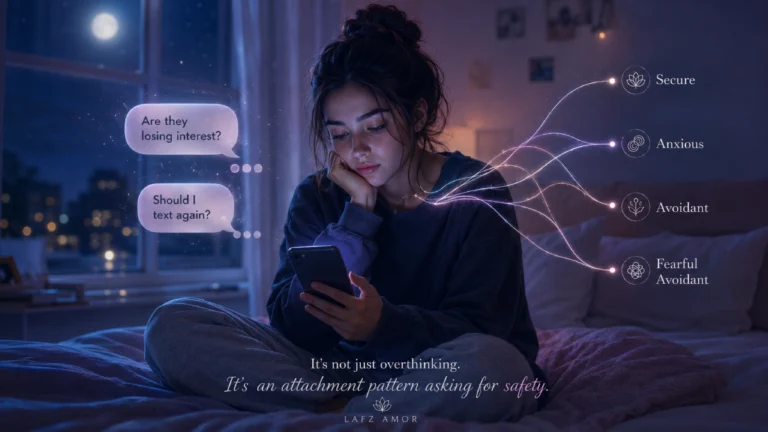
Anxious attachment fears distance.
Avoidant attachment fears closeness.
Fearful avoidant attachment can contain both fears.
That is why it can feel so confusing.
When someone pulls away, the abandonment fear wakes up.
You may chase, panic, overthink, or seek reassurance.
When someone comes closer, the intimacy fear wakes up.
You may withdraw, doubt, feel trapped, or want space.
So no matter what happens, part of you may feel unsafe.
Distance feels dangerous.
Closeness feels dangerous.
That can make relationships feel like emotional tightrope walking.
Emotional Impact
When they leave, you panic.
When they stay, you panic differently.
This is not because you are impossible to love.
It is because your system has not yet learned how to feel safe in either closeness or distance.
Healing means building safety in both.
“I can survive distance without chasing.”
“I can receive closeness without running.”
Both are learned slowly.
Reason 3: Control Can Feel Safer Than Vulnerability
Vulnerability requires trust.
It means you cannot fully control how someone responds.
You can tell the truth, but you cannot control whether they stay.
You can open your heart, but you cannot guarantee they will protect it.
That uncertainty can feel terrifying.
So fearful avoidant attachment may choose control.
Pushing away.
Testing.
Disappearing.
Creating distance.
Ending things first.
Finding flaws.
Acting as if you care less than you do.
These behaviors may create temporary control.
But they also block real intimacy.
Emotional Impact
You may choose the pain you control over the love you cannot predict.
That sentence may feel heavy, but it is honest.
Sometimes known pain feels safer than unknown love.
But healing asks you to stop choosing familiar pain just because it gives you the illusion of control.
Real safety is not controlling every outcome.
Real safety is trusting yourself to handle truth, closeness, and even disappointment without abandoning yourself.
Reason 4: Your Nervous System May Confuse Familiar Pain With Love
If your emotional history includes inconsistency, chaos, rejection, or unpredictability, calm love may not feel familiar.
Uncertainty may feel more exciting.
Hot-and-cold behavior may feel more magnetic.
Emotional highs and lows may feel like passion.
The chase may feel like proof of love.
The reunion after distance may feel like deep connection.
But sometimes, that is not love.
Sometimes it is attachment activation.
Your body is not peaceful.
It is alert.
It is not necessarily saying, “This person is right for me.”
It may be saying, “This pattern is familiar.”
And familiar can feel powerful.
Emotional Impact
Sometimes the spark is not destiny.
Sometimes it is an old wound recognizing familiar weather.
This does not mean chemistry is always unhealthy.
But chemistry without safety can become addictive.
So ask:
“Do I feel connected, or do I feel activated?”
“Do I feel chosen, or do I feel challenged to prove I am worth choosing?”
“Do I feel safe, or do I feel obsessed?”
These questions can protect you.
Reason 5: Trust Feels Risky Even When Someone Is Safe
A safe person may still trigger fear because trusting someone means becoming emotionally vulnerable.
And vulnerability is not just sweet.
It is risky.
To trust someone means admitting they matter.
To let someone close means accepting they could hurt you.
To receive love means letting go of some control.
For fearful avoidant attachment, this can feel terrifying.
So even when someone is consistent, kind, and respectful, your system may still test them.
You may look for signs they will change.
You may feel suspicious of their steadiness.
You may push a little to see if they stay.
You may doubt their words because trusting them feels like standing without armor.
Emotional Impact
You may test good love because part of you is waiting for it to disappear.
But testing love can damage it.
A safe person may be patient, but they are still human.
They also need emotional safety.
Healing means learning to say:
“I feel scared this will disappear,” instead of acting in ways that make it disappear.
That one shift can change everything.
What Should You Do If You Have Fearful Avoidant Attachment?
If you see yourself in fearful avoidant attachment, please do not use this blog as another reason to hate yourself.
Use it as a mirror.
A gentle one.
The point is not to say, “I am messed up.”
The point is to say, “There is a pattern here, and now I can learn how to respond differently.”
You do not have to heal everything overnight.
You only need to start noticing the moment where fear takes the steering wheel.
That is where change begins.
Step 1: Name the Push-Pull Pattern Without Shaming Yourself
The first step is naming the pattern.
Not with judgment.
With honesty.
When do you pull closer?
When do you pull away?
When do you feel anxious?
When do you feel trapped?
When do you test people?
When do you avoid?
When do you miss someone after creating distance?
Naming the pattern helps you stop feeling like your emotions are random.
You begin to see the shape of your fear.
Clear Action
Write:
“When I feel close, I tend to…”
“When I feel scared, I tend to…”
“When someone gives me consistency, I…”
“When someone becomes distant, I…”
“When I want reassurance, I usually…”
“When I feel overwhelmed, I usually…”
“When I start trusting someone, I…”
“When I feel like they may leave, I…”
Be honest.
Not cruel.
Just honest.
Your answers may reveal the push-pull pattern clearly.
Emotional Reassurance
You are not broken.
You are noticing a pattern that once tried to protect you.
Maybe that pattern is hurting you now.
Maybe it is hurting people you care about.
But shame will not heal it.
Awareness will.
Responsibility will.
Gentle repetition will.
Step 2: Pause Before You Push or Chase
Fearful avoidant attachment can create fast reactions.
You may chase quickly when you feel abandoned.
You may push quickly when you feel overwhelmed.
Either way, fear is moving fast.
Healing means learning to pause before acting.
Not because your feelings are wrong.
But because fear may be asking for protection in a way that creates more pain.
Before sending the long text, pause.
Before disappearing, pause.
Before ending things suddenly, pause.
Before testing them, pause.
Before assuming the worst, pause.
That pause is not small.
It is where your future pattern changes.
Clear Action
Before reacting, ask:
- Am I scared of losing them?
- Am I scared of needing them?
- Am I reacting to this person or an old fear?
- Do I want connection, control, or protection right now?
- Am I about to create distance because I need space, or because I feel vulnerable?
- Am I about to chase because I need clarity, or because I feel abandoned?
- What would a secure response look like here?
These questions help you identify which part of you is activated.
The anxious part?
The avoidant part?
The protective part?
The wounded part?
Once you know, you can respond more wisely.
Emotional Reassurance
A pause gives your fear less control over your next action.
You do not have to solve everything in the moment.
You only have to slow the reaction enough to choose.
Step 3: Separate Safe Love From Familiar Pain
This step is very important.
Fearful avoidant attachment can make familiar pain feel more attractive than unfamiliar safety.
You may feel drawn to people who create uncertainty.
You may feel bored by steady love.
You may feel suspicious when someone is kind.
You may feel more emotionally alive in relationships that make you anxious.
So you need to learn how to separate safe love from familiar pain.
Ask not only, “Do I feel strongly?”
Ask, “Do I feel safe?”
Strength of feeling is not enough.
Some feelings are strong because they are activating your wound.
Clear Action
Ask:
- Do I feel calm or activated?
- Do their actions match their words?
- Is this connection consistent or intense?
- Am I drawn to them because they are safe or because they feel familiar?
- Do I feel respected, or do I feel like I have to earn care?
- Is this relationship making me more honest or more guarded?
- Is my body relaxed around them, or always alert?
These questions help you stop confusing emotional activation with love.
Emotional Reassurance
What feels familiar is not always what is healthy.
And what feels unfamiliar is not always wrong.
Sometimes safe love feels strange at first because your body has not learned to recognize peace.
Give yourself time.
Step 4: Communicate the Fear Instead of Acting It Out
Fearful avoidant attachment often acts out fear instead of naming it.
You feel scared, so you pull away.
You feel unsure, so you test.
You feel overwhelmed, so you disappear.
You feel vulnerable, so you create conflict.
But healing means learning to communicate the fear before it becomes behavior that hurts the relationship.
This does not mean oversharing everything.
It means giving the other person a real chance to understand what is happening inside you.
Instead of making them guess.
Clear Action
Use scripts like:
“I care about you, but closeness sometimes scares me. I am trying not to pull away without explaining.”
Or:
“I feel overwhelmed, but I do not want to disappear. Can I take some time and come back to this conversation?”
Or:
“I want reassurance, but I am also struggling to trust it. I am working on that.”
Or:
“When I feel vulnerable, I sometimes create distance. I am trying to name it instead of acting it out.”
These sentences are brave.
Not because they are dramatic.
Because they replace old protection with honest connection.
Emotional Reassurance
You do not have to perform fear through distance, testing, or silence.
You can name it gently.
And the right kind of person will not use your honesty against you.
Still, remember: honesty is not only for them.
It is also for you.
Every time you name fear instead of acting it out, you become safer with yourself.
Step 5: Choose Consistency Even When Intensity Feels More Familiar
If you have fearful avoidant attachment, consistency may not feel exciting at first.
It may feel too calm.
Too easy.
Too predictable.
You may miss the emotional rush of uncertain love.
But healthy love often grows in consistency.
Not chaos.
Not guessing.
Not emotional rollercoasters.
Consistency gives your nervous system repeated evidence:
“This person shows up.”
“This person respects me.”
“This person repairs.”
“This person does not punish my needs.”
“This person does not disappear when things get real.”
That is the kind of love that can help attachment wounds soften.
Not because the other person heals you completely.
But because safety becomes something you can practice receiving.
Clear Action
Look for:
- Clear communication
- Emotional steadiness
- Respect for boundaries
- Willingness to repair
- Kindness without chaos
- Patience with your healing
- Actions matching words
- Calm presence during conflict
- Care that continues after the excitement fades
These things may not create instant fireworks.
But they create trust.
And trust is quieter than chaos, but much more nourishing.
Emotional Reassurance
Safe love may feel unfamiliar at first, but unfamiliar does not mean wrong.
Sometimes calm love feels strange because your heart is used to earning affection through emotional storms.
Let peace introduce itself slowly.
Step 6: Build Secure Attachment Habits Slowly
Healing fearful avoidant attachment happens through small secure habits.
Not one giant transformation.
You become secure by practicing security in small moments.
When you want to disappear, you communicate.
When you want to test, you ask.
When you want to chase, you pause.
When you feel suspicious of kindness, you observe instead of sabotaging.
When you need space, you give a return point.
When you need reassurance, you ask directly.
This is how the pattern changes.
Tiny moment by tiny moment.
Clear Action
Practice:
- Self-soothing before reacting
- Asking for reassurance directly
- Taking space with a return point
- Not testing people to prove love
- Staying present during safe intimacy
- Letting consistency matter more than emotional intensity
- Separating old fear from present reality
- Repairing when you pull away or act from fear
- Choosing relationships where safety is mutual
These are not glamorous steps.
But they are powerful.
Healing often looks ordinary from the outside.
A pause.
A calmer message.
A truthful sentence.
A different choice.
But inside, those small moments are revolutionary.
Emotional Reassurance
Healing fearful avoidant attachment happens in small moments where you choose safety over old protection.
You do not need to become perfectly secure tomorrow.
You only need to stop letting fear make every choice today.
What Should You Do If Your Partner Has Fearful Avoidant Attachment?
If your partner has fearful avoidant attachment, it can be emotionally confusing.
They may want you close, then push you away.
They may ask for reassurance, then distrust it.
They may miss you, then act distant.
They may seem scared of losing you and scared of needing you.
This can make you feel like you are constantly trying to prove your love.
But please remember:
You can support someone.
You cannot heal for them.
You can offer safety.
You cannot become their entire emotional safety system.
You can be patient.
You cannot abandon yourself to keep them close.
Step 1: Do Not Take Every Push-Pull Personally
When someone pushes and pulls, it can feel deeply personal.
You may think:
“I did something wrong.”
“They do not love me.”
“I am not enough.”
“They are playing games.”
Sometimes there may be behavior that needs accountability.
But not every push-pull reaction is about your worth.
Fearful avoidant attachment often reacts to intimacy itself.
The person may pull away because closeness feels scary, not because you are unlovable.
Still, this does not mean the impact disappears.
You can understand the pattern and still feel hurt by it.
Clear Action
Notice the pattern without instantly blaming yourself.
Ask:
“Did I do something hurtful, or did closeness trigger fear?”
“Is this a repeated pattern for them?”
“Do they take responsibility after pulling away?”
“Do they communicate what is happening?”
This helps you stay grounded.
Emotional Reassurance
Their fear may be about intimacy itself, not your worth.
But your pain still matters.
Do not use their attachment style to erase your emotional experience.
Step 2: Offer Safety, But Do Not Become Their Therapist
You can be kind.
You can be steady.
You can avoid unnecessary pressure.
You can communicate clearly.
You can reassure when it is healthy.
But you cannot carry all the emotional labor.
You cannot be the only one reflecting.
You cannot be the only one repairing.
You cannot constantly prove that you are safe while your own needs are ignored.
That turns love into emotional labor.
And eventually, it becomes exhausting.
Clear Action
You can be patient, clear, and kind, but do not carry all the emotional labor.
This means:
- Do not chase every withdrawal.
- Do not apologize for needs you expressed respectfully.
- Do not tolerate hurtful behavior just because it has a reason.
- Do not become responsible for managing all their fear.
- Do not make your peace dependent on their healing pace.
Support is beautiful.
Self-erasure is not.
Emotional Reassurance
You can love someone without becoming responsible for healing them.
Their healing is theirs.
Your support can matter.
But their willingness matters more.
Step 3: Ask for Clear Behavior, Not Perfect Healing
Your partner does not need to be perfectly healed to be in a relationship.
Nobody is.
But they do need to be responsible.
A fearful avoidant partner may still get triggered.
They may still need space.
They may still struggle with trust.
They may still feel overwhelmed by intimacy.
But they can learn to communicate instead of disappearing.
Repair instead of blaming.
Ask instead of testing.
Reflect instead of repeating.
You are not asking for perfection.
You are asking for effort that protects the relationship.
Clear Action
Ask for:
- Honest communication
- No disappearing without explanation
- Repair after conflict
- Respect for your emotional needs
- Accountability for hurtful behavior
- Space with a return point
- Reassurance without testing
- Willingness to talk after both people calm down
These are reasonable needs.
Not too much.
Not dramatic.
Not impossible.
Emotional Reassurance
They do not need to be perfect, but they do need to be responsible.
Fear may explain the pattern.
Responsibility changes it.
Step 4: Watch for Willingness to Grow
Willingness is the difference between a painful pattern that can heal and a painful pattern that keeps repeating.
Someone with fearful avoidant attachment can grow.
But only if they want to.
Only if they are willing to notice the impact of their behavior.
Only if they care about repair.
Only if they stop hiding behind “this is just how I am.”
The question is not:
“Are they wounded?”
Most people are.
The question is:
“Are they willing?”
Clear Action
Observe:
- Do they reflect after conflict?
- Do they apologize and change?
- Do they communicate fear instead of acting it out?
- Do they respect your needs too?
- Do they return after space with repair?
- Do they try to understand your experience?
- Do they take responsibility without making you the villain?
Watch behavior over time.
Not one emotional apology.
Not one good week.
Pattern.
Emotional Reassurance
Attachment wounds can heal, but willingness is non-negotiable.
You can love someone deeply and still choose not to stay where there is no willingness to grow.
Common Mistakes People Make With Fearful Avoidant Attachment
Fearful avoidant attachment can be painful, so people often respond in ways that make the pattern worse.
Not because they are bad.
Because fear makes quick protection look tempting.
Let’s name the common mistakes gently.
No shame.
Just clarity.
Mistake 1: Calling Yourself “Crazy” or “Confusing”
If you have fearful avoidant attachment, you may call yourself confusing.
Too much.
Too cold.
Unstable.
Dramatic.
Impossible.
But those words do not heal anything.
They turn a protection pattern into shame.
And shame makes you hide.
The truth is softer.
Your reactions may be confusing, but they are not meaningless.
They are connected to fear.
Fear of abandonment.
Fear of intimacy.
Fear of trusting the wrong person.
Fear of being hurt again.
That does not excuse every behavior.
But it does give you a starting point for healing.
Why It Is Harmful
Calling yourself crazy turns a protection pattern into shame.
And when you shame the pattern, you are less likely to understand it.
You may hide your fears instead of communicating them.
You may act from them instead of naming them.
You may believe you are unlovable instead of learning what needs healing.
Emotional Consequence
You may hide your fear instead of understanding it.
And hidden fear often controls more than named fear.
So replace “I am crazy” with:
“I am triggered.”
“I am scared.”
“I am using an old protection strategy.”
“I can learn a new response.”
That language matters.
Mistake 2: Testing People Instead of Trusting Slowly
Fearful avoidant attachment may create the urge to test people.
You may pull away to see if they chase.
You may act distant to see if they care.
You may create conflict to see if they stay.
You may ask for reassurance, then doubt it.
You may push someone emotionally and watch whether they leave.
But tests often create the very insecurity you fear.
A person may love you and still get tired of being tested.
A safe person may want to stay, but repeated tests can make the relationship feel unsafe for them too.
Trust is not built through testing.
It is built through honesty, consistency, time, and repair.
Why It Is Harmful
Tests create insecurity, even with people who care.
They make love feel like an exam the other person keeps taking without knowing the rules.
And eventually, the person may feel manipulated, exhausted, or mistrusted.
Emotional Consequence
You may push away the very safety you wanted.
Instead of testing, try saying:
“I feel scared you will leave.”
“I need reassurance.”
“I am struggling to trust this, but I want to.”
That is more vulnerable.
But also more healing.
Mistake 3: Choosing Intensity Over Consistency
Intensity can feel powerful.
But it is not always healthy.
The deep late-night conversations.
The hot-and-cold attention.
The emotional chase.
The reunion after distance.
The feeling that you cannot stop thinking about them.
It may feel like love.
But sometimes it is your attachment system getting activated.
Consistency may feel less exciting.
But it is often safer.
The person who shows up steadily may not create emotional fireworks.
But they may create emotional trust.
And if your heart is used to chaos, trust may feel unfamiliar at first.
Why It Is Harmful
Intensity can feel like chemistry, but may actually be emotional activation.
If you keep choosing intensity, you may keep choosing relationships that repeat your wound.
You may think, “I feel so much, so this must be love.”
But feeling a lot does not always mean being loved well.
Emotional Consequence
You keep choosing relationships that feel powerful but unsafe.
And over time, your nervous system may start believing love must always hurt to feel real.
It does not.
Love can be calm and still be deep.
Mistake 4: Disappearing Instead of Asking for Space
If you have fearful avoidant attachment, you may need space when overwhelmed.
That is okay.
Space can be healthy.
But disappearing is different.
If you go silent, avoid, shut down, or leave someone guessing, the relationship loses trust.
The other person may feel abandoned.
They may become anxious.
They may start chasing.
And then you may feel even more overwhelmed.
The cycle repeats.
A healthier way is to ask for space with a return point.
Why It Is Harmful
Disappearing protects you temporarily but hurts trust.
It may calm your fear in the moment.
But it creates insecurity in the relationship.
And insecurity will come back later with more pain.
Emotional Consequence
The other person may feel abandoned, and the relationship becomes less safe.
Instead of disappearing, try:
“I am overwhelmed and need time. I am not leaving. Can we talk in an hour?”
That one sentence can protect both your need for space and their need for reassurance.
Mistake 5: Expecting Love to Heal the Pattern Without Inner Work
A safe partner can support healing.
But love alone does not automatically heal fearful avoidant attachment.
Someone can be patient, consistent, and kind, and you may still feel fear.
Someone can reassure you, and you may still doubt.
Someone can stay, and you may still test.
This does not mean the love is wrong.
It means the pattern needs inner work too.
Healing requires self-awareness, emotional regulation, communication, responsibility, and practice.
A relationship can become a healing space.
But your partner cannot do your healing for you.
Why It Is Harmful
A safe partner can support healing, but cannot do the healing for you.
If you expect love to fix the pattern automatically, you may feel disappointed when fear still appears.
You may blame the relationship.
Or the partner.
Or yourself.
But healing is a process.
Not a switch.
Emotional Consequence
You may keep repeating the same cycle with different people.
Unless you learn the pattern, the same fear may wear different faces.
Different person.
Same trigger.
Different relationship.
Same push-pull.
Healing means finally meeting the pattern itself.
When Should You Walk Away?
Fearful avoidant attachment can be healed.
But not every relationship involving this pattern is safe or repairable.
Sometimes the push-pull can become emotionally harmful.
Sometimes one person uses fear as an excuse.
Sometimes only one person is doing the work.
Sometimes love becomes a cycle of panic, withdrawal, confusion, and temporary relief.
So when should you walk away?
Not impulsively.
Not from fear.
But from clarity.
Walk Away When Push-Pull Becomes Emotional Harm
A little confusion during healing is human.
But repeated emotional chaos is harmful.
If the relationship constantly cycles through closeness, panic, withdrawal, chasing, silence, reunion, and no real repair, it may be damaging both people.
You may feel emotionally exhausted.
They may feel emotionally unsafe.
Trust may keep breaking.
The same issues may repeat.
The relationship may become more about surviving the cycle than building love.
Ask:
“Are we learning?”
“Are we repairing?”
“Are we becoming safer?”
Or:
“Are we only repeating the same pain with better explanations?”
If there is no real change, the pattern may be causing harm.
Walk Away When Fear Becomes an Excuse for Hurtful Behavior
Attachment wounds explain fear.
They do not excuse manipulation, cruelty, cheating, emotional neglect, silent treatment, or repeated disrespect.
Someone may be fearful avoidant and still responsible for their actions.
You may be fearful avoidant and still responsible for how you treat someone.
Fear is real.
But fear cannot become a free pass.
If someone says, “This is just my attachment style,” while continuing to hurt you, that is not healing.
That is avoidance with vocabulary.
Look for responsibility.
Not just explanation.
Walk Away When Only One Person Is Doing the Work
A relationship cannot become secure if only one person is reflecting, repairing, and changing.
If you are the only one trying to understand the pattern, you will become exhausted.
If you are the only one apologizing, the relationship becomes unfair.
If you are the only one regulating, communicating, reading, forgiving, and adjusting, you may slowly lose yourself.
Both people do not need to be perfect.
But both need willingness.
Without willingness, the relationship becomes one person’s emotional labor and the other person’s repeated pattern.
That is not sustainable.
Walk Away When You Keep Losing Yourself Trying to Prove Safety
If your partner has fearful avoidant attachment, you may keep trying to prove that you are safe.
You reassure.
You wait.
You explain.
You forgive.
You stay patient.
You soften yourself.
You make fewer demands.
You become careful with your words.
You try not to trigger them.
But if your own needs are being ignored, pause.
Love should not require you to constantly prove you will not leave while your own heart is left unsupported.
You can offer safety.
But you also need safety.
If staying with someone means abandoning yourself, that relationship is asking for too much.
Reality Check
Fearful avoidant attachment can explain the push-pull pattern, but emotional safety requires responsibility from both people.
Not just love.
Not just understanding.
Not just patience.
Responsibility.
Without responsibility, attachment language becomes a soft blanket over a sharp pattern.
And you deserve more than softened explanations for repeated hurt.
Final Thoughts: You Can Want Love and Still Be Afraid of It
Fearful avoidant attachment does not mean you are impossible to love.
It does not mean you are broken beyond repair.
It does not mean you will always push away the people you care about.
It means love may have become connected with both longing and fear.
A part of you wants closeness.
A part of you prepares for pain.
Dono sach ho sakte hain.
You can want someone to stay and still feel scared when they do.
You can crave reassurance and still struggle to believe it.
You can miss someone after pushing them away.
You can feel drawn to love and terrified of what love might cost you.
These contradictions do not make you unlovable.
They make you human with a pattern that needs care.
But healing begins when you stop letting fear make every decision.
You can learn to stay present.
You can learn to trust slowly.
You can learn to ask for space without disappearing.
You can learn to receive love without immediately preparing for loss.
You can learn to separate safe love from familiar pain.
You can learn that calm does not mean boring.
You can learn that closeness does not always mean danger.
And you can learn that you do not have to run from the thing your heart deeply wants.
Healing fearful avoidant attachment is not about forcing yourself to trust everyone.
It is about learning how to trust wisely.
Slowly.
With evidence.
With communication.
With self-respect.
With people who show responsibility, not just intensity.
And with yourself too.
Because the safest relationship you build will always begin with this:
“I can feel fear without letting fear become my whole personality.”
“I can want love without losing myself.”
“I can protect myself without pushing away every good thing.”
That is where healing begins.
Not in becoming perfect.
But in becoming present.
Read Next
If this blog helped you understand your pattern, read these next:
- Anxious vs Avoidant Attachment
- Avoidant Attachment Signs
- How to Become Secure in Relationships
If you feel both anxious and avoidant, start with anxious vs avoidant attachment.
If you pull away when people get close, read avoidant attachment signs.
If you are ready to build a calmer, safer way to love, read how to become secure in relationships.
Because healing does not mean you stop wanting love.
It means love no longer has to feel like danger before it feels real.