Long-Distance Relationship Communication Tips for When Texts Start Feeling Dry
Tips for When Texts Start Feeling Dry
Why does communication in a long-distance relationship feel so heavy when all you want is to feel close?
Maybe you both talk every day, but somehow it still feels like something is missing.
Maybe the calls have become shorter.
Maybe the texts are mostly:
“What did you eat?”
“How was your day?”
“Good night.”
And maybe you feel guilty for wanting more because technically, you are still talking.
But emotionally?
Something feels distant.
Kabhi kabhi baat hoti rehti hai, but connection feel nahi hota. Messages aa rahe hote hain, calls bhi ho rahi hoti hain, phir bhi dil ke andar ek gap sa feel hota hai.
That is one of the most confusing parts of long-distance love.
Because in a normal relationship, communication is one part of the relationship.
But in long-distance, communication becomes the relationship’s emotional bridge.
Texts, calls, voice notes, video calls, photos, updates, reassurance — these things carry the weight of presence.
So when communication feels dry, inconsistent, rushed, or emotionally flat, it does not feel like a small issue.
It can feel like the relationship itself is becoming weaker.
But here is the truth.
The problem is not always lack of love.
Sometimes long-distance couples keep exchanging updates but stop creating an emotional connection.
And that is exactly why you need better, more emotionally aware long-distance relationship communication tips — not generic advice like “just communicate more.”
Because more communication is not always the answer.
Better communication is.
The best long-distance relationship communication tips are to create a realistic communication rhythm, talk about expectations, use voice or video for emotional topics, ask for reassurance clearly, avoid text fights, build emotional rituals, and repair misunderstandings quickly.
This guide will help you communicate in a long-distance relationship without making it feel like pressure, performance, or constant proof of love.
Why Communication Feels Different in a Long-Distance Relationship
Communication feels different in a long-distance relationship because it carries more emotional responsibility.
When you cannot meet often, your partner does not experience your love through everyday physical presence.
They cannot casually see your smile.
They cannot sit beside you after a hard day.
They cannot feel your hug after a misunderstanding.
They cannot read your face and know, “Okay, we are fine.”
So your words, timing, tone, and effort start mattering more.
Not because either of you is too sensitive.
But because communication becomes the main way emotional closeness is maintained.
Because Communication Becomes the Main Way You Feel Loved
In a long-distance relationship, love is often felt through small communication habits.
A good morning text.
A warm voice note.
A proper call after a long day.
A message that says, “I know I’ve been busy, but I miss you.”
A photo from their day.
A random “this reminded me of you.”
These small things may look ordinary from the outside.
But inside the relationship, they become emotional proof.
They say:
“I am still thinking about you.”
“You are still part of my day.”
“Distance has not made me careless.”
That is why communication gaps hurt so much in long-distance relationships.
It is not only about the message.
It is about what the message represents.
Texts, Calls, Voice Notes, and Video Chats Carry More Emotional Weight
When physical closeness is missing, digital closeness becomes more important.
A text can calm you.
A call can make your whole day feel lighter.
A voice note can feel more intimate than a long paragraph.
A video call can remind you that the person you miss is still real, still yours, still emotionally present.
But the opposite is also true.
A dry reply can feel cold.
A delayed response can trigger anxiety.
A cancelled call can feel like rejection.
A distracted video call can make you feel like you are talking, but not really being heard.
This is why long-distance communication needs more intention.
Not more control.
More emotional care.
Emotional Impact Line
When physical presence is missing, every message can start feeling like emotional evidence.
And that is why a small communication change can feel so big.
Micro Takeaway
Long-distance communication needs warmth, clarity, and consistency — not just frequency.
Talking all day does not automatically create closeness.
But talking with emotional presence can.
Because You Cannot Rely on Body Language
In close-distance relationships, so much communication happens without words.
A soft smile.
A tired face.
A gentle touch.
A pause.
A hug.
A look that says, “I am not angry, I am just exhausted.”
But in long-distance, most of that disappears.
You are often left with text.
And text is easy to misunderstand.
A short reply may mean your partner is tired.
But it may feel like they are losing interest.
A delayed reply may mean they are busy.
But it may feel like you are not a priority.
A simple “okay” may mean agreement.
But on a bad day, it can feel like emotional coldness.
Tone Gets Misread Easily Through Text
Text has no facial expression.
No softness.
No body language.
No full context.
So your mind fills in the missing emotion.
If you already feel secure, you may read a short reply normally.
If you already feel anxious, you may read the same reply as rejection.
This is why text fights become so intense in long-distance relationships.
Both people are not only reacting to words.
They are reacting to the meaning they believe is behind the words.
And sometimes, that meaning is not accurate.
A Short Reply Can Feel Colder Than It Was Meant to Be
Imagine your partner texts:
“Fine.”
Maybe they are genuinely fine.
Maybe they are busy.
Maybe they are replying quickly between tasks.
But if you were waiting for warmth, that one word may hurt.
You may think:
“Why are they talking like this?”
“Did I do something?”
“Are they irritated?”
“Is the connection fading?”
This is why long-distance couples need more context in communication.
A slightly warmer message can prevent hours of overthinking.
Instead of:
“Busy.”
Say:
“Busy right now, but I’m not ignoring you. I’ll reply properly later.”
Small change.
Big emotional difference.
Because Different Communication Needs Can Create Pressure
One person may want frequent texts.
The other may prefer fewer but deeper calls.
One person may need reassurance when plans change.
The other may feel overwhelmed by too much emotional checking.
One person may see daily calls as love.
The other may see daily calls as pressure.
Neither person is automatically wrong.
But if these needs are not discussed clearly, both people start feeling hurt.
One Partner May Need Frequent Reassurance
If you are more emotionally sensitive to distance, you may need reassurance more often.
You may want small signs that the relationship is okay.
You may feel calmer when your partner says:
“I miss you.”
“We’re okay.”
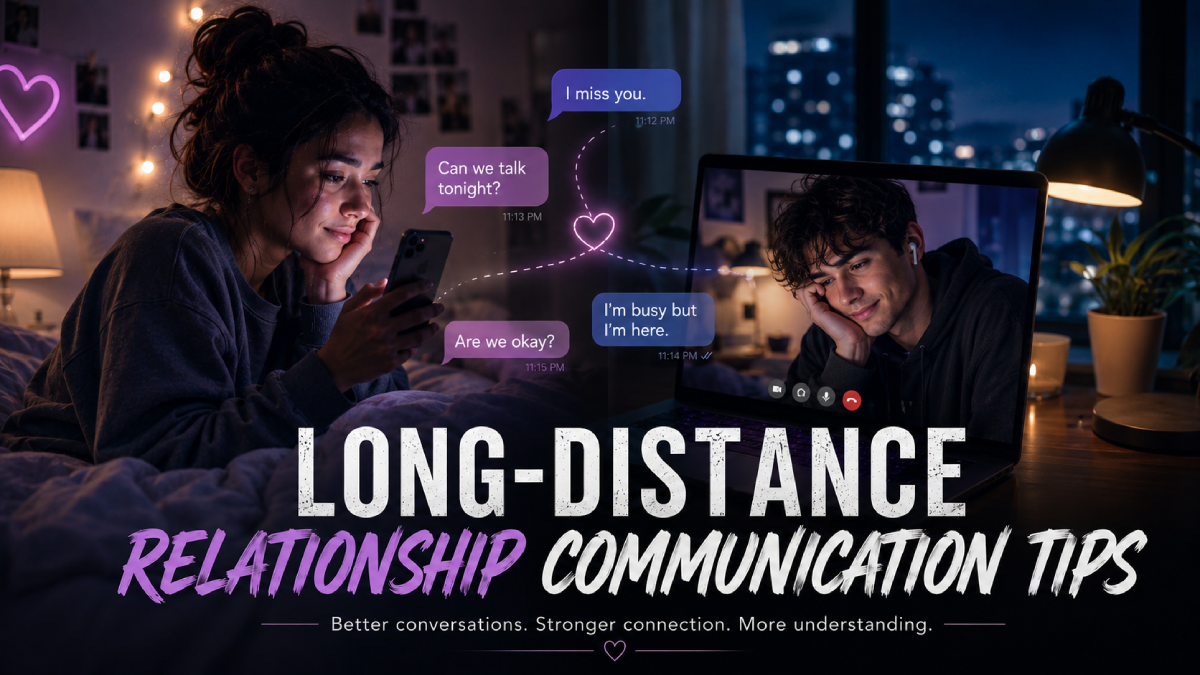
“I’m busy, but I’m still here.”
“You matter to me.”
This is not childish.
Long distance naturally makes reassurance more important because physical proof is limited.
But reassurance works best when it is asked for clearly, not demanded through panic or blame.
The Other May Need More Space or Flexibility
Your partner may love you and still need breathing room.
They may have work, studies, family pressure, mental exhaustion, or a different communication style.
They may not naturally text all day.
They may prefer focused calls over constant messages.
They may need quiet time to feel like themselves.
This does not always mean they do not care.
But they also need to understand that in long-distance, silence can feel emotionally loud.
The goal is not for one person to win.
The goal is to build a rhythm where both closeness and space feel respected.
Because Digital Access Can Create Unrealistic Expectations
Modern relationships are complicated because we are almost always digitally reachable.
If someone is online, we assume they can reply.
If they post a story, we assume they had time.
If they watch our story but do not text, we feel ignored.
If they like someone’s post but delay our reply, we start overthinking.
Technology creates access.
But access is not the same as emotional availability.
Being Online Does Not Always Mean Being Emotionally Available
Someone can be online and still not have the energy for a meaningful conversation.
Someone can scroll for two minutes and still be too mentally tired to reply properly.
Someone can watch a story without being ready to talk.
This does not excuse repeated neglect.
But it does remind you that digital activity is not always emotional rejection.
At the same time, if your partner constantly has energy for everything except communicating with you, that pattern deserves attention.
The key is balance.
Do not panic over every online moment.
But do not ignore consistent emotional unavailability either.
Micro Insight
Constant access can make couples expect constant availability, and that can quietly damage emotional safety.
A healthy long-distance relationship needs connection, not surveillance.
Long-Distance Relationship Communication Tips That Actually Help
Most people say, “Communication is key.”
But that sentence is too vague.
What does it actually mean when you are far away?
Does it mean texting every hour?
Calling every night?
Sharing every detail?
Never sleeping angry?
Always replying quickly?
Not exactly.
Healthy long-distance communication means both people feel emotionally considered, not controlled.
It means you can talk about needs without shame.
It means you know how to stay connected during busy days.
It means you repair misunderstandings before they become resentment.
It means communication feels like a bridge, not a burden.
1. Create a Communication Rhythm, Not a Communication Rulebook
Long-distance couples need rhythm.
But they do not need a strict rulebook that makes love feel like attendance.
A rhythm gives emotional safety.
A rulebook creates pressure.
There is a difference.
A rhythm says:
“We know how we stay connected.”
A rulebook says:
“If you do not follow this, you failed me.”
You want the first one.
Decide What Daily and Weekly Connection Looks Like
Talk about what feels realistic for both of you.
Not what Instagram couples do.
Not what your friend’s relationship looks like.
Not what sounds romantic but feels impossible.
Ask:
- Do we both like texting throughout the day?
- Do we need a proper call every night?
- What happens when one of us is busy?
- Do goodnight texts matter?
- How often should we video call?
- What kind of communication feels too much?
- What kind of silence feels hurtful?
These questions may feel small.
But they prevent big emotional misunderstandings.
Example Rhythm
Small daily updates + planned calls + one weekly emotional check-in + one fun virtual activity.
That could look like:
- Morning message
- Small updates during the day
- Voice note when busy
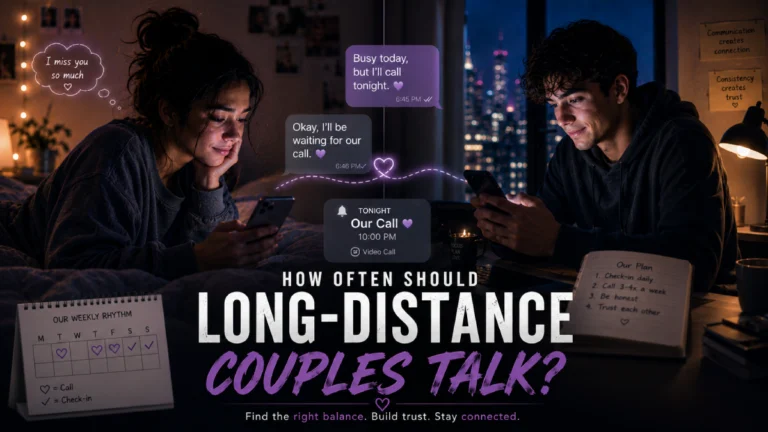
- Proper call two or three times a week
- Weekly emotional check-in
- One virtual date or shared activity
It does not have to be perfect.
It has to feel emotionally sustainable.
2. Talk About Expectations Before They Turn Into Resentment
A lot of long-distance relationship communication problems come from unspoken expectations.
You expect them to call after work.
They think texting is enough.
You expect a goodnight message.
They do not realize it matters.
You expect updates when plans change.
They assume you will understand.
And slowly, disappointment builds.
Not because love is missing.
But because expectations were never named.
Ask What Makes Each Person Feel Loved, Ignored, Pressured, or Safe
This conversation can change the entire relationship.
Ask each other:
- What makes you feel loved from far away?
- What makes you feel ignored?
- What kind of communication feels pressuring?
- What helps you feel safe?
- What triggers overthinking for you?
- What do you need when we cannot talk much?
- How should we handle cancelled calls?
This is not “too much.”
This is emotional maintenance.
And long-distance relationships need emotional maintenance more than most.
Conversation Starter
“I don’t need us to talk all day, but I need to know when we’ll properly connect.”
This sentence is honest without being controlling.
It says:
“I respect your life, but I also need to feel emotionally included.”
That is a healthy need.
3. Use Voice or Video for Emotional Conversations
Not every conversation should happen through text.
Especially not emotional ones.
If something is sensitive, important, or likely to be misunderstood, move it to voice or video.
Because text can make soft feelings look harsh.
And it can make hurt sound like an attack.
Do Not Try to Solve Sensitive Issues Through Dry Texts
Avoid solving these through text:
- Trust issues
- Feeling ignored
- Plans
- Jealousy
- Emotional distance
- Repeated disappointment
- Big misunderstandings
- Fights after cancelled calls
Texting during emotional conflict can make both people defensive.
One person sends long paragraphs.
The other feels overwhelmed.
One person reads the message as cold.
The other says, “That’s not what I meant.”
And suddenly the problem becomes bigger than it needed to be.
Why It Helps
Voice carries softness that text often loses.
A voice can say:
“I am hurt, but I still love you.”
A text may only look like:
“I am hurt.”
That difference matters.
If you feel a conversation becoming heavy, say:
“I don’t want us to misunderstand each other through text. Can we talk on call?”
That is mature communication.
4. Make Small Updates Feel Personal, Not Mechanical
Long-distance couples need updates.
But updates should not feel like reporting.
If communication becomes only mechanical, the relationship starts feeling emotionally dry.
“Reached.”
“Ate.”
“Busy.”
“Good night.”
These are fine sometimes.
But if this becomes the whole relationship, emotional closeness may fade.
Replace Empty Updates With Emotionally Warm Details
You do not need to write paragraphs all day.
Just add warmth.
Instead of:
“Busy.”
Say:
“Today is hectic, but I miss you. I’ll call when I’m home.”
Instead of:
“Going out.”
Say:
“Going out with friends for a bit. I’ll send you a picture if I see something cute.”
Instead of:
“Tired.”
Say:
“I’m tired today, so I may be quiet, but nothing is wrong between us.”
These little additions create emotional safety.
They tell your partner:
“My life is busy, but you are not forgotten.”
Better Examples
Instead of “busy,” say:
“Today is hectic, but I miss you. I’ll call when I’m home.”
Instead of “later,” say:
“I can’t talk properly right now, but I want to. Let’s talk tonight.”
Instead of “fine,” say:
“I’m okay, just low energy today. We’re good.”
This is not over-explaining.
This is emotional kindness.
5. Ask for Reassurance Clearly Instead of Hinting
Many people do not ask for reassurance directly because they fear sounding needy.
So they hint.
They become cold.
They say, “Do whatever you want.”
They send dry replies.
They wait to see if the other person notices.
But hinting often creates more confusion.
Your partner may not understand what you need.
And then you feel even more hurt.
Emotional Needs Are Easier to Meet When They Are Named
If you need reassurance, name it.
If you miss them, say it.
If you feel disconnected, say it gently.
If you want more effort, explain what effort means to you.
A need that is clearly expressed has a much better chance of being met.
A need hidden under sarcasm, silence, or testing usually becomes a fight.
Script
“I’ve been feeling a little far from you today. Can you reassure me that we’re okay?”
This is soft.
Clear.
Emotionally honest.
It does not attack your partner.
It invites closeness.
And in a healthy relationship, reassurance should not feel like begging.
6. Do Not Turn Late Replies Into Immediate Fights
Late replies are one of the biggest long-distance triggers.
And yes, they can hurt.
Especially when you already miss them.
But one late reply does not always mean something is wrong.
Sometimes people are busy.
Sometimes they are tired.
Sometimes they saw the message and planned to reply later.
Sometimes they do not realize how anxious the silence feels.
So pause before reacting.
Watch the Pattern Before Reacting to One Moment
Ask yourself:
Is this a one-time thing?
Or is this a repeated pattern?
Do they usually come back with warmth?
Or do they disappear without care?
Do they explain when they are busy?
Or do they make me feel guilty for asking?
One moment needs patience.
A pattern needs conversation.
Emotional Clarity
One late reply may be busyness.
Repeated disappearance without care is a pattern.
Do not panic over every delay.
But also do not ignore repeated emotional neglect.
Both truths can exist.
7. Balance Practical Talks With Emotional Talks
Long-distance couples often talk about daily updates.
What did you eat?
How was work?
Did you sleep?
What are you doing?
These questions are fine.
They help you stay included in each other’s lives.
But if your relationship only has updates and no emotional depth, you may start feeling disconnected.
You may be talking every day but still feel lonely.
Updates Keep You Informed; Emotional Talks Keep You Close
Practical talks tell you what happened.
Emotional talks tell you how they felt.
Both matter.
A healthy long-distance relationship needs:
- Daily updates
- Emotional check-ins
- Future conversations
- Fun conversations
- Repair conversations
- Romantic conversations
- Random silly conversations
Do not let your relationship become only logistics.
Love needs emotional texture.
Weekly Check-In Questions
Try asking:
- Did you feel loved by me this week?
- Did anything make you feel distant?
- What kind of reassurance do you need right now?
- What are you looking forward to with us?
- Did I do anything that made you feel ignored?
- What helped you feel close to me recently?
- Is there anything you want us to improve?
These questions may feel simple, but they can prevent emotional distance from growing silently.
8. Create Communication Rituals That Feel Like “Us”
Rituals make long-distance love feel alive.
They create shared moments even when you are apart.
Because if communication is only random texting and tired calls, the relationship can start feeling flat.
Rituals bring warmth back.
They give you something to look forward to.
Voice Notes, Goodnight Texts, Virtual Dates, Shared Playlists, Photo Updates
Try simple rituals like:
- Sending one voice note before sleeping
- Watching a show together every weekend
- Sharing one photo from your day
- Making a playlist for each other
- Sending a “thinking of you” message randomly
- Having a virtual dinner date
- Writing small love notes
- Sending “open when you miss me” messages
- Having a Sunday emotional check-in
These do not need to be expensive or complicated.
They just need to feel intentional.
Lafz Amor Bridge
Open when letters, love notes, and small emotional gestures can make communication feel more tangible from far away.
Sometimes your partner does not need a perfect paragraph.
They need something that says:
“Even from far away, I am still choosing you.”
That is the emotional power of small rituals.
9. Learn How to Pause During Text Fights
Text fights can damage long-distance relationships quickly.
Because when you are already far away, the emotional safety is fragile.
A harsh sentence can echo for hours.
A misunderstood message can become a full argument.
A delayed reply during a fight can feel like abandonment.
So you need a pause habit.
Not silent treatment.
A pause.
There is a difference.
Text Arguments Can Make Small Issues Feel Bigger
When emotions rise, texting becomes risky.
You may type faster than you think.
You may read messages in the worst tone.
You may bring up old issues.
You may say things you do not fully mean.
And because you are not physically together, repair feels harder.
So when a text conversation becomes too heated, pause and move to voice or video.
Repair Line
“I don’t want us to hurt each other through text. Can we talk on call when we’re calmer?”
This line protects the relationship.
It says:
“I still care about us, but this format is hurting us.”
That is not avoidance.
That is emotional responsibility.
10. Keep Your Own Life Alive So Communication Does Not Become Emotional Survival
This may sound unrelated, but it is deeply connected.
If your whole life revolves around their messages, communication will start carrying too much weight.
Every reply will affect your mood.
Every delay will feel personal.
Every call will feel like emotional oxygen.
That is too much pressure for you.
And too much pressure for the relationship.
Your Whole Mood Should Not Depend on One Notification
You can love someone deeply and still have your own life.
You can miss them and still enjoy your day.
You can wait for their call without pausing your entire emotional world.
This does not make your love weaker.
It makes you more grounded.
And grounded people communicate better.
They ask more clearly.
They react less impulsively.
They love without losing themselves.
Emotional Reassurance
A healthy relationship supports your life; it should not pause your life.
Long-distance love becomes healthier when both people stay emotionally alive outside the relationship too.
How Often Should Long-Distance Couples Talk?
There is no perfect number.
Some long-distance couples talk every day.
Some talk a few times a week deeply.
Some text constantly.
Some prefer voice notes and planned calls.
The right answer depends on your schedules, emotional needs, time zones, and communication styles.
But there should be predictability.
Not because love needs rules.
But because uncertainty creates overthinking.
There Is No Perfect Number, But There Should Be Predictability
The question is not only:
“How often should we talk?”
The better question is:
“What rhythm helps both of us feel connected without feeling pressured?”
If one person wants daily calls and the other can only manage two quality calls a week, you need to discuss that.
Not silently resent each other.
Not force each other.
Discuss it honestly.
Some Couples Need Daily Calls; Others Need Fewer but Deeper Conversations
A newly long-distance couple may need more frequent reassurance.
A couple with demanding work schedules may need fewer but more focused calls.
A couple in different time zones may need asynchronous communication like voice notes and photos.
A couple going through conflict may need extra check-ins for a while.
The rhythm can change.
That is okay.
Healthy communication adapts.
Quality Matters More Than Constant Contact
Talking all day does not always mean feeling close.
You can send hundreds of texts and still feel emotionally unseen.
You can have one honest call and feel deeply connected.
Quality matters.
Presence matters.
Warmth matters.
Curiosity matters.
A distracted two-hour call may feel lonelier than a sincere ten-minute voice note.
So do not measure love only by time spent talking.
Measure it by emotional presence.
Talking All Day Does Not Always Mean Feeling Close
Sometimes people use constant texting to avoid real emotional conversations.
They talk all day, but never say what they feel.
They share updates, but not fears.
They send memes, but avoid disconnection.
They say goodnight, but do not repair hurt.
That is why quantity alone is not enough.
A long-distance relationship needs communication that reaches the heart, not just the phone.
A Healthy Communication Rhythm Should Feel Safe, Not Suffocating
If one person feels ignored and the other feels monitored, the rhythm is not working.
It needs adjustment.
Not blame.
Adjustment.
The goal is not to force the more distant partner to talk constantly.
And it is not to force the anxious partner to pretend they need nothing.
The goal is to create a middle ground where both feel respected.
If One Person Feels Ignored and the Other Feels Monitored, the Rhythm Needs Repair
Say something like:
“I don’t want you to feel pressured, but I also don’t want to feel emotionally far from you. Can we find a rhythm that works for both of us?”
This sentence is powerful because it protects both needs:
Space and closeness.
Independence and connection.
Flexibility and reassurance.
Suggested Communication Framework
Here are practical frameworks you can adapt.
Do not copy them blindly.
Use them as starting points.
For Busy Couples
Small updates + 2–3 quality calls per week.
This works when both people have demanding schedules but still want emotional consistency.
Add small messages like:
“Today is hectic, but I’m thinking of you.”
That one line can reduce a lot of anxiety.
For Anxious or Newly Long-Distance Couples
Daily reassurance + planned call times + weekly check-in.
This helps when the relationship is adjusting to distance.
New long-distance couples often need more structure because the emotional shift is fresh.
The goal is not dependency.
The goal is stability.
For Different Time Zones
Async voice notes + scheduled deep calls + flexible expectations.
Voice notes are especially powerful for different time zones.
They let your partner wake up to your voice.
They make communication feel warmer than text.
And they reduce the pressure of being available at the same time.
What to Talk About in a Long-Distance Relationship
Sometimes couples run out of things to say.
Not because love is gone.
But because distance can make conversations repetitive.
You ask the same questions.
You give the same updates.
You talk about the same problems.
And slowly, calls start feeling predictable.
Maybe even boring.
But this can be repaired.
You need more emotional variety in your conversations.
Talk About Daily Life So You Still Feel Included
Daily life matters.
Small details matter.
Do not wait for something big to share.
Tell them about your coffee.
Your commute.
A funny moment.
A stressful meeting.
A random thought.
A song you heard.
A person who annoyed you.
A little thing that made you smile.
These small details help your partner feel like they are part of your world.
Share Ordinary Details, Not Just Big Updates
Long-distance intimacy is built through ordinary details.
The more your partner knows about your everyday life, the less far away they feel.
A simple photo of your desk can say:
“This is where I am today.”
A voice note from your walk can say:
“You are with me in this moment.”
A random message can say:
“I thought of you while living my life.”
That is closeness.
Talk About Feelings Before They Become Fights
Do not wait until hurt becomes anger.
If you feel disconnected, say it early.
Softly.
Clearly.
Without accusation.
Because unspoken feelings do not disappear.
They become mood shifts.
They become sarcasm.
They become cold replies.
They become distance.
Name Disconnection Early
You do not have to make it dramatic.
You can say:
“I’ve been missing us a little.”
Or:
“I don’t think anything is wrong, but I feel slightly disconnected.”
Or:
“Can we have a proper call soon? I miss feeling close.”
These sentences are not needy.
They are emotionally honest.
Script
“I don’t think anything is wrong, but I miss feeling close to you.”
This is such a gentle way to open a conversation.
It lowers defensiveness.
It names the feeling.
It invites closeness.
Talk About the Future Without Making It a Daily Pressure
Long-distance relationships need future conversations.
But not in a way that creates pressure every day.
You do not need to ask “Where is this going?” every night.
But you do need honest conversations sometimes.
Because without future clarity, distance can start feeling endless.
Visits, Timelines, Career Plans, Family, and Closing the Distance
Talk about:
- When you might meet next
- What needs to happen before closing the distance
- How work or studies affect your plans
- What both families may need to know
- What timeline feels realistic
- How serious both of you are
- What kind of future you are building
These conversations may feel heavy.
But they also create emotional grounding.
They remind both people:
“We are not just waiting. We are moving somewhere.”
Talk About What Makes You Feel Loved
Do not assume your partner knows what makes you feel loved.
One person may feel loved through daily texts.
Another through quality calls.
Another through surprise gifts.
Another through words of affirmation.
Another through consistency.
Another through future planning.
Love is easier to give when you know how the other person receives it.
Reassurance, Quality Time, Words, Effort, Gifts, or Consistency
Ask:
- What makes you feel most loved from far away?
- Do words matter a lot to you?
- Do calls matter more than texts?
- Do small surprises make you feel remembered?
- Does planning the future make you feel secure?
- Do you need more reassurance during busy periods?
This helps you stop guessing.
And it helps your partner love you better.
Talk About Conflict Patterns
Every couple has patterns.
In long-distance, those patterns become more noticeable.
Maybe when you feel hurt, you send long messages.
Maybe when they feel overwhelmed, they go quiet.
Maybe you chase.
Maybe they withdraw.
Maybe you ask for reassurance.
Maybe they feel accused.
Maybe they need space.
Maybe you feel abandoned by their space.
If you do not talk about the pattern, you will keep fighting about the surface issue.
What Happens When One Person Pulls Away and the Other Chases?
This is a common long-distance pattern.
One person feels disconnected and reaches harder.
The other feels pressured and pulls away.
Then the first person panics more.
Then the second person withdraws more.
This cycle can hurt both people.
The solution is not blaming.
It is naming the cycle.
Say:
“I think when I feel distant, I ask for more closeness, and when you feel pressured, you pull away. Can we find a better way before both of us feel hurt?”
This kind of awareness can protect the relationship.
Use These Deep Conversation Prompts
Deep conversation does not have to feel like an interview.
It can feel soft.
Curious.
Warm.
Use prompts when calls feel repetitive or emotionally dry.
Emotional Closeness Prompts
Try these when you want to feel closer:
Prompt List
- What made you miss me this week?
- When did you feel most connected to me recently?
- Is there anything you are scared to tell me?
- What does effort look like to you in long distance?
- What can I do that makes you feel emotionally safe?
- What is one thing you wish I understood better?
- What do you need more of from me lately?
- What is one memory of us you keep thinking about?
- What makes you feel reassured when we are far apart?
- What are you excited for in our future?
These questions create emotional intimacy because they go beyond routine.
They help you feel known.
And feeling known is one of the deepest forms of closeness.
Long-Distance Relationship Texting Tips
Texting is important in long-distance relationships.
But texting can also create misunderstandings.
So the goal is not to text perfectly.
The goal is to text with enough warmth and clarity that your partner does not feel emotionally abandoned between calls.
Text should support the relationship.
Not become the place where every fear explodes.
Do Not Use Texts for Every Serious Conversation
Text is good for updates, affection, small reassurance, and everyday closeness.
But it is not always good for serious emotional conversations.
When the topic is sensitive, text can make things worse.
Especially if one person is anxious and the other is defensive.
Some Topics Need Voice, Tone, and Emotional Context
Use voice or video for:
- Feeling ignored
- Trust concerns
- Plans
- Repeated communication issues
- Jealousy
- Emotional distance
- Conflict repair
- Big decisions
You need tone for these conversations.
You need pauses.
You need softness.
You need to hear that the other person is human, not just words on a screen.
Send Context With Short Replies
Short replies are not always bad.
But in long-distance relationships, context helps.
If you are busy, say that.
If you are tired, say that.
If you are not upset, say that.
A little context can prevent unnecessary overthinking.
“I’m Busy” Feels Different From “I’m Busy, But I’ll Reply Properly Later”
Compare these:
“Busy.”
And:
“I’m busy right now, but I’ll reply properly after work. Miss you.”
The second one feels safer.
It gives context.
It gives reassurance.
It gives a next connection point.
Small emotional effort, big impact.
Avoid Passive-Aggressive Texts
Passive-aggressive texts usually come from hurt.
But they rarely create closeness.
They create confusion, guilt, and defensiveness.
Texts like:
“K.”
“Do whatever.”
“Nice.”
“Clearly you’re busy.”
“Forget it.”
These may express pain indirectly, but they do not help your partner understand the real need.
Say the Real Feeling Underneath the Anger
Under the anger, there is usually something softer.
“I felt ignored.”
“I missed you.”
“I wanted you to make time.”
“I felt unimportant.”
“I needed reassurance.”
Say that.
It is more vulnerable, yes.
But it is also more effective.
Instead of “Do Whatever You Want,” Try This
“I felt hurt when our call got cancelled without a clear plan to reconnect.”
This sentence is direct.
It gives the real issue.
It does not attack.
It helps the relationship repair.
Use Voice Notes When Text Feels Too Cold
Voice notes are underrated in long-distance relationships.
They carry warmth.
They carry tone.
They feel more personal.
A simple voice note can feel more intimate than a long text.
Especially when your partner is anxious or missing you.
Voice Makes Reassurance Feel More Human
A typed “I miss you” is sweet.
But hearing it in their voice can feel different.
It feels more real.
More present.
More emotionally alive.
Use voice notes for:
- Goodnight messages
- Quick reassurance
- Apologies
- Sharing emotional thoughts
- Saying “I miss you”
- Explaining something that text may misunderstand
Voice can soften distance.
Create a “Busy But Connected” Message Habit
This one habit can prevent so many fights.
When you are busy, do not disappear.
Send a short message that gives context, reassurance, and a next point of connection.
Simple Message Formula
Busy context + reassurance + next connection point.
For example:
“I’m in back-to-back classes today, but I’m not ignoring you. I’ll text properly tonight.”
Or:
“Work is crazy right now. I miss you though. Can we call after dinner?”
Or:
“I’m low energy today, but we’re okay. I just need some rest.”
Example
“Today is packed, but I’m not ignoring you. I’ll call after dinner.”
This kind of message makes the other person feel considered.
And feeling considered is one of the biggest needs in long-distance.
Common Communication Problems in Long-Distance Relationships
Even couples who love each other can struggle with communication.
Especially when distance creates pressure, anxiety, and different expectations.
The goal is not to avoid every problem.
The goal is to understand what is happening and repair it before it becomes emotional distance.
Problem 1: One Person Initiates More
This can hurt deeply.
When one person always texts first, plans calls, asks questions, sends sweet messages, and tries to keep the relationship alive, they may start feeling unwanted.
Not because the other person never cares.
But because effort feels uneven.
And uneven effort slowly becomes emotional pain.
Why It Hurts
It starts feeling like one person is carrying the connection.
The person initiating may think:
“Would we even talk if I stopped trying?”
That thought is painful.
Because nobody wants to feel like they are forcing love to stay alive.
What to Do
Discuss effort clearly instead of silently keeping score.
Say:
“I’ve noticed I initiate most of our calls, and it’s starting to make me feel like I’m carrying the connection. Can we find a better balance?”
This is better than silently withdrawing and hoping they notice.
Problem 2: Calls Feel Dry or Repetitive
Sometimes calls become repetitive.
Same questions.
Same answers.
Same routine.
No spark.
No emotional depth.
No excitement.
And then you may start wondering if the relationship is fading.
But sometimes, the relationship is not fading.
The conversation format is just tired.
Why It Hurts
You talk, but you do not feel emotionally nourished.
This is frustrating because technically, communication is happening.
But your heart still feels hungry.
You may think:
“Why do I still miss them after talking to them?”
Maybe because the conversation gave information, but not intimacy.
What to Do
Add shared activities and deeper questions.
Try:
- Watching something together
- Playing an online game
- Cooking the same meal
- Asking emotional prompts
- Planning future visits
- Sharing childhood stories
- Doing a virtual date
- Reading old chats together
- Making a playlist together
Sometimes connection needs a new container.
Problem 3: One Partner Wants More Communication Than the Other
This is very common.
One person feels:
“We barely talk.”
The other feels:
“We talk so much, and it still isn’t enough.”
Both may feel hurt.
Both may feel misunderstood.
And if they do not talk about it carefully, it becomes a cycle of pressure and withdrawal.
Why It Hurts
One feels ignored; the other feels pressured.
The person wanting more communication may feel unloved.
The person wanting less may feel controlled.
Both feelings need compassion.
This is not about deciding who is right.
It is about finding a rhythm that protects both emotional needs.
What to Do
Build a realistic rhythm that protects both closeness and space.
Say:
“I know you need flexibility, and I need emotional consistency. Can we create a rhythm that supports both?”
This moves the conversation from blame to teamwork.
Problem 4: Every Serious Talk Becomes a Fight
If every emotional conversation turns into conflict, both people may start avoiding honesty.
One person stops bringing things up.
The other assumes everything is fine.
But underneath, resentment grows.
This is dangerous for long-distance relationships because emotional distance can grow quietly.
Why It Hurts
Emotional needs start feeling unsafe to express.
You may start thinking:
“What’s the point of saying anything? It will become a fight anyway.”
That thought is a sign that communication needs repair.
Not silence.
Repair.
What to Do
Use repair language and move sensitive topics to calls.
Try saying:
“I don’t want this to become a fight. I just want us to understand each other better.”
Or:
“Can we talk about this as a team, not as opponents?”
Or:
“I am hurt, but I am not against you.”
These lines can soften the emotional tone.
Problem 5: Future Conversations Are Avoided
Long-distance relationships need future clarity.
If every future conversation is avoided, the relationship may start feeling directionless.
You may feel like you are emotionally investing without knowing where it is going.
That uncertainty can make communication feel heavier.
Why It Hurts
The relationship starts feeling emotionally directionless.
Without a plan, even daily communication can start feeling pointless.
You may think:
“We talk every day, but what are we actually building?”
That question matters.
What to Do
Talk about timelines gently but honestly.
You do not need to pressure your partner with immediate decisions.
But you do need openness.
Ask:
“I’m not asking for everything to be solved today, but can we talk honestly about what closing the distance might look like for us?”
That is fair.
Common Mistakes That Make Long-Distance Communication Worse
Long-distance communication can be fragile.
Not because the relationship is weak, but because distance already creates emotional gaps.
These mistakes can make those gaps bigger.
If you recognize yourself in any of these, do not shame yourself.
Just use it as a place to grow.
Mistake 1: Expecting Constant Availability
Wanting connection is normal.
But expecting your partner to always be available can create pressure.
If they feel they must reply instantly to prove love, communication becomes stressful.
And if your peace depends on their instant reply, you may feel anxious all day.
Why It Is Harmful
It turns love into monitoring.
Instead of feeling freely chosen, your partner may feel watched.
And instead of feeling secure, you may become more dependent on constant proof.
Emotional Consequence
One person feels controlled, and the other feels anxious.
A better goal is not constant availability.
It is reliable emotional presence.
Mistake 2: Saying “I’m Fine” When You Are Not
Many people do this because they do not want to seem dramatic.
But “I’m fine” when you are not fine creates emotional confusion.
Your partner may believe you.
Then you feel hurt that they did not understand.
But you never actually told them.
This becomes painful for both people.
Why It Is Harmful
Unspoken hurt becomes resentment.
And resentment changes your tone.
You may become cold.
Sarcastic.
Distant.
Less affectionate.
Not because you stopped loving them, but because your hurt has been sitting inside too long.
Say the truth earlier.
Softly.
Before it becomes bitterness.
Mistake 3: Having Serious Fights Over Text
Text fights can turn small issues into big emotional wounds.
You cannot hear tone.
You cannot see softness.
You cannot feel intention.
You only see words.
And when you are hurt, you may read those words in the most painful tone possible.
Why It Is Harmful
Tone gets lost and defensiveness increases.
One person writes a paragraph.
The other feels attacked.
One person needs reassurance.
The other feels accused.
And suddenly, both are fighting for emotional survival instead of understanding each other.
Move serious conversations to voice or video when possible.
Mistake 4: Only Talking About Problems
This is a quiet mistake.
If every call becomes a discussion about what is wrong, the relationship starts feeling heavy.
Of course, problems need to be discussed.
But your relationship also needs play, softness, romance, and ordinary joy.
Otherwise, both people may start dreading calls.
Why It Is Harmful
The relationship starts feeling heavy instead of loving.
Your partner may begin to associate communication with stress.
You may begin to feel like the relationship is always in repair mode.
Balance is important.
Talk about problems.
But also talk about dreams, memories, jokes, attraction, plans, and silly things.
Love needs lightness too.
Mistake 5: Avoiding Communication About Communication
Many couples fight about symptoms.
Late replies.
Cancelled calls.
Dry texts.
Different expectations.
But they never talk about the actual communication system.
So the same problems repeat.
Again and again.
Why It Is Harmful
You keep fighting about symptoms instead of fixing the system.
Instead of only saying:
“You replied late again.”
Talk about:
“What should we do when one of us is busy so the other doesn’t feel ignored?”
That fixes the system.
Not just the moment.
When Communication Problems Are a Red Flag
Communication problems are normal in long-distance relationships.
But some patterns are not just communication issues.
They are emotional red flags.
It is important to know the difference.
Because long-distance can be hard, but it should not make you feel permanently invisible.
They Regularly Disappear Without Explanation
Everyone gets busy.
But regularly disappearing without explanation is different.
If your partner vanishes for hours or days and then acts as if nothing happened, that can make your heart feel unsafe.
Healthy space includes communication.
Unexplained disappearance creates anxiety.
They Make You Feel Needy for Asking for Basic Connection
Wanting communication is not needy.
Wanting reassurance is not needy.
Wanting a clear plan to talk is not needy.
If your partner constantly makes you feel dramatic for asking for basic emotional connection, that is not healthy.
You should not have to act emotionless to be loved.
They Refuse to Repair After Hurting You
Everyone makes mistakes.
But repair matters.
If they hurt you and refuse to acknowledge it, the wound stays open.
If they say sorry but repeat the same behavior, trust does not rebuild.
If they make you feel guilty for being hurt, communication becomes unsafe.
They Avoid Every Conversation About the Future
Long distance needs direction.
Not a perfect plan.
But willingness to talk.
If they avoid every future conversation, dismiss your concerns, or keep everything vague, your anxiety may not be random.
It may be reacting to real uncertainty.
They Only Communicate When It Is Convenient for Them
A relationship cannot survive on one person’s convenience and the other person’s patience.
If they communicate only when they want comfort, attention, or entertainment, but disappear when you need emotional support, that imbalance matters.
You deserve mutual effort.
Their Words Say Love, But Their Effort Says Distance
This is one of the most painful patterns.
They say:
“I love you.”
But they do not make time.
They say:
“I miss you.”
But they do not initiate.
They say:
“You matter.”
But they dismiss your feelings.
When words and actions do not match, confusion grows.
And your heart starts overthinking because it is trying to understand the mismatch.
Emotional Clarity
Long-distance communication can be difficult, but it should not make you feel permanently invisible.
A healthy relationship may have communication problems.
But it should also have repair, effort, and care.
When to Walk Away From a Long-Distance Relationship With Poor Communication
This is not an easy thing to think about.
Because sometimes you love someone deeply, but the way the relationship communicates keeps hurting you.
And you may keep telling yourself:
“It’s just the distance.”
“They are busy.”
“Maybe I am asking for too much.”
“Maybe I should be more patient.”
Patience is beautiful.
But patience should not become self-abandonment.
Walk Away When You Are Always Begging for Basic Effort
If you are always begging for texts, calls, explanations, reassurance, plans, or emotional repair, something is wrong.
Basic effort should not feel like a luxury.
You should not have to beg someone to act as if the relationship matters.
Effort will never be perfectly equal every day.
But it should feel mutual overall.
Walk Away When Every Concern Gets Dismissed or Turned Against You
If you bring up a concern and they always call you dramatic, insecure, needy, or difficult, communication becomes emotionally unsafe.
A loving partner may not always agree with you.
But they should care about how their behavior affects you.
If every concern becomes your fault, there is no real repair.
Only blame shifting.
Walk Away When Trust Has Been Broken and They Refuse Repair
Trust can heal.
But only when the person who broke it is willing to repair it.
Repair means honesty.
Accountability.
Consistency.
Patience.
Changed behavior.
If they want your trust but refuse the work needed to rebuild it, your anxiety will keep coming back.
And that is not your fault.
Walk Away When There Is No Communication, No Plan, and No Emotional Safety
A long-distance relationship can survive many things.
Busy schedules.
Time zones.
Missing each other.
Hard days.
But it cannot survive forever without communication, direction, and emotional safety.
If there is no real communication, no plan, no repair, and no sense of being emotionally held, you may need to ask yourself a hard question:
“Am I in a relationship, or am I holding onto the idea of one?”
That question can hurt.
But sometimes it brings clarity.
Reality Check
A relationship can survive distance, but it cannot survive permanent emotional neglect.
Love needs effort.
Not perfection.
Effort.
Final Thoughts: Good Communication Makes Distance Feel Less Lonely
Good communication in a long-distance relationship is not about talking all day.
It is not about proving love every hour.
It is not about forcing your partner to be available whenever you feel anxious.
And it is not about pretending you do not need reassurance.
Good communication is about making each other feel emotionally remembered.
It is about creating a rhythm that feels safe.
It is about explaining busyness instead of disappearing.
It is about adding warmth to short messages.
It is about moving serious conversations to voice or video.
It is about asking for reassurance without shame.
It is about repairing quickly when misunderstandings happen.
And most of all, it is about remembering that the person on the other side of the screen has a heart too.
Reassurance
Long-distance communication does not have to be perfect.
It has to be honest, warm, consistent, and emotionally safe.
You will still have missed calls sometimes.
Dry days sometimes.
Busy weeks sometimes.
Misunderstandings sometimes.
But if both people care enough to repair, explain, reassure, and keep showing up, the distance becomes less lonely.
Not easy.
But less lonely.
Emotional Closure
The goal is not to talk all day.
The goal is to make each other feel remembered, respected, and connected even when life is busy.
Because sometimes one thoughtful message can do more than twenty empty texts.
Sometimes one honest call can repair what a hundred dry replies could not.
Sometimes one clear reassurance can calm a whole night of overthinking.
And sometimes love from far away survives not because the couple never struggles, but because both people keep learning how to reach each other better.
Even through screens.
Even through time zones.
Even through silence.
Even when it is hard.
If communication issues are making you overthink, read next:
How to Stop Overthinking in a Long-Distance Relationship
Because sometimes the problem is not that you need too much.
Sometimes your heart just needs communication that feels clear, warm, and safe enough to trust.