Anxious Attachment in Relationships: Why You Overthink
Why Does Love Make You Feel So Anxious?
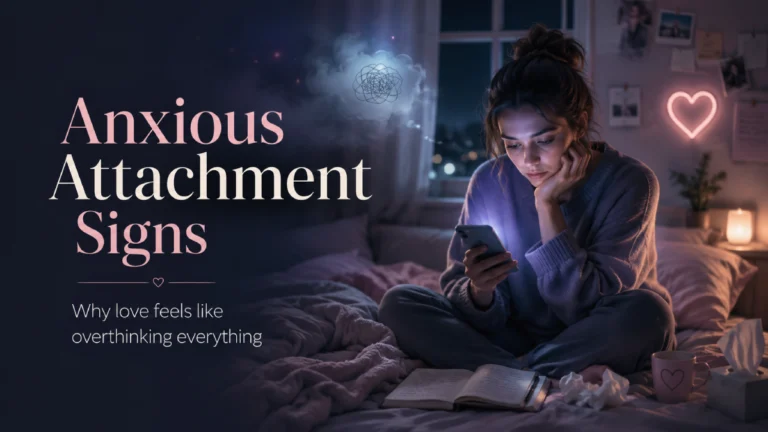
Have you ever felt your whole mood change because someone replied late?
Maybe they were only busy. Maybe their phone was away. Maybe nothing was wrong at all.
But your mind did not stay calm.
It started creating stories.
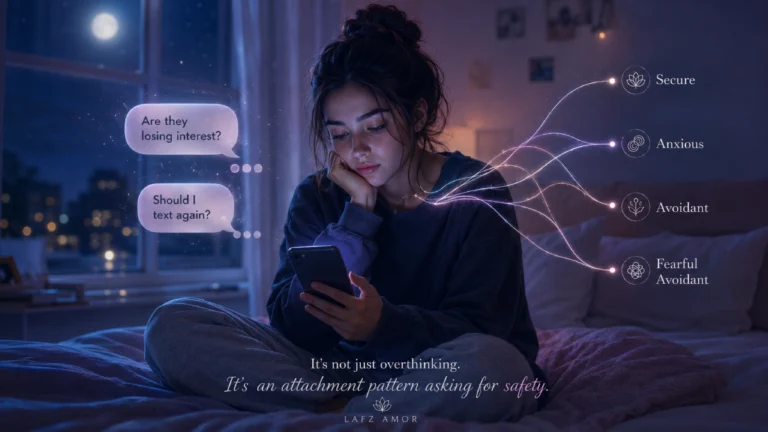
“They are losing interest.”
“I said too much.”
“They are tired of me.”
“They found someone better.”
“Maybe I care more than they do.”
And suddenly, one late reply became more than a late reply. It became a whole emotional storm inside your chest.
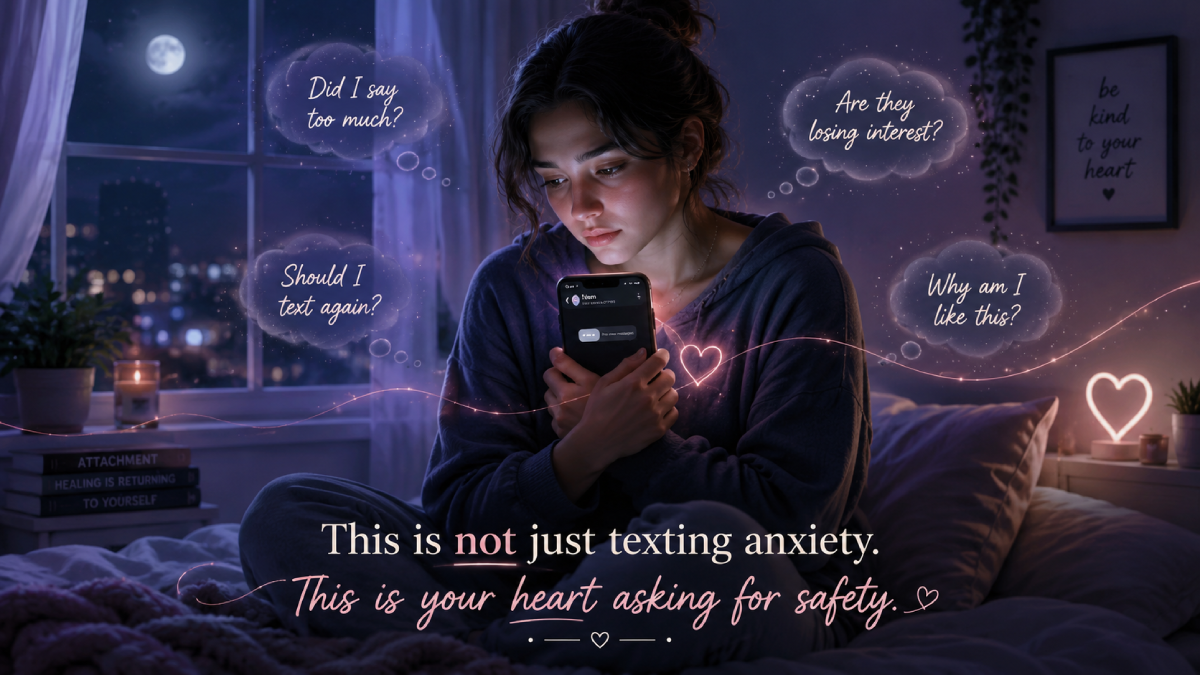
You may check their last seen.
You may reread your last message.
You may compare their tone with how they usually text.
You may open the chat, close it, open it again, and then feel embarrassed for caring so much.
If this feels familiar, you are not crazy.
You are not dramatic.
You are not “too much.”
You may be experiencing anxious attachment in relationships, where love does not only feel beautiful. It also feels uncertain, fragile, and easy to lose.
And that can be exhausting.
Because you do not just want attention.
You want safety.
You want to know that one small distance does not mean abandonment. You want to believe that someone can be busy and still care. You want to feel loved without needing proof every few hours.
But sometimes your heart does not believe safety easily.
Sometimes your heart keeps asking, “Are we okay?” even when your mind says, “Maybe everything is fine.”
That inner conflict is painful.
And this blog is here to help you understand it without judging yourself.
The Late Reply Spiral
Maybe this has happened to you.
They usually reply quickly, but today they took longer.
At first, you try to stay normal.
You tell yourself, “They must be busy.”
But then you see them online.
Or they watch your story.
Or they post something.
And now your calm starts breaking.
You think, “So they have time for that, but not for me?”
Then the spiral begins.
You check the chat.
You reread your last message.
You wonder if your tone was too emotional.
You imagine them getting bored.
You think about texting again.
Then you stop yourself because you do not want to look needy.
Then you feel hurt because why should asking for basic attention feel needy?
And then, when they finally reply, your whole body relaxes.
You feel okay again.
Maybe even happy.
But somewhere inside, you also feel ashamed.
“Why did I panic so much?”
“Why can’t I be chill?”
“Why does this person have so much power over my mood?”
That is the late reply spiral.
And for someone with anxious attachment, it can feel very real.
Not because you are weak.
Not because you lack self-respect.
But because emotional distance can feel like danger to your nervous system.
Your mind may be reacting to the present moment, but your fear may be much older.
The Emotional Impact of Anxious Attachment
Anxious attachment can make love feel less like connection and more like waiting for proof.
Waiting for the text.
Waiting for the reassurance.
Waiting for them to sound normal again.
Waiting for them to choose you clearly.
Waiting for the anxiety to stop.
And because the anxiety feels so intense, you may start doing things you do not even want to do.
You may chase.
You may over-explain.
You may apologize when you did nothing wrong.
You may ask the same question again and again.
You may hide your feelings to avoid looking “too emotional.”
You may accept less than you need because you are afraid asking for more will push them away.
This is where anxious attachment becomes painful.
Not because you love deeply.
Loving deeply is not the problem.
The pain begins when love starts feeling like something you must constantly earn, monitor, and protect from disappearing.
Micro Takeaway
Anxious attachment is not just wanting attention.
It is often fear looking for emotional safety.
And once you understand that, you can stop hating yourself for your reactions and start gently working with the fear underneath them.
What Is Anxious Attachment in Relationships?
Anxious attachment in relationships is an insecure attachment style where a person deeply wants closeness but fears rejection, abandonment, or emotional distance. It often shows up as overthinking, reassurance-seeking, emotional sensitivity, fear of being left, and feeling unsafe when a partner becomes inconsistent, unavailable, or distant.
In simple words, anxious attachment makes love feel emotionally uncertain.
You may want closeness, consistency, and reassurance more strongly than others. You may feel deeply connected when your partner is warm, but emotionally shaken when their behavior changes.
A small shift can feel huge.
A delayed reply can feel personal.
A little distance can feel like the beginning of loss.
This does not mean you are weak.
It means your emotional system may have learned that love can disappear, so now it watches for signs.
It scans.
It checks.
It prepares.
It tries to protect you before you get hurt.
The problem is that this protection can also hurt you.
Because when your mind is always scanning for rejection, even normal relationship moments can start feeling unsafe.
Anxious Attachment Is Not the Same as Being “Too Needy”
Let’s clear this up gently.
Having anxious attachment does not mean you are “too needy.”
It does not mean you are impossible to love.
It does not mean you should become someone who needs nothing from anyone.
Everyone needs reassurance sometimes.
Everyone wants consistency.
Everyone wants to feel chosen.
Everyone wants to know where they stand in someone’s life.
The problem is not having needs.
The problem begins when your emotional safety depends completely on another person’s constant response.
If they reply warmly, you feel okay.
If they become distant, you feel like everything is falling apart.
If they reassure you, you calm down.
If they delay reassurance, your fear gets louder.
That is not neediness.
That is emotional dependence on external proof of safety.
And it usually comes from a deeper fear:
“What if I am not enough to stay for?”
That fear deserves compassion.
But it also needs healing.
Because you deserve a love where you can ask for reassurance without panic, and where your whole sense of worth does not collapse because someone took longer to reply.
How Anxious Attachment Feels Internally
Anxious attachment can feel like your heart is standing outside a door, waiting to see if someone still wants to let you in.
You may be physically present in your life, doing normal things, but emotionally you are somewhere else.
Waiting.
Checking.
Wondering.
Trying to understand their tone.
Trying to predict their mood.
Trying to make sure the connection is still safe.
Sometimes, even when nothing is clearly wrong, you feel unsettled.
You may feel like love is always slightly at risk.
Like one wrong word could change everything.
Like one small mistake could make someone lose interest.
Like you must be loving enough, funny enough, attractive enough, calm enough, interesting enough, and low-maintenance enough to be chosen.
That is a heavy way to love.
And if you have been carrying this quietly, you may feel tired in a way other people do not understand.
Because anxious attachment does not only live in your thoughts.
It lives in your body.
In the tight chest.
In the restless hands.
In the phone checking.
In the sudden stomach drop.
In the relief when they finally say, “I love you” or “I was just busy.”
And for a while, everything feels okay again.
Until the next trigger.
Why This Pattern Can Feel So Exhausting
Anxious attachment is exhausting because your emotional system rarely rests.
Even in good moments, you may worry about when the good moment will end.
Even when someone shows love, you may wonder if they will change.
Even when things are stable, your mind may search for signs that they are not.
You are not just experiencing the relationship.
You are monitoring it.
That constant monitoring drains you.
It makes love feel like emotional work.
And then the shame comes.
You may feel ashamed for asking for reassurance.
Ashamed for overthinking.
Ashamed for checking their activity.
Ashamed for wanting more clarity.
Ashamed for being affected so much.
But shame does not heal anxious attachment.
Shame only makes you hide the fear instead of understanding it.
What helps is learning to say:
“This is my fear speaking. I do not have to obey it immediately. But I do need to understand what it is asking for.”
That sentence can become a small emotional doorway.
And on the other side of it, there is more choice.
Signs of Anxious Attachment in Relationships
Anxious attachment signs can show up quietly at first.
They do not always look dramatic from the outside.
Sometimes they look like being “very caring.”
Sometimes they look like being “emotionally available.”
Sometimes they look like always trying harder.
But inside, the experience is very different.
You are not just loving.
You are afraid.
You are not just checking in.
You are seeking proof.
You are not just missing them.
You are scared of being forgotten.
Here are the signs of anxious attachment in relationships, explained with emotional clarity.
1. You Overthink Small Changes in Their Behavior
Maybe they usually say “good morning” with warmth, but today they just said “morning.”
Maybe they usually reply with paragraphs, but today they sent one line.
Maybe they were affectionate yesterday and distant today.
To someone else, this may look small.
To you, it may feel like a signal.
Your mind starts asking:
“Are they upset?”
“Did I do something?”
“Are they losing feelings?”
“Why do they sound different?”
And the worst part is, you may know you are overthinking. But knowing does not automatically stop the feeling.
Because anxious attachment often turns emotional uncertainty into mental investigation.
You become a detective of tone, timing, punctuation, and energy.
But love was never meant to feel like solving a case every night.
What It Looks Like
It may look like:
- Their reply is shorter and you feel worried.
- Their tone feels different and your mood drops.
- They stop using affectionate words and you feel rejected.
- They seem less excited and you blame yourself.
- They are online but not replying, and your mind spirals.
- They take longer than usual, and you imagine worst-case scenarios.
- They say “I’m fine,” but you keep feeling something is wrong.
This can be especially intense in modern dating because there are so many tiny digital signals to overread.
Last seen.
Typing bubble.
Story views.
Liked posts.
Reaction changes.
Dry texts.
Delayed replies.
Online status.
It is like anxious attachment found a whole playground in your phone.
Why It Hurts
It hurts because your mind may read emotional distance as rejection.
You are not simply reacting to a text.
You are reacting to what the text might mean.
And when you fear abandonment, “might” can feel very loud.
A small change becomes a threat.
A quiet moment becomes a warning.
A delayed reply becomes a story about your worth.
That is why people saying “just stop overthinking” does not help.
Because the problem is not only thought.
It is fear.
Micro Takeaway
Sometimes the trigger is small, but the fear underneath is old and deep.
So instead of asking, “Why am I overreacting?”
Try asking, “What did this moment make me afraid of?”
That question is softer.
And softness is where healing begins.
2. You Need Reassurance to Feel Calm
Reassurance can feel like oxygen when you have anxious attachment.
One “I love you.”
One “We are okay.”
One “I am not mad.”
One “I was just busy.”
And suddenly your body relaxes.
The storm quiets.
Your heart stops racing.
You feel safe again.
But if the deeper fear is still there, that calm may not last long.
Soon, another trigger comes.
And you need reassurance again.
This can feel embarrassing.
You may think, “Why do I need to hear it again if they already said it?”
But anxious attachment does not always store reassurance well.
It is like pouring water into a cup with a small crack. The reassurance helps, but the fear slowly leaks back in.
The goal is not to shame yourself for needing reassurance.
The goal is to build a deeper sense of safety so reassurance becomes supportive, not survival.
What It Looks Like
You may often ask:
- “Do you still love me?”
- “Are you mad at me?”
- “Are we okay?”
- “Do you still want this?”
- “Did I do something wrong?”
- “Are you losing interest?”
- “Do you promise you are not leaving?”
- “Why do you feel different today?”
Sometimes you ask directly.
Sometimes you ask indirectly.
You may test their affection.
You may become quiet to see if they notice.
You may pull away a little to see if they chase.
You may ask the same question in different ways.
Not because you want drama.
But because you want to feel safe.
Why It Hurts
Reassurance helps, but only for a while.
Then the fear comes back.
And when the fear comes back, you may feel guilty for needing more.
This creates a painful cycle:
You feel anxious.
You seek reassurance.
They reassure you.
You feel calm.
Then another trigger happens.
You seek reassurance again.
They may become tired or defensive.
You feel ashamed.
Then you become even more anxious.
This cycle can hurt both people if it is not understood.
But the answer is not to stop needing reassurance completely.
The answer is to learn how to ask for it clearly, and also learn how to comfort yourself when your fear rises.
Both matter.
Relational safety and inner safety.
Not one or the other.
Micro Takeaway
Reassurance is not wrong.
But it becomes painful when it is the only thing holding your emotional safety together.
Healthy love can reassure you.
Healing helps you believe reassurance for longer.
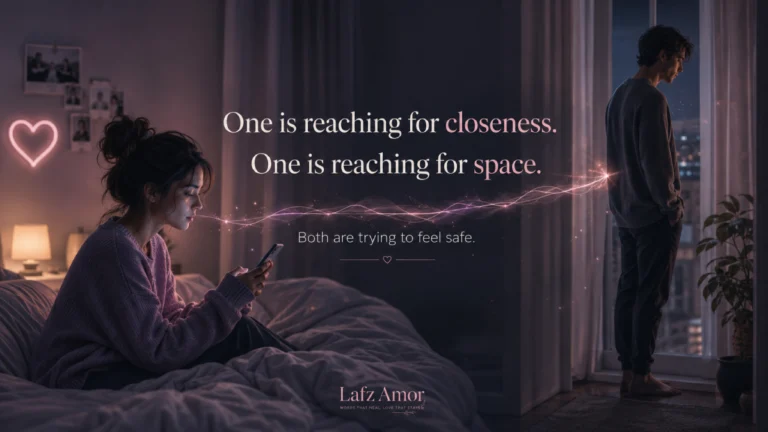
3. You Feel Anxious When They Need Space
For someone with secure attachment, space may feel normal.
For someone with anxious attachment, space can feel terrifying.
Your partner may say, “I just need some time.”
But your heart hears, “I am leaving.”
They may say, “I am busy today.”
But your mind hears, “You are no longer important.”
They may say, “I need to process.”
But your fear says, “This is the beginning of distance.”
And because the fear feels so strong, you may try to close the gap immediately.
You text.
You ask.
You explain.
You apologize.
You try to fix something that may not even be broken.
But in the anxious attachment system, space often feels like a problem to solve.
What It Looks Like
Your partner says they need space, and you may:
- Feel panic in your body.
- Assume they are losing feelings.
- Want immediate reassurance.
- Send multiple messages.
- Feel angry because space feels like rejection.
- Struggle to focus on anything else.
- Imagine the relationship ending.
- Take their need for alone time personally.
The difficult part is that not all space is harmful.
Some people genuinely need time to process emotions.
Some people recharge alone.
Some people do not text constantly but still care deeply.
But anxious attachment struggles with uncertainty.
So even healthy space may feel unsafe until it is explained clearly and consistently.
Why It Hurts
For anxious attachment, space can feel like abandonment, even when the other person does not mean it that way.
This usually happens because your emotional system connects distance with loss.
Maybe in the past, distance did mean something bad.
Maybe someone became distant before leaving.
Maybe affection was unpredictable.
Maybe silence was used as punishment.
Maybe you learned that when people pull away, you have to chase before they disappear.
So now, even normal space can activate old fear.
And your fear says, “Do something now, or you will lose them.”
Micro Takeaway
The goal is not to force yourself to fear space less.
The goal is to understand what story your mind attaches to space.
Because sometimes the pain is not just “they need time.”
The pain is “I believe time away means I am no longer loved.”
And that belief can be healed.
Slowly.
With awareness, consistency, and the right kind of love.
4. You Chase Clarity From Emotionally Unavailable People
Anxious attachment often feels drawn to emotionally unavailable people.
Not because you want pain.
Not because you enjoy confusion.
But because uncertainty can feel familiar.
Someone gives you affection, then pulls away.
They act interested, then distant.
They say they care, but avoid commitment.
They make you feel special sometimes, invisible other times.
And your heart gets hooked on trying to understand them.
You keep asking:
“What changed?”
“Why did they act like that if they did not care?”
“Why do they come close and then disappear?”
“Why do they keep giving mixed signals?”
“What are we?”
And the more unclear they are, the more you may chase clarity.
But clarity from an unclear person can become a trap.
What It Looks Like
You may notice this pattern:
- You are attracted to people who are emotionally inconsistent.
- You keep waiting for someone to become ready.
- You accept mixed signals because the good moments feel powerful.
- You keep trying to “earn” their certainty.
- You feel addicted to small signs of affection.
- You excuse their distance because you understand their wounds.
- You feel more attached when they pull away.
- You confuse anxiety with chemistry.
This is one of the hardest patterns to break because the relationship gives you both pain and relief.
The same person who triggers your anxiety also becomes the person who calms it.
When they disappear, you suffer.
When they return, you feel chosen.
That emotional contrast can feel intense.
But intensity is not always intimacy.
Why It Hurts
Emotionally unavailable people can keep anxious attachment activated because they offer just enough hope to keep you waiting.
Not enough consistency to feel safe.
But enough affection to make you stay.
This creates emotional hunger.
And when you are emotionally hungry, even small crumbs can feel like a feast.
You may think, “But when it is good, it is so good.”
Yes.
But the question is not only how they act in good moments.
The question is how often they leave you starving between them.
That is where clarity lives.
Micro Takeaway
Sometimes you are not addicted to the person.
You are addicted to the relief they give after making you anxious.
And once you understand that, you may start asking a different question.
Not “How do I make them choose me?”
But “Why does their inconsistency feel so powerful to me?”
That question can open the door to real healing.
5. You Blame Yourself When Someone Pulls Away
When someone becomes distant, anxious attachment often turns inward.
Instead of thinking, “Maybe they are dealing with something,” or “Maybe this is about their capacity,” you may immediately think:
“I did something wrong.”
“I was too emotional.”
“I should not have said that.”
“I was too available.”
“I scared them away.”
“I should act less interested.”
You start editing yourself.
You become smaller.
You try to become easier to love.
You may hide your needs, soften your opinions, delay your replies, or pretend you are less affected than you are.
Not because that feels true.
But because you are afraid the real you will be too much.
That is a painful way to live in love.
What It Looks Like
You may think:
- “Maybe I said too much.”
- “Maybe I was too emotional.”
- “Maybe I should have waited longer to reply.”
- “Maybe I should not have asked for clarity.”
- “Maybe my standards are too high.”
- “Maybe I need to be more chill.”
- “Maybe if I become easier, they will stay.”
This is how anxious attachment can slowly turn into self-abandonment.
You stop asking, “Are they showing up for me?”
And start asking, “How can I become someone they will not leave?”
That question can quietly break your self-worth.
Why It Hurts
It hurts because you start treating someone’s inconsistency as proof that your needs are wrong.
But someone pulling away does not automatically mean you were too much.
Sometimes they are avoidant.
Sometimes they are emotionally unavailable.
Sometimes they are confused.
Sometimes they do not know how to communicate.
Sometimes they liked attention more than responsibility.
Sometimes they were never offering the kind of love you were ready to give.
Their distance may reveal something about them, not just you.
Micro Takeaway
Someone’s distance is not always evidence that you are unlovable.
Sometimes it is evidence that they do not have the emotional capacity to meet you.
And that is painful.
But it is not the same as you being hard to love.
6. Your Mood Depends on Their Attention
Anxious attachment can make someone else’s attention feel like the remote control for your emotional state.
When they are warm, you feel alive.
When they are distant, you feel heavy.
When they reply, you breathe again.
When they disappear, your whole day changes.
You may try to focus on work, studies, friends, content, self-care, or daily life.
But part of your mind stays with them.
Waiting.
Wondering.
Checking.
It is not because you do not have a life.
It is because your emotional safety has become tied to their availability.
And that can make even a normal day feel unstable.
What It Looks Like
You may notice:
- Your mood improves instantly when they text.
- You feel low when they are distant.
- You cannot enjoy your day until you know things are okay.
- You keep checking your phone even while doing other tasks.
- You feel rejected when they do not respond warmly.
- You feel emotionally dependent on their attention.
- You feel relieved after reassurance, then anxious again later.
This can be very tiring because your peace keeps moving outside of you.
It sits in someone else’s reply.
Someone else’s mood.
Someone else’s effort.
Someone else’s availability.
And when your peace lives there, you keep feeling powerless.
Why It Hurts
Your emotional stability becomes tied to their availability.
This means your day may no longer belong fully to you.
A message can lift you.
A silence can ruin you.
A compliment can make you feel worthy.
A dry reply can make you question everything.
And slowly, you may lose touch with your own center.
This is why healing anxious attachment is not about becoming cold.
It is about coming back to yourself.
So love can affect you, but not erase you.
Micro Takeaway
Love should affect you.
But it should not completely control your sense of worth.
The right relationship can matter deeply without becoming the only place you feel okay.
Why Anxious Attachment Happens: The Psychology Layer
Anxious attachment usually does not come from nowhere.
It often develops when love, care, attention, or emotional safety has felt uncertain in some way.
This could come from childhood.
It could come from past relationships.
It could come from betrayal, inconsistent affection, emotional neglect, abandonment, rejection, or being with people who gave love in unpredictable ways.
But let’s be careful here.
Understanding where anxious attachment comes from is not about blaming your parents, your ex, or yourself.
It is about understanding the emotional logic behind your reactions.
Because when your reactions make sense, they become easier to work with.
You stop saying, “Why am I like this?”
You start saying, “This is a pattern. And I can learn a new one.”
Reason 1: Love May Have Felt Inconsistent Before
Anxious attachment can develop when emotional care feels unpredictable.
Sometimes love is available.
Sometimes it disappears.
Sometimes people are warm.
Sometimes they are distant.
Sometimes affection comes easily.
Sometimes you have to earn it.
When this happens repeatedly, your emotional system learns to stay alert.
It learns to watch for changes.
It learns to notice tone.
It learns to predict distance.
It learns to hold on tightly when love appears because it does not fully trust that love will stay.
This is why anxious attachment can feel like emotional hyper-awareness.
You are not just noticing things.
You are scanning for possible loss.
Maybe someone in your past was loving one day and cold the next.
Maybe someone left without explanation.
Maybe someone gave affection only when you behaved a certain way.
Maybe you had to be “good,” quiet, useful, impressive, or low-maintenance to receive love.
Maybe you learned that emotional needs made people annoyed.
So now, when someone matters to you, your fear wakes up.
It says, “Be careful. Love can change.”
Emotional Impact
When love was inconsistent before, consistency can feel like something you must constantly check.
Even if someone is kind, you may still wonder when they will change.
Even if they reassure you, you may still feel afraid.
Even if things are going well, you may still search for signs that the good part is ending.
That is not because you want to suffer.
It is because your heart may not yet know how to trust peace.
Reason 2: Your Mind Connects Distance With Abandonment
For someone with anxious attachment, distance can feel emotionally dangerous.
A late reply may feel like rejection.
A cancelled plan may feel like loss.
A quiet mood may feel like the start of abandonment.
A request for space may feel like goodbye.
This happens because your mind connects distance with being left.
Maybe that connection came from real experiences.
Maybe people became distant before they left.
Maybe silence was used to punish you.
Maybe someone withdrew love when they were upset.
Maybe you never knew where you stood with important people.
So now, your emotional system reacts quickly.
It thinks, “Distance means danger.”
And once that alarm goes off, it becomes hard to stay calm.
You may try to think rationally.
But your body is already preparing for pain.
That is why anxious attachment is not solved by saying, “Just relax.”
The fear needs more than logic.
It needs repeated emotional safety.
Emotional Impact
This is why one small change can feel like a whole heartbreak starting.
It is not only about today’s reply.
It is about the story your emotional system connects to that reply.
The work is learning to separate today from every old wound that feels similar.
Not easy.
But possible.
Reason 3: Reassurance Becomes Emotional Pain Relief
Reassurance feels powerful when you have anxious attachment.
It can calm the body quickly.
One message can soften your chest.
One loving sentence can stop the spiral.
One clear answer can make the whole day feel lighter.
That is why reassurance-seeking makes sense.
You are not trying to annoy someone.
You are trying to reduce emotional pain.
But here is the delicate part.
If reassurance is the only way you feel safe, then you may need it again and again.
Because the deeper fear has not been healed.
It has only been quieted for a moment.
It is like putting a blanket over a shaking body.
Helpful, yes.
But if the room is still cold, the body will keep shaking.
Real healing means learning both:
“I can receive reassurance from someone I love.”
And:
“I can also help my body feel safe when reassurance is not immediately available.”
Both are needed.
Emotional Impact
Reassurance can soothe the moment, but healing requires safety that lasts longer than one reply.
You deserve reassurance.
But you also deserve inner steadiness.
A kind of steadiness where one delayed text does not destroy your entire self-worth.
Reason 4: Inconsistent Partners Can Make the Pattern Stronger
Sometimes you may think, “I am just anxiously attached.”
But maybe the relationship is also making your anxiety worse.
This is important.
Because not every anxious feeling is irrational.
Sometimes your anxiety is responding to real inconsistency.
If someone is hot and cold, unclear, dismissive, avoidant, manipulative, or emotionally unavailable, your anxious attachment may become louder.
You may feel more insecure than usual.
More reactive.
More desperate.
More confused.
More unlike yourself.
And then you may blame yourself for everything.
But maybe your system is not only reacting to old fear.
Maybe it is reacting to current instability.
A stable partner may help your nervous system calm down over time.
An inconsistent partner may keep it activated.
This is why relationship choice matters so much in anxious attachment healing.
You cannot keep choosing emotional chaos and expect your body to feel peaceful.
Emotional Impact
The wrong relationship can make you feel more anxious than you actually are.
Read that again slowly.
You may not be “too much.”
You may be with someone who gives too little clarity.
You may not be “clingy.”
You may be attached to someone who keeps creating uncertainty.
You may not be “dramatic.”
You may be exhausted from trying to feel safe with someone who keeps moving the ground.
Reason 5: You May Confuse Anxiety With Chemistry
This is where anxious attachment can become very tricky.
Because sometimes anxiety feels like passion.
The waiting.
The intensity.
The emotional highs.
The sudden relief.
The strong pull.
The feeling that you cannot stop thinking about them.
It can feel like love.
But sometimes it is not love.
Sometimes it is uncertainty.
When someone is inconsistent, your brain starts craving the next good moment.
You replay the sweet parts.
The late-night call.
The compliment.
The one time they were gentle.
The message that made you feel chosen.
And you keep waiting for that version of them to return.
This creates emotional intensity.
But intensity is not the same as intimacy.
Intimacy feels safe enough to be real.
Intensity often feels like being emotionally activated.
One gives peace.
The other gives hunger.
And if you have anxious attachment, hunger can sometimes feel familiar.
Emotional Impact
Butterflies are not always love.
Sometimes they are your body asking, “Am I safe here?”
This does not mean attraction is bad.
It means you should learn to ask:
“Do I feel excited because this person is emotionally good for me?”
Or:
“Do I feel obsessed because I do not know where I stand?”
That question can save you from calling anxiety destiny.
What Should You Do If You Have Anxious Attachment?
Knowing you have anxious attachment is not meant to make you feel worse.
It is meant to give you a starting point.
You do not need to become a completely different person.
You do not need to become cold.
You do not need to pretend you do not care.
You need to learn how to care without abandoning yourself.
Healing anxious attachment in relationships is not about needing nothing.
It is about learning to feel safe enough that your needs do not have to come out as panic, chasing, testing, or self-blame.
Let’s make this practical.
Step 1: Pause Before You React
When you feel triggered, your first impulse may be strong.
Text again.
Ask if they are upset.
Check their profile.
Send a paragraph.
Apologize.
Try to fix the mood.
But the first impulse is not always the wisest response.
It is usually the fear response.
So before you react, pause.
Not forever.
Just long enough to let your nervous system slow down.
You can say to yourself:
“I am activated right now. I do not have to act from this exact feeling.”
That one sentence can create space.
And space gives you choice.
Clear Action
When you feel triggered, do not immediately text, accuse, check, or beg for reassurance.
Pause and ask:
- What happened?
- What story am I telling myself?
- What evidence do I actually have?
- What do I need right now?
- Am I responding to the present or an old fear?
- Will this action bring clarity or only temporary relief?
This is not about ignoring your feelings.
It is about not letting fear drive the car while your heart is in the backseat crying.
Emotional Reassurance
You are not abandoning your feelings by pausing.
You are giving them a safer place to land.
A pause says, “I hear you, fear. But let me understand you before I follow you.”
That is emotional maturity.
Not silence.
Not suppression.
A softer kind of strength.
Step 2: Name the Trigger Clearly
Anxiety becomes scarier when it feels vague.
You just feel bad.
Heavy.
Restless.
Rejected.
Unsafe.
But when you name the trigger, the fear becomes easier to understand.
Instead of saying, “I am anxious,” try to say what actually happened.
Did they reply differently?
Did they ask for space?
Did their behavior suddenly change?
Did they avoid a serious conversation?
Did they become less affectionate?
Did they leave you unclear about where you stand?
Naming the trigger helps you separate the event from the emotional story.
And that matters.
Because sometimes the trigger is real, but the story becomes bigger than the situation.
Clear Action
Instead of saying only, “I am anxious,” say:
- “I feel anxious because they replied differently.”
- “I feel scared because they asked for space.”
- “I feel unsafe because their behavior changed suddenly.”
- “I feel triggered because I do not know where I stand.”
- “I feel hurt because I asked for clarity and they avoided it.”
- “I feel worried because this silence reminds me of being left before.”
This gives your emotion a shape.
And once fear has a shape, you can work with it.
Emotional Reassurance
When you name the trigger, the fear becomes less foggy.
You stop drowning in “something is wrong” and start seeing the actual moment.
And maybe the moment still needs attention.
Maybe it does not.
But now you are responding to something clearer.
That clarity itself can feel calming.
Step 3: Separate Feeling From Fact
This step is one of the most powerful for anxious attachment.
Because anxious attachment often turns feelings into facts.
You feel like they are leaving, so it feels true.
You feel unwanted, so it feels obvious.
You feel ignored, so it feels like proof.
But a feeling can be real without being the full truth.
Your feeling deserves care.
But it may need more evidence before it becomes a conclusion.
This is not about gaslighting yourself.
It is about protecting yourself from fear-based storytelling.
Clear Action
Use this structure:
| Feeling | Fact | Missing Information | Healthier Response |
| I feel like they are losing interest | They replied late today | I do not know why yet | I can wait, observe, or ask calmly |
| I feel like I did something wrong | Their tone changed | I do not know what caused it | I can check in without blaming myself |
| I feel abandoned | They asked for space | I do not know what space means to them | I can ask for clarity around space |
| I feel like I am too much | I expressed a need | Their reaction is about their capacity too | I can honor my need without shame |
This table may look simple, but emotionally it can be very grounding.
Because anxious attachment often jumps from feeling to conclusion.
This step creates a bridge.
Emotional Reassurance
Your feeling is valid, but it may not be the full truth.
You can care about your feelings without obeying every fear they create.
You can say:
“I feel scared, and I will be kind to myself.”
Without also saying:
“This fear must be proof that I am being abandoned.”
That difference is healing.
Step 4: Ask for Reassurance Without Begging
You are allowed to ask for reassurance.
Please do not let internet advice convince you that needing reassurance means you are weak.
Healthy relationships include reassurance.
People who love each other check in.
They clarify.
They repair.
They comfort.
The issue is not asking for reassurance.
The issue is when reassurance is asked from panic, demanded repeatedly, or requested from someone who keeps creating the same wound without effort to change.
So the goal is not to never ask.
The goal is to ask clearly, calmly, and with self-respect.
Clear Action
Use calm, direct language.
You can say:
“I feel a little anxious when communication suddenly changes. Can we talk about what consistency looks like for both of us?”
Or:
“I do not need constant texting, but I do need emotional clarity. Can you tell me where you are with this?”
Or:
“When things feel unclear, I start overthinking. I am working on it, but clarity helps me feel safe. Can we talk honestly?”
Or:
“I care about you, and I do not want to assume the worst. I just want to understand what changed.”
Notice the difference.
You are not accusing.
You are not begging.
You are not pretending everything is fine.
You are naming your experience and asking for clarity.
That is brave.
Emotional Reassurance
You are allowed to ask for reassurance.
You do not have to perform emotional coolness to be loved.
The right person may not always respond perfectly, but they will not make you feel pathetic for needing clarity.
And if someone repeatedly shames you for basic emotional needs, that is not a sign that you are too much.
That is a sign that the relationship may not be emotionally safe enough for you.
Step 5: Build Self-Soothing Rituals
Self-soothing does not mean you stop needing people.
It means you learn how to stay with yourself when someone else is not immediately available.
This is especially important for anxious attachment because your body may want instant relief.
A text.
A reply.
A call.
A confirmation.
A sign.
But sometimes, before you reach outward, you need to come inward.
Not because your needs are wrong.
But because you deserve to feel held by yourself too.
Clear Action
When you feel triggered, try this:
- Put the phone away for 20 minutes.
- Write the fear down exactly as it is.
- Breathe slowly and relax your shoulders.
- Drink water.
- Walk outside.
- Wash your face.
- Message a trusted friend instead of texting the person immediately.
- Ask, “What would secure me do right now?”
- Remind yourself, “I can handle this feeling without chasing relief.”
- Do one task that reconnects you to your own life.
You are not trying to erase the feeling.
You are teaching your body, “This emotion is intense, but I can survive it.”
That lesson builds inner safety.
Slowly.
One trigger at a time.
Emotional Reassurance
Self-soothing does not mean you stop needing people.
It means you stop abandoning yourself when someone else feels distant.
You can still want their reply.
You can still miss them.
You can still ask for clarity.
But you do not have to collapse while waiting.
That is the beginning of secure attachment.
Not perfection.
Just a little more steadiness inside the storm.
Step 6: Choose Partners Who Can Offer Consistency
This may be the most important step.
You can do all the inner work in the world, but if you keep choosing people who are emotionally inconsistent, your anxious attachment will keep getting activated.
Healing does not happen only inside you.
It also happens in the kind of relationships you allow close to you.
A consistent partner does not have to text every minute.
They do not have to be perfect.
They do not have to read your mind.
But they should be emotionally honest enough that you are not always guessing where you stand.
They should care about how their behavior affects you.
They should be able to clarify instead of constantly confusing you.
They should not use distance as punishment.
They should not make you feel needy for wanting basic respect.
Clear Action
Look for:
- Clear communication
- Follow-through
- Emotional honesty
- Warmth after conflict
- Stable effort
- Respect for your needs
- No hot-and-cold games
- Willingness to repair
- Consistency between words and actions
- The ability to talk about difficult things without disappearing
Also notice how your body feels around them.
Not just excited.
Safe.
Not just obsessed.
Peaceful.
Not just chosen for one night.
Respected over time.
That is where anxious attachment starts softening.
Emotional Reassurance
You cannot heal anxious attachment by constantly loving people who make you feel unwanted.
You are not asking for too much by wanting consistency.
You are asking for the emotional ground where love can actually grow.
And the right love will not make you feel like you have to earn every small sign of care.
Common Mistakes People Make With Anxious Attachment
When you begin understanding anxious attachment, it is easy to make certain mistakes.
Not because you are careless.
But because emotional pain can make any quick relief feel tempting.
You may want to fix the anxiety immediately.
You may want the person to reassure you now.
You may want to prove you are lovable.
You may want to stop feeling so intensely.
But healing needs more than quick relief.
It needs honest awareness.
So let’s look at the mistakes gently, without shame.
Mistake 1: Calling Yourself “Too Much”
This is one of the most painful mistakes.
You feel deeply, so you call yourself too much.
You need reassurance, so you call yourself needy.
You want consistency, so you call yourself demanding.
You ask for clarity, so you worry you are difficult.
But wanting emotional safety does not make you too much.
The way fear expresses itself may need healing, yes.
But the need itself is not wrong.
You are allowed to want love that feels clear.
You are allowed to want effort.
You are allowed to want honesty.
You are allowed to want someone who does not make you feel foolish for caring.
Why It Is Harmful
Calling yourself “too much” turns your emotional needs into shame.
And shame makes you smaller.
You start hiding your needs.
You start pretending you are fine.
You start accepting less because you do not want to scare someone away.
But hiding your needs does not create secure love.
It creates silent resentment.
Emotional Consequence
You may start accepting too little because you think wanting consistency is wrong.
And one day you may realize you did not become secure.
You only became quiet.
There is a difference.
Healing anxious attachment is not about becoming quiet.
It is about becoming clear.
Mistake 2: Texting Again and Again for Relief
When anxiety rises, texting again can feel irresistible.
You want clarity.
You want connection.
You want the fear to stop.
So you send one message.
Then another.
Then you explain.
Then you apologize.
Then you ask if they are okay.
Then you feel exposed.
And if they still do not reply, the anxiety becomes worse.
This is the trap.
The action that promises relief can sometimes create more panic.
Because now you are not only worried about their silence.
You are also worried that you sent too much.
Why It Is Harmful
Texting again and again may calm you temporarily if they respond.
But it can increase anxiety later.
Because your emotional system learns, “When I panic, I must chase relief immediately.”
That makes the pattern stronger.
It also gives the other person’s response too much control over your emotional state.
Emotional Consequence
You become dependent on their response to feel okay.
And every silence starts feeling like an emergency.
Instead, try pausing before sending the second message.
Ask:
“Am I trying to communicate, or am I trying to stop the panic?”
If it is communication, send it clearly.
If it is panic, soothe yourself first.
Then decide.
Mistake 3: Choosing Emotionally Unavailable People
Anxious attachment often becomes more painful around emotionally unavailable people.
These are the people who give you just enough to stay, but not enough to feel safe.
They may be charming.
They may be deep sometimes.
They may make you feel special in moments.
But overall, they leave you confused.
They avoid clarity.
They disappear emotionally.
They come close, then pull away.
They make you feel like you are always waiting for them to choose you properly.
And because anxious attachment is sensitive to uncertainty, this dynamic can become addictive.
You keep trying to win safety from someone who keeps making you feel unsafe.
Why It Is Harmful
It keeps the wound active.
Instead of healing your fear of abandonment, the relationship keeps touching it.
Again and again.
You may start believing that love means waiting, proving, and earning.
But love should not always feel like trying to convince someone to show up.
Emotional Consequence
You start believing love means emotional hunger.
You may become attached not to how they love you consistently, but to how badly you want them to finally love you properly.
That is a dangerous kind of hope.
Because it keeps you tied to potential while your present self keeps hurting.
Mistake 4: Mistaking Inconsistency for Passion
Inconsistency can create emotional highs.
When someone pulls away, you feel pain.
When they return, you feel relief.
That relief can feel like love.
It can feel intense.
It can feel special.
It can feel like, “No one makes me feel this way.”
But ask yourself:
Do they make you feel loved?
Or do they make you feel anxious and then relieved?
Because those are not the same.
A stable person may not give you the same emotional rollercoaster.
They may feel calmer.
Less dramatic.
Less addictive.
But that calm may actually be what your heart needs.
Why It Is Harmful
Mistaking inconsistency for passion romanticizes emotional instability.
You may start chasing the high instead of noticing the harm.
You may ignore secure love because it does not activate you the same way chaos does.
But peace may feel unfamiliar when your heart is used to earning affection.
Unfamiliar does not mean wrong.
Sometimes unfamiliar is healing.
Emotional Consequence
You may ignore calm love because chaos feels more familiar.
You may choose the person who makes your heart race, not realizing your heart is racing because it does not feel safe.
This is why emotional clarity matters.
It helps you ask, “Is this love, or is this my attachment wound being activated?”
Mistake 5: Trying to Become “Low Maintenance”
Many anxiously attached people try to heal by needing less.
They tell themselves:
“I will not ask for anything.”
“I will act chill.”
“I will reply late too.”
“I will not show I care.”
“I will become low maintenance.”
But pretending not to need anything is not healing.
It is emotional hiding.
You may look calm outside, but inside you are still waiting, hurting, and hoping they notice.
That is not secure attachment.
That is self-silencing.
Why It Is Harmful
You suppress your needs instead of learning to express them clearly.
And suppressed needs do not disappear.
They come out later as resentment, anxiety, passive aggression, emotional distance, or sudden breakdowns.
You do not have to become low maintenance.
You have to become emotionally honest.
There is a difference.
Emotional Consequence
You may look calm outside while feeling abandoned inside.
And that kind of pretending slowly teaches you that love requires self-erasure.
It does not.
The right love will not require you to delete your emotional needs to be accepted.
When Should You Walk Away?
This is a sensitive part.
Because if you have anxious attachment, you may already blame yourself for too much.
So when a relationship hurts, you may think:
“Maybe I am just triggered.”
“Maybe I am overthinking.”
“Maybe I need to heal more.”
“Maybe if I become secure, this will work.”
Sometimes that may be true.
But not always.
Sometimes your anxiety is not just an old wound.
Sometimes it is your body noticing that the relationship is genuinely unsafe, inconsistent, or emotionally unfair.
The hard part is learning the difference.
Anxious attachment can make you sensitive.
But sensitivity does not mean you are always wrong.
Walk Away When They Use Your Anxiety Against You
If someone knows you fear abandonment and still disappears to punish you, that is not love.
If they know silence hurts you and use it as control, that is not emotional safety.
If they trigger you on purpose, then call you dramatic for reacting, that is not care.
If they say things like, “This is why people leave you,” or “You are too needy,” when you express pain, that is deeply harmful.
A loving person may not always understand your anxiety perfectly.
But they will not weaponize it.
They will not use your softest fear to win an argument.
They will not make your wound bleed and then blame you for the blood.
That is not a relationship you heal inside.
That is a relationship you survive.
Walk Away When They Mock Your Need for Reassurance
A caring partner may not always know what to say.
They may need to learn.
They may need space sometimes.
They may not be able to reassure you every second.
That is normal.
But there is a difference between having limits and mocking your needs.
If someone laughs at your need for clarity.
If they call you pathetic for wanting reassurance.
If they make you feel embarrassed for asking where you stand.
If they dismiss every emotional conversation as “drama.”
If they make you regret being vulnerable.
Pay attention.
You do not need a partner who performs perfect reassurance.
But you do need someone who respects your emotional reality.
Walk Away When Their Pattern Keeps You in Panic
Some people are not openly cruel.
But their pattern keeps you anxious.
They are warm, then cold.
Interested, then distant.
Intimate, then unavailable.
Clear, then confusing.
They come back just when you start letting go.
And every time you think things are changing, the same cycle starts again.
This can keep your anxious attachment fully activated.
You may spend weeks trying to decode someone who is not actually offering stability.
Ask yourself:
“Do I feel mostly safe in this relationship, or mostly activated?”
“Do their actions bring clarity, or do they create more confusion?”
“Am I growing here, or just becoming better at tolerating pain?”
These questions are not easy.
But they are honest.
And honesty can protect you.
Walk Away When You Are the Only One Trying to Heal
Your attachment healing matters.
But a relationship cannot become safe if only one person is doing emotional work.
If you are the only one reflecting, reading, apologizing, adjusting, communicating, and trying to understand the pattern, you will eventually become exhausted.
Love cannot be carried by one emotionally aware person and one emotionally avoidant person who refuses to participate.
Both people do not need to be perfect.
But both need to be willing.
Willing to listen.
Willing to repair.
Willing to understand impact.
Willing to talk honestly.
Willing to grow.
If only you are willing, then the relationship becomes a place where your healing gets used as free labor.
And you deserve more than that.
Reality Check
Anxious attachment may make you sensitive, but it does not mean every relationship problem is your fault.
Sometimes you are triggered because of your pattern.
Sometimes you are anxious because the relationship is genuinely unsafe.
Sometimes your fear is old.
Sometimes your fear is accurate.
Emotional maturity is learning the difference.
And the difference often shows up in patterns.
If someone is consistent, kind, honest, and willing to repair, your anxiety may be asking for inner healing.
If someone is confusing, dismissive, dishonest, hot-and-cold, or emotionally careless, your anxiety may be giving you important information.
Do not ignore that.
Your healing should not make you easier to mistreat.
It should make you clearer about what love should feel like.
Final Thoughts: You Are Not Needy, You Are Learning Safety
Anxious attachment in relationships does not mean you are too emotional, too needy, or impossible to love.
It means love may have felt uncertain enough that your heart learned to stay alert.
It learned to watch for distance.
It learned to fear silence.
It learned to hold tightly when someone mattered.
It learned to search for reassurance because reassurance felt like safety.
And maybe for a long time, that was the only way you knew how to protect yourself.
So please do not hate the part of you that gets anxious.
That part is not trying to ruin your relationships.
It is trying to protect you from being hurt again.
But now, gently, you can teach it something new.
You can teach it that not every late reply means abandonment.
Not every quiet mood means rejection.
Not every need makes you too much.
Not every person deserves unlimited access to your heart.
Not every intense connection is healthy love.
You can learn to need reassurance without begging for it.
You can feel anxious without chasing.
You can ask for clarity without shame.
You can choose people who do not make love feel like a test you keep failing.
Tum zyada nahi ho.
Tum bas safety dhoondh rahe ho.
And the right kind of love will not make you feel ashamed for needing emotional safety.
It will meet your softness with respect.
It will not punish you for feeling.
It will not force you to become cold just to survive.
And slowly, with the right awareness, the right choices, and the right kind of care, love can stop feeling like waiting outside a locked door.
It can start feeling like coming home to yourself.
Read Next
If this blog helped you understand your emotional pattern, read these next:
- What Are Attachment Styles in Relationships?
- Why Do Avoidants Pull Away When Things Get Serious?
- How to Become Secure in Relationships?
Start with the one that feels closest to your current pain.
Because healing does not begin where everything looks perfect.
It begins where your heart quietly says, “This is the part I need to understand.”