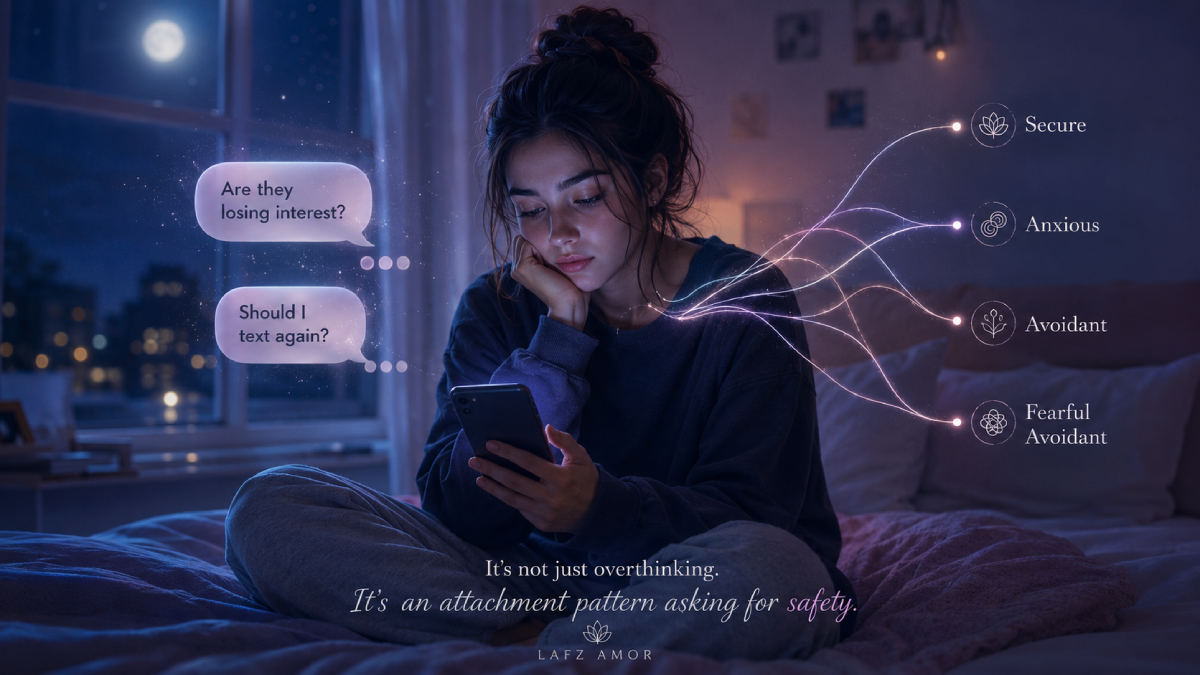
Attachment Styles in Relationships: Why You Love, Chase, Pull Away, or Overthink
Why Do You Feel So Different in Relationships?
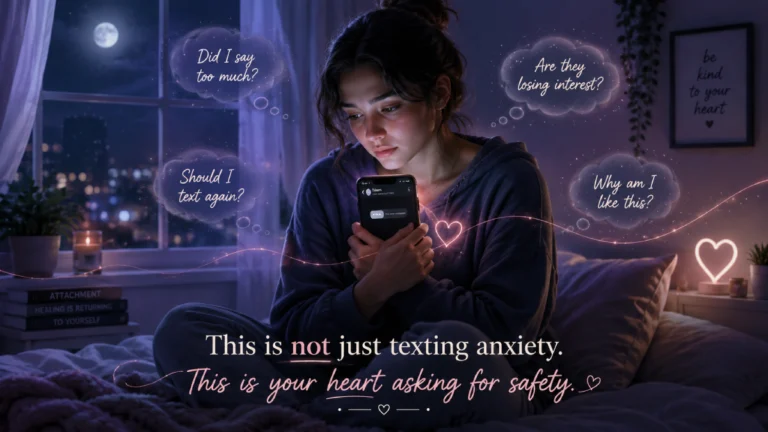
Have you ever noticed how one small change in someone’s tone can change your whole mood?
Maybe they replied late, used fewer emojis, sounded a little distant, or did not say “goodnight” the way they usually do. Logically, you know it may not mean anything serious. But emotionally, something inside you starts preparing for rejection.
You check your phone again.
You reread the chat.
You wonder if you did something wrong.
And then suddenly, one tiny moment becomes a whole emotional courtroom inside your mind.
Or maybe your experience is different.
Maybe you like someone, but when they start getting too close, you feel pressure. You enjoy the connection, but when they ask for emotional depth, consistency, or commitment, something inside you wants to step back. You may care about them, but closeness starts feeling heavy.
It can be confusing when your heart wants love, but your reactions do not always make sense.
This is where attachment styles in relationships can help you understand yourself with more kindness.
Not as a label.
Not as a punishment.
Not as another reason to overthink yourself.
But as a map.
A map of how you learned to feel safe, unsafe, wanted, unwanted, free, trapped, chosen, or abandoned in love.
Sometimes, the way you react in relationships is not random. It is your emotional system trying to protect you in the only way it knows.
And once you understand that, you stop asking, “What is wrong with me?”
You start asking, “What is my heart trying to protect me from?”
That question changes everything.
What Are Attachment Styles in Relationships?
Attachment styles in relationships are emotional patterns that shape how you connect, trust, communicate, handle distance, and respond to intimacy. They influence whether you feel secure, anxious, avoidant, or fearful in love. These patterns often develop from early emotional experiences and past relationships, but they can change with awareness, healing, consistency, and safer emotional connections.
In simple words, your attachment style affects how love feels to you.
For some people, love feels calm.
For some, love feels like waiting.
For some, love feels like pressure.
For some, love feels like wanting closeness but fearing it at the same time.
And maybe you have lived this in small ways.
You may have wondered why you need reassurance more than others. Or why someone you love becomes distant exactly when things start getting serious. Or why you keep feeling drawn to people who give you affection in small, unpredictable pieces.
Attachment styles help explain these patterns.
They do not excuse harmful behavior. They do not mean you are broken. They do not mean every relationship problem is because of childhood.
But they do help you understand why certain moments feel so emotionally powerful.
A late reply may not just feel like a late reply.
Silence may not just feel like silence.
Space may not just feel like space.
For someone with an anxious attachment pattern, distance can feel like danger.
For someone with an avoidant attachment pattern, closeness can feel like losing themselves.
For someone with a fearful avoidant pattern, love can feel both comforting and unsafe.
For someone with secure attachment, love can still be imperfect, but it usually feels emotionally manageable.
That is why understanding attachment styles in romantic relationships can be so powerful.
It gives language to the feelings you thought were “too much,” “too cold,” “too confusing,” or “too hard to explain.”
Attachment Style Is Not a Label; It Is a Pattern
Your attachment style is not your full personality.
It is not your destiny.
It is not a permanent stamp on your love life.
It is simply a pattern your emotional system may use when connection feels important.
This matters because many people discover attachment styles and immediately start labeling themselves harshly.
“I am anxious, so I ruin everything.”
“They are avoidant, so they do not care.”
“I am fearful avoidant, so I can never have healthy love.”
But that is not emotional clarity. That is just self-judgment wearing psychology’s clothes.
Attachment styles are not meant to trap you inside an identity. They are meant to help you notice what happens inside you when love becomes vulnerable.
For example, you may feel secure with friends but anxious in romantic relationships.
You may feel avoidant with someone who demands too much too quickly, but secure with someone emotionally steady.
You may feel anxious with an inconsistent partner and calm with a reliable one.
That means your attachment style is not only about you. It is also about the relationship environment.
Some people bring out your healing.
Some people bring out your panic.
Some people make your nervous system feel like it has to stay awake all night guarding the door.
So instead of asking, “Which label am I?”
Try asking, “What pattern shows up in me when I feel emotionally unsafe?”
That answer will help you more.
Why Attachment Styles Matter in Modern Dating
Modern dating has made attachment wounds louder.
Earlier, people had distance, but they did not have blue ticks, story views, typing bubbles, online status, ghosting, situationships, and “we are talking but not official” emotional confusion.
Now your attachment style can get triggered by a phone screen.
One ignored message can feel like rejection.
One “seen” without reply can feel like abandonment.
One person acting interested today and distant tomorrow can become your entire emotional weather.
And if you are already someone who overthinks, modern dating can feel like living inside a guessing game where the rules keep changing.
Attachment styles matter because they explain why the same dating situation affects people differently.
One person sees a late reply and thinks, “They are busy.”
Another person thinks, “They are losing interest.”
Another person feels relieved because the distance gives them breathing room.
Another person wants closeness, then panics when they get it.
Same situation.
Different emotional history.
Different attachment response.
That is why this topic matters so much for Gen Z and Millennials. Many people are not just trying to date. They are trying to understand why love feels so uncertain, why situationships hurt so much, why mixed signals become addictive, and why emotional safety feels rare.
Your attachment style can quietly decide whether love feels like safety, pressure, hunger, or danger.
And once you see the pattern, you can stop reacting blindly.
You can begin choosing consciously.
The 4 Main Attachment Styles in Relationships
Most people talk about four main attachment styles in relationships:
- Secure attachment
- Anxious attachment
- Avoidant attachment
- Fearful avoidant attachment
You may see yourself fully in one style, or you may relate to parts of more than one.
That is normal.
Human emotions do not always fit neatly into boxes—Dil koi spreadsheet nahi hai.
But these styles can still help you understand your relationship patterns with more clarity.
1. Secure Attachment: “I Can Love Without Losing Myself.”
Secure attachment is the relationship pattern where love feels mostly safe, steady, and emotionally manageable.
This does not mean securely attached people never feel insecure.
They can still miss someone.
They can still feel hurt.
They can still need reassurance.
But they usually do not lose themselves completely when something feels uncertain.
A securely attached person can say, “I feel hurt,” without assuming the relationship is ending.
They can ask for space without disappearing.
They can hear feedback without collapsing into shame.
They can love someone deeply without needing to control every emotional detail.
Secure attachment may sound simple, but for someone who grew up amid inconsistency, emotional distance, chaos, or betrayal, it can feel unfamiliar at first.
Sometimes secure love does not feel exciting immediately because it is not giving your nervous system the high of uncertainty.
It feels calm.
And when you are used to chaos, calm can feel strange.
But calm is not boring.
Sometimes calm is safety arriving without drama.
Signs of Secure Attachment
You may have secure attachment in relationships if:
- You can express your needs without panic.
- You can trust someone’s love without constantly testing it.
- You do not assume every conflict means abandonment.
- You can apologize without feeling destroyed by shame.
- You can give love without losing your own identity.
- You can receive love without feeling suspicious of it.
- You respect space without interpreting it as rejection.
- You can talk through problems instead of avoiding or exploding.
Secure attachment does not mean you never struggle.
It means you can return to emotional balance.
You may feel triggered, but you do not become completely controlled by the trigger.
You can pause, reflect, communicate, and repair.
That is the quiet power of secure attachment.
How It Feels Emotionally
Secure love feels like breathing normally.
You are not constantly waiting for the next emotional earthquake.
You are not checking every word for hidden meaning.
You are not performing to be chosen.
You are not begging for basic consistency.
You feel wanted without having to chase.
You feel free without having to disappear.
You feel close without feeling trapped.
In secure attachment, love feels like a place where you can be honest and still be held with respect.
And maybe that sounds simple.
But for many people, that kind of love feels almost revolutionary.
Micro Takeaway
Secure attachment is not perfect love.
It is emotionally steady love.
It means you and your partner can have difficult moments without turning the relationship into a battlefield.
2. Anxious Attachment: “I Need Reassurance to Feel Safe.”
Anxious attachment in relationships often feels like loving someone with your whole heart, but also fearing that they may leave at any moment.
You may care deeply.
You may be loyal, expressive, emotionally available, and sensitive.
But when distance appears, your mind starts running.
Maybe they replied late.
Maybe they sounded different.
Maybe they did not say something with the same warmth.
Maybe they were online but did not respond.
And suddenly, your body reacts as if something is wrong.
You may tell yourself, “Relax, it is not a big deal.”
But emotionally, it feels like a big deal.
Because anxious attachment is not just about wanting attention.
It is about wanting safety.
It is the fear that love can disappear if you do not hold it tightly enough.
Signs of Anxious Attachment
You may relate to anxious attachment if:
- You overthink small changes in someone’s behavior.
- You feel anxious when they take longer to reply.
- You need frequent reassurance to feel secure.
- You fear being abandoned, replaced, or forgotten.
- You feel emotionally activated by distance.
- You may text again even when you promised yourself you would not.
- You replay conversations to check if you said something wrong.
- You feel drawn to emotionally unavailable people.
- You may confuse inconsistency with chemistry.
- You feel calm only after they give you attention again.
One painful part of anxious attachment is that you may know your reaction is intense, but you still cannot easily stop it.
That can create shame.
You may think, “Why am I like this? Why can’t I be normal?”
But anxious attachment is not neediness in its pure form.
Often, it is an old fear asking, “Am I still loved? Am I still safe? Am I still chosen?”
How It Feels Emotionally
Anxious attachment can feel like standing outside a door, waiting to see if someone will open it.
You may feel deeply connected when they are warm.
But the moment they become distant, your emotional safety shakes.
One day of affection can feel like heaven.
One day of silence can feel like punishment.
And this is why inconsistent relationships can become so addictive for anxious attachment.
The person who makes you anxious also becomes the person who gives you relief.
When they finally reply, you feel calm.
When they finally show affection, your whole body relaxes.
But that relief is not the same as security.
Relief says, “The pain stopped for now.”
Security says, “I do not have to keep fearing the pain will return.”
There is a difference.
And understanding that difference can save you from calling emotional inconsistency “love.”
Micro Takeaway
Anxious attachment is often fear looking for safety, not weakness.
But healing begins when you learn to offer yourself safety too, instead of depending only on someone else’s response.
3. Avoidant Attachment: “I Want Love, But Closeness Feels Too Much.”
Avoidant attachment in relationships can be confusing because it does not always look like fear.
Sometimes it looks like independence.
Sometimes it looks like calmness.
Sometimes it looks like “I am fine alone.”
Sometimes it looks like someone being emotionally unavailable.
But underneath, avoidant attachment often carries a quiet discomfort with too much closeness.
A person with avoidant attachment may want love.
They may enjoy connection.
They may care more than they show.
But when emotional expectations increase, something inside them starts feeling pressured.
They may withdraw.
They may become distant.
They may need more space.
They may avoid serious conversations.
They may feel overwhelmed when someone needs too much from them emotionally.
This does not always mean they do not care.
But care without emotional availability can still hurt the other person.
That is why avoidant attachment needs to be understood with compassion, but not romanticized.
Signs of Avoidant Attachment
You may relate to avoidant attachment if:
- You enjoy connection but feel uncomfortable with too much emotional closeness.
- You need a lot of independence.
- You feel pressured when someone asks for reassurance.
- You shut down during conflict.
- You avoid vulnerable conversations.
- You pull away when things become serious.
- You dislike feeling dependent on someone.
- You may focus on a partner’s flaws when intimacy increases.
- You feel safer handling emotions alone.
- You may disappear emotionally instead of explaining what you feel.
Avoidant attachment can also show up as irritation.
Someone may ask, “Can we talk?”
And your body may hear, “You are about to be trapped.”
Someone may say, “I miss you.”
And instead of feeling loved, you may feel responsible for their emotions.
This can be difficult for both people.
The anxious partner feels abandoned.
The avoidant partner feels overwhelmed.
And both may secretly feel misunderstood.
How It Feels Emotionally
Avoidant attachment can feel like wanting love from a distance where it still feels safe.
You may enjoy someone’s presence, but when they need more emotional intimacy, you feel your inner walls rising.
You may not know how to explain it.
You may care, but feel suffocated.
You may miss them, but still not reach out.
You may want connection, but only when it does not feel like pressure.
And sometimes, after you create distance, you feel calm again.
But the relationship may slowly become emotionally lonely for the other person.
This is the delicate truth:
Space is healthy.
Emotional disappearance is not.
Needing independence is valid.
Using distance to avoid all vulnerability can damage connection.
Micro Takeaway
Avoidant attachment is not always lack of love.
Sometimes it is fear of losing freedom, control, or emotional safety.
But love needs presence too, not just good intentions from far away.
4. Fearful Avoidant Attachment: “I Want Love, But I Don’t Fully Trust It.”
Fearful avoidant attachment in relationships is often the most emotionally confusing pattern.
It can feel like wanting closeness and fearing it at the same time.
You may crave love deeply.
You may want to be chosen, understood, held, and reassured.
But when someone actually gets close, another part of you becomes scared.
You may think:
“What if they hurt me?”
“What if I trust them and they leave?”
“What if I become dependent?”
“What if they see the real me and change their mind?”
So you move closer.
Then you pull away.
You ask for love.
Then you doubt it.
You want reassurance.
Then you feel suspicious of it.
You may long for emotional safety, but when it arrives, you do not fully trust it.
That push-pull can feel exhausting.
For you and for the person trying to love you.
Signs of Fearful Avoidant Attachment
You may relate to fearful avoidant attachment if:
- You want closeness but feel scared when you receive it.
- You push people away even when you care about them.
- You fear abandonment and fear intimacy.
- You feel drawn to intense relationships.
- You may test people to see if they will stay.
- You want reassurance but struggle to believe it.
- You may leave before someone can leave you.
- You feel emotionally hot and cold.
- You crave love but distrust people’s intentions.
- You may feel confused by your own reactions.
Fearful avoidant attachment can feel like having two emotional voices inside you.
One says, “Please come closer.”
The other says, “No, this is dangerous.”
One wants to be loved.
The other is already planning an escape route.
And if you have ever felt this, you may have judged yourself harshly.
But the truth is, this pattern often comes from emotional experiences where love felt unpredictable, unsafe, or mixed with pain.
So now, your heart does not know whether closeness means comfort or danger.
How It Feels Emotionally
Fearful avoidant attachment can feel like standing at the edge of love with one foot forward and one foot ready to run.
You may want someone to prove they care.
But when they do, you may question why.
You may want consistency.
But consistency may feel unfamiliar.
You may want to trust.
But trust may feel like giving someone the power to hurt you.
This is not drama for the sake of drama.
It is emotional confusion born from wanting safety but expecting pain.
And that is why healing fearful avoidant attachment requires patience.
Not self-blame.
Not forcing yourself into closeness.
Not running from every feeling.
But learning slowly, “I can feel fear without letting fear make every decision.”
Micro Takeaway
Fearful avoidant attachment can make love feel both comforting and dangerous.
Healing begins when you stop treating every closeness as a threat and every fear as a fact.
Attachment Styles Comparison Table
Sometimes it becomes easier to understand attachment styles when you see them side by side.
This table is not meant to box you in.
It is meant to help you notice your emotional pattern with more honesty.
| Attachment Style | Core Fear | Relationship Pattern | Emotional Need |
| Secure | Losing connection, but not obsessively | Communicates, trusts, repairs | Consistency and honesty |
| Anxious | Being abandoned | Chases, overthinks, seeks reassurance | Emotional safety |
| Avoidant | Losing independence | Pulls away, shuts down, creates distance | Space without rejection |
| Fearful Avoidant | Being hurt or trapped | Push-pull, confusion, intensity | Safety plus patience |
You may see yourself in one row.
Or you may notice that different people bring out different parts of you.
That is okay.
The goal is not to diagnose yourself in one minute.
The goal is to start noticing what happens inside you when love feels uncertain.
Because awareness is where the pattern starts losing control over you.
How Attachment Styles Affect Romantic Relationships
Attachment styles in relationships do not only affect how you feel.
They affect how you text, argue, trust, choose, wait, leave, stay, forgive, and ask for love.
They shape the tiny emotional decisions you make every day.
Whether you double-text.
Whether you shut down.
Whether you ask for clarity.
Whether you pretend you do not care.
Whether you stay too long.
Whether you leave too early.
This is why attachment styles can quietly control the emotional rhythm of a relationship.
Not loudly.
Not obviously.
But slowly, through repeated reactions.
They Shape How You React to Distance
Distance is one of the biggest attachment triggers.
For one person, distance feels normal.
For another, it feels like rejection.
For another, it feels like freedom.
For another, it feels like both relief and fear.
If you have anxious attachment, distance may make you want to reach out more. You may start searching for proof that the person still cares.
If you have avoidant attachment, distance may feel calming. You may feel more in control when emotional intensity reduces.
If you have fearful avoidant attachment, distance may confuse you. You may want them to come closer, but when they do, you may feel overwhelmed again.
If you have secure attachment, distance can still hurt, but it does not automatically feel like abandonment.
This is why two people can experience the same moment completely differently.
One person says, “I just needed space.”
The other hears, “You do not love me anymore.”
Neither may be trying to hurt the other.
But their attachment systems are speaking different emotional languages.
They Influence How You Handle Conflict
Conflict reveals attachment patterns very quickly.
Not because conflict is bad.
But because conflict creates emotional threat.
An anxious person may want to solve everything immediately because unresolved conflict feels unbearable.
An avoidant person may need space before talking because conflict feels overwhelming.
A fearful avoidant person may switch between wanting repair and wanting escape.
A secure person may still feel upset, but they are more likely to believe, “We can talk about this and still be okay.”
This is where many couples get stuck.
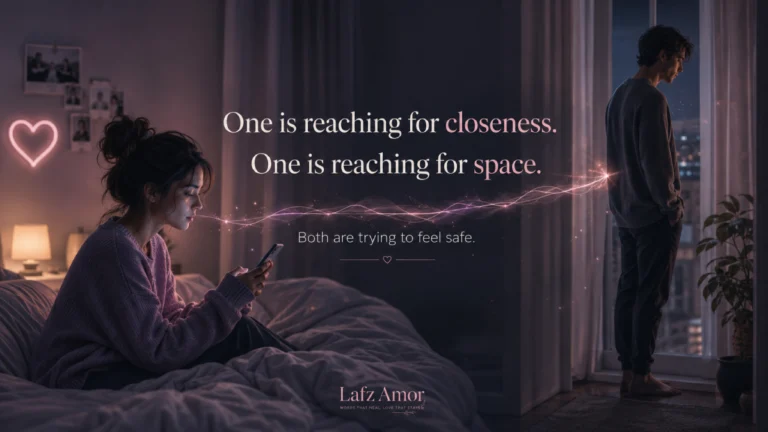
One person pursues.
The other withdraws.
The more one asks for closeness, the more the other feels pressured.
The more one pulls away, the more the other panics.
And suddenly the problem is not just the original issue.
The problem becomes the cycle.
That is why understanding attachment styles matters.
It helps you stop fighting only about the surface issue and start noticing the emotional pattern underneath.
They Affect Who Feels “Attractive” to You
This part may feel uncomfortable, but it is important.
Sometimes the people who trigger your wounds can feel the most attractive.
Not because they are best for you.
But because their inconsistency feels familiar.
If you have anxious attachment, someone emotionally unavailable may feel magnetic. Their small moments of attention can feel intense because you are also dealing with the fear of losing them.
That fear can be mistaken for chemistry.
Your body may confuse uncertainty with excitement.
You may think, “I have never felt this strongly before.”
But sometimes what you are feeling is not deep love.
Sometimes it is emotional activation.
There is a difference between someone making you feel alive and someone making you feel unsafe.
One expands you.
The other keeps you waiting for relief.
Secure love may feel calmer at first.
It may not create the same emotional high.
But it also may not make you abandon yourself for small signs of affection.
And that matters.
They Decide Whether Intimacy Feels Safe or Threatening
Intimacy is not just physical closeness.
It is emotional visibility.
It is being known.
It is letting someone see your needs, fears, softness, imperfections, and truth.
For secure attachment, intimacy usually feels natural.
For anxious attachment, intimacy may feel necessary for safety.
For avoidant attachment, intimacy may feel like pressure.
For fearful avoidant attachment, intimacy may feel beautiful and terrifying at the same time.
This is why someone may act romantic in the beginning and then pull away when things get real.
The early stage of love can feel exciting because it has less emotional responsibility.
But deeper intimacy asks for honesty, consistency, and vulnerability.
That is where attachment wounds often appear.
So if you have ever thought, “Why do things change when the relationship gets serious?” attachment may be part of the answer.
Not the only answer.
But a meaningful one.
Why Attachment Patterns Happen: The Psychology Layer
Attachment patterns do not appear out of nowhere.
They usually develop from repeated emotional experiences.
This can include childhood, family dynamics, friendships, early romantic relationships, betrayal, inconsistency, rejection, emotional neglect, or relationships where love felt conditional.
But this section is not here to blame anyone.
It is here to help you understand the emotional logic behind your reactions.
Because once something makes sense, it becomes easier to work with.
Reason 1: Your Brain Learns What Love Feels Like From Repeated Emotional Experiences
Your brain learns from repetition.
If love felt consistent, responsive, and safe, your emotional system may learn, “Connection is safe.”
If love felt unpredictable, your emotional system may learn, “I have to stay alert.”
If love felt overwhelming or controlling, your emotional system may learn, “Closeness is dangerous.”
If love felt mixed with pain, your emotional system may learn, “I want love, but I cannot fully trust it.”
This does not mean your past controls your future.
But it may explain why certain relationship moments feel bigger than they look from the outside.
Someone else may see one delayed reply.
You may feel an old emotional story waking up.
Someone else may see one request for closeness.
You may feel like your independence is being threatened.
The present moment touches an old emotional memory.
And your body responds before your logic can catch up.
Emotional Impact
If love was inconsistent before, consistency may feel unfamiliar now.
If love came with pressure before, closeness may feel unsafe now.
If love disappeared without warning before, silence may feel terrifying now.
That does not mean you are dramatic.
It means your emotional system learned to survive by noticing signs early.
Now healing means teaching it that not every sign is danger.
Reason 2: Your Body May Treat Distance as Danger
For some people, emotional distance does not feel neutral.
It feels threatening.
A late reply can create tightness in the chest.
A dry text can create racing thoughts.
A cancelled plan can feel like proof that someone is pulling away.
This is why telling yourself “do not overthink” rarely works.
Because your body may already be reacting.
Your mind is not just thinking.
Your emotional system is trying to protect you.
In anxious attachment, the body may treat distance as abandonment.
In avoidant attachment, the body may treat closeness as loss of control.
In fearful avoidant attachment, the body may treat both closeness and distance as unsafe in different ways.
That is why attachment work is not only about thinking better.
It is also about slowing down your reaction long enough to ask, “What is actually happening right now?”
Not what happened before.
Not what I fear will happen.
What is happening right now?
That question brings you back to the present.
Emotional Impact
This is why a late reply can feel bigger than just a late reply.
It is not only about the message.
It is about what your emotional system believes the message means.
And when you understand that, you can respond with more care instead of instantly reacting from fear.
Reason 3: You May Confuse Intensity With Connection
This is one of the most important parts of understanding attachment styles in relationships.
Sometimes intensity feels like love.
The obsession.
The waiting.
The emotional highs.
The sudden attention after distance.
The anxiety before a reply.
The relief when they finally come back.
It can feel powerful.
It can feel cinematic.
It can feel like a connection you cannot explain.
But sometimes, what feels intense is actually uncertainty.
When someone gives you inconsistent affection, your brain may start chasing the good moments.
You remember how sweet they were that one night.
You remember how deeply they looked at you.
You remember the message that made you feel chosen.
And you keep waiting for that version to return.
This is how people get stuck in emotional loops.
Not because they are foolish.
But because intermittent affection can feel addictive.
Thoda pyaar, thoda distance, thoda hope, thoda pain.
And suddenly your heart starts calling the cycle “special.”
But love that keeps you emotionally hungry is not the same as love that nourishes you.
Emotional Impact
Sometimes butterflies are not chemistry.
Sometimes they are uncertainty.
Sometimes your heart is not saying, “This is the one.”
Sometimes your nervous system is saying, “This feels familiar.”
That difference can be painful to accept, but it can also free you.
Reason 4: Your Attachment Style Can Get Stronger With the Wrong Partner
Your attachment style does not exist in isolation.
The relationship dynamic matters.
You may feel mostly secure with someone consistent, respectful, and emotionally available.
But with someone unpredictable, dismissive, hot-and-cold, or emotionally confusing, your anxious side may become louder.
You may feel independent and calm normally.
But with someone demanding, controlling, or emotionally intense, your avoidant side may become stronger.
This is why you should not judge yourself only by how you act in one painful relationship.
Sometimes the relationship itself is repeatedly activating your wounds.
The wrong dynamic can turn small insecurities into daily emotional storms.
For example, anxious and avoidant patterns often attract each other.
The anxious person seeks closeness to feel safe.
The avoidant person seeks space to feel safe.
The anxious person feels abandoned by space.
The avoidant person feels pressured by closeness.
And the cycle keeps feeding itself.
One chases.
One withdraws.
One asks, “Why don’t you care?”
One thinks, “Why is this so much?”
Both feel unsafe.
Both feel misunderstood.
Both may care.
But care alone cannot fix a pattern that neither person is willing to understand.
Emotional Impact
The wrong dynamic can make a calm person feel desperate, and a caring person feel emotionally unsafe.
This is why you must pay attention not only to how much you love someone, but also to who you become while loving them.
Do you become softer?
Or do you become smaller?
Do you become honest?
Or do you become afraid to ask for basic things?
Do you feel seen?
Or do you feel like you are constantly auditioning for care?
Your attachment style matters.
But the relationship environment matters too.
Can Your Attachment Style Change?
Yes, your attachment style can change.
Attachment styles are patterns, not permanent identities. With self-awareness, emotionally safe relationships, better communication, healthy boundaries, self-reflection, and sometimes professional support, people can move toward more secure attachment.
This is important because many people read about attachment styles and feel discouraged.
They think, “So this is just who I am?”
No.
This is not the final version of you.
This is a pattern your emotional system learned.
And what is learned can slowly be relearned.
Not overnight.
Not by forcing yourself to become “chill.”
Not by pretending you do not need love.
Not by shaming yourself every time you feel triggered.
Change happens when you start noticing the space between your feeling and your reaction.
You may still feel anxious.
But you do not immediately chase.
You may still need space.
But you do not disappear without explanation.
You may still feel fear.
But you do not let fear write the whole story.
That is growth.
Not becoming emotionless.
Not becoming perfect.
Just becoming safer inside yourself.
What Secure Attachment Actually Means
Secure attachment does not mean you never need reassurance.
It does not mean you never feel jealous.
It does not mean you never get hurt.
It does not mean you become detached, cool, or unaffected.
Secure attachment means you can feel emotions without being completely ruled by them.
It means you can say, “I feel anxious,” without turning it into “They will leave me.”
It means you can say, “I need space,” without punishing someone with silence.
It means you can say, “This hurt me,” without attacking or begging.
It means you can love someone without losing the relationship you have with yourself.
Secure attachment is not a personality type for people who never struggle.
It is a relationship with yourself where fear no longer gets to drive every decision.
And maybe that is what you have been looking for.
Not perfect love.
Just love where your heart does not have to stay in survival mode.
What Should You Do After Learning Your Attachment Style?
Understanding your attachment style is only the first step.
The real change begins when you know what to do with that understanding.
Because awareness without action can become another form of overthinking.
You do not need to analyze yourself forever.
You need to start responding differently, gently, one moment at a time.
Step 1: Notice Your Pattern Without Judging It
Before you try to change your attachment style, notice it.
Not with shame.
With curiosity.
Ask yourself:
“When I feel unsafe in love, what do I usually do?”
Do you chase?
Do you shut down?
Do you over-explain?
Do you test them?
Do you pretend you do not care?
Do you disappear?
Do you become extra sweet so they do not leave?
Do you start finding flaws so you do not have to feel vulnerable?
Your pattern is information.
Not proof that you are broken.
Action
Write this sentence somewhere:
When I feel unsafe in love, I usually…
Then complete it honestly.
Not how you wish you reacted.
How you actually react.
That honesty is not weakness.
It is the beginning of emotional freedom.
Example Prompts
You can write:
- When I feel unsafe in love, I chase.
- When I feel unsafe in love, I shut down.
- When I feel unsafe in love, I test them.
- When I feel unsafe in love, I over-explain.
- When I feel unsafe in love, I disappear.
- When I feel unsafe in love, I keep checking their activity.
- When I feel unsafe in love, I act like I do not care.
- When I feel unsafe in love, I ask for reassurance repeatedly.
Once you see the pattern, you can pause before repeating it.
And that pause is powerful.
Step 2: Identify Your Main Trigger
Your trigger is the moment your emotional system starts feeling unsafe.
For some people, the trigger is silence.
For some, it is conflict.
For some, it is too much closeness.
For some, it is lack of clarity.
For some, it is inconsistency.
For some, it is feeling ignored.
Your trigger is not silly just because someone else does not understand it.
But it is your responsibility to understand it.
Because if you do not know your triggers, you may keep blaming the wrong things.
You may think, “They ruined my mood.”
But sometimes the deeper truth is, “Their silence touched my fear of abandonment.”
You may think, “They are asking too much.”
But sometimes the deeper truth is, “Their emotional need touched my fear of being trapped.”
This does not mean the other person is always innocent.
It means your reaction may have layers.
And understanding those layers gives you choice.
Common Triggers
Common attachment triggers include:
- Late replies
- Change in tone
- Conflict
- Silence
- Too much closeness
- Lack of clarity
- Feeling ignored
- Commitment pressure
- Cancelled plans
- Emotional inconsistency
- Being asked for vulnerability
- Feeling criticized
- Feeling controlled
- Seeing them active online but not replying
When you know your trigger, you can stop treating every emotion as proof.
A feeling is real.
But it is not always the full truth.
Step 3: Ask What You Actually Need
When you feel triggered, your first urge may not be your deepest need.
If you feel anxious, your first urge may be to text again.
But your actual need may be reassurance, clarity, or self-soothing.
If you feel avoidant, your first urge may be to disappear.
But your actual need may be space with emotional honesty.
If you feel fearful avoidant, your first urge may be to test the person.
But your actual need may be safety and consistency.
So before reacting, pause and ask:
“What do I actually need right now?”
Not “What will make this discomfort disappear fastest?”
But “What would help me respond more healthily?”
That one question can interrupt old patterns.
Action
Before reacting, ask:
- Do I need reassurance?
- Do I need space?
- Do I need clarity?
- Do I need a boundary?
- Do I need to self-soothe first?
- Do I need to wait before responding?
- Do I need to ask a direct question?
- Do I need to accept what their behavior is showing me?
This is where emotional maturity begins.
Not in never being triggered.
But in learning to respond to the trigger with wisdom.
Step 4: Communicate the Need Without Blame
This is where many people struggle.
Because when you are triggered, your words may come out as an accusation.
“You never care.”
“You always do this.”
“You are ignoring me.”
“You are too much.”
“You are suffocating me.”
“You are making me anxious.”
But underneath those statements, there is usually a softer truth.
“I feel scared.”
“I need reassurance.”
“I need space.”
“I need clarity.”
“I need consistency.”
“I need to feel respected.”
Healthy communication is not about sounding perfect.
It is about making your real need easier to understand.
Not hidden behind anger.
Not buried under silence.
Not disguised as sarcasm.
Example Script for Anxious Attachment
You can say:
“I know you may be busy, but when communication suddenly changes, I feel anxious. Can we talk about what consistency looks like for both of us?”
This is better than saying:
“You do not care about me.”
Because it names the feeling, explains the trigger, and asks for clarity without attacking.
Example Script for Avoidant Attachment
You can say:
“I care about you, but sometimes I need space to process emotions. I am not leaving. I just need a little time to come back calmly.”
This is better than disappearing.
Because it gives space without creating panic.
And that matters.
Sometimes love does not need a grand speech.
It needs one honest sentence that reduces confusion.
Step 5: Watch Their Response, Not Just Their Words
This part is important.
Once you express a need, watch how the other person responds.
Do they try to understand?
Do they dismiss you?
Do they shame you?
Do they make everything your fault?
Do they adjust their behavior?
Do they listen once and then repeat the same hurtful pattern?
Words can be beautiful.
But patterns are more honest.
Someone may say, “I care about you,” but still keep you emotionally starving.
Someone may say, “I need space,” but use that space to avoid all accountability.
Someone may say, “You can trust me,” but act in ways that keep you confused.
Attachment healing is not only about calming yourself.
It is also about choosing relationships where your nervous system does not have to beg for basic safety.
Reality Check
Someone who wants healthy love will not shame you for having emotional needs.
They may not meet every need perfectly.
They may need conversations, time, and mutual adjustment.
But they will not make you feel foolish for asking for respect, clarity, consistency, or emotional honesty.
And if they do, that is information.
Important information.
Common Mistakes People Make With Attachment Styles
Attachment styles can bring clarity.
But they can also become confusing if people use them carelessly.
Psychology terms are helpful only when they lead to self-awareness and healthier behavior.
They become harmful when they become excuses, labels, or reasons to stay stuck.
So let’s gently clear up some common mistakes.
Mistake 1: Using Attachment Styles as an Excuse
It is good to understand your pattern.
But understanding is not the same as avoiding responsibility.
Saying “I am anxiously attached” does not make it okay to constantly monitor, accuse, or test someone.
Saying “I am avoidant” does not make it okay to disappear, stonewall, or emotionally neglect someone.
Saying “I am fearful avoidant” does not make it okay to create chaos and then call it self-protection.
Your attachment style may explain why something is hard for you.
But it does not remove your responsibility to grow.
Why It Is Harmful
“My attachment style made me do it” can become a free pass for hurting someone.
And when that happens, the relationship stays stuck.
One person keeps explaining.
The other keeps hurting.
No real change happens.
Emotional Consequence
It keeps the relationship trapped in explanation without repair.
And love cannot survive on explanations alone.
At some point, care has to become behavior.
Mistake 2: Calling Every Distant Person Avoidant
Not every distant person has avoidant attachment.
Sometimes someone is emotionally unavailable.
Sometimes they are not interested enough.
Sometimes they like attention but not commitment.
Sometimes they enjoy access to you without responsibility.
Sometimes they are inconsistent because they are keeping options open.
This is why you need emotional clarity.
If you label every distant person as avoidant, you may start over-explaining behavior that is simply not loving enough.
You may think:
“They are avoidant, so I should be patient.”
“They are scared, so I should give them more time.”
“They care but cannot show it.”
Maybe.
But maybe they are also not choosing you properly.
Both things can be true.
Someone can have wounds and still be responsible for how they treat you.
Why It Is Harmful
It can keep you decoding someone who is not giving you real love.
You may become so focused on understanding their attachment style that you forget to ask:
“Is this relationship actually meeting me with respect?”
Emotional Consequence
You may keep waiting for potential while your present self keeps getting hurt.
Potential is not a relationship.
Consistency is.
Mistake 3: Thinking Anxious Attachment Means You Are “Too Much”
If you relate to anxious attachment, you may already carry shame.
You may feel like your needs are embarrassing.
You may apologize for wanting clarity.
You may call yourself clingy before anyone else can.
But anxious attachment does not mean you are too much.
It often means your emotional system is sensitive to signs of distance because safety has felt uncertain before.
That deserves understanding.
Not shame.
At the same time, your fear deserves guidance.
Because if you let fear lead everything, it may make you chase people who are not meeting you with care.
So the goal is not to hate your needs.
The goal is to understand them, express them clearly, and stop handing them to people who keep mishandling them.
Why It Is Harmful
When you believe you are “too much,” you may start accepting too little.
You may lower your standards because you think your needs are the problem.
But needing consistency is not wrong.
Needing emotional honesty is not wrong.
Wanting effort is not wrong.
The question is not, “How do I become someone who needs nothing?”
The question is, “How do I meet my needs in healthier ways and choose people who respect them?”
Emotional Consequence
You may start begging for basic respect because you think your heart is the problem.
It is not.
Your heart may need healing.
But it is not wrong to want safety.
Mistake 4: Trying to Heal Your Attachment Style Through Someone Who Keeps Triggering It
This mistake is painful because it often looks like hope.
You think:
“If I become more secure, maybe this relationship will work.”
“If I stop overthinking, maybe they will love me better.”
“If I become more patient, maybe they will finally commit.”
“If I understand their avoidant attachment, maybe I can handle the distance.”
Growth is beautiful.
But you cannot heal your attachment wound inside a dynamic that keeps reopening it without care.
If someone repeatedly lies, disappears, manipulates, dismisses, confuses, or disrespects you, your anxiety is not just an attachment issue.
It may be your intuition noticing emotional danger.
This is where you need honesty.
Not every trigger is irrational.
Sometimes your body is anxious because the relationship is genuinely unstable.
Why It Is Harmful
You cannot heal insecurity in a relationship that repeatedly creates emotional danger.
Healing needs awareness, yes.
But it also needs safety.
If the relationship keeps giving you confusion, your nervous system may never get enough peace to grow.
Emotional Consequence
You become addicted to small moments of relief instead of real safety.
You start calling temporary calm “progress.”
But real progress does not only feel like finally getting a reply after panic.
Real progress feels like not having to panic so often in the first place.
When Should You Walk Away?
Understanding attachment styles does not mean you should stay in every relationship and keep explaining pain.
Some relationships need patience.
Some need communication.
Some need repair.
Some need distance.
And some need an ending.
This section matters because emotionally aware people often stay too long trying to understand everyone.
They think, “If I can explain their behavior, maybe I can survive it.”
But explanation is not the same as safety.
You can understand why someone behaves a certain way and still decide it is not healthy for you.
That is emotional maturity.
Walk Away When Your Needs Are Constantly Mocked
If someone makes you feel ashamed for having emotional needs, pay attention.
If they call you dramatic every time you ask for clarity.
If they call you needy every time you ask for consistency.
If they call you cold every time you ask for space.
If they use your vulnerability against you.
If they make you feel small for wanting basic respect.
That is not emotional safety.
A healthy person may not understand your needs perfectly at first.
But they will not humiliate you for having them.
They will not turn your softness into a weapon.
They will not make you regret opening up.
Love does not require you to become need-less.
It requires both people to treat each other’s needs with care.
Walk Away When There Is No Effort to Understand the Pattern
One person cannot carry the full emotional labor of a relationship.
You cannot be the only one reading, reflecting, apologizing, adjusting, explaining, and trying again.
If you are the only person trying to understand the pattern, then the relationship becomes a classroom where you are both student and teacher, while the other person refuses to show up.
That is exhausting.
And it is not sustainable.
Healthy love does not mean both people are perfect.
It means both people are willing.
Willing to listen.
Willing to repair.
Willing to notice their part.
Willing to grow.
If only one person is willing, the relationship becomes emotionally one-sided.
And one-sided effort can slowly turn love into resentment.
Walk Away When Attachment Becomes a Cycle of Pain
Some relationship cycles are not just difficult.
They are damaging.
You fight.
They disappear.
You panic.
They come back.
You feel relieved.
Things feel good for a while.
Then the same pattern starts again.
This cycle can become addictive because every reunion feels like hope.
But ask yourself honestly:
Is the relationship actually changing?
Or are you just getting temporary relief from the same pain?
That question may hurt.
But it can also wake you up.
If the relationship repeatedly gives you confusion, panic, silence, chasing, and temporary comfort, you may not be healing.
You may be surviving.
And survival is not the same as love.
Reality Check
Attachment style explains behavior.
It does not justify emotional neglect, manipulation, disrespect, cheating, gaslighting, or cruelty.
Someone’s fear of intimacy does not permit them to keep hurting you.
Someone’s fear of abandonment does not permit them to control you.
Someone’s past pain does not permit them to damage your present peace.
Compassion is beautiful.
But compassion without self-protection becomes self-abandonment.
And you are allowed to understand someone deeply and still choose yourself.
Final Thoughts: You Are Not Broken, You Are Learning Safety
Your attachment style is not a life sentence.
It is a map.
It shows where your heart learned fear.
Where your body expects pain.
Where your mind starts overthinking.
Where closeness feels risky.
Where distance feels unbearable.
Where love stopped feeling simple.
But a map is not a prison.
It helps you see the path more clearly.
Maybe you have been calling yourself too needy when you were actually craving emotional safety.
Maybe you have been calling yourself independent when you were actually scared of being deeply known.
Maybe you have been calling a relationship intense when it was actually inconsistent.
Maybe you have been blaming yourself for reactions that started as protection.
This does not mean every reaction is healthy.
But it does mean you deserve to understand yourself without cruelty.
Tum difficult nahi ho.
Tum bas pyaar ko samajhne ki koshish kar rahe ho without losing yourself.
And that is a brave thing.
The goal is not to become someone who never needs reassurance.
The goal is to become someone who can ask for reassurance without panic.
The goal is not to never need space.
The goal is to ask for space without disappearing.
The goal is not to never feel scared.
The goal is to stop letting fear choose your whole love story.
Your attachment style may explain where you are starting from.
But it does not decide where you have to stay.
Read Next
If this blog helped you understand your relationship pattern, you may want to read these next:
- What Is Anxious Attachment in Relationships?
- Why Do Avoidants Pull Away When Things Get Serious?
- How to Become Secure in Relationships
Start with the one that feels closest to your current pain point.
Because healing usually begins there.
Not where everything looks perfect.
But where your heart quietly says, “This is the part I need to understand.”