
How to Become Secure in Relationships: Stop Chasing
Do You Want Love to Feel Safe Instead of Scary?
Maybe you are tired.
Not the kind of tired that sleep can fix.
The kind of tired that comes from overthinking every message, reading between every line, waiting for someone’s energy to feel normal again, or wondering why love keeps making you feel unsafe.
Maybe you are tired of chasing people who pull away.
Maybe you are tired of pulling away when someone gets too close.
Maybe you are tired of pretending to be “chill” when your heart is quietly asking, “Please just make me feel secure.”
It can be confusing when you want love, but love also triggers your fear.
You may want closeness, but panic when someone becomes distant.
You may want commitment, but feel trapped when someone asks for more.
You may want healthy love, but somehow keep choosing emotionally unavailable people, mixed signals, or relationships that make your nervous system feel like it is always waiting for bad news.
And at some point, you may ask yourself:
How do I become secure in relationships when love has never really felt safe?
This question is not small.
It is not just about dating.
It is about learning how to love without losing yourself.
Maybe you are tired of repeating the same relationship patterns
Maybe you already know your pattern.
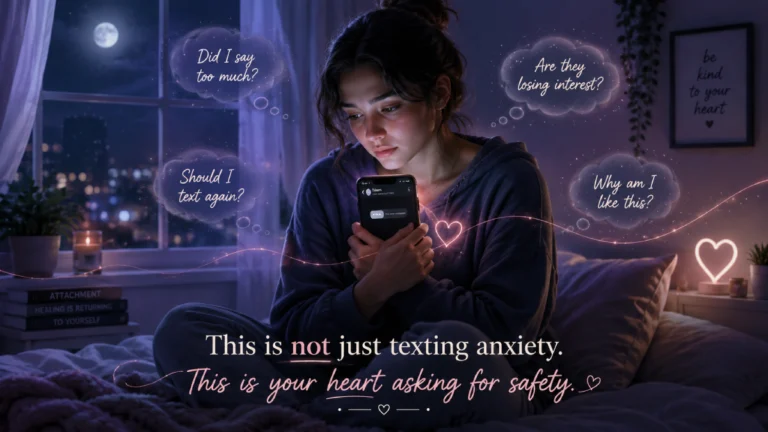
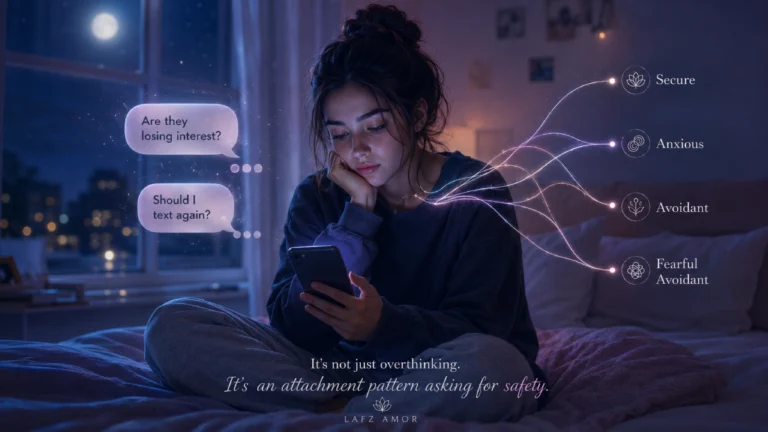
You know you get anxious when someone replies late.
You know you overthink tone changes.
You know you sometimes need reassurance again and again.
You know you start feeling scared when someone feels emotionally distant.
Or maybe your pattern is different.
Maybe when someone gets too close, you feel overwhelmed.
You start noticing their flaws.
You need space.
You shut down.
You want love, but when love becomes real, something inside you starts looking for the exit.
Or maybe you are both.
Sometimes you chase.
Sometimes you disappear.
Sometimes you crave closeness, but when it arrives, it feels too intense.
That is why learning how to become secure in relationships is not about becoming a perfect person.
It is about understanding the emotional survival patterns you learned, and slowly choosing something safer.
Not overnight.
Not magically.
But gently, repeatedly, honestly.
The confusing part is that you may know your patterns but still repeat them.
This is where many emotionally aware people feel stuck.
You may know about anxious attachment.
You may know about avoidant attachment.
You may have watched videos, read posts, saved quotes, journaled your feelings, and promised yourself, “Next time, I will act differently.”
But then the trigger happens.
They reply late.
They seem cold.
They ask for space.
They become too available.
They ask where this is going.
They seem too calm.
And suddenly, all your knowledge disappears behind the emotional storm.
You do not feel like the version of yourself who understands attachment theory.
You feel like the version of yourself who is scared.
The version who wants to text again.
The version who wants to run.
The version who wants proof.
The version who says, “I know I should not react like this, but I cannot stop feeling this way.”
That does not mean you failed.
It means healing has not fully reached your nervous system yet.
Because knowing something in your mind is different from feeling safe in your body.
Emotional impact line
Sometimes the hardest part is not knowing what your pattern is.
It is watching yourself repeat it while wishing you could feel safe enough to choose differently.
You may judge yourself for this.
But please pause here.
Your attachment pattern was probably not created by logic.
So it will not heal only through logic.
You cannot shame yourself into secure attachment.
You cannot bully yourself into calmness.
You cannot become secure by pretending you do not care.
Security grows when you learn to meet your fear with truth, your needs with respect, and your relationships with clearer choices.
Micro takeaway
Becoming secure in relationships is not about becoming emotionless.
It is about learning to feel love without abandoning yourself, chasing certainty, or running from closeness.
Secure attachment does not mean you never feel scared.
It means fear no longer gets to drive every decision.
What Does It Mean to Be Secure in a Relationship?
Being secure in a relationship means you can love someone without constantly fearing that love will disappear.
It means you can be close without losing yourself.
It means you can give space without assuming abandonment.
It means you can express needs without feeling ashamed.
It means you can handle conflict without believing the relationship is automatically ending.
And maybe most importantly, it means you can trust yourself.
Not just the other person.
Yourself.
Because secure attachment is not only about believing someone else will never hurt you.
It is about knowing that even if something painful happens, you will not completely abandon yourself.
Simple meaning of secure attachment
Secure attachment means you can give and receive love with trust, emotional honesty, healthy independence, and consistency.
You can care deeply without becoming consumed.
You can miss someone without spiraling.
You can communicate discomfort without attacking.
You can hear someone’s needs without feeling instantly rejected.
You can let love be important without making it your entire identity.
Secure relationships usually feel emotionally steady.
Not boring.
Not flat.
Not passionless.
Steady.
There is affection, but also respect.
There is closeness, but also breathing room.
There is conflict, but also repair.
There are needs, but not constant panic around having them.
A secure relationship does not feel like you are always trying to prove your worth.
It feels like both people are choosing the connection with honesty, care, and emotional responsibility.
Secure does not mean you never feel triggered
This is important because many people misunderstand secure attachment.
Secure people still get hurt.
They still feel jealous sometimes.
They still feel disappointed.
They still need reassurance.
They still have hard conversations.
They still feel scared when something important feels uncertain.
The difference is not that secure people never feel emotional.
The difference is that they can usually pause, reflect, communicate, and repair without letting fear control the entire relationship.
For example, a secure person may feel anxious after a partner replies late.
But instead of immediately assuming, “They are losing interest,” they may ask:
“Do I have enough evidence for this fear?”
They may soothe themselves first.
Then, if needed, they communicate calmly.
That is security.
Not emotional numbness.
Emotional steadiness.
Secure love feels calm, but not empty.
If you are used to chaotic relationships, secure love may feel strange at first.
You may even confuse peace with boredom.
Maybe you are used to love feeling intense.
Hot and cold.
High and low.
Chasing and waiting.
Missing and reuniting.
Almost losing them, then feeling relief when they come back.
So when someone is consistent, respectful, and emotionally available, your body may not immediately recognize it as love.
You may think, “Where is the spark?”
But sometimes what you call spark is actually anxiety wearing perfume.
And sometimes what feels “boring” is simply your nervous system meeting peace for the first time.
Secure love can still be romantic.
Still passionate.
Still deep.
But it does not require emotional chaos to feel alive.
Featured snippet answer
To become secure in relationships, you need to build self-awareness, regulate emotional triggers, communicate needs clearly, choose consistent partners, practice healthy boundaries, and create emotional safety inside yourself and in the relationship.
Signs You Are Becoming More Secure in Relationships
Healing does not always announce itself dramatically.
Sometimes it is quiet.
You notice you do not spiral as long.
You pause before reacting.
You ask directly instead of testing.
You stop chasing people who keep you confused.
You feel discomfort, but you do not betray yourself just to make it stop.
These are signs that secure attachment is slowly growing inside you.
1. You can pause before reacting to a trigger
What this looks like
You still feel the trigger.
You still notice the late reply.
You still feel the urge to text again.
You still feel hurt when someone’s tone changes.
But there is a new space between the feeling and the action.
You do not immediately accuse.
You do not immediately chase.
You do not immediately disappear.
You pause.
Maybe for two minutes.
Maybe for ten.
Maybe for one deep breath before sending a message you might regret.
That pause matters.
It means your fear is no longer the only voice in the room.
Emotional meaning
Your feelings still matter, but they no longer control every action.
You are not suppressing yourself.
You are learning to respond from self-respect instead of panic.
This is one of the first signs that you are becoming more secure in relationships.
Not because you never get triggered.
But because you no longer hand the steering wheel to the trigger every time.
2. You can ask for reassurance without feeling ashamed
What this looks like
Instead of testing someone, you ask honestly.
Instead of saying:
“You do not even care about me.”
You say:
“I feel a little anxious today. Can you reassure me?”
Instead of going silent to see if they notice, you say:
“I think I need some comfort right now.”
This may feel vulnerable at first.
Especially if you are used to hiding your needs.
But secure attachment is not about having no needs.
It is about expressing them with clarity and dignity.
Micro takeaway
Secure communication is honest without being desperate.
You do not have to manipulate someone into caring.
You do not have to pretend nothing hurts.
You do not have to make your need look like anger because softness feels too risky.
You can simply say what is true.
And the right person will not use your honesty as a weapon.
3. You stop confusing inconsistency with chemistry
What this looks like
Hot and cold behavior no longer feels exciting.
It starts feeling unsafe.
Someone disappears and returns with sweetness, and instead of thinking, “This means they care,” you start thinking, “This pattern hurts me.”
Someone gives mixed signals, and instead of chasing clarity from them, you give clarity to yourself.
You begin noticing that the emotional high after distance is not always love.
Sometimes it is just relief.
Relief that they came back.
Relief that you were not abandoned.
Relief that the anxiety paused for a while.
But secure attachment begins when you stop mistaking relief for romance.
Emotional clarity
Your nervous system begins to prefer peace over emotional gambling.
You no longer want a relationship that keeps you guessing.
You want warmth that stays.
Effort that repeats.
Care that does not disappear every time things become real.
That is not asking for too much.
That is asking for emotional safety.
4. You can let someone have space without assuming abandonment
What this looks like
They need time alone, and your heart does not immediately collapse.
You may still miss them.
You may still want connection.
But you do not automatically turn space into rejection.
You can say:
“They need space, and I am still okay.”
“They are quiet today, and that does not automatically mean I did something wrong.”
“I can give them room without losing myself in the waiting.”
This is a big shift.
Especially if you have anxious attachment.
Because for anxious attachment, space can feel like danger.
But secure attachment slowly teaches your body that distance is not always abandonment.
Emotional meaning
You can respect someone’s individuality without feeling erased by it.
You can allow breathing room without turning it into emotional punishment.
And you can also notice when space is healthy versus when space becomes avoidance.
Because secure does not mean accepting disappearance.
It means knowing the difference between normal space and emotional neglect.
5. You stop shrinking your needs to keep someone
What this looks like
You no longer pretend to be “chill” when something genuinely hurts you.
You stop saying “it’s okay” when it is not okay.
You stop accepting confusion just because you fear losing the connection.
You stop making your needs smaller so someone else can feel more comfortable.
Maybe you used to think:
“If I ask for too much, they will leave.”
Now you begin to think:
“If asking for basic respect makes them leave, maybe they were not safe for me.”
That shift is powerful.
Quiet, but powerful.
Emotional meaning
You start choosing self-respect over emotional performance.
You realize that the goal is not to become easy to love by needing nothing.
The goal is to become honest enough to be loved as a full person.
Needs included.
Feelings included.
Boundaries included.
6. You choose patterns over potential
What this looks like
You stop falling only for who someone could become.
You start watching who they consistently are.
Do they repair after hurting you?
Do they communicate clearly?
Do they respect your emotional needs?
Do their actions match their words?
Do you feel safer over time, or more confused?
This is secure attachment in action.
It does not only ask, “Do I like them?”
It asks, “Is this connection emotionally healthy for me?”
Micro takeaway
Secure attachment does not fall in love only with who someone could become.
It pays attention to patterns.
Because potential can be beautiful, but it can also keep you waiting at the door of a future that never arrives.
Secure love lives in repeated behavior.
Not occasional softness.
Not dramatic apologies.
Not promises made after distance.
Repeated behavior.
7. You can handle conflict without feeling like the relationship is ending
What this looks like
Conflict still feels uncomfortable.
But it does not automatically feel catastrophic.
You can disagree without thinking, “They will leave me now.”
You can hear feedback without assuming you are unloved.
You can express hurt without trying to destroy the connection.
You can take time to cool down and come back.
This is one of the deepest signs of security.
Because secure relationships are not conflict-free.
They are repair-rich.
Emotional clarity
You learn that healthy conflict can lead to repair, not abandonment.
A disagreement does not have to become a breakup rehearsal.
A hard conversation does not mean love is dying.
Sometimes it means two people are learning how to understand each other better.
That kind of love may not feel perfect.
But it can feel safe.
Why You May Feel Insecure in Relationships: The Psychology Layer
Before you try to become secure, you need to understand why love may feel unsafe in the first place.
Because insecure patterns usually have a story.
Maybe not a neat story.
Maybe not one big event.
Sometimes it is a collection of small emotional experiences.
Being ignored.
Being left.
Being criticized.
Being made to feel too much.
Being loved inconsistently.
Being punished for needing comfort.
Being taught that closeness disappears when you need it most.
So if you feel insecure in relationships, it does not mean something is wrong with you.
It may mean your nervous system learned love through uncertainty.
And now it is trying to protect you.
1. Your nervous system may have learned that love is unpredictable
What this means
If affection, care, or attention was inconsistent before, your body may have learned to stay alert.
Maybe someone important was loving sometimes and distant other times.
Maybe you never knew which version of them you would get.
Maybe closeness felt beautiful one day and unsafe the next.
So now, in adult relationships, your nervous system may keep scanning.
“Are they changing?”
“Are they pulling away?”
“Is something wrong?”
“Do I need to prepare myself?”
This scanning is not random.
It is learned protection.
Real-life example
A stable partner may feel boring, while an unavailable person feels exciting.
Not because unavailable love is better.
But because inconsistency feels familiar.
Your body may recognize the chase.
The waiting.
The emotional highs.
The uncertainty.
And sometimes familiarity can feel like chemistry, even when it is actually a wound being activated.
Emotional clarity
Sometimes chaos feels familiar because your body learned to call uncertainty “love.”
Becoming secure means slowly teaching your nervous system that love does not have to feel like waiting for the next emotional earthquake.
2. Past abandonment can make present distance feel dangerous
What this means
If you have been abandoned, ghosted, replaced, rejected, or emotionally left before, even small distance can trigger old pain.
A late reply may not feel like a late reply.
It may feel like the beginning of being left again.
A cancelled plan may not feel like a changed schedule.
It may feel like proof that you are not important.
A quiet tone may not feel like tiredness.
It may feel like love disappearing.
This is how past wounds can enter present relationships.
Not politely.
Suddenly.
Loudly.
Real-life example
Your partner says, “I am busy today.”
Your mind hears, “They are losing interest.”
Your body reacts before your logic can catch up.
You feel panic.
You want reassurance.
You want to check.
You want to make sure you still matter.
This does not mean you are dramatic.
It may mean your body remembers a time when distance did lead to loss.
Micro takeaway
Healing means learning to ask:
“Is this about now, or is my past joining the conversation?”
That question does not erase the feeling.
But it gives you a doorway out of the spiral.
3. Emotional neglect can make reassurance feel like survival
What this means
If your feelings were ignored before, reassurance can feel deeply important now.
Maybe no one asked how you felt.
Maybe your emotions were dismissed.
Maybe you were told you were too sensitive.
Maybe you learned to handle pain alone.
So when someone finally matters to you, you may crave proof that they care.
You may need them to say it again.
And again.
And again.
Not because you want to annoy them.
But because part of you still does not fully believe love will stay.
Emotional consequence
You may need constant reassurance but still struggle to believe it.
They say, “I care about you.”
You feel calm for a little while.
Then the fear returns.
“What if they only said that because I asked?”
“What if they change?”
“What if they get tired of me?”
This is not because reassurance is useless.
It is because external reassurance works best when internal safety is also growing.
Without internal safety, reassurance becomes a temporary bandage on a deeper wound.
4. Avoidance may have protected you from disappointment
What this means
Not everyone becomes anxious when love feels unsafe.
Some people become avoidant.
Maybe closeness once felt disappointing.
Maybe depending on people led to pain.
Maybe vulnerability was used against you.
Maybe you learned that needing no one was safer than needing someone who might not show up.
So now, when someone gets close, your body may feel threatened.
You may pull away.
You may shut down.
You may start seeing flaws.
You may feel trapped, even when the person is not trapping you.
Real-life example
You want love.
You enjoy someone’s presence.
You feel connected.
But when they start needing consistency, commitment, or emotional openness, something inside you feels overwhelmed.
You may think:
“This is too much.”
“I need space.”
“I do not know if I want this.”
“They are getting too close.”
So you distance yourself, not because you feel nothing, but because feeling something starts feeling unsafe.
Emotional clarity
Avoidance is often self-protection, but it can also block the intimacy you actually want.
Becoming secure does not mean forcing yourself into closeness.
It means learning to stay present with closeness slowly, honestly, and without disappearing from yourself or the other person.
5. Low self-worth can make someone’s behavior feel like proof of your value
What this means
When your self-worth is fragile, someone’s behavior can feel like a verdict.
Their attention means, “I am lovable.”
Their distance means, “I am not enough.”
Their reply means, “I matter.”
Their silence means, “I have been rejected.”
This is a painful way to live.
Because now the relationship is not just about connection.
It becomes a mirror where your worth rises and falls based on someone’s mood.
Emotional clarity
Someone’s inconsistency is information about the relationship, not the final truth about your lovability.
If someone cannot love you steadily, that does not mean you are unlovable.
If someone cannot choose you clearly, that does not mean you are not worth choosing.
If someone is emotionally unavailable, that does not mean your needs are too much.
Secure attachment begins when you stop letting someone’s limited capacity become your identity.
How to Become Secure in Relationships Step by Step
Now let’s make this practical.
Because understanding your pattern is important.
But healing needs action.
Small action.
Repeated action.
Real-life action.
You do not become secure by reading one article and suddenly never getting triggered again.
You become secure by practicing new responses in the exact moments where old patterns want to take over.
Step 1: Learn your attachment pattern without judging yourself
Clear action
Start by identifying your attachment pattern.
Do you usually become anxious?
Avoidant?
Disorganized?
A mix?
Secure in some relationships, insecure in others?
Ask yourself gently:
- Do I chase when I feel distance?
- Do I shut down when someone needs me?
- Do I fear abandonment?
- Do I feel trapped by closeness?
- Do I crave love but fear trusting it?
- Do I people-please to keep connection?
- Do I choose emotionally unavailable people?
- Do I feel bored by stable love?
Do not use the answers to attack yourself.
Use them as a map.
Emotional reassurance
Your attachment style is not your identity.
It is a pattern your nervous system learned.
And learned patterns can be unlearned, softened, and replaced.
You are not “the anxious one.”
You are not “the avoidant one.”
You are a person who learned certain strategies to protect your heart.
Now you are learning safer ones.
Step 2: Name your triggers before they control your behavior
Clear action
Create a trigger list.
Write down the moments that activate you.
Examples:
- Late replies
- Dry texting
- Partner needing space
- Conflict
- Emotional closeness
- Commitment talks
- Feeling ignored
- Feeling criticized
- Social media activity
- Cancelled plans
- Unclear labels
- Changes in affection
Once you know your triggers, they become less mysterious.
You can say:
“This is not the whole relationship falling apart. This is my late-reply trigger.”
Or:
“This is not proof that I should run. This is my closeness trigger.”
Why this helps
Naming the trigger turns emotional fog into something you can understand.
And what you can understand, you can respond to more wisely.
An unnamed trigger feels like reality.
A named trigger becomes a signal.
There is a difference.
Micro takeaway
You cannot heal a pattern you keep calling “just my mood.”
Sometimes your mood is a message.
Sometimes your anxiety is a wound asking for care.
Sometimes your urge to run is protection asking if closeness is safe.
Name it.
Gently.
Step 3: Separate facts from fear stories
Clear action
Use a simple two-column method.
| Fact | Fear Story |
| They replied late | They are losing interest |
| They need space | They are leaving |
| They seem quiet | I did something wrong |
| They disagreed with me | The relationship is ending |
| They did not use a heart emoji | They do not love me the same |
| They asked for time | I am too much |
This exercise helps you slow down the emotional spiral.
Because insecure attachment often turns uncertainty into a story.
And the story usually hurts more than the fact.
Emotional reassurance
Your fear may be real inside your body, but it may not be the full truth of the situation.
This does not mean you ignore red flags.
It means you stop treating every fear as confirmed evidence.
A secure version of you can say:
“I feel scared, but I need more information before I decide what this means.”
That is emotional maturity.
Not denial.
Not avoidance.
Clarity.
Step 4: Practice self-soothing before seeking reassurance
Clear action
Before reacting, try to calm your body.
Not to silence your need.
Not to pretend you are fine.
But to make sure panic is not writing the message.
Try:
- Slow breathing
- Journaling the exact fear
- Taking a short walk
- Putting your phone away for 15 minutes
- Naming what you need
- Reminding yourself of facts
- Asking, “What would secure me do here?”
- Placing one hand on your chest and saying, “This feeling is intense, but I can hold it.”
This may sound small.
But small practices repeated during emotional activation are how security grows.
Why this helps
Self-soothing gives your body a chance to calm before your fear becomes your behavior.
When you are activated, your mind may want immediate relief.
Text now.
Ask now.
Run now.
Accuse now.
End it now.
But not every urgent feeling needs an urgent action.
Sometimes the most secure thing you can do is pause long enough to hear yourself clearly.
Emotional clarity
Self-soothing is not pretending you do not need people.
It is meeting yourself first so you can reach out from clarity, not panic.
You can still ask for reassurance.
You can still express hurt.
You can still want closeness.
But you do it from a steadier place.
And that changes everything.
Step 5: Communicate needs directly without blaming
Clear action
Secure communication means saying what you feel and need without attacking, testing, or disappearing.
Instead of:
“You never care.”
Say:
“I feel disconnected when communication changes suddenly. Can we talk about what feels realistic for both of us?”
Instead of:
“You are going to leave me.”
Say:
“I noticed I feel anxious when plans are unclear. It would help me to know what to expect.”
Instead of:
“Do whatever you want, I don’t care.”
Say:
“I do care, and I need some clarity before I can feel calm.”
This kind of communication may feel unfamiliar.
Especially if you are used to hiding your needs or expressing them only when you are overwhelmed.
But directness is secure.
Not harsh directness.
Kind directness.
Micro takeaway
Secure communication is clear, kind, and honest.
It does not beg.
It does not test.
It does not attack.
It does not disappear.
It says:
“Here is what I feel. Here is what I need. Can we meet this with respect?”
That is not too much.
That is healthy.
Step 6: Build boundaries that protect your peace
Clear action
Boundaries are not about controlling someone else.
They are about deciding what you will and will not keep participating in.
Examples:
“I cannot stay in a connection with repeated ghosting.”
“I need clarity if we are emotionally involved.”
“I will not keep chasing someone who avoids every serious conversation.”
“I can give space, but I will not wait indefinitely.”
“I will not shrink my needs to keep someone close.”
The boundary is not:
“You must reply within ten minutes.”
The boundary is:
“I cannot stay in a relationship where communication constantly makes me feel ignored and emotionally unsafe.”
See the difference?
One tries to control.
The other protects your peace.
Emotional reassurance
Boundaries are not walls against love.
They are doors that protect your self-respect.
They let healthy love enter.
They keep repeated harm from becoming normal.
And they remind you that loving someone does not mean giving them unlimited access to hurt you.
Step 7: Choose emotionally available people, not just emotionally intense people
Clear action
Start evaluating people by their patterns.
Not just chemistry.
Not just how they made you feel in the beginning.
Not just how deeply you connect during rare vulnerable moments.
Ask:
- Are they consistent?
- Do they repair after conflict?
- Do they respect my needs?
- Do they communicate honestly?
- Do they make me feel safe over time?
- Do their words match their actions?
- Do they come closer only when I pull away?
- Do I feel calm with them, or constantly activated?
This is one of the most important steps in learning how to become secure in relationships.
Because you cannot build secure attachment only through self-work if you keep choosing relationships that repeatedly create insecurity.
Emotional clarity
Your chemistry with someone does not matter more than your emotional safety with them.
A strong connection can still be unhealthy.
A deep bond can still be inconsistent.
A person can feel familiar and still not be good for your nervous system.
Secure attachment asks you to choose what is healthy, not only what is intense.
That choice may feel strange at first.
But it is how you stop repeating old patterns in new bodies.
Step 8: Learn to tolerate healthy love
Clear action
When love feels calm, do not immediately call it boring.
Ask:
“Is this boring, or is my body unfamiliar with peace?”
This question is quietly powerful.
Because if your past relationships were full of anxiety, uncertainty, and emotional highs, your body may not instantly trust stable love.
You may look for problems.
You may miss the intensity.
You may wonder if something is missing.
But maybe nothing is missing.
Maybe panic is missing.
Maybe the chase is missing.
Maybe the emotional rollercoaster is missing.
And maybe that absence is not emptiness.
Maybe it is peace.
Why this helps
If you are used to chaos, secure love may feel strange at first.
Your nervous system may need time to adjust to someone consistent.
Someone who does not make you beg for clarity.
Someone who does not disappear when things get serious.
Someone whose affection does not feel like a limited-time offer.
Micro takeaway
Peace may feel unfamiliar before it feels safe.
Do not reject calm love too quickly just because it does not activate the old storm.
Sometimes the safest love enters quietly.
Step 9: Practice repair after conflict
Clear action
After a conflict, focus on repair instead of winning.
Ask:
“What did we both misunderstand?”
“What do we need next time?”
“How can we reconnect after this?”
“What hurt you, and what hurt me?”
“What can we do differently?”
Secure relationships are not relationships where nobody gets hurt.
They are relationships where hurt can be acknowledged, discussed, and repaired.
This matters because many insecure patterns are triggered by conflict.
Anxious attachment may think conflict means abandonment.
Avoidant attachment may think conflict means engulfment or criticism.
Secure attachment learns:
Conflict is uncomfortable, but it does not have to be the end.
Emotional clarity
Secure relationships are not conflict-free.
They are repair-rich.
That one idea can change how you see love.
A perfect relationship is not the goal.
A relationship where both people care enough to return, repair, and grow is much more real.
Step 10: Build a life outside the relationship
Clear action
Create emotional anchors outside romance.
Not because love does not matter.
But because no one relationship should become your entire emotional oxygen supply.
Build anchors like:
- Friendships
- Career goals
- Hobbies
- Fitness
- Creative work
- Family connection
- Journaling
- Therapy or counseling
- Spiritual or personal routines
- Time with yourself
- Learning something new
- A routine that belongs only to you
This is not a distraction from love.
It is support for your nervous system.
The more full your life feels, the less one person’s mood controls your entire inner world.
Emotional reassurance
A relationship can be important without becoming your entire emotional oxygen supply.
You can love someone deeply and still have a self outside them.
You can miss them and still live your day.
You can care and still stay connected to your own life.
That is security.
Not detachment.
Wholeness.
Common Mistakes People Make While Trying to Become Secure
Healing is beautiful, but it can become another place where you judge yourself.
You may start thinking every trigger means you are failing.
Every anxious thought means you are not healed.
Every avoidant urge means you are broken.
No.
Becoming secure is not a straight road.
It is more like slowly teaching your heart a new language.
There will be old accents.
Old reactions.
Old fears.
That does not mean you are not healing.
It means you are human.
Mistake 1: Trying to become secure overnight
Why it is harmful
You may shame yourself every time you feel triggered.
You may think:
“I should be over this by now.”
“I know better, so why am I still reacting?”
“I am not secure enough.”
“This means I am failing.”
But healing attachment patterns takes time.
These patterns often form through repeated emotional experiences.
So they usually heal through repeated emotional experiences too.
Emotional consequence
Healing starts feeling like another way to criticize yourself.
And then you are not healing from fear.
You are just adding pressure to it.
Better approach
Measure progress by smaller, real signs.
You pause for five minutes before reacting.
You send one clear message instead of ten anxious ones.
You walk away sooner from mixed signals.
You recover faster after being triggered.
You name the fear instead of becoming it.
That counts.
Progress is not always “I never spiral.”
Sometimes progress is “I spiraled, but I came back to myself sooner.”
Mistake 2: Thinking secure attachment means needing nothing
Why it is harmful
Some people try to become secure by suppressing their needs.
They stop asking for reassurance.
They pretend they do not care.
They act low-maintenance.
They convince themselves that needing closeness is weakness.
But that is not secure attachment.
That is emotional shutdown wearing a nice outfit.
Secure people have needs.
They just do not treat their needs as shameful.
Emotional consequence
You become emotionally disconnected, not secure.
You may look calm on the outside, but inside you are lonely.
You may stop expressing pain, but that does not mean pain is gone.
It only means it has nowhere safe to go.
Better approach
Secure attachment means you can have needs without panic or shame.
You can say:
“I need clarity.”
“I need consistency.”
“I need affection.”
“I need space.”
“I need repair.”
And you can say these things without making yourself small.
Mistake 3: Staying with emotionally unavailable people to “practice security”
Why it is harmful
This is a quiet trap.
You may think:
“If I were truly secure, their distance would not affect me.”
“If I heal enough, I can handle this relationship.”
“If I become secure, I will stop needing so much from them.”
But sometimes the problem is not only your attachment style.
Sometimes the relationship is actually emotionally unsafe.
You cannot build security in a connection where someone repeatedly ghosts, avoids, manipulates, dismisses, or confuses you.
That is not practice.
That is emotional self-abandonment with a psychology label.
Emotional consequence
You blame your attachment style instead of noticing their inconsistency.
You think your pain is proof that you need more healing.
But maybe your pain is also proof that this relationship is not giving you basic safety.
Better approach
Practice security with people who are capable of consistency, repair, and emotional honesty.
Healing does not mean becoming calm around people who keep hurting you.
Healing means choosing environments where your nervous system can actually learn safety.
Mistake 4: Confusing calm love with lack of passion
Why it is harmful
If chaos once felt like love, calmness may feel suspicious.
You may reject someone kind because they do not make you anxious.
You may think a stable connection lacks passion because it does not make your heart race in fear.
You may miss the emotional highs of unavailable love.
But intensity is not always intimacy.
Sometimes intensity is uncertainty.
Sometimes obsession is anxiety.
Sometimes chemistry is your nervous system recognizing an old wound.
Emotional consequence
You keep choosing emotional intensity over emotional safety.
You keep returning to relationships that feel alive because they keep you activated.
And then you wonder why love always feels exhausting.
Better approach
Learn to recognize peace as connection, not emptiness.
Ask:
“Does this person feel boring, or do they simply not trigger my fear?”
That question can save you from rejecting healthy love too quickly.
Mistake 5: Using attachment theory to over-explain someone’s bad behavior
Why it is harmful
Attachment theory can help you understand people.
But it should not become a tool for excusing repeated harm.
You may say:
“They ghost because they are avoidant.”
“They lie because they have trauma.”
“They are inconsistent because they fear intimacy.”
“They hurt me because they are wounded.”
Maybe some of that is true.
But truth without accountability can become a cage.
Understanding someone’s wound does not mean volunteering to be hurt by it forever.
Emotional consequence
Compassion becomes self-abandonment.
You become so focused on why they act this way that you forget to ask how their behavior is affecting you.
Better approach
Understand patterns, but still evaluate behavior.
You can be compassionate and still have standards.
You can understand their past and still protect your future.
You can love someone and still say, “This is not healthy for me.”
That is secure.
When to Walk Away Even If You Are Trying to Become Secure
Becoming secure does not mean staying in every relationship and regulating yourself through pain.
It does not mean tolerating emotional neglect because you want to prove you are healed.
It does not mean accepting someone’s inconsistency while calling it “growth.”
Sometimes becoming secure means leaving.
Not because you are giving up too easily.
But because you finally trust yourself enough to stop staying where your heart keeps getting injured.
Walk away if the relationship constantly activates your wounds without repair.
Clear decision signal
You feel triggered all the time.
But there is no repair.
No accountability.
No change.
No honest conversation.
No emotional safety being built.
Just the same cycle.
Hurt.
Apology.
Hope.
Repeat.
Or worse:
Hurt.
Silence.
Confusion.
Repeat.
Reality check
A secure relationship is not one where you never get triggered.
It is one where both people care about repair.
If the relationship keeps opening your wounds but never helps create healing, you need to ask whether it is a relationship or a trigger loop.
You can work on yourself.
But the relationship also needs to be workable.
Walk away if your needs are always treated like a burden
Clear decision signal
Every time you ask for clarity, they call it pressure.
Every time you ask for consistency, they call you needy.
Every time you express hurt, they say you are too sensitive.
Every time you want emotional presence, they make you feel guilty.
This can slowly make you ashamed of wanting normal things.
Emotional clarity
You are not insecure for needing basic emotional safety.
You are not too much for wanting respect.
You are not needy for wanting emotional consistency.
You are not controlling for wanting to know where you stand.
A relationship where your basic needs are always treated like an inconvenience will not help you become secure.
It will teach you to become silent.
And silence is not security.
Walk away if you are the only one doing emotional work
Clear decision signal
You journal.
You regulate.
You communicate carefully.
You reflect.
You apologize.
You learn your triggers.
You try to understand them.
But they keep repeating the same harmful pattern without responsibility.
This is painful because you may think:
“If I just heal more, maybe this will work.”
But a relationship cannot be carried by one person’s emotional maturity.
Reality check
You cannot heal a relationship alone.
You can heal yourself.
You can change your reactions.
You can communicate better.
But if the other person refuses to meet you with honesty, effort, and care, your growth will eventually become exhaustion.
Secure love requires mutual responsibility.
Not one person becoming endlessly understanding.
Walk away if becoming secure means becoming silent
Clear decision signal
You start believing healing means asking for less.
Feeling less.
Needing less.
Expecting less.
You tell yourself:
“A secure person would not be bothered by this.”
“A healed person would not need reassurance.”
“A mature person would not ask for more.”
But maybe that is not maturity.
Maybe that is self-erasure.
Emotional clarity
Secure attachment is not self-erasure.
It is self-trust.
It means you trust yourself enough to know which needs are real.
You trust yourself enough to speak.
You trust yourself enough to leave when love keeps asking you to disappear.
Becoming secure should make you more honest.
Not more invisible.
Walk away if the relationship keeps making you abandon yourself
Clear decision signal
You lose your routines.
Your confidence.
Your friendships.
Your standards.
Your emotional balance.
Your sense of self.
You become smaller, quieter, more anxious, more confused.
You do not recognize yourself.
And still, you keep trying to make the relationship work.
Reality check
Love should expand you, not erase you.
A healthy relationship may challenge you, yes.
But it should not slowly remove you from yourself.
If staying connected to someone means disconnecting from your own dignity, peace, and identity, that is not secure love.
That is emotional survival.
Can You Become Securely Attached Later in Life?
Yes.
You can become securely attached later in life.
You can become more secure even if you have anxious attachment.
Even if you have avoidant attachment.
Even if you grew up with emotional inconsistency.
Even if past relationships hurt you.
Even if you have repeated the same pattern many times.
Your attachment style is not a permanent sentence.
It is a learned pattern.
And the beautiful, difficult, hopeful thing about learned patterns is that they can be changed.
Yes, secure attachment can be built through repeated emotional safety
Secure attachment is built through new experiences of safety.
With yourself.
With emotionally available people.
With healthy communication.
With boundaries.
With repair.
With consistency.
With moments where you choose differently even though the old pattern is loud.
Every time you pause before reacting, you build security.
Every time you ask directly instead of testing, you build security.
Every time you do not chase someone who keeps pulling away, you build security.
Every time you leave a relationship that keeps making you abandon yourself, you build security.
Every time you let calm love feel strange without running from it, you build security.
Security is not one giant transformation.
It is many small returns to yourself.
Healing is not linear.r
Some days you will respond securely.
Some days old fears will return.
That does not mean you failed.
It means you are still human.
You may have days where you feel calm and clear.
And then one late reply activates everything again.
You may walk away from one unavailable person, then feel tempted by another.
You may communicate beautifully one day, then shut down the next.
This does not erase your progress.
Healing is not a straight staircase.
It is a spiral where you meet old wounds with slightly more awareness each time.
Emotional reassurance
Progress may look like pausing for five minutes before reacting.
It may look like asking clearly instead of testing.
It may look like walking away sooner from someone who keeps hurting you.
It may look like saying:
“I am triggered, but I do not have to become the trigger.”
That is growth.
Soft, real, unglamorous growth.
Secure attachment is built through practice, not perfection
What progress looks like
You may be becoming more secure if:
- You spiral less often
- You recover faster
- You communicate more clearly
- You stop chasing mixed signals
- You trust patterns over promises
- You choose consistency over chaos
- You stop confusing anxiety with love
- You ask for reassurance without shame
- You let people have space without losing yourself
- You leave sooner when something is repeatedly unsafe
- You stop performing “chill” when you need honesty
This is what healing actually looks like.
Not perfection.
Practice.
Not never being triggered.
Coming back to yourself sooner.
Not needing love.
Needing love without abandoning your dignity for it.
Conclusion: Secure Love Starts With Coming Back to Yourself
Becoming secure in relationships is not about becoming someone who never feels fear.
It is about becoming someone who knows how to hold fear without letting it choose everything.
It is not about becoming detached.
It is about becoming steady.
It is not about needing nothing.
It is about having needs without shame.
It is not about never being hurt.
It is about trusting yourself enough to respond with clarity when hurt happens.
Maybe love has not always felt safe for you.
Maybe you learned to chase.
Maybe you learned to run.
Maybe you learned to please.
Maybe you learned to stay quiet.
Maybe you learned that closeness disappears, people leave, and asking for more makes you too much.
But those patterns are not your final home.
You can learn something different.
Slowly.
With patience.
With better choices.
With emotional honesty.
With people who do not make you beg for basic consistency.
Emotional closure
Becoming secure is really about coming back to yourself.
Again and again.
When someone replies late.
Come back to yourself.
When someone pulls away.
Come back to yourself.
When love feels calm and unfamiliar.
Come back to yourself.
When you want to chase.
Come back to yourself.
When you want to disappear.
Come back to yourself.
When you feel tempted to accept less just to keep someone.
Come back to yourself.
Secure love starts there.
Not because relationships do not matter.
But because you matter inside them.
Final reassurance
You are not broken because love has felt unsafe.
You may have learned anxious, avoidant, or insecure patterns because they once helped you survive emotionally.
But now, you can slowly learn something new.
You can learn love without panic.
Closeness without losing yourself.
Space without assuming abandonment.
Needs without shame.
Boundaries without guilt.
Conflict without collapse.
Peace without boredom.
And one day, secure love may not feel strange anymore.
It may simply feel like home.
Not the kind of home where you have to earn your place.
The kind where you can breathe.
If you often overthink texts, need reassurance, or panic when someone pulls away, read next:
Anxious Attachment Signs in Relationships
It will help you understand the pattern you may be trying to heal, and why your heart keeps searching for safety in every small sign.