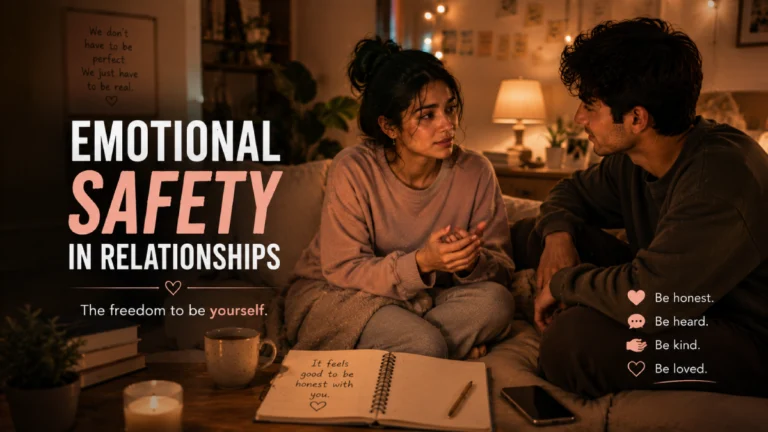

How to Handle Conflict in a Relationship Without Hurting
What Does It Mean to Handle Conflict in a Relationship?
To handle conflict in a relationship means learning how to disagree, express hurt, listen, pause, and respond without damaging emotional safety.
It does not mean you never fight.
It does not mean you always stay perfectly calm.
It does not mean you agree with everything just to keep peace.
Healthy conflict means both people can feel upset without becoming cruel.
Maybe you are here because every serious conversation feels risky.
You want to say one small thing.
“I felt hurt.”
“I need more effort.”
“I did not like how that felt.”
“I want us to talk about this.”
But somehow, it turns into a fight.
The topic changes.
The tone changes.
Someone gets defensive.
Someone shuts down.
Someone brings up the past.
Someone says something they do not fully mean.
And suddenly, the issue is no longer the issue.
Now both people are hurt.
That is why learning how to handle conflict in a relationship matters so much.
Because conflict itself does not always destroy love.
But the way conflict is handled can either make love safer or slowly make it feel dangerous.
Healthy conflict means disagreeing without destroying emotional safety
In a healthy relationship, conflict may feel uncomfortable, but it should not make you feel emotionally unsafe.
You may feel hurt.
You may feel misunderstood.
You may need space.
You may cry.
You may struggle to explain yourself clearly.
But you should not feel like your dignity is being attacked.
You should not feel afraid to speak.
You should not feel like one disagreement will make someone abandon, punish, humiliate, or emotionally destroy you.
Healthy conflict protects the relationship while discussing the problem.
It says:
“We are upset, but we are not enemies.”
That sentence is important.
Because many couples do not actually fight about the problem anymore.
They start fighting each other.
And once the person becomes the enemy, emotional safety disappears.
Conflict is not the problem; emotional harm during conflict is
Conflict is normal.
Two people can love each other and still have different needs, habits, fears, expectations, communication styles, and emotional triggers.
One person may need reassurance.
Another may need space.
One may want to talk immediately.
The other may need time to process.
One may feel hurt by tone.
The other may feel criticized.
These differences can create conflict.
That does not mean the relationship is unhealthy.
What matters is how both people behave when the conflict appears.
Do you try to understand?
Or do you try to win?
Do you explain your hurt?
Or do you attack their character?
Do you ask for space respectfully?
Or do you disappear to punish?
Do you repair afterward?
Or do you pretend nothing happened while the hurt keeps sitting between you?
Conflict is not the enemy of love.
Emotional harm during conflict is.
A healthy relationship can have arguments and still feel safe
A healthy relationship is not one where no one ever gets upset.
It is one where both people know how to come back to respect.
You can argue and still feel loved.
You can disagree and still feel valued.
You can say, “I need a pause,” without making the other person feel abandoned.
You can say, “That hurt me,” without turning the whole conversation into blame.
This is the difference between a relationship that has conflict and a relationship that becomes unsafe during conflict.
The first one can grow.
The second one slowly creates fear.
Quick answer for featured snippet
To handle conflict in a relationship, pause before reacting, focus on one issue, express feelings without blame, listen before defending, avoid insults or silent punishment, and come back to repair after the conversation.
Micro takeaway
Healthy conflict is not about never fighting.
It is about staying respectful, honest, and emotionally safe when things feel difficult.
Why Conflict Feels So Hard in Relationships
Conflict feels hard because it is rarely only about the topic.
Sometimes the argument looks small from outside.
A late reply.
A cancelled plan.
A different tone.
A forgotten promise.
A misunderstood sentence.
A feeling that was not acknowledged.
But underneath that small issue, there may be a much bigger emotional fear.
“Do I matter?”
“Are you still choosing me?”
“Will you understand me?”
“Will you leave if I am honest?”
“Am I safe with you when things get hard?”
That is why relationship conflict can feel so intense.
It touches the places where people feel most emotionally vulnerable.
Conflict can trigger fear of abandonment
Sometimes a fight is not only about what happened.
It is about what the fight makes you fear.
Maybe your partner sounds distant, and your body hears, “They are pulling away.”
Maybe they ask for space, and your mind hears, “They are leaving.”
Maybe they disagree with you, and something inside you feels, “I am not safe anymore.”
This is especially common if you have experienced emotional inconsistency, abandonment, rejection, or painful arguments before.
Your present conflict may activate old fear.
So instead of responding only to the moment, you respond to the fear underneath it.
Emotional impact
Sometimes the fight is not only about the issue.
It is about the fear that love may disappear.
That fear deserves compassion.
But it also needs awareness, because fear can make us react in ways that create more distance.
One person may want closeness while the other wants space
This is one of the most common conflict patterns.
One person wants to talk immediately because silence feels scary.
The other person wants space because talking immediately feels overwhelming.
So one person moves closer.
The other pulls away.
Then the closer one feels abandoned and pushes harder.
The one who needs space feels pressured and withdraws more.
And now the conflict becomes bigger than the original issue.
It becomes a chase-and-withdraw cycle.
Neither person may be trying to hurt the other.
Both may be trying to feel safe in opposite ways.
Psychology layer
Different conflict responses can create a chase-and-withdraw pattern.
One person tries to reduce anxiety through closeness.
The other tries to reduce overwhelm through distance.
The problem is not always the need for closeness or space.
The problem is when neither need is communicated safely.
Defensiveness can make feelings sound like attacks
A lot of conflicts escalate because one person shares hurt, and the other hears blame.
One person says:
“I felt ignored.”
The other hears:
“You are a bad partner.”
One person says:
“I need more consistency.”
The other hears:
“Nothing you do is enough.”
One person says:
“That tone hurt me.”
The other hears:
“You are always wrong.”
So instead of listening, they defend.
They explain.
They counterattack.
They list their own pain.
They try to prove they did not mean it.
But the hurt person was not always asking for a trial.
Sometimes they were asking to be understood.
Behavior explanation
When someone hears hurt as blame, they may protect their ego instead of listening.
Healthy conflict requires both people to slow down enough to ask:
“What are they actually feeling underneath these words?”
Old wounds can enter present arguments
Sometimes today’s conflict hurts so much because it touches an older wound.
Maybe your partner forgot to update you, and it reminded you of a time when someone made you feel unimportant.
Maybe they got defensive, and it reminded you of someone who never took accountability.
Maybe they asked for space, and it reminded you of being abandoned.
So the present issue becomes emotionally heavier.
This does not mean your feelings are fake.
It means your heart has memory.
But it also means you need to ask:
“What part of this is happening now, and what part is being brought in from before?”
Micro takeaway
Sometimes you are not only reacting to what happened today.
You are reacting to what today reminded you of.
That awareness can soften the conflict before it becomes damaging.
What Healthy Conflict Looks Like in a Relationship
Healthy conflict does not always look calm from beginning to end.
Sometimes voices shake.
Sometimes people need pauses.
Sometimes tears come.
Sometimes someone says something imperfectly and then corrects themselves.
Healthy conflict is not perfect communication.
It is respectful communication under emotional pressure.
It is two people trying to protect the relationship even while discussing something painful.
You can disagree without disrespect
Disagreement is not disrespect.
You can see something differently and still respect the person in front of you.
You can say:
“I understand your point, but I feel differently.”
“I see why you felt that way, but my experience was different.”
“I do not agree, but I want to understand.”
These sentences keep the conversation human.
They remind both people that the goal is not to dominate.
The goal is to understand.
Real-life example
You can say, “I see this differently,” without insulting, mocking, or humiliating each other.
This is one of the clearest signs of healthy conflict in relationships.
There is room for difference without emotional cruelty.
You can express hurt without attacking the person
It is natural to want someone to understand how much they hurt you.
But if hurt comes out as attack, the other person may stop hearing the feeling and start defending themselves.
There is a difference between:
“You never care.”
And:
“I felt uncared for when this happened.”
The second one still tells the truth.
It does not make the pain smaller.
It simply gives the conversation a better chance of staying safe.
Real-life example
Instead of “You never care,” you say, “I felt uncared for when this happened.”
This keeps the focus on the emotional impact, not the person’s entire character.
You can pause without abandoning the conversation
Taking space can be healthy.
But only when it is communicated with care.
A pause is not the same as silent treatment.
A healthy pause says:
“I need time to calm down, but I will come back.”
Silent punishment says:
“I will disappear so you feel anxious.”
That difference matters.
When you pause with a return plan, you protect the conversation.
When you disappear without care, you create fear.
Real-life example
You say, “I need 20 minutes to calm down, but I want to come back to this.”
That one sentence can make space feel safer.
It tells your partner, “I am not abandoning this. I am trying not to damage it.”
You both try to understand before winning
A conflict becomes dangerous when both people become lawyers.
Each person collects evidence.
Each person defends.
Each person tries to prove who is more right, more hurt, more justified.
But relationships are not healed by winning.
They are healed by understanding.
Healthy conflict asks:
“What did this feel like for you?”
“What did I misunderstand?”
“What do you need from me right now?”
“What are we really fighting about?”
These questions create emotional safety.
Real-life example
One person can ask, “What did that feel like for you?” instead of only defending their intention.
That question does not mean they have no side.
It means they are willing to understand yours first.
You come back to repair after the hard moment
Healthy conflict does not end when people stop talking.
It ends when the emotional wound has been cared for.
Sometimes the conversation needs repair afterward.
An apology.
A clarification.
A softer explanation.
A promise to do one thing differently.
A moment of emotional reconnection.
This is what prevents conflict from becoming distance.
Emotional meaning
Conflict becomes safer when both people know hurt will not be ignored.
When repair is part of the relationship, conflict feels less terrifying.
You know hard moments can be handled.
Signs Conflict Is Being Handled in a Healthy Way
If you are wondering whether your conflict pattern is healthy, do not only ask, “Do we fight?”
Ask:
How do we fight?
Do we stay respectful?
Do we listen?
Do we repair?
Do we attack or understand?
Do we feel clearer afterward or more unsafe?
These signs can help you understand the difference between normal conflict and emotionally harmful conflict.
1. You stay focused on one issue
Healthy conflict does not turn one problem into every problem.
If the issue is a cancelled plan, the conversation stays close to that issue.
It does not become a list of everything someone has done wrong for the past six months.
Of course, patterns matter.
If something keeps happening, it should be discussed.
But bringing every old wound into one heated moment usually overwhelms the conversation.
It makes repair harder.
What this looks like
The conversation does not become a history of every mistake.
You can say:
“I know there are bigger patterns, but right now I want to focus on what happened today.”
This keeps the conflict clear.
Reflection question
Are we discussing the current issue, or fighting about everything at once?
2. You avoid character attacks
Healthy conflict talks about behavior.
Unhealthy conflict attacks identity.
There is a difference between:
“I felt hurt when you dismissed me.”
And:
“You are selfish.”
The first names the emotional impact.
The second attacks the person.
When people feel attacked as a person, they usually stop listening and start defending.
Character attacks make the relationship feel unsafe.
What this looks like
You talk about behavior without attacking the person’s worth, personality, or intentions.
You do not use words just to make them feel small.
You stay close to the issue.
Reflection question
Are we trying to solve the problem or hurt each other?
This question can stop many conflicts from becoming damaging.
3. Both people get space to speak
Conflict becomes unhealthy when only one person’s reality is allowed.
One person talks.
The other gets interrupted.
One person explains.
The other gets dismissed.
One person’s feelings matter.
The other’s feelings are called dramatic, irrational, or irrelevant.
Healthy conflict gives both people room.
Not unlimited room to attack.
But enough space to share what they experienced.
What this looks like
One person does not dominate, interrupt, dismiss, or shut down the other’s emotional reality.
Both people may not speak perfectly.
But both people are allowed to be heard.
Reflection question
Do both of us feel heard, or does one person always disappear in the conversation?
If one person always disappears, the conflict may look calmer than it actually is.
4. You take pauses before things become damaging
Some conversations need a pause.
Not because the issue does not matter.
But because continuing while emotionally flooded can make people say things they later regret.
A healthy pause protects the relationship.
It is not used to avoid accountability.
It is not used to punish.
It is not used to create panic.
It is a break with care.
What this looks like
A break is used to calm down, not to punish or create fear.
You say:
“I need time to calm down.”
Not:
“Fine, I am done,” followed by hours or days of emotional disappearance.
Reflection question
Do our pauses protect the relationship, or do they become silent treatment?
That difference matters deeply.
5. You listen for the feeling under the words
Sometimes people say things imperfectly during conflict.
They may sound sharper than they mean.
They may say the surface issue first.
But underneath, there is usually a feeling.
Hurt.
Fear.
Loneliness.
Disappointment.
Insecurity.
Need for reassurance.
Need for respect.
Need for clarity.
Healthy conflict listens for that deeper feeling.
Not to excuse harmful words.
But to understand what the argument is really asking for.
What this looks like
You try to understand the hurt, fear, need, or disappointment underneath the argument.
You ask:
“What did this mean to you emotionally?”
That question can change the whole direction of the conversation.
Reflection question
What is this conflict really asking for emotionally?
Often, the answer is not “win.”
It is “understand me.”
6. You can take accountability
Accountability is a major sign of healthy conflict.
It means you can say:
“I see how that affected you.”
“I said that badly.”
“I got defensive.”
“I should have listened.”
“I understand why that hurt.”
This does not mean you take blame for everything.
It means you can own your impact without collapsing into shame or attacking back.
What this looks like
Both people can say, “I see how that affected you,” without turning everything into blame.
Accountability makes repair possible.
Defensiveness keeps the wound open.
Reflection question
Can we own impact without drowning in shame or defensiveness?
A healthy relationship needs both honesty and humility.
7. The conflict leads to clarity, not more confusion
After healthy conflict, you may still feel emotional.
But you usually understand each other better.
You know what hurt.
You know what needs to change.
You know what the next step is.
In unhealthy conflict, you leave more confused.
You question your memory.
You wonder if you were wrong to speak.
You feel smaller.
You feel guilty for having needs.
You feel emotionally unsafe.
That difference matters.
What this looks like
Even if the conversation is hard, both people understand each other better afterward.
There is more clarity, not just exhaustion.
Reflection question
After conflict, do we feel clearer or more emotionally unsafe?
Your answer can tell you a lot about the emotional health of the relationship.
How to Handle Conflict in a Relationship Step by Step
When conflict starts, it can feel like everything happens too fast.
Your body reacts.
Your tone changes.
Their face changes.
The conversation speeds up.
Suddenly, you are not responding from clarity.
You are responding from fear, hurt, or defense.
So the goal is to slow the conflict down.
Not to avoid truth.
But to protect it.
Step 1: Pause before reacting emotionally
Before you speak, notice your body.
Is your chest tight?
Are your hands tense?
Is your voice rising?
Are you about to say something just to hurt them back?
Are you trying to win?
Are you scared they will leave?
This pause matters because your first reaction is not always your clearest truth.
Sometimes it is your wound speaking.
Clear action
Notice your body before your words take over.
Take one breath.
Slow the conversation down.
Name what is happening inside you.
Example script
“I am feeling reactive right now. I want to slow down before I say this badly.”
This sentence protects the relationship from words spoken in emotional fire.
Step 2: Name the real issue
Many conflicts start with one topic but are really about something deeper.
A late reply may not only be about the reply.
It may be about feeling unimportant.
A cancelled plan may not only be about the plan.
It may be about feeling not considered.
A harsh tone may not only be about tone.
It may be about feeling disrespected.
Try to name the real issue.
Not just the event.
The emotional meaning.
Clear action
Separate the actual problem from the emotional story around it.
Ask yourself:
“What hurt me here?”
“What did this make me feel?”
“What do I need them to understand?”
Example script
“The issue is not only the late reply. It is that I felt unimportant and uninformed.”
This helps your partner understand the heart of the conflict.
Step 3: Use feeling-first language instead of blame-first language
Blame makes people defensive.
Feeling-first language makes understanding more possible.
Instead of starting with:
“You always do this.”
Try:
“I felt hurt when this happened.”
This does not make your pain smaller.
It simply makes your pain easier to hear.
Healthy communication during conflict is not about pretending you are not hurt.
It is about expressing hurt without turning the other person into the enemy.
Clear action
Start with “I felt…” instead of “You always…”
This keeps the conversation grounded in your experience.
Example script
“I felt hurt when the plan changed suddenly. I need clearer communication next time.”
That sentence gives both truth and direction.
It says what happened, how it affected you, and what would help.
Step 4: Ask what they heard before continuing
Sometimes fights continue because one person thinks they explained clearly, but the other person heard something different.
You may say:
“I felt ignored.”
They may hear:
“You are a terrible partner.”
Before the conversation goes further, check what they heard.
This can prevent misunderstanding from becoming a bigger fight.
Clear action
Check whether your partner understood the emotional meaning.
Ask them to reflect back what they heard.
Example script
“Can you tell me what you heard me say? I want to make sure I explained it clearly.”
This may feel awkward at first.
But it helps slow down conflict and reduce defensiveness.
Step 5: Listen before defending your side
Listening first is hard.
Especially when you feel misunderstood.
But listening does not mean you have no side.
It means you are willing to understand before explaining.
You can say:
“I do want to share my perspective, but I want to understand yours first.”
That kind of response creates safety.
It tells the other person, “Your feelings matter even if my intention was different.”
Clear action
Understand their experience before explaining your intention.
Let them feel heard before you defend your side.
Example script
“I want to explain my side, but first I want to understand how it affected you.”
This is one of the most emotionally mature things you can say during conflict.
Step 6: Take a respectful break if things escalate
If the conversation becomes too heated, pause.
But pause respectfully.
Do not storm out without clarity.
Do not disappear.
Do not use silence to make the other person anxious.
A respectful break includes reassurance and a return plan.
It says:
“This matters, and I will come back.”
Clear action
Pause the conversation with a return plan.
Choose a time to return if possible.
Example script
“I need 30 minutes to calm down. I am not leaving the conversation. I want to come back to it.”
This helps both people feel safer.
One gets space.
The other does not feel abandoned.
Step 7: End with one clear next step
Many conflicts end with vague promises.
“I will do better.”
“We will communicate more.”
“Let’s not fight like this again.”
These sound good, but they may not change the pattern.
End with one clear next step.
Something specific.
Something doable.
Something both people understand.
Clear action
Do not end with vague promises. Decide what will be done differently.
A clear next step turns conflict into growth.
Example script
“Next time plans change, we will update each other earlier instead of leaving it unclear.”
That is how conflict becomes useful.
Not perfect.
Useful.
What to Say During Conflict: Healthier Scripts
Sometimes you know what you feel, but it comes out in a way that creates more damage.
That does not mean your feeling is wrong.
It means the wording needs more care.
These scripts are not about sounding perfect.
They are about protecting both honesty and respect.
Instead of “You never listen to me”
This usually comes from a real pain.
You feel unheard.
Maybe you have repeated yourself many times.
Maybe you feel dismissed.
But “you never listen” can make the other person defend every time they did listen.
Then the emotional point gets lost.
Say this
“I feel unheard when I share something and it gets dismissed quickly.”
This tells them what hurts without attacking their entire character.
Instead of “You always make everything a fight”
This sentence often comes from exhaustion.
You may feel like every concern becomes too much.
But saying it this way can start another fight.
Say this
“I want us to talk about this without attacking each other. Can we slow down?”
This invites emotional safety back into the conversation.
It does not deny the problem.
It simply changes the direction.
Instead of “Fine, forget it”
“Fine, forget it” often means:
“I feel unsafe now.”
“I feel unheard.”
“I am scared this will get worse.”
“I do not know how to say this anymore.”
But the other person may hear it as attitude or withdrawal.
Try naming the fear underneath.
Say this
“I feel overwhelmed and scared this will turn into a fight, but I still want to be understood.”
This is vulnerable.
It gives the other person a chance to respond with care.
Instead of “You do not care”
“You do not care” may feel true in the moment.
But it can make the other person focus on proving they care instead of understanding why you felt uncared for.
Say this
“I felt uncared for in that moment, and I need us to talk about what happened.”
This explains the emotional experience without defining their entire heart.
Instead of going silent
Silence can feel safer when you are overwhelmed.
But unexplained silence can make the other person feel punished or abandoned.
If you need a pause, say it clearly.
Say this
“I need a pause, but I will come back. I do not want silence to become punishment.”
That sentence is powerful.
It protects your need for space and the other person’s need for emotional safety.
Micro takeaway
Healthy conflict does not require perfect words.
It requires words that protect honesty and respect at the same time.
Common Mistakes People Make During Relationship Conflict
Most conflict mistakes come from pain, fear, or overwhelm.
That does not make them harmless.
But it does make them understandable.
The goal is not to shame yourself.
The goal is to notice the pattern and choose something safer next time.
Mistake 1: Bringing up every old wound at once
When you are hurt, everything can feel connected.
One small issue reminds you of five older ones.
Suddenly, the current conflict becomes a history lesson of every mistake.
This usually overwhelms both people.
The person listening may shut down.
The person speaking may feel even more unheard.
Why this is harmful
It overwhelms the conversation and makes repair harder.
If there is a pattern, name the pattern calmly.
But do not overload one heated moment with every wound at once.
Mistake 2: Trying to win instead of understand
When the goal becomes winning, love loses.
You may prove your point and still damage the connection.
You may win the argument and still make your partner feel unsafe.
You may be technically right and emotionally careless.
Healthy conflict asks a better question:
Not “How do I win?”
But “How do we understand what is happening here?”
Why this is harmful
Winning the argument can still make the relationship lose emotional safety.
And without emotional safety, even correct points can land painfully.
Mistake 3: Using silence as punishment
Space is healthy.
Silent punishment is not.
If you need time to calm down, say that.
But if you go silent to make the other person panic, beg, or feel guilty, the silence becomes control.
That kind of silence creates fear.
It does not create resolution.
Why this is harmful
Silent punishment creates fear, not resolution.
It teaches the other person that conflict may cost them connection.
Mistake 4: Attacking character instead of naming behavior
Character attacks make conflict feel dangerous.
“You are selfish.”
“You are immature.”
“You are impossible.”
“You never care.”
“You always ruin things.”
These phrases may come from pain, but they usually create defense.
Behavior-focused language is safer.
“When this happened, I felt hurt.”
That gives the relationship a chance to respond.
Why this is harmful
Character attacks make people defensive and emotionally unsafe.
They shift the focus from solving the problem to protecting the self.
Mistake 5: Apologizing only to end the fight
Some apologies are not repair.
They are escape.
“Fine, sorry.”
“Okay, my fault.”
“Happy now?”
These apologies may stop the conversation, but they do not heal the emotional wound.
A real apology shows understanding.
It says:
“I see what hurt you.”
“I understand my part.”
“I want to do better.”
Why this is harmful
A rushed apology may stop the argument, but it does not heal the emotional wound.
And unhealed wounds often return in future fights.
What to Do If Every Conflict Turns Into a Fight
If every serious conversation becomes a fight, the relationship may need a new conflict pattern.
Not just better words.
A better emotional structure.
Because once a couple gets used to fighting a certain way, the pattern can start repeating automatically.
One person brings up hurt.
The other gets defensive.
One pushes.
The other withdraws.
Someone brings up the past.
Someone goes silent.
Both feel misunderstood.
The original issue disappears.
The wound gets bigger.
This can change, but both people have to be willing.
Step 1: Identify the escalation point
Every fight has a turning point.
The moment where it stops being a conversation and becomes emotional defense.
Maybe the escalation happens when someone says “always” or “never.”
Maybe it happens when tone changes.
Maybe it happens when one person interrupts.
Maybe it happens when someone asks for space without reassurance.
Maybe it happens when old wounds enter.
Find that point.
Action
Notice when the conversation shifts from problem-solving to blame, defense, or shutdown.
Ask:
“What usually happens right before we lose control of the conversation?”
That answer is valuable.
Step 2: Create a conflict rule before the next fight
Do not wait until you are already hurt to decide how you want to fight.
Talk about conflict rules when you are calm.
This is not childish.
It is emotionally mature.
You are creating safety before the storm.
Action
Agree on what you both will not do during conflict.
Example
No insults.
No threats.
No disappearing.
No bringing up unrelated past issues.
No mocking emotions.
No using private vulnerability as a weapon.
No silent treatment.
These rules protect the relationship when emotions rise.
Step 3: Use repair phrases in the moment
Repair phrases can interrupt a fight before it becomes damaging.
They are small sentences that bring care back into the room.
Try:
“I said that badly.”
“I do not want to hurt you.”
“Can we restart?”
“I am feeling defensive, but I want to understand.”
“I think we are fighting each other instead of the problem.”
These phrases require humility.
And humility can soften conflict.
Action
Try “I said that badly,” “I do not want to hurt you,” or “Can we restart?”
A relationship becomes safer when both people know how to interrupt the damage.
Step 4: Decide whether both people are willing to change the pattern
This part is important.
You cannot handle conflict well alone.
You can speak softly.
You can use scripts.
You can pause.
You can listen.
You can take accountability.
But if the other person keeps insulting, dismissing, punishing, or refusing to repair, the pattern will not become healthy.
Healthy conflict needs mutual willingness.
Action
Watch whether both people want emotional safety, or only want to be right.
Do they care about how conflict affects you?
Do they try to repair?
Do they take responsibility?
Do they soften when they realize they hurt you?
Or do they only blame you for bringing things up?
That answer matters.
Step 5: Get support if the same fight keeps repeating
Sometimes couples need outside support.
Not because the relationship is doomed.
But because the pattern has become too strong for both people to break alone.
A counselor, therapist, or trusted relationship resource can help you understand what keeps happening underneath the fight.
Especially if the same issue keeps coming back with different details.
Emotional reassurance
Needing help does not mean the relationship failed.
It means the pattern may need tools you both did not learn yet.
And honestly, many people were never taught how to handle conflict safely.
Learning it is not shameful.
It is brave.
When Conflict Becomes a Warning Sign
Conflict is normal.
But some conflict patterns are not just “normal relationship problems.”
Some patterns make a relationship emotionally unsafe.
And it is important to recognize the difference.
You do not need to panic.
But you do need to be honest.
Conflict includes insults, threats, humiliation, or fear
If conflict regularly includes insults, threats, humiliation, intimidation, or fear, it is not healthy conflict.
Being upset does not give someone permission to emotionally harm you.
A person can be angry and still be respectful.
If they repeatedly choose cruelty, that matters.
One person uses silence, distance, or withdrawal as punishment
Needing space is healthy when it is communicated.
Using silence to punish is different.
If someone withdraws to make you anxious, beg, or feel powerless, that is not emotional regulation.
That is emotional control.
A healthy pause protects the conversation.
Punishing silence damages safety.
Your feelings are always turned against you
If every concern you bring up becomes proof that you are too sensitive, too needy, too dramatic, or the real problem, the relationship becomes unsafe.
Your feelings do not have to be perfect to deserve care.
A healthy partner can disagree without dismissing your emotional reality.
You feel scared to bring up normal needs
If you are scared to say basic things like:
“I felt hurt.”
“I need clarity.”
“I need reassurance.”
“I want us to talk.”
Then the conflict pattern may have trained you to stay silent.
That is serious.
Because love should not require you to hide every need to keep the peace.
You feel smaller, more anxious, or less like yourself after every fight
Pay attention to who you are becoming.
After conflict, do you feel clearer?
Or smaller?
Do you feel understood?
Or ashamed?
Do you feel connected?
Or emotionally broken?
Repeated conflict should not slowly erase your confidence, voice, or sense of self.
Clear decision signal
If conflict repeatedly makes you feel unsafe, unheard, or emotionally broken, the issue is not just communication style.
It is emotional safety.
Emotional clarity
Healthy conflict may feel uncomfortable, but it should not make you afraid to be honest.
You are not asking for too much by wanting disagreement without emotional damage.
Final Answer: How Do You Handle Conflict in a Relationship?
You handle conflict in a relationship by slowing down, naming the real issue, expressing feelings without attacking, listening before defending, taking respectful breaks when needed, and coming back to repair.
Healthy conflict is not about never disagreeing.
It is about disagreeing in a way that still protects respect, honesty, trust, and emotional safety.
Pause before reacting
Notice what is happening inside you before your words take over.
If you are too activated, slow down.
A pause can protect the relationship from unnecessary wounds.
Name the real issue
Ask what the conflict is really about.
Is it the late reply?
Or feeling unimportant?
Is it the cancelled plan?
Or feeling not considered?
Is it the tone?
Or feeling disrespected?
Naming the real issue makes the conversation clearer.
Express feelings without attacking
Say what hurt.
But try not to turn the other person into the enemy.
“I felt hurt when this happened” is usually safer than “You never care.”
Your pain deserves honesty.
And the relationship deserves respect.
Listen before defending
Try to understand the emotional impact before explaining your intention.
You can still share your side.
But listening first helps the other person feel emotionally safer.
Take respectful breaks when needed
If things escalate, pause with care.
Say when you will come back.
Do not use silence as punishment.
Space should protect the conversation, not create fear.
Repair after the conflict
Do not leave emotional wounds unattended.
Come back.
Clarify.
Apologize.
Reconnect.
Talk about what can be done differently next time.
Repair is what keeps conflict from becoming distance.
Choose emotional safety over winning
This is the heart of healthy conflict.
You can win a fight and still hurt the relationship.
But when both people choose emotional safety, conflict can become a place of deeper understanding.
Emotional closure
Conflict does not have to destroy a relationship.
When handled with respect, honesty, accountability, and care, conflict can become a place where two people understand each other more deeply.
Not because the conversation was perfect.
But because both people cared enough not to turn pain into cruelty.
Healthy love does not mean you never fight.
It means when you fight, you still remember there is a heart in front of you.
A heart that wants to be understood.
A heart that may be scared.
A heart that may not have the perfect words.
A heart that still deserves respect.
Aur sach kahun, healthy conflict ka matlab yahi hai — disagreement ke beech bhi pyaar ki izzat bachaye rakhna.
You can be upset and still be kind.
You can need space and still be reassuring.
You can express pain and still avoid emotional damage.
You can disagree and still choose each other with maturity.
That is what makes conflict safer.
Not silence.
Not perfection.
Care.
Soft CTA
If you want to understand what happens after a fight, read next:
Repair After Conflict in a Relationship: How to Reconnect After Hurt
It will help you understand how to come back after an argument, rebuild emotional safety, and stop conflict from turning into distance.