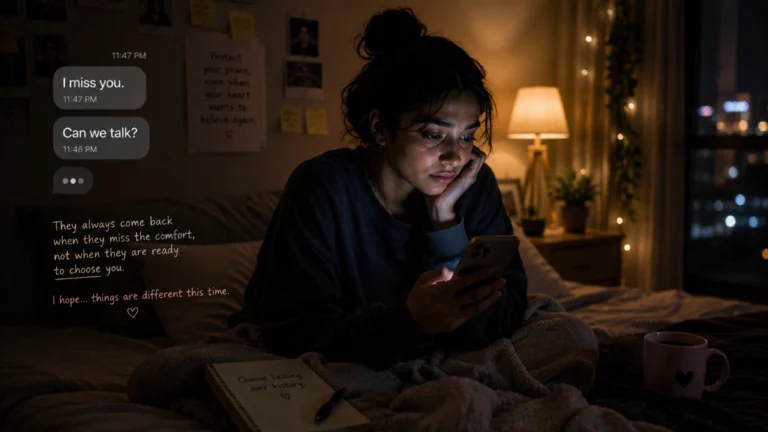

Likes Attention More Than You? Signs They Want Your Validation
Signs They Want Your Validation, Not Your Heart
Have you ever felt like someone enjoys being wanted by you more than they actually want you?
Maybe they flirt when you start pulling away.
Maybe they reply when you stop trying.
Maybe they suddenly act interested when you seem less available.
Maybe they like your compliments, your care, your emotional support, your soft spot for them, and the way you make them feel important.
But when you ask for clarity, consistency, or commitment, they become vague again.
And now you are sitting with that uncomfortable question:
Do they like me, or do they just like the attention?
If someone likes attention more than you, they may flirt when they need validation, come back when you pull away, avoid commitment, disappear after receiving reassurance, and show interest only when your attention is no longer guaranteed.
Real interest creates consistency.
Attention-seeking creates confusion.
And that confusion hurts because the person does not fully reject you.
They keep you close enough to hope, but far enough to stay unsure.
Kabhi-kabhi woh aapko nahi, bas aapse milne wali attention ko pasand karte hain. Aur ye samajhna dil ke liye easy nahi hota.
Because when you care about someone, you do not want to believe that your presence is only making them feel validated.
You want to believe they see you.
Not just your attention.
You want to believe they value your heart.
Not just the comfort of being wanted by it.
What Does It Mean When Someone Likes Attention More Than You?
When someone likes attention more than you, it means they may enjoy the feeling of being wanted, admired, chased, comforted, or emotionally prioritized, but they may not be genuinely willing to build something real with you.
They may like how you make them feel.
They may like knowing you care.
They may like having access to your warmth.
But they may not be ready or willing to offer clarity, consistency, commitment, or emotional responsibility in return.
That is the painful difference.
Because from the outside, it may look interesting.
They reply sometimes.
They flirt sometimes.
They come back sometimes.
They act jealous sometimes.
They make you feel like something is still there.
But when you need something real, the connection slips back into uncertainty.
It Means They Enjoy Being Wanted, But May Not Want Real Commitment
Some people love the feeling of being desired.
They enjoy being someone’s favorite notification.
They enjoy knowing someone is waiting for their reply.
They enjoy being missed.
They enjoy being admired.
They enjoy feeling emotionally important.
But enjoying attention is not the same as valuing the person giving it.
Someone can like your care without wanting to care for you properly.
Someone can like your loyalty without offering commitment.
Someone can like your emotional availability without respecting your emotional needs.
Someone can like being wanted by you, but still not choose you clearly.
That is what makes this dynamic so confusing.
Because there is energy.
There is chemistry.
There may even be affection.
But there is no stable emotional responsibility.
It Does Not Always Mean They Are Evil or Intentionally Using You
This part matters.
Not every person who likes attention is cruel.
Some people are insecure.
Some are lonely.
Some are emotionally immature.
Some are avoidant.
Some are used to seeking validation because they do not know how to feel secure within themselves.
Some do not fully realize how much hope they are creating in someone else.
They may not wake up thinking, “Let me hurt this person.”
But still, their behavior can hurt you.
Their intention may be unclear.
But the impact is real.
And this is where emotionally aware people often get stuck.
You understand too much.
You think:
“Maybe they are just lonely.”
“Maybe they have low self-worth.”
“Maybe they do not know what they want.”
“Maybe they are not doing it intentionally.”
Maybe.
But you still need to ask:
“Is this dynamic emotionally safe for me?”
Because someone does not have to be a villain to become harmful to your peace.
But It Does Mean Their Pattern Can Hurt You
Even if they are not trying to hurt you, they may keep you emotionally attached without offering clarity.
They may give you just enough attention to keep your hope alive.
A late-night message.
A random compliment.
A flirty reply.
A little jealousy.
A “miss you” when you start moving on.
A sudden interest when you stop chasing.
These moments can feel meaningful.
And maybe they are meaningful in that moment.
But if they never become consistent, you are left with emotional crumbs.
You keep feeding on small signs while your heart is asking for something whole.
And slowly, you may start confusing attention with affection.
Reaction with effort.
Jealousy with love.
Comebacks with commitment.
That is where the pattern becomes dangerous.
Not because you are weak.
Because mixed attention can be emotionally powerful.
Emotional Impact Line
Kabhi-kabhi woh aapko nahi, bas aapse milne wali attention ko pasand karte hain.
And accepting that can feel painful.
Because it makes you question the moments that felt special.
But clarity does not erase what you felt.
It simply helps you see whether the other person is actually meeting you with the same emotional intention.
Micro Takeaway
The question is not only whether they enjoy your attention.
The question is whether they respect your heart while receiving it.
Because someone who values you will not keep taking your emotional warmth while leaving you confused about your place in their life.
Signs They Like Attention More Than You
Sometimes it is hard to tell whether someone genuinely likes you or just enjoys the attention you give them.
Because attention-seeking can look romantic at first.
They may flirt.
They may come back.
They may act jealous.
They may say they miss you.
They may seem affected when you stop trying.
But real interest becomes clearer over time.
It does not only show up when they need validation.
It shows up through consistency, care, clarity, and effort.
If you are wondering whether someone likes attention more than you, these signs may help you understand the pattern.
1. They Show Interest Only When You Pull Away
Maybe they were distant when you were available.
Maybe they replied slowly when you were trying.
Maybe they acted casual when you cared openly.
But the moment you stopped initiating, something changed.
Suddenly, they noticed you.
Suddenly, they replied faster.
Suddenly, they flirted again.
Suddenly, they wanted to know what you were doing.
Suddenly, they acted like they did not want to lose you.
This can feel like proof that they care.
But sometimes, it is not love waking up.
It is their fear of losing your attention.
When your availability was guaranteed, they took it lightly.
When your attention became uncertain, they became interested again.
That is not emotional security.
That is a push-pull dynamic.
And it can keep you hooked because you start thinking distance is the only way to be valued.
But healthy love should not require you to disappear to be noticed.
2. They Flirt, But Avoid Real Effort
Flirting can create emotional excitement.
A compliment.
A teasing message.
A little romantic tension.
A late-night conversation.
A suggestive joke.
A sudden “you looked good today.”
These moments can make you feel like there is something real.
But when it comes to actual effort, they avoid it.
They do not make clear plans.
They do not define anything.
They do not follow through.
They do not create emotional safety.
They enjoy the spark, but not the responsibility after the spark.
This is one of the clearest signs they may like attention more than you.
Because flirting gives them validation.
Effort requires intention.
Flirting says, “I enjoy the energy.”
Effort says, “I value the person.”
If they keep choosing energy over effort, notice that.
3. They Come Back When They Need Validation
Some people appear when they feel low.
When they are bored.
When they are lonely.
When their confidence needs a little boost.
When they want to feel wanted again.
And because they know you care, they return to you.
Maybe they message:
“You up?”
“Miss me?”
“I was thinking about you.”
“You disappeared.”
“You don’t talk to me anymore.”
These messages can feel personal.
But sometimes they are less about you and more about what you give them.
Attention.
Comfort.
Reassurance.
Proof that they still matter.
They may not want to build something real.
They may only want to feel emotionally important for a while.
And when they get that reassurance, their effort drops again.
That is a painful pattern.
Because you become the place they visit when they need validation, but not the person they choose when clarity is required.
4. They Enjoy Your Care, But Ignore Your Needs
They may love how much you understand them.
They may come to you when they are stressed.
They may share their problems.
They may enjoy your patience.
They may like that you listen without judging.
They may feel safe with you.
But when you need emotional support, they become unavailable.
When you need reassurance, they act irritated.
When you need clarity, they avoid the conversation.
When you need consistency, they make you feel demanding.
This creates a painful imbalance.
You are giving emotional care.
They are receiving it.
But they are not offering the same care back.
They like being held by your attention.
But they do not hold your heart with the same gentleness.
That is not a mutual connection.
That is emotional access without emotional responsibility.
5. They Avoid Commitment, But Expect Emotional Access
They may not want a label.
They may not want a relationship.
They may not want to define where this is going.
But they still expect access to you.
They want you to reply.
They want you to care.
They want your time.
They want your emotional support.
They may even act uncomfortable when you move on.
This is where the dynamic becomes unfair.
Because they are not choosing you clearly, but they still want the benefits of being emotionally important to you.
They want commitment-level comfort without commitment-level responsibility.
And if you ask for clarity, they may say:
“Why do we need labels?”
“Why are you making it serious?”
“Can’t we just enjoy this?”
But your heart is not a casual resource.
You are allowed to need definition when your emotions are involved.
6. They Disappear After You Reassure Them
This pattern is very telling.
They come close when they feel uncertain about your attention.
They flirt.
They check in.
They act soft.
They pull you back emotionally.
You reassure them, directly or indirectly.
You reply warmly.
You show you still care.
You give them the comfort of knowing they still have access.
Then suddenly, their effort drops again.
They become casual.
Distant.
Busy.
Unclear.
This can make you feel emotionally used.
Because it seems like they only needed proof that you still cared.
Once they got it, they relaxed again.
Not into commitment.
Into the distance.
That is not the rhythm of real interest.
That is the rhythm of validation-seeking.
7. They Get Jealous, But Still Do Not Choose You
Jealousy can feel like evidence.
If they get jealous, they must care, right?
Maybe.
But jealousy is not always love.
Sometimes jealousy means they do not want to lose access to your attention.
They may not want to commit to you, but they also do not want someone else to receive what you used to give them.
They may not choose you, but still feel uncomfortable when you stop choosing them.
That is not the same as real commitment.
Real commitment says, “I want to be with you clearly.”
Jealousy without commitment says, “I do not want to lose what I get from you.”
Those are very different things.
So if they get jealous but still avoid clarity, do not let jealousy confuse you.
Possessiveness is not proof of love.
Sometimes it is proof of ego.
8. They Keep You Hopeful With Small Signals
A small signal can carry a lot of emotional weight when you care about someone.
A like.
A story reaction.
A late-night text.
A short “miss you.”
A compliment.
A random check-in.
A message after days of silence.
These little signals can make you think:
“Maybe they still care.”
“Maybe they are coming back.”
“Maybe they are not done with me.”
And maybe they are not done.
But are they building anything?
That is the question.
Small signals can keep the emotional door open without creating real movement.
They can keep you attached without giving you clarity.
They can make you feel chosen for a moment, then confused again.
This is why emotional breadcrumbs are so powerful.
They are small, but they arrive exactly where your hope is hungry.
9. They Make You Feel Replaceable Until You Stop Trying
When you are available, they act casual.
When you are caring, they seem comfortable.
When you are trying, they do not value the effort.
But the moment you stop, they return.
Suddenly, they care.
Suddenly, they notice.
Suddenly, they ask where you went.
This can make you feel like you only matter when you are leaving.
And that is deeply painful.
Because you start wondering:
“Why do they value my absence more than my presence?”
A healthy person does not need to lose access to respect your value.
A person who truly likes you does not only show interest when they feel you slipping away.
They show care while you are still there.
Emotional Impact Line
The painful part is not only that they want attention.
It is that they make you feel special only when they are afraid of losing your attention.
And that can slowly teach your heart the wrong lesson.
It can make you think you need to become unavailable to be valued.
But real love does not require emotional disappearing acts.
Do They Like You or Just the Attention?
This is the question that keeps people awake.
Because the behavior is not fully cold.
If they were completely uninterested, maybe it would be easier.
But they flirt.
They return.
They react.
They seem jealous.
They make you feel like there is still something.
And because there is “something,” you keep wondering if you should keep trying.
So let’s separate real interest from attention-seeking.
Not to make you cynical.
But to help you stop mistaking emotional activation for emotional safety.
Real Interest Feels Consistent
Real interest does not mean someone is perfect.
They can be busy.
They can have low days.
They may need space.
They can take time to open up.
But real interest has a certain emotional steadiness.
You do not feel like you are constantly proving your value.
You do not feel like their attention disappears the moment you become available.
You do not feel like you have to pull away to be noticed.
Real interest shows up in small, consistent ways.
They ask about you.
They make an effort.
They care about how their behavior affects you.
They respect your feelings.
They do not make you feel foolish for wanting clarity.
They do not only appear when they need reassurance.
They show interest when things are calm, too.
That is important.
Because anyone can chase when they feel they are losing access.
But real interest stays when access is already there.
Attention-Seeking Feels Conditional
Attention-seeking has a different rhythm.
They become interested when you pull away.
They become warm when you seem less available.
They become jealous when you move on.
They become affectionate when they need validation.
But when you become emotionally open again, their effort drops.
This creates a painful cycle.
You learn that your availability reduces their interest.
You learn that your distance increases their attention.
You start thinking:
“Maybe I should stop caring.”
“Maybe I should act cold.”
“Maybe I should be less available.”
“Maybe then they will want me.”
But this is not emotional safety.
This is an emotional performance.
You should not have to act detached to be treated with care.
Comparison Table to understand whether they only like or have a real interest in you
| Real Interest | Likes Attention More Than You |
| They make a consistent effort | They show up when they need validation |
| They care about your feelings | They focus on how you make them feel |
| They move the connection forward | They keep things vague |
| They respect clarity | They avoid commitment |
| They show up when things are calm, too | They return when they feel ignored |
| They value you as a person | They value your emotional access |
| They communicate honestly | They give mixed signals |
| They follow through | They flirt without real effort |
| They respect your boundaries | They test if you still care |
| They make you feel emotionally safe | They make you feel emotionally hooked |
Reality Check
If someone only wants you when you stop wanting them, they may be reacting to the loss of attention, not love.
That does not mean they feel nothing.
They may feel something.
But the feeling may be more about ego, comfort, or validation than real readiness to choose you.
And you deserve to know the difference.
Because your heart cannot live peacefully inside someone else’s need for attention.
It needs care that is clear.
Why Do Some People Want Attention More Than Commitment?
People seek attention for different reasons.
Some are insecure.
Some are lonely.
Some enjoy being desired.
Some fear intimacy.
Some like the chase.
Some are emotionally unavailable.
Some want the benefits of connection without the responsibility of commitment.
Understanding the psychology can help you stop blaming yourself.
But it should not make you excuse the pattern forever.
Their reason may explain their behavior.
It does not erase how it affects you.
1. They Use Attention to Feel Desired
Attention can soothe insecurity.
When someone feels unwanted, lonely, unattractive, or emotionally low, your attention may make them feel valuable again.
Your reply becomes reassurance.
Your care becomes proof.
Your interest becomes a mirror that shows them they are still desirable.
This may feel flattering at first.
You may think, “They need me.”
But being someone’s validation source is not the same as being loved.
If they only come to you when they need to feel wanted, the connection becomes one-sided.
They get relief.
You get confused.
They feel desirable.
You feel emotionally used.
That is not a balanced connection.
2. They Like Emotional Comfort Without Responsibility
Some people enjoy the softness of emotional closeness.
They like having someone who listens.
Someone who understands.
Someone who cares.
Someone emotionally available.
Someone who makes them feel less alone.
But they do not want responsibility.
They do not want to define the connection.
They do not want to be consistent.
They do not want to answer difficult questions.
They want the comfort of connection without the accountability of commitment.
This is one of the most painful dynamics.
Because you may feel like you are giving love, but receiving uncertainty.
They come to you for warmth.
But they do not build a safe place for you in return.
3. They Fear Real Intimacy
Some people want attention because it feels safer than intimacy.
Attention is light.
Intimacy is deep.
Attention gives validation.
Intimacy asks for vulnerability.
Attention can be controlled.
Intimacy requires emotional openness.
So they may flirt, tease, and return for attention.
But when real closeness appears, they pull away.
They may enjoy being liked, but fear being known.
They may enjoy romantic energy, but fear emotional responsibility.
They may enjoy connection, but not the exposure that comes with intimacy.
This can leave you feeling confused because their behavior has romantic elements.
But romance without emotional openness often becomes a loop, not a relationship.
4. They Enjoy the Chase More Than the Connection
Some people enjoy wanting something more than having it.
They like the chase.
The uncertainty.
The thrill.
The feeling of winning attention.
But once your attention becomes available, their interest drops.
This can make you feel like you did something wrong by caring.
You may think:
“Maybe I became too available.”
“Maybe I should have stayed mysterious.”
“Maybe I gave too much.”
But the problem is not your care.
The problem is their relationship with pursuit.
They may be more interested in the emotional high of being desired than the steady responsibility of building something real.
And that is not something you can fix by playing harder to get.
Because even if distance brings them back, it does not create emotional maturity.
5. They Are Emotionally Unavailable
Emotionally unavailable people may want closeness in small doses.
They may like your attention.
They may enjoy your affection.
They may miss you when you pull away.
But they may not be able to sustain emotional presence.
They may avoid commitment.
They may become distant when things get serious.
They may dismiss your needs.
They may keep things vague.
They may want access to you without the emotional responsibility that comes with choosing you.
This is why emotional unavailability and attention-seeking often overlap.
They want a connection.
But only at a distance can they control.
They want affection.
But not accountability.
They want you close enough to feel good, but not close enough to expect something from them.
6. They Want Options Open
Sometimes someone likes your attention but still wants romantic flexibility.
They like you.
But they also want to keep their options open.
They enjoy your care.
But they do not want to close other doors.
They may flirt with you, but avoid commitment because commitment would require a decision.
And some people avoid decisions because they enjoy the benefits of uncertainty.
They get attention from you.
Possibility elsewhere.
Freedom for themselves.
Hope from you.
This is not fair if they are letting you emotionally invest without honesty.
You do not need to shame them for wanting options.
But you also do not need to keep offering emotional loyalty to someone who refuses clarity.
7. They Are Breadcrumbing You
Breadcrumbing means giving small signs of interest without real intention to build something committed.
It is attention without real movement.
A message here.
A compliment there.
A story reaction.
A “miss you.”
A “we should catch up sometime.”
A flirty reply when you start detaching.
Each signal is small.
But emotionally, it keeps you connected.
It makes you think something may still happen.
But if those signals never become clarity, consistency, or effort, they are not building a relationship.
They are keeping the door open.
And you may be the one standing at that door, waiting.
Micro Takeaway
Attention-seeking is not always about love.
Sometimes it is about ego, comfort, insecurity, or convenience.
And that does not mean your feelings were foolish.
It means you need to protect your heart from becoming someone’s emotional mirror.
Why This Feels So Confusing Emotionally
When someone likes attention more than you, the pain is not simple.
Because they do not always act uninterested.
They act interested enough.
That “enough” is what keeps you there.
Enough to hope.
Enough to wait.
Enough to wonder.
Enough to make excuses.
Enough to feel like leaving might be giving up too soon.
This is why the pattern feels so confusing.
You are not imagining the signals.
The signals exist.
But the signals may not mean what your heart hopes they mean.
Their Attention Feels Like Proof
When they finally respond warmly, it feels like proof.
When they flirt, it feels like proof.
When they come back, it feels like proof.
When they get jealous, it feels like proof.
When they say they miss you, it feels like proof.
Your heart collects these moments like evidence.
See? They care.
See? I matter.
See? Something is there.
And maybe something is there.
But proof of attention is not proof of commitment.
Proof of reaction is not proof of love.
Proof that they enjoy your presence is not proof that they are willing to choose you with clarity.
That difference can hurt.
But it can also help you stop building a whole relationship in small moments.
Their Distance Makes You Try Harder
When someone becomes distant, it can activate your need to earn closeness again.
You may start giving more attention.
Texting more carefully.
Posting more intentionally.
Acting less available.
Trying to be funnier.
Trying to be calmer.
Trying to be less emotional.
Trying to become the version of you that might make them stay.
But this is exhausting.
Because now the connection is not just about liking them.
It becomes about winning back their attention.
And slowly, their mood becomes the scoreboard for your worth.
If they respond, you feel okay.
If they do not, you feel rejected.
That is not emotional safety.
That is emotional dependency forming around inconsistent attention.
Their Return Reopens Hope
Just when you start detaching, they come back.
And suddenly, all your progress feels fragile.
You were becoming okay.
You were accepting the truth.
You were making peace.
Then they send one message, and your hope opens like an old wound.
Maybe they changed.
Maybe they care.
Maybe they missed me.
Maybe this means something.
This is why their return feels so powerful.
It interrupts your healing.
It makes you question your decision to move on.
It makes the almost-relationship feel alive again.
But before you reopen the door, ask:
“Did they come back with clarity, or did they come back for attention?”
That question is not cold.
It is protective.
You Start Measuring Your Worth Through Their Interest
This is the deepest emotional cost.
When someone gives attention inconsistently, you may start measuring yourself through their reactions.
If they flirt, you feel attractive.
If they reply, you feel important.
If they come back, you feel chosen.
If they ignore you, you feel replaceable.
Their attention becomes the mirror.
But that mirror is unstable.
It changes according to their mood, loneliness, ego, insecurity, and convenience.
Your worth cannot be safely measured through someone inconsistent with you.
You need to take your value back from their reactions.
Emotional Clarity
Jab kisi ki attention hi reward ban jaati hai, toh aap apni value unke mood ke hisaab se measure karne lagte ho.
And your value was never supposed to be that fragile.
You were not meant to feel worthy only when someone unpredictable decides to look at you.
What Should You Do If They Like Attention More Than You?
If you realize someone may like attention more than you, the goal is not to panic or punish them.
The goal is to stop feeding the cycle blindly.
You do not need to become cold.
You do not need to play games.
You do not need to prove anything.
You need to become clear.
Clear about what they are doing.
Clear about how it affects you.
Clear about what you will no longer keep giving without respect.
Step 1: Stop Over-Rewarding Low Effort
If someone gives low effort and receives full access to you, the imbalance continues.
They send one small message, and you give them your full warmth.
They react to a story, and you emotionally reopen.
They say they miss you, and you become available again.
They flirt, and you forget the confusion.
This teaches the pattern that a small effort is enough to regain full access.
Not because you are foolish.
Because you care.
But caring without self-protection can keep you stuck.
Clear Action
Notice what they do when you stop over-giving.
If you stop feeding the dynamic with unlimited attention, do they step up with clarity?
Or do they disappear because validation was all they wanted?
That response will tell you a lot.
Step 2: Ask Yourself What They Actually Offer
Not what they hint.
Not what they promise.
Not what they make you feel occasionally.
Not what they could become.
What do they consistently offer?
Do they offer clarity?
Do they offer effort?
Do they offer respect?
Do they offer emotional safety?
Do they offer commitment?
Do they offer care when you need it, not only when they want it?
This question can feel sobering.
Because sometimes the answer is:
They offer chemistry.
They offer attention.
They offer hope.
But not stability.
And once you see that, you can stop mistaking emotional excitement for emotional nourishment.
Step 3: Stop Confusing Their Reaction With Real Interest
If they only react when you pull away, that is not enough.
If they only come back when they feel ignored, that is not enough.
If they only flirt when they need validation, that is not enough.
If they only act jealous when you move on, that is not enough.
Real interest is not only reactive.
It is active.
It does not wait until you are leaving to show care.
It does not need your absence to remember your value.
It does not make you perform a distance to receive attention.
You should not have to create fear in someone to receive effort from them.
That is not love.
That is emotional instability.
Step 4: Ask for Clarity Once
If the pattern continues, ask clearly.
Not with anger.
Not with begging.
Not with a long emotional essay.
Just clarity.
You can say:
“I feel like you come closer when I pull away, but avoid clarity when I’m emotionally available. I need to know what you actually want.”
This kind of message names the pattern directly.
It does not attack.
It does not chase.
It does not offer unlimited access.
It simply asks them to step out of ambiguity.
Why This Works
It names the pattern without begging for affection.
It gives them a chance to be honest.
And it gives you a chance to observe their response.
If they care with real intention, they may take the conversation seriously.
If they only wanted attention, they might avoid, joke, dismiss, or disappear.
And that is painful.
But it is also clarity.
Step 5: Reduce Access If They Avoid Accountability
If they keep wanting your attention without offering clarity, reduce access.
This does not mean you need to block them immediately unless that is what protects your peace.
It means you stop giving partner-level emotional availability to someone who refuses partner-level responsibility.
You stop being their comfort place without being respected.
You stop staying up for late-night validation messages.
You stop rewarding vague flirting with full emotional softness.
You stop letting their tiny signals reopen your whole heart.
This is not cruelty.
This is emotional hygiene.
Your attention is not unlimited.
Your care is not casual.
Your heart is not a place people can visit only when they need to feel wanted.
Emotional Reassurance
You are not being cold.
You are stopping the cycle where your care is available without your needs being respected.
You can be kind and still be unavailable for confusion.
You can care and still step back.
You can understand them and still choose yourself.
Common Mistakes People Make With Attention-Seeking People
When someone gives inconsistent attention, it can pull you into behaviors that do not actually serve you.
You may start chasing.
Performing.
Waiting.
Competing.
Explaining.
Trying to be more lovable.
Not because you lack self-worth.
But because inconsistent attention can make even strong people feel emotionally shaky.
Let’s name the mistakes gently, so you can stop blaming yourself and start protecting yourself.
Mistake 1: Thinking Their Jealousy Means Love
Jealousy can feel flattering.
Especially when you have been waiting for proof that they care.
If they get jealous, you may think:
“They do not want to lose me.”
“They must have feelings.”
“They care more than they admit.”
Maybe.
But jealousy is not always love.
Sometimes jealousy is the fear of losing attention.
Sometimes it is ego.
Sometimes it is possessiveness.
Sometimes it is discomfort with being replaced.
A person can be jealous and still not be ready to choose you.
Why It Is Harmful
Jealousy can mean they fear losing access, not that they are ready to choose you.
If you mistake jealousy for commitment, you may stay attached to someone who reacts strongly but acts vaguely.
And that can keep you waiting.
Emotional Consequence
You may confuse possessiveness with emotional commitment.
But love does not only say, “I do not want anyone else to have you.”
Love says, “I am willing to show up clearly for you.”
Mistake 2: Giving More Attention When They Become Distant
When they pull away, your fear may push you to give more.
More messages.
More softness.
More patience.
More reassurance.
More effort.
You may think, “If I show them I care, they will come closer.”
But if they are attention-seeking, your extra effort may only teach them that distance brings more attention from you.
They do less.
You give more.
They pull away.
You chase.
They become unsure.
You over-explain.
The imbalance grows.
Why It Is Harmful
You teach them that distance earns more effort from you.
This can slowly train the connection into a painful rhythm.
They do not need to show up consistently because your care expands to fill their absence.
And while you are trying to save the connection, you may be losing your own emotional balance.
Mistake 3: Believing Small Signals Mean Big Feelings
A small signal can feel huge when you are emotionally invested.
A like.
A reply.
A reaction.
A compliment.
A “miss you.”
A sudden memory.
A little flirtation.
These things can feel like signs.
And sometimes they are signs of interest.
But not always signs of intention.
That distinction matters.
A person can send a signal without wanting a relationship.
They can enjoy a moment without wanting consistency.
They can miss your attention without wanting commitment.
Why It Is Harmful
Breadcrumbs can keep hope alive without creating real commitment.
And when you keep building hope from small signals, you may ignore the bigger pattern.
You keep asking:
“What did this message mean?”
But the better question is:
“What does their consistent behavior mean?”
That answer is usually clearer.
Mistake 4: Competing for Their Validation
When someone gives inconsistent attention, you may start performing.
You may try to look more desirable.
Post things to get their reaction.
Act less available.
Try to be more interesting.
Compare yourself to others.
Wonder who else they are talking to.
Adjust your behavior to become the person they finally choose.
This is emotionally exhausting.
Because now you are not simply being yourself.
You are competing for validation from someone who may not even be emotionally capable of choosing clearly.
Why It Is Harmful
You start performing instead of being yourself.
And the longer you perform, the more disconnected you become from your own needs.
You ask:
“What will make them want me?”
Instead of:
“Does this person make me feel respected and safe?”
That shift matters.
Because love should not turn you into an audition.
Mistake 5: Staying Because You Feel “Chosen” When They Return
When someone returns after a distance, it can feel like being chosen.
They came back to me.
They noticed my absence.
They missed me.
They still care.
And maybe they do care.
But a return is not always a choice.
Sometimes it is a reaction.
Sometimes it is loneliness.
Sometimes it is ego.
Sometimes it is attention-seeking.
Sometimes it is an emotional habit.
A person choosing you will not only return when you leave.
They will show up while you are still there.
Why It Is Harmful
Their return may be about needing attention, not choosing a relationship.
If you mistake every comeback for commitment, you may keep reopening the same cycle.
And every cycle may leave you a little more tired.
A little more doubtful.
A little more afraid to trust your own feelings.
You deserve better than being chosen only when you are leaving.
When Should You Walk Away?
Walking away does not always mean the person never cared.
It does not always mean they were fake.
It does not always mean the connection meant nothing.
Sometimes walking away simply means the pattern is costing you too much.
You can care about someone and still admit that their need for attention is hurting your need for peace.
You can understand them and still stop giving access.
You can miss them and still choose not to be someone’s validation source.
Walk Away When They Only Show Up After You Pull Away
If they need distance to value you, they may not value your presence properly.
Notice that.
When you are present, they are casual.
When you are caring, they are comfortable.
When you are available, they are inconsistent.
But when you pull away, suddenly they become interested.
This pattern can teach you to hide your feelings to receive effort.
That is not healthy.
You should not have to become unavailable to be appreciated.
You should not have to disappear to be noticed.
If your absence creates more interest than your presence, the connection may be feeding on uncertainty, not love.
Walk Away When They Want Access Without Clarity
If they keep taking your attention while avoiding commitment, the imbalance is hurting you.
They cannot keep receiving emotional closeness while keeping you confused.
They cannot keep expecting your care while refusing your questions.
They cannot keep flirting, returning, reacting, and asking for emotional availability while avoiding responsibility.
At some point, you have to protect the door to your heart.
Not everyone who knocks deserves access.
Especially if they only knock when they need to feel wanted.
Walk Away When You Feel Like You Are Performing for Their Interest
If you feel like you have to act mysterious to be wanted, pause.
If you feel like you have to post for their reaction, pause.
If you feel like you have to reduce your care to increase their interest, pause.
If you feel like you cannot be emotionally honest without losing their attention, pause.
A connection that makes you perform is not giving you emotional safety.
It is turning love into a strategy.
And you deserve a connection where you can breathe.
Where you can be warm without being taken for granted.
Where you can care without feeling powerless.
Where you can ask for clarity without being punished.
Walk Away When Their Attention Controls Your Mood
This is one of the clearest signs that the pattern is affecting your peace.
Their message makes your day.
Their silence ruins your night.
Their reaction gives you hope.
Their distance makes you anxious.
Their attention becomes the emotional remote control.
And slowly, your mood starts depending on someone inconsistent with you.
That is too much power to give someone who has not offered clarity.
You are allowed to take your emotional center back.
You are allowed to stop letting their unpredictable attention decide how worthy, lovable, or wanted you feel.
Emotional Clarity
You do not need to keep feeding someone’s ego just because your heart is hungry for their love.
That line may hurt.
But it can also bring you back to yourself.
Because your heart deserves love.
Not just someone’s temporary need to feel wanted.
FAQs About Someone Who Likes Attention More Than You
How do I know if they like me or just the attention?
You may know they like the attention more than you if they only show interest when they need validation, avoid commitment, disappear after reassurance, and return when you pull away.
Real interest feels more consistent.
It does not only appear when your attention is no longer guaranteed.
If they like you, they will care about your feelings, make an effort, respect clarity, and show up even when they already have your attention.
If they only like the attention, they may enjoy your care but avoid responsibility.
Why do they act interested only when I stop trying?
They may act interested when you stop trying because they sense they are losing access to your attention.
Your withdrawal may trigger their need for validation, control, or reassurance.
This does not always mean they suddenly realized they love you.
Sometimes it means they miss being wanted by you.
If their interest only appears when you pull away, but disappears when you become available again, the pattern may be about attention, not commitment.
Can someone like you and still have feelings for you?
Yes, someone can like your attention and still have feelings for you.
Human emotions are complicated.
They may feel attraction, care, attachment, or comfort.
But feelings are not enough if they do not offer consistency, clarity, and respect.
Someone can have feelings and still be emotionally immature.
Someone can care and still avoid commitment.
Someone can miss you and still not be ready to choose you.
So the better question is not only, “Do they have feelings?”
The better question is:
“Are their feelings creating emotional safety for me?”
Is wanting attention a red flag?
Wanting attention is human.
Everyone wants to feel seen, wanted, and valued.
It becomes a red flag when someone uses your emotional availability without caring about your needs.
If they enjoy your attention but avoid clarity, dismiss your feelings, flirt without effort, and return only when they need validation, the pattern can become emotionally harmful.
The issue is not that they like attention.
The issue is that they may be taking attention from your heart without respecting what your heart needs in return.
Should I stop giving them attention?
If your attention keeps feeding a cycle of confusion, yes, you may need to reduce access.
Not to punish them.
Not to manipulate them.
But to protect your emotional energy.
When you stop over-giving, you will often see the truth more clearly.
A person with real interest may step forward with clarity.
A person who only wanted validation may disappear or seek attention elsewhere.
Both outcomes give you information.
What should I say to someone who only wants attention?
You can say:
“I need clarity, not just moments of attention. If you are not serious, I need to step back.”
Or:
“I feel like you come close when you want attention, but avoid clarity when I ask where this is going. I cannot keep doing that.”
Or:
“I care, but I do not want to stay emotionally available in something that keeps me confused.”
These responses are not rude.
They are clear.
And clarity is not cruelty.
Conclusion: Real Interest Does Not Make You Beg for Clarity
Someone who likes attention more than you can make you feel emotionally confused.
They show up just enough.
They flirt just enough.
They miss you just enough.
They return just enough.
They react just enough.
But never enough to make you feel safe.
And that is the problem.
Because your heart does not only need signs.
It needs security.
Real interest does not only enjoy your care.
It respects your heart.
Real interest does not only react when you pull away.
It shows up when you are present.
Real interest does not keep you guessing forever.
It gives clarity through behavior.
Someone who truly values you will not only want your attention.
They will care about how their actions affect you.
They will not keep using your softness as a mirror for their ego.
They will not make you feel like you have to disappear to be desired.
They will not confuse you just to keep you emotionally available.
And if they do, you are allowed to step back.
Not because you are cold.
Because you are finally choosing peace over emotional guessing.
Aap kisi ki validation ka source banne ke liye nahi bane. Aap us love ke layak hain jo aapko sirf tab notice kare jab aap door jaane lagenge.
You deserve love that values your presence.
Not just your absence.
You deserve someone who wants you.
Not just the feeling of being wanted by you.
You deserve clarity that does not need games.
An effort that does not need distance.
Care that does not arrive only when you stop giving.
If this felt familiar, you may want to read next:
- Comes Back but Won’t Commit
- Interested Then Distant
- Why Do They Give Mixed Signals?
Because sometimes the next step is not asking:
“Do they like me?”
Sometimes it asks:
“Do they value me, or only the attention I give them?”