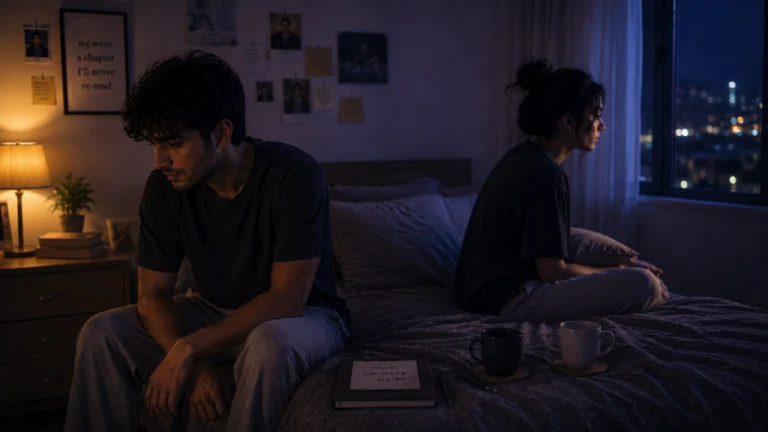

Relationship Feels Different? Why Love Doesn’t Feel the Same Anymore
Why Does It Hurt When Your Relationship Feels Different?
Maybe nothing big happened.
No huge fight.
No breakup talk.
No betrayal you can clearly point to.
No dramatic moment where everything changed.
But still, something feels different.
Maybe they still text you. Maybe you still talk every day. Maybe you still say “I love you.” Maybe from the outside, the relationship looks normal.
But inside, your heart keeps whispering:
“This does not feel the same anymore.”
And that feeling can be deeply confusing.
Because when a relationship clearly ends, the pain has a name. But when a relationship is still there and still feels different, the pain becomes harder to explain.
You may start comparing everything.
How they used to talk.
How they used to look at you.
How excited they used to be.
How natural the conversations felt.
How easy it was to feel close.
Now, even when things are “fine,” something feels missing.
And maybe that is what brought you here.
Not because you want to overthink.
But because your heart has noticed a shift your mind is still trying to understand.
Maybe Nothing Big Happened, But Something Still Feels Off
Sometimes the hardest relationship changes are not loud.
They are quiet.
A little less warmth.
A little less curiosity.
A little less effort.
A little less emotional presence.
You may still talk, but the conversations feel shorter. You may still spend time together, but the closeness feels harder to reach. You may still be in love, but love does not feel as alive as before.
And that can scare you.
Because you keep thinking:
“Is this normal?”
“Are we just getting comfortable?”
“Are they losing interest?”
“Am I bored, or am I emotionally disconnected?”
“Is this a phase, or are we slowly drifting apart?”
It can be confusing when nothing is clearly wrong, but nothing feels fully right either.
That emotional grey area is exhausting.
Because you are not sure whether to relax, repair, or prepare yourself for something painful.
When Love Changes, Your Heart Notices Before Your Mind Explains It
Your heart often notices emotional shifts before your mind has proof.
A message feels colder.
A hug feels shorter.
A conversation feels forced.
A silence feels heavier.
A normal day suddenly feels emotionally far.
And maybe when you try to explain it, you sound unsure even to yourself.
You might say:
“I don’t know… it just feels different.”
That sentence may sound vague, but it usually carries a lot of emotional information.
It can mean:
“I miss how close we were.”
“I don’t feel as wanted anymore.”
“I feel like we are going through the motions.”
“I feel like something changed in their energy.”
“I feel like I am holding onto the old version of us.”
You may not have all the words yet.
But your feelings are still trying to tell you something.
Micro Takeaway
A relationship feeling different does not always mean it is ending.
But it does mean something inside the connection needs attention.
Your heart is not being dramatic for noticing the shift. It may simply be asking you to look closer.
What Does It Mean When Your Relationship Feels Different?
When your relationship feels different, it usually means something has changed in the emotional experience of the relationship.
It may be the effort.
It may be the warmth.
It may be the communication.
It may be the emotional safety.
It may be your own needs.
It may be your partner’s energy.
It may be the relationship moving into a new phase.
The important thing is this:
Different does not automatically mean bad.
But different should not be ignored when it starts feeling emotionally lonely, cold, confusing, or one-sided.
A relationship can change healthily.
But it can also change as the emotional connection fades.
The real work is understanding which one is happening.
It May Mean Emotional Intimacy Has Changed
Emotional intimacy is the feeling that your heart has a place inside the relationship.
It is the comfort of being known.
Not just seen.
Not just contacted.
Not just claimed.
Known.
When emotional intimacy is strong, you feel safe being honest. You feel like your moods matter. You feel like your partner wants to understand what is happening inside you.
When emotional intimacy changes, the relationship may continue, but the emotional depth starts to feel weaker.
You may still talk, but not about what really matters.
You may still be together, but not feel emotionally close.
You may still care, but not feel deeply connected.
That is why the relationship can feel different even when the relationship status has not changed.
The label is still there.
But the emotional experience has shifted.
It May Mean the Relationship Has Moved From Excitement to Routine
Sometimes a relationship feels different because the early excitement has naturally softened.
In the beginning, everything feels intense.
Every message feels special.
Every meeting feels exciting.
Every conversation feels new.
Every small gesture feels meaningful.
There is mystery, curiosity, nervousness, discovery.
But over time, relationships become more familiar.
You know each other’s habits.
You repeat similar conversations.
Life responsibilities enter the picture.
The relationship becomes part of daily life.
This is not automatically a bad thing.
Healthy love often becomes calmer with time.
But here is the important difference:
Calm love should still feel warm.
It may not feel as intense as the beginning, but it should not feel emotionally empty.
Comfort should not become carelessness.
Routine should not become emotional absence.
Stability should not mean the relationship stops feeling alive.
It May Mean Something Is Unspoken Between You
Sometimes a relationship feels different because something is sitting between you.
Not loudly.
Quietly.
Maybe there was a conflict that never fully healed.
Maybe one of you felt hurt but did not express it clearly.
Maybe a need was ignored.
Maybe a disappointment got buried.
Maybe both of you moved on practically, but emotionally, something stayed unresolved.
And now, the relationship feels changed.
Not because love disappeared.
But because emotional safety got affected.
When something remains unspoken for too long, it does not vanish. It often turns into distance.
You become more careful.
They become less open.
You both avoid certain topics.
The connection becomes polite, but less emotionally free.
And slowly, love starts feeling different.
Example
You still talk every day.
But the conversations feel shorter, safer, and less emotionally alive.
Earlier, you could talk about anything: random things, deep things, silly things, emotional things.
Now, you both talk enough to keep the relationship moving, but not enough to feel close.
Maybe you ask, “How was your day?”
They answer, “Fine.”
You ask, “What happened?”
They say, “Nothing much.”
And that’s it.
No emotional depth. No real curiosity. No softness that makes you feel connected.
Technically, communication exists.
But emotionally, something feels missing.
Emotional Impact
When your relationship doesn’t feel the same anymore, you may feel anxious, unwanted, bored, confused, or scared.
You may start wondering whether you are losing them.
Or whether you are losing yourself in a relationship that no longer feels emotionally fulfilling.
You may compare the present to the beginning and feel guilty for missing the past.
You may think:
“Maybe I should be happy with what we have.”
“Maybe I expect too much.”
“Maybe this is what long-term love becomes.”
“Maybe I am the problem.”
But missing warmth is not the same as being ungrateful.
Wanting emotional closeness is not the same as chasing drama.
Sometimes you are not missing excitement.
You are missing effort.
Sometimes you are not missing the honeymoon phase.
You are missing emotional presence.
Soft Reminder
You are not wrong for missing how it used to feel.
But the goal is not only to return to the past.
The goal is to understand what the relationship needs now.
Because sometimes love does not need to go backward. It needs to grow forward with more honesty, warmth, and intention.
Signs Your Relationship Doesn’t Feel the Same Anymore
Sometimes you do not immediately know why your relationship feels different.
You just notice small emotional changes.
The relationship still exists, but the feeling has shifted.
It is like listening to a song you used to love, but somehow it does not hit the same way anymore.
You remember the feeling.
You miss the feeling.
But you cannot force it to return by pretending nothing changed.
Here are some signs your relationship doesn’t feel the same anymore.
Conversations Feel More Practical Than Emotional
You still talk.
But mostly about practical things.
Food.
Work.
College.
Plans.
Schedules.
Family.
Bills.
Updates.
Random reels.
Daily tasks.
There is nothing wrong with practical conversation. Real relationships need it.
But if everything becomes practical, the relationship can start feeling emotionally dry.
You may realize that you know what they ate, but not what they are feeling.
You know their schedule, but not their inner world.
You know what happened in their day, but not what touched them, hurt them, scared them, or made them feel alive.
That is when communication starts feeling like maintenance, not connection.
You Miss the Effort They Used to Show Naturally
This one can hurt a lot.
Because you are not asking for something impossible.
You are remembering something they once gave freely.
Maybe they used to check on you without being asked.
Maybe they used to send thoughtful messages.
Maybe they used to notice your mood.
Maybe they used to plan little things.
Maybe they used to make you feel chosen.
Now, you feel like everything has to be requested.
And when effort becomes something you have to repeatedly ask for, it stops feeling the same.
You may think:
“If they could do it before, why does it feel so hard now?”
That question can sit heavily in your heart.
Because it is not only about the action.
It is about what the action used to mean.
Affection Feels Less Warm or More Automatic
Affection can still exist and still feel different.
A hug can happen without emotional warmth.
A kiss can feel routine.
A compliment can feel rare.
An “I love you” can sound like habit rather than presence.
This does not mean your partner is fake.
But it may mean the emotional energy behind the affection has changed.
And you can feel that.
You may not want dramatic romance every day. You may not want grand gestures or constant attention.
Maybe you just miss softness.
The natural kind.
The kind that does not feel forced.
The kind that makes you feel like they still enjoy loving you.
You Feel Like You Are Both Present, But Not Really Connected
This is one of the clearest signs of relationship disconnection.
You may sit together.
Eat together.
Watch something together.
Sleep beside each other.
Text throughout the day.
But emotionally, it feels like there is a glass wall between you.
You are near, but not close.
Together, but not connected.
Available, but not emotionally present.
This is often why someone searches “relationship feels different” late at night.
Because from the outside, everything looks normal.
But inside, you feel the distance.
And it is hard to explain emotional distance when the person is technically still there.
Small Things Hurt More Than They Used To
When the connection already feels fragile, small things can start hurting more.
A delayed reply.
A distracted tone.
A forgotten detail.
A dry message.
A missed call.
A lack of excitement.
A casual “okay” when you needed warmth.
Maybe earlier, these things would not have hurt as much.
But now, they feel like signs.
Not because you want to overthink.
But because your emotional security feels weaker.
When the relationship feels safe, small mistakes feel manageable.
When the relationship feels uncertain, small mistakes feel like proof that something is wrong.
That is why your reactions may feel stronger lately.
It may not be about the small thing.
It may be about the emotional distance underneath it.
You Compare Everything to the Beginning
You keep thinking about how it used to be.
The first conversations.
The excitement.
The attention.
The way they wanted to know everything.
The way you felt sure.
The way love felt simple.
Now, you compare.
Not because you are childish.
But because the beginning represents a time when you felt wanted without needing to ask.
You miss that emotional certainty.
You miss the version of the relationship where love felt active, not assumed.
But here is the tricky part:
The beginning is not the full relationship.
It is the introduction.
So the question is not, “Can we go back to exactly how we were?”
The better question is:
“Can we create a present version of us that still feels warm, safe, and emotionally alive?”
You Feel Unsure Whether This Is Normal or a Warning Sign
This is the most confusing part.
Because relationships do change.
People get comfortable. Life gets busy. The honeymoon phase softens. Love becomes less intense and more real.
But sometimes what we call “normal change” is actually emotional distance.
So you keep going back and forth:
“Maybe this is normal.”
“Maybe I am expecting too much.”
“Maybe all relationships become like this.”
“But why do I feel so alone?”
“But why does it feel emotionally empty?”
“But why do I miss them even when they are right there?”
That confusion is valid.
And the answer is not found in one moment.
It is found in the pattern.
Does the relationship feel calmer but still warm?
Or does it feel colder, lonelier, and emotionally one-sided?
That difference matters.
Why Does My Relationship Feel Different?
If you are wondering, “Why does my relationship feel different?”, the answer may not be one simple reason.
Sometimes love changes because it is growing.
Sometimes it changes because it is being neglected.
Sometimes it changes because something was never repaired.
Sometimes it changes because one or both people are no longer emotionally showing up the way they used to.
Let’s understand the possible reasons with emotional honesty.
1. The Honeymoon Phase May Be Changing Into Real-Life Love
In the beginning, love often feels intense because everything is new.
There is curiosity.
You are discovering each other.
You are waiting for messages.
You are excited by small details.
You feel a rush because the relationship is emotionally fresh.
This stage can feel magical.
But it is not meant to stay the same forever.
Over time, love usually becomes more familiar.
The nervous excitement may soften. The constant texting may reduce. The mystery may become comfort.
That does not automatically mean love is gone.
It may simply mean the relationship is moving from excitement into real-life love.
Psychology Layer
Early relationship excitement often comes from novelty, curiosity, emotional discovery, and the pleasure of being chosen by someone new.
Your mind is highly alert to every signal.
Every message feels meaningful because the connection is still forming.
But once the relationship becomes familiar, the intensity naturally changes.
The problem begins when the relationship loses not just intensity, but also emotional care.
Because healthy long-term love may feel calmer, but it should not feel empty.
Emotional Consequence
When that early intensity fades, you may mistake calmness for lost love.
You may think:
“Why don’t I feel butterflies like before?”
“Why does it feel normal now?”
“Why am I not excited all the time?”
“Does this mean something is wrong?”
Not necessarily.
But ask yourself:
Does calm feel safe?
Or does calm feel cold?
That answer matters.
Micro Takeaway
Love feeling calmer does not always mean love is gone.
But calm should still feel emotionally warm, not empty.
2. Emotional Effort May Have Reduced
Sometimes a relationship feels different because the effort has changed.
Not the love.
The effort.
In the beginning, people often show love actively. They ask questions. They plan things. They send sweet messages. They notice moods. They try to impress, comfort, understand, and stay connected.
But later, they may start assuming the relationship will survive without those small efforts.
They stop doing what once created closeness.
And slowly, the relationship starts feeling emotionally underfed.
Behavior Explanation
One or both partners may have stopped doing the small things that created emotional connection.
Maybe there are fewer check-ins.
Less appreciation.
Less curiosity.
Less affection.
Less intentional time.
Less emotional listening.
Less effort to repair after conflict.
The relationship may not be broken, but it may be running on assumption.
And love that is always assumed but rarely expressed can start feeling distant.
Emotional Consequence
The relationship starts feeling taken for granted.
You may feel like they love you, but they no longer actively show it.
And that can hurt.
Because being chosen once is beautiful.
But in a relationship, people also need to feel chosen again and again in small ways.
3. You May Be Feeling Emotionally Disconnected
A relationship can feel different when emotional connection becomes weak.
This can happen slowly.
You stop sharing deeply.
They stop asking.
You both avoid uncomfortable conversations.
You spend time together but do not feel truly present.
You still care, but closeness feels harder to access.
This is emotional disconnection.
And it can feel very lonely.
What This Looks Like
You talk, but not deeply.
You spend time, but not meaningfully.
You care, but do not feel close.
You know each other’s routines, but not each other’s emotional state.
You are together, but your heart does not feel fully held.
This kind of disconnection can make the relationship feel different even when nothing dramatic has happened.
Because emotional closeness is not maintained by relationship status.
It is maintained by repeated moments of presence, honesty, curiosity, affection, and repair.
Emotional Consequence
The relationship exists, but the emotional connection feels weak.
You may start feeling lonely, even when you are not alone.
You may start missing your partner while they are still with you.
And that is one of the most confusing pains in love.
4. Unresolved Conflict May Be Sitting Between You
Sometimes a relationship changes because something hurtful happened and was never properly repaired.
Maybe there was a fight.
Maybe someone said something painful.
Maybe one person felt ignored.
Maybe trust got slightly damaged.
Maybe a need was dismissed.
Maybe someone apologized, but the emotional wound did not fully heal.
So you both moved on.
But not really.
The relationship continued, but the emotional safety changed.
Psychology Layer
When hurt is not repaired, people become guarded.
They may still love each other, but they start protecting themselves.
One person shares less.
The other becomes defensive.
One avoids emotional topics.
The other feels unheard.
Softness gets replaced by caution.
And over time, the relationship feels different because both people are no longer emotionally open in the same way.
Unresolved hurt does not always look like anger.
Sometimes it looks like distance.
Emotional Consequence
The relationship may feel different because emotional safety has changed.
You may not trust the connection the way you used to.
You may feel careful with your words.
You may avoid bringing up your real feelings because you fear another argument.
And when emotional safety reduces, closeness naturally becomes harder.
5. The Relationship May Have Become Routine-Based
Routine is not bad.
In fact, healthy relationships need some routine.
But when a relationship becomes only routine, it can start feeling emotionally flat.
Same talks.
Same patterns.
Same plans.
Same assumptions.
Same distracted time together.
Same “good morning” and “good night” without much emotional presence behind them.
The relationship is functioning, but not feeling.
Behavior Explanation
A routine-based relationship often happens when both people stop intentionally nurturing connection.
They assume love is there, so they stop expressing it.
They assume the relationship is stable, so they stop checking in.
They assume the other person knows they care, so they stop showing care in meaningful ways.
This is how emotional distance can grow quietly.
Not because love disappears.
But because attention disappears.
Emotional Consequence
Stability starts feeling like emotional flatness.
You may feel bored, but not because your partner is boring.
You may feel empty, but not because the relationship has no value.
You may simply be missing intentional connection.
Sometimes the relationship does not need chaos or intensity.
It needs aliveness.
It needs both people to stop moving through the motions and start emotionally choosing each other again.
6. One or Both of You May Have Changed Emotionally
People change.
Their needs change.
Their emotional awareness changes.
Their expectations change.
Their boundaries change.
Their definition of love changes.
Maybe earlier, you were okay with less communication.
Now, you need more emotional depth.
Maybe earlier, you accepted inconsistency.
Now, you want stability.
Maybe earlier, you confused attraction with connection.
Now, you want emotional safety.
This does not mean you became difficult.
It may mean you became more honest with yourself.
Psychology Layer
As people grow emotionally, they start recognizing needs they once ignored.
They may stop accepting things they used to normalize.
They may need different forms of reassurance, affection, communication, or respect.
If the relationship does not grow with them, it can start feeling different.
Not because love was fake.
But because the old dynamic no longer fits the person they are becoming.
Emotional Consequence
The old relationship pattern may no longer meet the new emotional needs.
And that can create confusion.
You may love them and still feel something is missing.
You may care about the relationship and still feel like you have outgrown certain patterns.
That is not betrayal.
That is self-awareness.
7. Your Partner May Be Emotionally Distant
Sometimes the reason your relationship feels different is that your partner has become emotionally distant.
Maybe they are quieter.
Less affectionate.
Less curious.
Less available.
Less emotionally responsive.
They may still be present, but something in their energy feels far away.
This can make you feel anxious because you are not just noticing a general relationship shift.
You are noticing their withdrawal.
Reality Check
If the difference is mostly coming from their emotional distance, the issue needs honest attention.
Maybe they are stressed.
Maybe they are overwhelmed.
Maybe they are avoiding something.
Maybe they do not know how to talk about feelings.
Maybe they are emotionally checking out.
You do not need to assume the worst immediately.
But you also should not ignore the pattern.
A partner feeling emotionally distant can change the entire emotional atmosphere of a relationship.
Internal Link
If this feels like your situation, you may want to read:
Partner Emotionally Distant? Why They Feel Far Away Even When They Stay
Because sometimes the relationship feels different because one person is still reaching for closeness while the other has slowly started pulling away.
Is It Normal for a Relationship to Feel Different Over Time?
Yes, it is normal for a relationship to feel different over time.
No relationship stays exactly like the beginning.
But here is the deeper truth:
A relationship can change and still feel healthy.
It can also change because emotional connection is fading.
So the question is not only, “Is change normal?”
The better question is:
“What kind of change is this?”
Yes, Some Change Is Normal
Healthy love often becomes less intense and more stable.
You may not feel the same nervous excitement before every message.
You may not talk all night like you did in the beginning.
You may become more comfortable with silence.
You may stop performing your best version all the time.
You may become more real with each other.
This kind of change can be beautiful.
It means the relationship is moving from constant excitement into deeper familiarity.
But healthy familiarity should still include warmth.
It should still include care.
It should still include emotional presence.
It should still make you feel safe.
But Different Should Not Mean Emotionally Empty
This is where you need to be honest.
A relationship feeling different is normal.
A relationship feeling emotionally empty is not something to ignore.
If “different” means calmer, safer, more mature, more grounded — that can be healthy.
But if “different” means colder, lonelier, more one-sided, more confusing, more emotionally distant — then it needs attention.
Do not let people convince you that emotional emptiness is just what happens in long-term love.
It is not.
Real love may become less dramatic.
But it should not become emotionally dead.
You are not asking for butterflies every second.
You are asking for warmth, effort, and emotional connection.
That is reasonable.
The Difference Between Healthy Change and Emotional Disconnection
| Healthy Change | Emotional Disconnection |
| The relationship feels calmer but still safe | The relationship feels cold or lonely |
| Effort becomes more stable | Effort becomes rare |
| Conversations become comfortable | Conversations become shallow |
| You feel secure even without constant excitement | You feel unsure, unwanted, or emotionally alone |
| Both partners still care about repair | One person avoids or dismisses emotional needs |
| Affection feels natural, even if less intense | Affection feels forced, reduced, or absent |
| You can talk about changes honestly | Talking about changes creates defensiveness or silence |
Emotional Clarity
A relationship can feel different and still be healthy.
But if it feels different because connection, effort, warmth, and emotional safety are fading, it needs attention.
Do not panic immediately.
But do not silence your heart either.
Does a Relationship Feeling Different Mean It Is Ending?
Not always.
A relationship feeling different does not automatically mean it is ending.
Sometimes it means the relationship is entering a new phase.
Sometimes it means the relationship needs repair.
Sometimes it means both people have become too comfortable and need to bring back emotional intention.
But sometimes, yes, it can mean that something deeper is being avoided.
The goal is not to jump to conclusions.
The goal is to look honestly.
Not Always
Sometimes the relationship feels different because the beginning phase has softened.
You may be moving from excitement into comfort.
You may be adjusting to real life.
You may be learning each other beyond the romantic version.
You may be seeing the relationship more clearly now.
That is not necessarily bad.
Love does not have to feel intense all the time to be real.
Sometimes healthy love feels calm, steady, safe, and less dramatic.
But again, calm should still feel emotionally connected.
If the relationship feels different but still kind, safe, caring, and mutual, it may simply be growing.
Sometimes It Means the Relationship Needs Repair
Maybe the relationship is not ending.
Maybe it is asking for attention.
Maybe both of you have stopped checking in emotionally.
Maybe unresolved hurt has created distance.
Maybe routine has replaced romance.
Maybe practical life has taken over emotional intimacy.
Maybe you both still care, but you have stopped actively nurturing the connection.
In that case, the relationship does not need panic.
It needs repair.
Repair means naming what changed.
Listening without defensiveness.
Making small changes consistently.
Bringing back emotional presence.
Choosing each other again, not just assuming the relationship will continue on its own.
Sometimes It Means You Are Avoiding a Truth
This part is harder.
Sometimes a relationship feels different because something important has changed and nobody wants to admit it.
Maybe one person is emotionally pulling away.
Maybe the connection has become one-sided.
Maybe you are staying attached to the past.
Maybe love still exists, but emotional safety does not.
Maybe you are trying to revive a relationship that both people are not equally willing to repair.
That truth can hurt.
But avoiding it hurts longer.
Reality Check
If you feel emotionally alone, unheard, unwanted, or like you are carrying the relationship by yourself, the “different feeling” may be a serious signal.
Not because every relationship has to feel perfect.
But because love should not regularly make you feel invisible.
A relationship can go through difficult phases.
But if one person keeps trying and the other keeps avoiding, the problem becomes deeper than a phase.
Emotional Clarity Line
The question is not only:
“Does it feel different?”
The question is:
“Do both of you care enough to understand why?”
Because when both people care, a relationship can often be repaired.
But when only one person cares, the relationship becomes emotionally lonely.
What to Do When Your Relationship Feels Different
When your relationship feels different, your first instinct may be to panic.
You may want to ask repeatedly, “Are we okay?”
You may want to become extra loving so they come closer.
You may want to ignore the feeling because you are scared of what it might mean.
But the healthiest response is not panic or denial.
It is clarity.
You need to understand what changed, what it means, and whether both people are willing to repair it.
Step 1: Identify What Actually Changed
“Different” is a feeling.
But to understand it, you need to name the shift.
What exactly feels different?
Is it their effort?
Their tone?
The conversations?
The affection?
The emotional safety?
The time you spend together?
The way conflicts are handled?
The way you feel around them?
When you name the specific change, the situation becomes less overwhelming.
Ask Yourself
Did the effort change?
Did communication change?
Did affection change?
Did emotional safety change?
Did your needs change?
Did your partner’s behavior change?
Did unresolved conflict create distance?
Did the relationship become more routine than emotionally alive?
Did you stop feeling like yourself in the relationship?
These questions help you move from vague anxiety to emotional clarity.
Why This Matters
“Different” is a feeling.
To repair it, you need to name the specific shift.
Because you cannot fix “something feels off” until you understand what “off” actually means.
Maybe the issue is not love.
Maybe it is lack of quality time.
Maybe it is unresolved hurt.
Maybe it is emotional distance.
Maybe it is reduced effort.
Maybe it is your own emotional needs becoming clearer.
Naming it is the first step toward understanding it.
Step 2: Separate Normal Change From Emotional Neglect
Not every change is emotional neglect.
But not every change should be excused as “normal.”
You need to separate the two.
Normal Change
Normal change may look like:
Less constant texting.
More comfort.
Less nervous excitement.
More real-life routine.
Fewer butterflies, but more stability.
Less mystery, but more emotional safety.
A calmer kind of love.
This can be healthy if the relationship still feels caring, respectful, warm, and emotionally present.
Emotional Neglect
Emotional neglect may look like:
Repeatedly feeling unseen.
Feeling dismissed when you express needs.
Feeling lonely inside the relationship.
Feeling like affection has disappeared.
Feeling like your partner no longer cares to understand you.
Feeling like you are always the one trying to reconnect.
This is different.
This is not just the honeymoon phase ending.
This is emotional disconnection.
Emotional Reassurance
You are not dramatic for noticing the difference.
You are trying to understand what your heart is reacting to.
And that is emotionally mature.
Ignoring your feelings does not make you secure.
Listening to them with honesty does.
Step 3: Talk About the Shift Without Blaming
Once you understand what feels different, talk about it.
But try to talk from honesty, not accusation.
Not because your hurt is small.
But because the goal is to open a real conversation, not start a war.
You can be soft and still be clear.
You can be kind and still be honest.
You can express pain without attacking.
Conversation Script
“I don’t want to fight, but I’ve been feeling like something between us feels different lately. I miss how connected we used to feel, and I want to understand what changed for both of us.”
This line works because it names the emotional shift without blaming one person completely.
It says:
“I feel something.”
“I miss us.”
“I want to understand.”
“I want honesty.”
That gives the relationship a chance to respond.
Why This Works
It invites honesty without attacking.
It also focuses on connection, not criticism.
Instead of saying:
“You changed.”
You are saying:
“Something between us feels different.”
That small difference can make the conversation safer.
But remember:
A good script can open the door.
It cannot force someone to walk through it.
Their response will tell you a lot.
Step 4: Ask Whether They Feel It Too
After sharing your experience, ask if they feel the shift too.
This matters because the relationship may feel different for both of you, but in different ways.
Maybe they also feel distant.
Maybe they have been stressed.
Maybe they felt hurt but did not know how to say it.
Maybe they thought you were the one pulling away.
Maybe both of you have been silently waiting for the other person to notice.
Honest questions can reveal what silence hides.
Better Questions to Ask
“Have you felt any change between us?”
“Do you feel emotionally close to me lately?”
“Is there something we have been avoiding?”
“What do you miss about us?”
“What would help us feel closer again?”
“Do you feel like we are both showing up emotionally?”
“Is there anything you need from me that you have not said clearly?”
These questions are not about interrogation.
They are about emotional truth.
And sometimes, one honest answer can explain months of confusion.
Step 5: Rebuild the Emotional Connection Intentionally
If both of you agree that the relationship feels different and both want to repair it, start small.
Do not expect one conversation to bring everything back.
Connection usually returns through repeated emotional effort.
Not pressure.
Not performance.
Effort.
Bring Back Emotional Curiosity
Ask deeper questions again.
Not only:
“What did you do today?”
But:
“What has been on your mind lately?”
“What has been making you feel stressed?”
“Have you felt loved by me recently?”
“What do you miss about us?”
“What would make you feel closer to me?”
Emotional curiosity tells your partner:
“I still want to know you.”
And sometimes that is exactly what a disconnected relationship needs.
Create Phone-Free Presence
Time together does not automatically create closeness.
You can spend hours together and still feel disconnected if both people are distracted.
Try creating small pockets of undivided attention.
No scrolling.
No half-listening.
No checking messages while the other person is speaking.
Even 20 minutes of real presence can feel more intimate than an entire day of distracted togetherness.
Repair Unspoken Hurt
If something hurt you, say it.
If something hurt them, listen.
If a fight was never repaired, return to it gently.
Not to restart the argument.
But to heal what remained.
Unspoken hurt often becomes emotional distance.
So repair is not about proving who was right.
It is about understanding what got damaged between you.
Reintroduce Small Warmth
Small things matter.
A thoughtful message.
A real compliment.
A soft hug.
A sincere “I missed you.”
A small plan.
A check-in.
A moment of appreciation.
These things may seem simple, but they rebuild emotional safety.
Love does not always need big gestures.
Sometimes it needs consistent small reminders that both people still care.
Step 6: Watch Whether Both People Participate
This is important.
You cannot rebuild connection alone.
You can start the conversation.
You can express your feelings.
You can make effort.
You can bring softness.
But if the other person does not participate, the relationship will still feel lonely.
Repair requires two people.
Signs the Relationship Can Improve
Both people listen.
Both acknowledge the shift.
Both make effort.
Both want closeness back.
Both stop pretending everything is fine.
Both take responsibility for their part.
Both show curiosity about each other again.
Both are willing to repair instead of avoid.
These signs mean the relationship may not be broken.
It may simply need emotional care.
Signs the Issue Is Deeper
Only one person tries.
One partner dismisses the concern.
Nothing changes after repeated conversations.
The relationship keeps feeling colder.
Your needs keep getting minimized.
You feel anxious bringing up emotional topics.
Your partner only makes effort when they fear losing you.
These signs need honesty.
Because a relationship cannot become close again if only one person is emotionally present.
Step 7: Decide What the Difference Is Teaching You
Sometimes the difference is a signal to repair.
Sometimes it is a signal to grow.
Sometimes it is a signal to have a conversation you have been avoiding.
Sometimes it is a signal that the relationship needs more emotional effort.
And sometimes, it is a signal that something has changed in a way you cannot ignore anymore.
Reflection Question
Is the relationship asking for repair, deeper honesty, more effort — or acceptance that something has truly changed?
Sit with that gently.
You do not need to decide everything instantly.
But you do need to stop pretending your feelings are meaningless.
They are not.
Your emotional discomfort may be pointing toward a truth that needs your attention.
Common Mistakes When Your Relationship Feels Different
When a relationship feels different, it is easy to react from fear.
You may overthink.
You may compare.
You may chase.
You may pretend.
You may blame yourself.
You may try to force the old version of the relationship back.
These reactions are human.
But some of them can make the disconnection worse.
Mistake 1: Pretending Everything Is Fine
Pretending can feel safer in the moment.
You avoid the conversation.
You avoid possible conflict.
You avoid hearing something painful.
You tell yourself, “Maybe it will fix itself.”
And sometimes, yes, small rough patches pass.
But if the feeling keeps returning, silence will not heal it.
Why It Is Harmful
Silence can turn emotional distance into a long-term pattern.
When you keep pretending, the relationship may continue functioning on the surface while becoming emptier inside.
You may start feeling resentful.
They may assume nothing is wrong.
And the emotional gap grows quietly.
Pretending does not protect love.
Honest care does.
Mistake 2: Comparing Everything to the Beginning
It is natural to miss the beginning.
The beginning often feels magical because everything is new and emotionally intense.
But comparing every present moment to the beginning can make you feel like the relationship is failing even when it is simply changing.
Why It Is Harmful
The beginning was not the full relationship.
It was the introduction.
Real love has to exist after the excitement softens.
So the goal is not to recreate every early feeling.
The goal is to build a current relationship that still feels warm, safe, and emotionally alive.
You can honor the beginning without expecting the relationship to stay frozen there.
Mistake 3: Forcing the Old Version of the Relationship Back
Sometimes you may try to bring back the old version.
You recreate old conversations.
You expect old habits.
You want them to act exactly like before.
You want the same intensity, same excitement, same constant attention.
This is understandable.
You miss what felt good.
But forcing the past can create pressure instead of closeness.
Why It Is Harmful
You may miss what was real before, but the relationship needs to grow, not only repeat the past.
The old version existed in a different phase.
Now, the question is:
“What does love need to look like here?”
Maybe the relationship needs deeper honesty.
Maybe it needs better repair.
Maybe it needs more mature emotional habits.
Maybe it needs a new kind of closeness.
Not the same as before.
But still real.
Mistake 4: Blaming Yourself for the Shift
When your relationship feels different, you may immediately look inward.
Maybe I became boring.
Maybe I changed.
Maybe I asked for too much.
Maybe I ruined the vibe.
Maybe I am overthinking everything.
Self-reflection is good.
Self-blame is not.
A relationship is created by two people.
If something feels different, both people need to look at the dynamic.
Why It Is Harmful
A relationship changing does not automatically mean you failed.
Sometimes life changed.
Sometimes emotional needs changed.
Sometimes effort reduced.
Sometimes your partner pulled away.
Sometimes unspoken issues built distance.
You can own your part without carrying the entire relationship on your shoulders.
That is an important difference.
Mistake 5: Ignoring Emotional Distance Because There Is Still Love
This is a big one.
You may tell yourself:
“But we still love each other.”
And maybe you do.
But love alone does not always mean the relationship is emotionally healthy.
Love can exist while effort fades.
Love can exist while communication weakens.
Love can exist while emotional safety disappears.
Love can exist while one person feels lonely.
Why It Is Harmful
Love can exist while connection is fading.
Both need attention.
If you use love as a reason to ignore emotional distance, the relationship may keep going but keep hurting.
The goal is not only to ask, “Do we love each other?”
The deeper question is:
“Do we know how to make each other feel loved?”
That question changes everything.
Mistake 6: Waiting Without Clarity
Waiting can feel like patience.
But sometimes waiting becomes avoidance.
You keep hoping things will go back to normal.
You keep waiting for them to notice.
You keep waiting for the warmth to return.
You keep waiting for the relationship to feel like before.
But nothing changes because nobody is naming the problem.
Why It Is Harmful
Waiting can become self-abandonment if nothing is being repaired.
Patience is healthy when both people are trying.
But patience becomes painful when you are silently suffering while the other person stays emotionally comfortable.
You do not need to rush.
But you do need clarity.
When a Relationship Feeling Different Becomes a Serious Sign
A relationship feeling different is not automatically a serious warning sign.
But sometimes it becomes one.
Especially when the difference is not just calmer love, but emotional disconnection, repeated loneliness, or one-sided effort.
Here are signs you should pay attention to.
You Feel Emotionally Alone Most of the Time
If you feel lonely more often than loved, something needs attention.
Maybe they are physically present.
Maybe you still talk.
Maybe the relationship still exists.
But emotionally, you feel alone.
That is not something to normalize.
A relationship should not make loneliness feel like your default emotional state.
Your Partner Refuses to Talk About What Changed
If you try to bring up the shift and your partner keeps avoiding, dismissing, or shutting down, repair becomes difficult.
A relationship cannot heal what one person refuses to acknowledge.
You do not need them to have perfect answers.
But they should be willing to understand why you feel this way.
Refusal to talk is not emotional safety.
It is avoidance.
The Relationship Feels Like Routine Without Warmth
Routine is normal.
But routine without warmth can feel empty.
If you are only going through daily motions without emotional presence, the relationship may start feeling like a habit instead of a connection.
You may still be together.
But togetherness without warmth can feel painfully lonely.
You Are Always the One Trying to Reconnect
You bring up the issue.
You suggest quality time.
You ask deeper questions.
You initiate repair.
You notice distance.
You try to bring back closeness.
And they just respond passively.
That kind of one-sided emotional work becomes exhausting.
A relationship cannot stay emotionally alive if only one person keeps breathing life into it.
You Feel More Anxious Than Safe
Love can bring vulnerability.
But it should not keep you in constant anxiety.
If you are always decoding tone, messages, silence, mood, distance, and effort, your nervous system may be living in uncertainty.
That is not emotional safety.
A healthy relationship may have problems, but it should not make you feel like you are always waiting for proof that you still matter.
Your Needs Keep Getting Dismissed
If you express what you need and they repeatedly dismiss it, that matters.
Maybe they say:
“You’re overthinking.”
“You always need something.”
“Everything is fine.”
“You are too sensitive.”
“You’re making this a big deal.”
These responses can make you doubt your own emotional reality.
But needing connection is not a problem.
Being dismissed for needing connection is the problem.
You Keep Missing the Past Because the Present Feels Empty
Missing the past occasionally is normal.
But if you constantly live emotionally in “how it used to be,” it may mean the present is not meeting your heart anymore.
You may be attached to the memory of the relationship more than the current experience of it.
That is painful to admit.
But it can also be clarifying.
Because love cannot only live in old screenshots, old memories, and old versions of someone.
It has to exist in the present too.
When Should You Walk Away If Your Relationship Doesn’t Feel the Same?
Walking away is not a small decision.
Especially when love still exists.
You may feel torn because part of you remembers the good days. Part of you hopes the old connection will return. Part of you wonders if leaving would mean giving up too soon.
So let’s be gentle and honest.
You do not need to walk away just because your relationship feels different.
But you may need to walk away if the relationship keeps hurting you, shrinking you, or making you feel emotionally unsafe after you have tried to repair it.
Walk Away When “Different” Becomes Emotionally Painful Every Day
If every day feels heavy, uncertain, lonely, or emotionally cold, the relationship may no longer be just “different.”
It may be damaging your peace.
Love should not make you feel like you are constantly waiting for warmth.
A difficult phase can happen.
But if emotional pain becomes the normal atmosphere of the relationship, you need to ask what staying is costing you.
Walk Away When Repair Is One-Sided
If you are the only one trying to understand the shift, the relationship cannot heal properly.
You cannot repair emotional distance alone.
You cannot create closeness alone.
You cannot carry both people’s responsibility.
If they know you are hurting and still do not participate in repair, that tells you something important.
Not about your worth.
About their willingness.
Walk Away When You Keep Shrinking Your Needs to Keep the Relationship
Maybe you stop asking for reassurance.
Then you stop asking for quality time.
Then you stop asking for emotional depth.
Then you stop saying when something hurts.
Then you stop expecting warmth.
And slowly, you become “low maintenance” by abandoning your own emotional needs.
That is not a healthy compromise.
That is self-erasure.
A relationship should not require you to become emotionally smaller just to keep it alive.
Walk Away When Love Exists, But Emotional Safety Does Not
This is one of the hardest truths in relationships.
You can love someone and still not feel emotionally safe with them.
You can miss them and still know they are hurting you.
You can have beautiful memories and still admit the present is painful.
You can care deeply and still choose yourself.
Love matters.
But emotional safety matters too.
If the relationship repeatedly makes you feel unseen, unheard, anxious, and alone, love alone may not be enough to make it healthy.
Emotional Reality Check
You can miss how the relationship used to feel and still admit that the present version is hurting you.
That does not make you disloyal.
It makes you honest.
And sometimes honesty is the first step back to yourself.
Decision Signal
If the relationship repeatedly costs you your peace, confidence, voice, and self-respect, the question is no longer only:
“Can we go back to how it was?”
The better question becomes:
“Can this relationship become emotionally healthy now?”
Because the past may have been beautiful.
But you are living in the present.
And the present needs to feel safe too.
Can a Relationship Feel Close Again After Feeling Different?
Yes, a relationship can feel close again after feeling different.
But only if both people are willing to notice the shift and rebuild connection intentionally.
Closeness does not usually return by accident.
It returns through honesty, emotional effort, repair, and small, consistent moments of care.
The relationship may not feel exactly like the beginning again.
But it can become warm in a new way.
Sometimes even deeper.
More mature.
More honest.
More emotionally aware.
But again, both people have to participate.
Yes, If Both People Are Willing to Notice the Shift
The first step is awareness.
Both people need to stop pretending everything is fine if it is not.
You need to be able to say:
“We feel different lately.”
“I miss our closeness.”
“I think we have been distant.”
“I want to understand what changed.”
“I want us to reconnect.”
That kind of honesty can feel scary.
But it can also be healing.
Because once something is named, it can be worked on.
Yes, If Both People Rebuild Emotional Habits
A relationship becomes close again through habits.
Not just one big conversation.
Small repeated emotional actions matter.
Checking in.
Listening fully.
Spending undistracted time.
Repairing after conflict.
Showing appreciation.
Being affectionate with intention.
Asking deeper questions.
Making the other person feel emotionally considered.
These small habits rebuild trust.
They tell the heart:
“We are not just existing together. We are choosing each other.”
No, If Only One Person Keeps Trying
This part needs honesty.
A relationship cannot feel close again if only one person is doing the emotional work.
One person cannot carry all the effort.
One person cannot be the only one noticing distance.
One person cannot be the only one repairing, asking, adjusting, and hoping.
That does not create intimacy.
It creates loneliness.
If only you are trying, the relationship may keep feeling different no matter how much love you pour into it.
Because connection needs mutual movement.
What Real Reconnection Looks Like
Real reconnection is not only a good day after a hard conversation.
It is not one sweet message after weeks of distance.
It is not one date night followed by the same emotional emptiness.
Real reconnection looks like:
More honest conversations.
More emotional presence.
More repair after conflict.
More consistent effort.
More warmth without being chased.
More willingness to understand each other.
More care in small daily moments.
More safety when difficult feelings are shared.
And most importantly, reconnection feels steady.
Not perfect.
Steady.
That steadiness is what helps love feel safe again.
Final Thoughts: Different Does Not Always Mean Over
If your relationship feels different, it does not automatically mean love is gone.
But it does mean your heart is noticing a shift that deserves honesty, care, and emotional attention.
Maybe this is a normal transition from early excitement to deeper love.
Maybe the relationship has become too routine-based and needs intentional warmth again.
Maybe there is unresolved hurt sitting between you.
Maybe your emotional needs have changed.
Maybe your partner has become emotionally distant.
Maybe the relationship needs repair.
Or maybe you are slowly realizing that the present version of the relationship no longer feels emotionally healthy for you.
Whatever the truth is, you do not have to shame yourself for noticing.
You do not have to call yourself dramatic because something feels off.
You do not have to silence your heart just because nothing “big” happened.
Sometimes the biggest shifts in relationships are quiet.
And sometimes your heart feels them before your life can explain them.
Emotional Closure
If your relationship feels different, pause before panicking.
But also pause before dismissing yourself.
Ask what changed.
Ask what your heart is missing.
Ask whether both of you are willing to understand the distance.
Ask whether the relationship still feels emotionally safe, not just familiar.
Different does not always mean over.
But different does deserve attention.
Because love should not only survive.
It should still feel emotionally alive enough for both people to feel seen, wanted, and safe.
If the difference feels like emotional distance from your partner, you may also want to read:
Partner Emotionally Distant? Why They Feel Far Away Even When They Stay
Because sometimes a relationship starts feeling different when one person is still present, but the emotional closeness has quietly started fading.