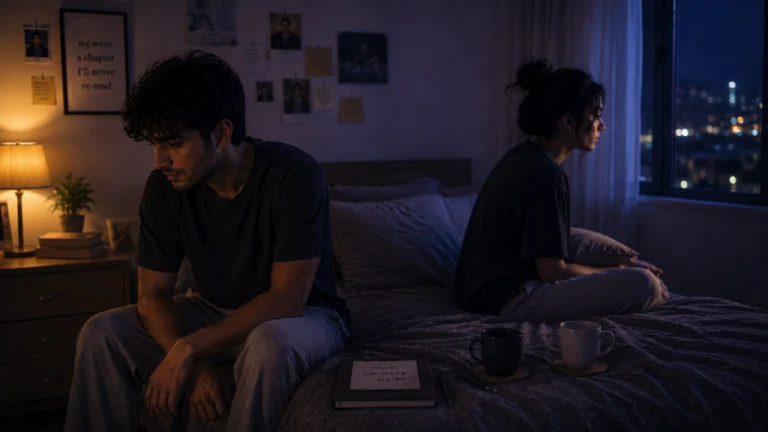

Partner Emotionally Distant? Why They Feel Far Away Even When They Stay
Why Does It Hurt So Much When Your Partner Feels Emotionally Distant?
Maybe they are still there.
They still reply. They still say “I love you.” They still sit beside you, make normal conversation, maybe even act like everything is fine.
But something feels different.
Their warmth feels less natural. Their attention feels divided. Their eyes do not stay on you the way they used to. Their words are there, but the emotional closeness feels missing.
And that is what hurts the most.
When your partner is emotionally distant, the pain is confusing because nothing may have officially ended. There may be no breakup, no dramatic fight, no clear reason you can point to and say, “This is what changed.”
But your heart knows something has shifted.
You may keep asking yourself:
“Are they losing interest?”
“Did I do something wrong?”
“Are they just stressed?”
“Should I give them space?”
“Am I overthinking?”
“Why do they feel so far away when they are still with me?”
That uncertainty can make you feel emotionally restless.
Because when someone leaves clearly, it hurts. But when someone stays and still feels far away, it creates a different kind of pain.
You do not know whether to hold on tighter or slowly prepare yourself for loss.
Maybe They Are Still There, But Something Feels Missing
Sometimes emotional distance does not look like absence.
It looks like someone being present without being emotionally available.
They may still talk to you, but the conversations feel dry.
They may still spend time with you, but it feels like their mind is somewhere else.
They may still say they care, but their energy does not feel caring.
And maybe that is why you feel so confused.
Because technically, they have not left.
But emotionally, it feels like they are no longer reaching for you.
You may miss the version of them who used to ask questions, notice little things, send random messages, laugh with you freely, and make you feel chosen without you having to ask.
Now, you may feel like you are trying to reach someone who is standing right in front of you, but still somehow far away.
That kind of distance is quiet, but it can be deeply painful.
Emotional Distance Can Feel Like Rejection, Even When Nothing Officially Changed
When your partner feels distant lately, your mind may start filling in the blanks.
Maybe they are bored.
Maybe they do not love me like before.
Maybe they found someone else.
Maybe I am too much.
Maybe they are tired of me.
Maybe this relationship is slowly ending.
This is why emotional distance can feel like rejection.
Not because your partner has necessarily rejected you directly, but because their change in energy makes you feel emotionally unwanted.
And when you care deeply, even small shifts can feel huge.
A shorter reply.
A colder tone.
A delayed response.
A missing hug.
A conversation that ends too quickly.
A look that feels less soft than before.
To someone outside the relationship, these things may look small.
But to the person feeling the distance, they can feel like emotional proof that something is slipping away.
And maybe you are not trying to be dramatic.
Maybe you are just trying to understand why the person who once felt like home now feels emotionally hard to reach.
Micro Takeaway
An emotionally distant partner does not always mean the relationship is ending.
But it does mean the connection needs honest attention.
Their distance is not proof that you are unlovable. But it is information. And if something inside the relationship feels far away, it deserves to be understood instead of ignored.
What Does It Mean When Your Partner Is Emotionally Distant?
When your partner is emotionally distant, it usually means there is a gap between their physical presence and their emotional presence.
They may be with you, but not fully open.
They may care, but not show it in a way that reaches you.
They may be struggling internally, avoiding vulnerability, carrying stress, or slowly disconnecting from the relationship.
The difficult part is this:
Emotional distance can have many reasons.
That is why you should not immediately panic, but you also should not dismiss what you feel.
Your heart may be noticing a pattern before your partner has the words to explain it.
It Means They May Be Present, But Not Emotionally Available
Physical presence is when someone is around you.
Emotional presence is when someone is actually with you.
There is a difference.
A partner can sit beside you and still feel unavailable. They can hear your words and still not understand your emotions. They can spend hours with you and still not make you feel close.
You may notice this when you try to share something vulnerable and they respond with a small “hmm.”
Or when you talk about your feelings and they immediately change the topic.
Or when they are physically there, but emotionally checked out.
This can make you feel lonely even inside the relationship.
Because what you need is not just their body in the room.
You need their attention, warmth, curiosity, and care.
It Means Emotional Intimacy May Be Fading
Emotional intimacy is the feeling of being connected from the inside.
It is not just romance.
It is not only physical affection.
It is the comfort of knowing, “I can be real with this person.”
When emotional intimacy is strong, you feel safe sharing your fears, moods, insecurities, dreams, and small emotional details.
When emotional intimacy fades, everything starts becoming surface-level.
You may still talk, but not deeply.
You may still meet, but not feel close.
You may still say goodnight, but the emotional warmth behind it feels weaker.
This is often where relationship disconnection begins.
Not with a breakup.
Not with betrayal.
But with a slow loss of emotional access.
You stop feeling like you know what is really happening inside them.
And even worse, you start feeling like they no longer want to know what is happening inside you.
It Means Something May Be Unspoken Between You
Sometimes emotional distance appears when something is being avoided.
Maybe there was a fight that never fully healed.
Maybe one person felt hurt but never said it clearly.
Maybe resentment has built quietly.
Maybe the relationship has changed, but no one wants to name it.
Maybe your partner is afraid that if they open one emotional door, too many difficult feelings will come out.
So they stay silent.
They act normal.
They say, “Nothing is wrong.”
But their energy says something else.
And that mixed signal can make you feel emotionally unstable.
Because words say one thing, behavior says another.
Example
They say:
“I’m fine.”
But their energy feels different.
They are with you, but not really with you.
They answer your questions, but do not continue the conversation.
They say they are busy, but even when they have time, they do not feel emotionally present.
They say nothing has changed, but your heart can feel that something has.
This is where you may start questioning yourself.
“Am I imagining this?”
But sometimes you are not imagining it.
Sometimes your body notices emotional distance before your partner admits it.
Emotional Impact
When your partner starts feeling emotionally distant, you may feel anxious, unwanted, or confused.
You may feel like you are chasing a version of them that used to exist.
You may start trying harder.
You become sweeter. More available. More careful. More understanding. More patient.
You may keep hoping that if you love them correctly, they will become warm again.
But that can become exhausting.
Because love should not feel like a constant attempt to bring someone back emotionally.
Soft Reminder
You are not crazy for noticing emotional distance.
Sometimes the heart notices changes before words confirm them.
And you are allowed to pay attention to that feeling without immediately blaming yourself.
Signs Your Partner Is Emotionally Distant
Emotional distance is not always loud.
Sometimes it shows up in small changes that slowly start hurting.
One day, you realize the relationship still exists, but the closeness feels thinner.
You still have access to them, but not intimacy.
You still talk, but not in the way that makes your heart feel safe.
Here are some signs your partner is emotionally distant.
They Reply, But the Warmth Feels Gone
They may still message you.
But the energy feels different.
Earlier, their replies may have felt warm, curious, playful, or emotionally present.
Now, they may feel short, dry, practical, or forced.
You may get replies like:
“Okay.”
“Hm.”
“Busy.”
“Later.”
“Nothing.”
“Yeah.”
And maybe it is not about one message.
It is the pattern.
You feel like they are responding, but not connecting.
They are communicating, but not reaching for you emotionally.
That difference matters.
Because a relationship can have daily conversation and still lack emotional closeness.
They Avoid Deep Conversations
When you try to talk about feelings, they shut down.
When you ask what is wrong, they say “nothing.”
When you bring up the relationship, they get irritated, silent, distracted, or defensive.
They may talk about casual things, but avoid anything emotionally meaningful.
This can make you feel like you are standing at the door of a conversation they refuse to open.
And after a while, you may stop trying.
Not because you no longer care.
But because every attempt to go deeper feels like emotional rejection.
They Seem Distracted Even When They Are With You
You may be sitting together, but they are scrolling.
You may be talking, but they are half-listening.
You may be sharing something important, but their attention keeps drifting.
And maybe when you point it out, they say:
“I’m listening.”
But listening is not only about hearing words.
Listening is also about presence.
It is about making the other person feel like their words matter.
When someone is always physically near but mentally absent, emotional distance starts feeling heavier.
You are together, but you feel alone.
They Stop Asking About Your Inner World
This is one of the quieter signs.
They may still ask practical questions:
“Did you eat?”
“Did you reach home?”
“What are you doing?”
“How was work?”
But they stop asking emotional questions:
“How are you really feeling?”
“What has been heavy lately?”
“Is something bothering you?”
“What do you need from me?”
“Have you been okay with us?”
When someone stops being curious about your inner world, you can start feeling emotionally unseen.
And that can hurt deeply.
Because love is not just knowing someone’s routine.
It is wanting to know their heart.
Affection Feels Forced, Reduced, or Routine-Based
Affection may still exist, but it feels different.
The hug feels shorter.
The kiss feels automatic.
The compliment feels rare.
The warmth feels like something they have to remember, not something that naturally comes from them.
Maybe you do not even want grand romance.
You just miss softness.
You miss the small emotional gestures that used to make you feel loved.
A gentle check-in.
A random message.
A hand held without asking.
A look that said, “I’m here.”
A little effort that made you feel chosen.
When affection becomes routine-based, the relationship may still look okay.
But emotionally, you may feel hungry for real closeness.
They Say “Nothing Is Wrong,” But Their Behavior Feels Different
This is one of the most confusing parts.
You ask, “Is everything okay?”
They say, “Yes.”
You ask, “Are you upset?”
They say, “No.”
You ask, “Did something change?”
They say, “You are overthinking.”
But their behavior keeps feeling different.
They are colder. Less present. Less interested. Less emotionally available.
And now you are stuck between their words and your experience.
This can make you doubt your own perception.
But emotional clarity means allowing yourself to observe both.
Words matter.
Behavior also matters.
If someone keeps saying nothing is wrong but keeps acting distant, you are not wrong for noticing the contradiction.
You Feel Like You Are Reaching While They Are Withdrawing
You try to come closer.
They create space.
You try to talk.
They become quiet.
You ask for connection.
They become irritated.
You express hurt.
They make you feel like you are pressuring them.
This creates a painful emotional cycle.
The more they withdraw, the more anxious you may feel.
The more anxious you feel, the more you may try to reach.
The more you reach, the more they may pull away.
And soon, the relationship feels less like love and more like emotional chasing.
That is exhausting.
You are not asking for constant attention.
You are asking not to feel like connection is something you have to fight for.
You Start Feeling Lonely Even When You Are Together
This is often the biggest sign.
You are with them, but you feel alone.
You talk to them, but you feel unheard.
You sit beside them, but something inside you feels empty.
You may even feel more peaceful when you are alone because at least then the loneliness makes sense.
When you are with your partner and still feel lonely, the pain becomes confusing.
Because the person who is supposed to be close feels emotionally far away.
And that is why partner emotional distance can hurt so much.
It is not just about what they are doing.
It is about what their absence is making you feel inside the relationship.
Why Is My Partner Emotionally Distant?
If you are asking, “Why is my partner emotionally distant?” the honest answer is: there can be many reasons.
Some are temporary.
Some are emotional.
Some are about stress.
Some are about unresolved conflict.
Some are about their own inability to be vulnerable.
And sometimes, yes, emotional distance can mean they are losing investment in the relationship.
The goal is not to assume the worst.
The goal is to understand the pattern.
1. They May Be Emotionally Overwhelmed
Sometimes people pull away when they feel emotionally overloaded.
They may be stressed, anxious, tired, pressured, or mentally exhausted.
Instead of saying, “I am struggling,” they become quiet.
Instead of asking for support, they retreat.
Instead of opening up, they act like everything is fine.
This can be especially confusing when they do not explain what is happening.
You are left feeling rejected, while they may be trying to survive their own inner pressure.
Psychology Layer
Some people do not process stress by talking.
They process stress by withdrawing.
They may need silence to feel in control. They may not know how to share emotional heaviness without feeling weak. They may fear becoming a burden.
But even if their distance has a reason, it can still hurt you.
Because understanding why someone is distant does not magically remove the pain of feeling shut out.
Emotional Consequence
Their distance may not be about lack of love.
But it can still make you feel unloved.
And both things can be true.
They may be overwhelmed.
You may still feel lonely.
Their struggle may be real.
Your pain is real too.
Micro Takeaway
A reason can explain distance, but it should not excuse repeated emotional absence.
If they are struggling, they can still learn to say, “I am overwhelmed, but I care about us.”
That one sentence can make a huge difference.
2. They May Not Know How to Express Vulnerability
Some people love, but they do not know how to open up.
They may care deeply, but emotional conversations feel uncomfortable to them.
They may have grown up in environments where feelings were ignored, mocked, punished, or never discussed.
So when love asks them to be vulnerable, they freeze.
They become quiet.
They change the topic.
They act normal.
They hide behind jokes, work, logic, or silence.
And you are left wondering why they cannot simply say what they feel.
Behavior Explanation
An emotionally distant partner may not always be cold on purpose.
Sometimes they lack emotional language.
They do not know how to say:
“I am scared.”
“I feel pressured.”
“I do not know how to talk about this.”
“I am afraid of disappointing you.”
“I need help understanding my feelings.”
“I care, but I feel overwhelmed.”
So instead, they say nothing.
Or they say, “I’m fine.”
But their silence creates distance.
Emotional Consequence
You may feel like you are asking for depth from someone who only knows how to survive through silence.
And that can feel heartbreaking.
Because you may see their potential.
You may feel that they care somewhere inside.
But potential does not always create emotional safety.
A person has to be willing to learn how to show up.
3. There May Be Unresolved Conflict Between You
Sometimes emotional distance is not random.
It is the result of something unresolved.
Maybe there was a fight that never got properly repaired.
Maybe they felt hurt but did not say it.
Maybe you felt dismissed and quietly withdrew.
Maybe both of you moved on practically, but emotionally, the wound stayed open.
This happens often.
Couples think the fight is over because the conversation stopped.
But the heart does not always move on just because the topic ended.
What This Looks Like
A past fight was never properly repaired.
A hurtful comment was ignored.
A need was dismissed.
Someone apologized, but the emotional wound remained.
One person said, “It’s fine,” but it was not actually fine.
Over time, unresolved hurt becomes emotional distance.
Not because love disappeared overnight.
But because safety got damaged.
Emotional Consequence
Unrepaired hurt often becomes emotional distance.
Your partner may not even realize they are pulling away.
Or maybe you are both protecting yourselves.
Less sharing. Less softness. Less emotional risk.
And slowly, the relationship becomes guarded.
You are still together, but emotionally, both of you may be standing behind walls.
4. They May Be Avoiding Difficult Conversations
Some people avoid difficult conversations because they fear conflict.
They do not want to fight.
They do not want to be wrong.
They do not want to feel guilty.
They do not want to face the fact that something is changing.
So they avoid.
They say, “Let’s not talk about this now.”
They act busy.
They minimize the problem.
They make you feel like you are creating issues.
And for a while, avoidance may keep things calm.
But calm is not the same as connection.
Psychology Layer
Avoidance gives temporary comfort but creates long-term disconnection.
When your partner avoids difficult conversations, they may feel safe for a moment.
But you feel alone.
The problem does not disappear.
It just moves deeper.
And the longer it stays unspoken, the heavier it becomes.
Emotional Consequence
You feel alone because the relationship keeps avoiding the very conversations that could bring closeness back.
This is where many people start overthinking.
Not because they enjoy drama.
But because when direct communication is blocked, the mind starts searching for answers in every small behavior.
5. Emotional Intimacy May Have Become Too Vulnerable for Them
Sometimes people pull away when the relationship starts getting deeper.
This can be confusing because you may think closeness should make them feel safer.
But for some people, closeness feels risky.
Emotional intimacy can bring up fear.
Fear of being known.
Fear of being needed.
Fear of failing someone.
Fear of losing freedom.
Fear of getting hurt.
Fear of being responsible for another person’s emotions.
So when the relationship becomes more emotionally serious, they step back.
Behavior Explanation
They may become distant after a very close phase.
They may pull away after a vulnerable conversation.
They may become cold when commitment deepens.
They may act normal when things are casual, but withdraw when emotional needs become real.
This does not always mean they do not care.
Sometimes closeness itself feels uncomfortable to them.
But again, their fear does not erase your pain.
Emotional Consequence
You may feel punished for wanting deeper connection.
You may start thinking:
“Why did they come close if they were going to pull away?”
“Why do they make me feel needy when all I want is emotional honesty?”
“Why does my love feel like pressure to them?”
That pain is valid.
Because intimacy should not make you feel ashamed for wanting closeness.
6. They May Be Losing Emotional Investment
This is the painful possibility.
And it has to be spoken gently, but honestly.
Sometimes a partner becomes emotionally distant because they are slowly checking out of the relationship.
They may not be ready to end it.
They may not want to hurt you.
They may be confused themselves.
They may be staying out of habit, comfort, guilt, fear, or attachment.
But emotionally, they may not be as invested as before.
Reality Check
Losing emotional investment can look like:
They stop making effort.
They stop asking meaningful questions.
They stop caring when you feel hurt.
They avoid future conversations.
They become emotionally flat.
They do not try to repair distance.
They make you feel like your pain is inconvenient.
This is different from temporary stress.
Because even stressed people can show care.
But someone emotionally checking out often stops participating in the relationship’s emotional health.
Emotional Consequence
You may feel like you are holding onto the relationship while your partner is slowly letting go.
And that is a very lonely place to be.
Because you are not only missing closeness.
You are also carrying fear.
The fear that one day they will say they have been distant because they were already leaving emotionally.
7. The Relationship May Have Fallen Into Routine
Not all emotional distance is dramatic.
Sometimes the relationship has simply become too routine-based.
Same conversations.
Same patterns.
Same days.
Same assumptions.
Same low effort.
Nobody is trying to hurt anyone, but nobody is intentionally nurturing the connection either.
And slowly, love starts feeling flat.
What This Means
They may not be intentionally distant.
The relationship may have become predictable, practical, and emotionally low-effort.
You may talk about what needs to be done, but not what needs to be felt.
You may spend time together, but not create meaningful moments.
You may assume the relationship is safe just because it is stable.
But stability without emotional presence can start feeling empty.
Emotional Consequence
Love may still exist, but emotional closeness needs to be rebuilt intentionally.
Sometimes the relationship does not need a dramatic rescue.
It needs attention.
It needs warmth again.
It needs both people to stop running on autopilot and start choosing each other consciously.
Does Emotional Distance Mean They Are Losing Interest?
Not always.
This is important.
A partner being emotionally distant does not automatically mean they are losing interest.
They may be stressed. They may be overwhelmed. They may be afraid of vulnerability. They may be carrying unresolved hurt. They may not know how to communicate what they feel.
But repeated emotional distance should not be ignored either.
Because whether it comes from stress, fear, avoidance, or fading interest, it still affects the relationship.
The real question is not only:
“Why are they distant?”
The better question is:
“Are they willing to repair the distance?”
Not Always
Sometimes distance is temporary.
Maybe your partner is going through something heavy.
Maybe they do not have the emotional skills to express it clearly.
Maybe they are not trying to reject you.
Maybe they are just overwhelmed and unsure how to stay connected while handling their own stress.
This possibility matters because panic can make you assume the worst too quickly.
You do not want to turn every quiet phase into proof that love is gone.
Healthy love needs patience too.
But patience should not mean ignoring your pain.
But Repeated Distance Should Not Be Ignored
If your partner keeps feeling emotionally far away even after you express your hurt, that matters.
If you keep saying, “I feel disconnected,” and they keep doing nothing, that matters.
If they know you are lonely and still refuse to show up, that matters.
At some point, distance stops being just a phase.
It becomes a pattern.
And patterns reveal the emotional health of a relationship.
A person does not need to be perfect to love you well.
But they do need to care when their behavior is hurting you.
How to Tell the Difference Between Stress and Losing Interest
| Stress-Based Distance | Losing-Interest Distance |
| They still care when you express hurt | They dismiss your hurt |
| They are overwhelmed but still make effort | They stop trying consistently |
| Distance improves after honest conversation | Distance continues after repeated conversations |
| They want to reconnect | They avoid emotional responsibility |
| They explain and repair | They make you feel needy for asking |
| Their warmth returns when stress reduces | Their emotional absence keeps growing |
| They include you in their inner world eventually | They keep shutting you out completely |
This table is not here to make you panic.
It is here to help you observe.
Because emotional clarity comes from patterns, not one bad day.
Emotional Clarity
The question is not only:
“Are they distant?”
The question is:
“Do they care enough to repair the distance?”
Because a partner who cares may struggle, but they will try.
They may not have perfect words, but they will not leave you alone with your pain forever.
What to Do When Your Partner Is Emotionally Distant
When your partner feels emotionally distant, your first instinct may be to chase.
You may want to text more. Explain more. Ask more. Fix more. Become more lovable, more patient, more understanding, more available.
That reaction is human.
When someone you love pulls away, your heart naturally wants to close the gap.
But emotional distance needs clarity, not panic.
You do not need to chase.
You need to understand the pattern, communicate honestly, and protect your self-respect while seeing whether repair is possible.
Step 1: Do Not Immediately Chase the Distance
When someone pulls away, chasing can feel natural.
You may think:
“If I love harder, they will come back.”
“If I explain better, they will understand.”
“If I stay available, they will feel safe.”
“If I give more, they will stop being distant.”
But sometimes chasing makes you lose yourself.
You start measuring your worth by their response.
You feel okay when they are warm.
You feel anxious when they are cold.
Their distance begins controlling your emotional state.
Why Chasing Feels Natural
When you sense emotional distance, your nervous system may panic.
The relationship feels uncertain.
And uncertainty makes the mind search for control.
So you try to control the distance by reaching more.
More texts.
More questions.
More reassurance-seeking.
More emotional effort.
More attempts to bring back the old version of them.
This does not mean you are weak.
It means you are scared of losing connection.
Why It Can Backfire
Chasing can make you feel even more powerless if they keep withdrawing.
Because now, not only are they distant, but you also feel like you are begging for closeness.
That can hurt your self-worth.
It can also create a cycle where they get more space, and you get more anxiety.
Better Approach
Pause.
Observe.
Breathe before reacting.
Ask yourself:
“What exactly has changed?”
“How long has this been happening?”
“Have I clearly expressed what I feel?”
“Do they respond with care when I bring it up?”
“Am I trying to repair, or am I chasing?”
Respond with clarity instead of fear.
That does not mean becoming cold.
It means staying emotionally grounded.
Step 2: Notice the Pattern Before Reacting
One distant day does not define a relationship.
But repeated emotional absence does reveal something.
Before you confront, accuse, or spiral, notice the pattern.
Patterns tell you more than isolated moments.
Ask Yourself
Is this sudden or long-term?
Did it start after a fight?
Are they stressed or overwhelmed?
Do they withdraw every time emotions get serious?
Do they still show care in other ways?
Do they become warm only when you pull away?
Do they dismiss your feelings when you talk about the distance?
Do they make any effort to reconnect?
These questions help you move from panic to observation.
And that matters.
Because when you are emotionally triggered, your mind may create stories.
But when you observe patterns, you collect truth.
Step 3: Start a Calm but Honest Conversation
You deserve to talk about emotional distance.
But how you begin the conversation matters.
If you start with blame, they may become defensive.
If you stay silent, they may never understand.
So the middle path is honest but calm.
Soft, but clear.
Conversation Script
“I don’t want to pressure you, but I have been feeling some emotional distance between us. I miss feeling close to you. Is something going on, or is there something we need to talk about?”
This script works because it does not attack.
It names what you feel.
It opens the door.
It gives them a chance to be honest.
And it makes the real need clear:
“I miss feeling close to you.”
That is often the truth beneath the anxiety.
Why This Works
This works because you are not saying:
“You never care.”
“You are ruining this.”
“You have changed.”
“You do not love me anymore.”
You are saying:
“I feel distance. I miss closeness. Can we talk?”
That kind of communication gives the relationship a chance to repair without turning your pain into a fight.
But remember this carefully:
A calm conversation is only useful if the other person is willing to participate.
You can speak with all the maturity in the world, but you cannot force someone to care.
Step 4: Ask for Emotional Clarity, Not Perfect Answers
Do not expect them to explain everything perfectly.
Some people need time to understand their feelings.
But you can ask for emotional honesty.
Not perfect language.
Honesty.
Better Questions to Ask
“Have you been feeling disconnected too?”
“Is there something you are finding hard to say?”
“Do you still want to work on our connection?”
“What do you need from me, and what can we both do differently?”
“Is this distance about stress, or is it about us?”
“Do you feel emotionally present in this relationship right now?”
These questions are direct, but not aggressive.
They invite truth.
And that is what you need.
Because uncertainty hurts more when no one is willing to name what is happening.
Step 5: Give Space Without Abandoning Yourself
Sometimes your partner may need space.
That can be okay.
But there is a big difference between healthy space and emotional abandonment.
Healthy space has respect, reassurance, and a return.
Unhealthy waiting has silence, confusion, and no emotional responsibility.
Healthy Space
Healthy space sounds like:
“I am overwhelmed right now, but I care about us.”
“I need some time to think, but I do want to talk.”
“I am not ignoring you. I just need to process.”
“Can we talk tomorrow when I feel clearer?”
Healthy space does not leave you guessing your worth.
It creates room without creating fear.
Unhealthy Waiting
Unhealthy waiting looks like:
They disappear emotionally.
They avoid every conversation.
They keep saying “later” but never return.
They make you feel guilty for asking.
They expect you to wait endlessly while your needs stay ignored.
That is not space.
That is emotional neglect.
Emotional Reassurance
Giving space should not mean accepting emotional starvation.
You can be patient without abandoning yourself.
You can understand their need for space while still honoring your need for clarity.
Both can exist.
Step 6: Watch What They Do After the Conversation
This is where you will learn the most.
Not from their first reaction.
Not from one emotional promise.
But from what they do after knowing how you feel.
Because care becomes visible through behavior.
Signs They Want to Reconnect
They listen.
They explain honestly.
They make small efforts.
They become more present.
They stop dismissing your feelings.
They participate in repair.
They ask how you are feeling.
They make time without being chased.
They show warmth in a way that feels real.
They do not punish you for being honest.
These signs matter.
They show that even if your partner was distant, they are willing to come closer.
Signs They Are Emotionally Checking Out
They avoid the topic.
They blame you.
They say “nothing is wrong” but change nothing.
They become colder after you open up.
They make you feel guilty for needing closeness.
They call you needy for expressing pain.
They give temporary effort only when they fear losing you.
They make you feel like the relationship’s emotional health is your responsibility alone.
These signs are painful, but they are important.
Because if someone knows you feel emotionally hurt and still refuses to care, the problem is no longer only distance.
It is emotional unwillingness.
Step 7: Rebuild Connection Through Small Emotional Rituals
If both of you want to reconnect, do not wait for one big magical moment.
Connection usually returns through small repeated gestures.
A safer conversation.
A softer tone.
A little more attention.
A small moment of honesty.
A repair after conflict.
A consistent choice to turn toward each other again.
Weekly Emotional Check-In
Ask:
“How connected have we felt this week?”
This question may sound simple, but it opens an important door.
It helps both people notice distance before it becomes too heavy.
You can also ask:
“What felt good between us this week?”
“What felt distant?”
“What do you need more of from me?”
“What can we do differently next week?”
These questions build emotional awareness.
And emotional awareness helps prevent silent disconnection.
No-Phone Quality Time
Create a small pocket of time where both of you are fully present.
No scrolling.
No half-listening.
No distracted replies.
Even 20 minutes of undivided attention can feel more intimate than three hours of distracted presence.
Because closeness is not only about time.
It is about attention.
Repair Conversations After Conflict
Do not let conflict disappear without repair.
If something hurt, talk about it.
If someone shut down, name it.
If someone felt dismissed, understand it.
Repair sounds like:
“I understand why that hurt you.”
“I did not handle that well.”
“I do not want us to become distant after this.”
“Can we talk about what happened without blaming each other?”
A relationship becomes safer when both people know conflict will not automatically create emotional distance.
Appreciation and Warmth Practice
Sometimes emotional distance grows because appreciation disappears.
You stop noticing each other.
You stop saying the small things.
You assume love is understood.
But love needs expression.
Tell them what you appreciate.
Notice their effort.
Ask for the same.
Small consistent warmth matters more than occasional dramatic romance.
Love does not need constant grand gestures.
But it does need regular emotional reminders.
Common Mistakes When Your Partner Feels Emotionally Distant
When your partner feels distant, you may react in ways that make sense emotionally, but still hurt you in the long run.
This is not about blaming you.
It is about helping you protect your peace while handling the distance with clarity.
Mistake 1: Chasing Harder When They Pull Away
Chasing can feel like love.
But sometimes it becomes fear wearing the mask of effort.
You keep reaching.
You keep explaining.
You keep adjusting.
You keep trying to become easier to love.
But the more you chase, the more exhausted you feel.
Why It Is Harmful
It can create an anxious cycle where your self-worth depends on their response.
If they reply warmly, you feel relieved.
If they act cold, you feel broken.
This makes their emotional distance the center of your inner world.
And you deserve more emotional stability than that.
Mistake 2: Pretending You Do Not Notice
Maybe you act normal because you are scared of hearing the truth.
Maybe you do not want to start a fight.
Maybe you hope the distance will fix itself.
Maybe you think if you stay quiet, they will come back on their own.
Sometimes they might.
But if the distance keeps growing, silence can become self-abandonment.
Why It Is Harmful
Ignoring distance does not remove it.
It usually makes it grow.
When emotional distance is not addressed, both people may start accepting a lower level of connection.
And one day, the relationship feels cold, but nobody knows how it got there.
Mistake 3: Turning Every Conversation Into a Fight
Your hurt is valid.
But if every attempt to talk becomes an emotional explosion, your partner may shut down more.
This does not mean you should silence yourself.
It means your pain needs expression in a way that creates clarity, not more fear.
Why It Is Harmful
If they already avoid emotions, aggressive confrontation may make them shut down more.
The goal is not to attack them into closeness.
The goal is to create enough honesty to see whether closeness is still possible.
Say the truth.
But say it in a way that gives the conversation a chance.
Mistake 4: Accepting Emotional Crumbs
When someone has been distant for a long time, even tiny effort can feel huge.
They text a little sweeter, and you feel hopeful.
They spend one good evening with you, and you think everything is fixed.
They show warmth for two days, and you ignore the last two months of loneliness.
This is understandable.
When you are starving emotionally, crumbs can feel like a meal.
But temporary warmth is not the same as real repair.
Why It Is Harmful
You may start calling minimum effort “progress” because you are scared to lose them.
But real repair is consistent.
It does not disappear the moment you stop asking.
You deserve love that does not only appear when you are about to give up.
Mistake 5: Blaming Yourself for Their Distance
It is easy to turn their distance into a story about your worth.
Maybe I am not attractive enough.
Maybe I am too emotional.
Maybe I ask for too much.
Maybe I ruined the connection.
Maybe if I were calmer, they would love me better.
Pause.
Their emotional distance may involve the relationship dynamic, but it is not automatically your fault.
Why It Is Harmful
Self-blame can make you ignore the other person’s responsibility.
A relationship involves two people.
If there is distance, both people can reflect.
But you cannot take full responsibility for someone else’s inability or unwillingness to show up emotionally.
You can own your part.
Do not carry theirs too.
Mistake 6: Waiting Forever for Them to Become Warm Again
Patience is beautiful when it is mutual.
But patience without clarity can slowly hurt you.
You keep waiting for the old version of them.
The one who made you feel wanted.
The one who used to talk with softness.
The one who showed effort without being asked.
The one who felt emotionally close.
And maybe part of you believes they will return if you wait long enough.
Why It Is Harmful
Patience without clarity can turn into self-abandonment.
At some point, you have to ask:
“Am I giving them time, or am I avoiding the truth?”
Because waiting is not always love.
Sometimes waiting becomes a way of staying attached to potential while ignoring reality.
When Emotional Distance Becomes a Serious Relationship Sign
Not every emotional distance is a red flag.
But some patterns are serious.
Especially when the distance keeps damaging your peace, confidence, and emotional safety.
You do not need to panic.
But you do need to be honest.
They Dismiss Your Feelings Every Time You Bring It Up
If you try to explain your hurt and they repeatedly dismiss you, that is serious.
They may say:
“You are overthinking.”
“You always create problems.”
“Nothing is wrong.”
“You are too sensitive.”
“I can never do enough for you.”
These responses do not create safety.
They make you feel ashamed for needing connection.
A loving partner may not always understand immediately, but they should care that something is hurting you.
They Refuse to Talk About What Has Changed
If your partner refuses to discuss the emotional distance, you are left alone with confusion.
And confusion can be emotionally exhausting.
You keep trying to solve a problem they will not even admit exists.
That is not fair.
A relationship cannot heal what one person keeps denying.
They Make You Feel Needy for Wanting Connection
Wanting emotional closeness is not neediness.
Wanting warmth is not weakness.
Wanting to feel loved in your relationship is not too much.
If your partner makes you feel guilty for basic emotional needs, you may slowly start shrinking yourself.
You become quieter.
You ask for less.
You pretend more.
And eventually, you may lose touch with what you actually need.
That is not healthy connection.
They Are Warm Only When They Fear Losing You
This pattern can be very confusing.
They are distant for weeks.
Then when you finally pull back, they become warm again.
They suddenly care.
They suddenly make effort.
They suddenly say the right things.
And you feel hopeful.
But after you relax, the distance returns.
This can become a painful cycle.
Warmth should not only appear when they fear consequences.
Real love shows care consistently, not only when it is about to lose access to you.
They Keep You Emotionally Confused for Months
Confusion is not always romantic.
Sometimes it is a sign that your emotional needs are not being met clearly.
If you spend months wondering where you stand, whether they care, whether they are losing interest, whether you are too much, whether the relationship is okay, that emotional uncertainty can wear you down.
A healthy relationship may have problems.
But it should not keep you permanently emotionally confused.
You Feel More Alone With Them Than Without Them
This is one of the clearest emotional signals.
If being with them makes you feel more lonely than being by yourself, something important needs attention.
Because being alone can be peaceful.
But feeling alone inside a relationship can feel like quiet rejection.
You should not have to sit beside your partner and feel like your heart has nowhere to go.
You Are Losing Your Peace Trying to Understand Them
Trying to understand someone is good.
But losing yourself in the process is not.
If your whole emotional life has become about decoding their mood, their silence, their tone, their distance, their mixed signals, and their possible feelings, pause.
Love should not turn you into a detective of someone else’s emotional availability.
You deserve clarity.
Not constant guessing.
When Should You Walk Away From an Emotionally Distant Partner?
This is hard.
Because you may still love them.
You may still remember the good parts.
You may still believe they can change.
You may still feel that if you leave, maybe you are giving up too soon.
So let’s be careful here.
Walking away is not always the first step.
But sometimes it becomes the healthiest step when repeated distance turns into emotional harm.
Walk Away When Distance Becomes the Relationship
Every relationship has distant moments.
But if distance has become the main experience, you need to be honest.
If you are always waiting for warmth, always hoping for effort, always missing closeness, always feeling like the relationship is emotionally one-sided, then distance is no longer a temporary issue.
It has become the relationship’s emotional climate.
And you cannot build safety in a place that keeps making you feel abandoned.
Walk Away When They Know You Are Hurt and Still Do Nothing
This is a painful truth.
If someone does not know they are hurting you, communication can help.
But if they know and still do nothing, that tells you something.
Not because they have to fix everything perfectly.
But because care should create effort.
If your pain does not move them at all, you need to ask whether this relationship is emotionally safe for you.
Walk Away When You Keep Shrinking Your Needs to Keep Them
Maybe you stop asking for calls.
Then you stop asking for affection.
Then you stop asking for reassurance.
Then you stop asking for effort.
Then you stop expressing hurt.
Then you stop expecting anything.
And you call that maturity.
But sometimes it is not maturity.
Sometimes it is emotional shrinking.
You are making yourself smaller so the relationship can continue.
But a relationship that survives only when you silence your needs is not truly secure.
Walk Away When Love Exists, But Effort Does Not
Love matters.
But effort is what makes love livable.
Someone may love you in their own way and still not show up in the way a relationship needs.
Someone may care about you and still avoid responsibility.
Someone may have feelings and still not be emotionally safe for you.
This is one of the hardest lessons.
Love alone does not always make a relationship healthy.
You also need consistency, emotional presence, repair, respect, and mutual effort.
Emotional Reality Check
You can understand why someone is distant and still decide that their distance is hurting you too much.
Understanding someone does not mean you must keep accepting pain.
You can have compassion for their struggles and still choose yourself.
You can love them and still admit the relationship is not loving you well.
Decision Signal
If their distance repeatedly costs you your peace, confidence, voice, and self-respect, the question is no longer only:
“Why are they distant?”
The better question becomes:
“Is this relationship still emotionally safe for me?”
That question may feel heavy.
But sometimes it is the question that brings you back to yourself.
Can an Emotionally Distant Partner Become Close Again?
Yes, an emotionally distant partner can become close again.
But not through pressure.
Not through begging.
Not through you carrying the entire emotional weight.
Closeness can return when both people are willing to notice the distance, talk honestly, take responsibility, and rebuild emotional trust through consistent actions.
Yes, If They Are Willing to Notice Their Distance
The first step is awareness.
They have to be willing to see that their distance affects you.
They do not need to be perfect.
But they do need to stop dismissing the issue.
If they can say:
“I know I have been distant.”
“I understand that hurt you.”
“I did not realize how far away I seemed.”
“I want to work on this.”
Then there is hope.
Because awareness opens the door to repair.
Yes, If They Participate in Repair
Repair cannot be one-sided.
You can express your needs.
You can listen.
You can create safety.
You can be patient.
But they also have to participate.
They have to talk.
They have to try.
They have to show warmth.
They have to make effort without being chased every time.
Real reconnection happens when both people move toward each other.
Not when one person keeps running after the other.
No, If They Keep Avoiding Emotional Responsibility
If they keep avoiding every emotional conversation, closeness cannot grow.
If they keep blaming you for noticing distance, repair cannot happen.
If they keep saying they will change but never do, the relationship stays stuck.
If they only become warm when they fear losing you, the pattern remains unstable.
You cannot build emotional intimacy with someone who refuses emotional responsibility.
You can love them.
But you cannot repair the relationship alone.
What Real Reconnection Looks Like
Real reconnection is not only one good day.
It is not one sweet message after weeks of distance.
It is not one emotional conversation followed by the same old pattern.
Real reconnection looks like:
They communicate more honestly.
They stop dismissing your feelings.
They make consistent effort.
They show emotional curiosity.
They repair after conflict.
They become present without being chased.
They ask how you are really doing.
They make time feel emotionally warm again.
They try to understand your inner world, not just respond to your words.
And most importantly, their effort starts feeling steady.
Not perfect.
Steady.
That steadiness is what helps your heart feel safe again.
Final Thoughts: Their Distance Is Information, Not Your Worth
If your partner is emotionally distant, it does not automatically mean you are unlovable.
It does not mean you are boring.
It does not mean you are too much.
It does not mean you failed.
Their distance is information about the relationship dynamic.
It may be telling you they are overwhelmed.
It may be telling you something is unresolved.
It may be telling you emotional intimacy needs repair.
It may be telling you they do not know how to be vulnerable.
Or it may be telling you they are no longer emotionally showing up in the way this relationship needs.
But it is not a final judgment on your worth.
Please remember that.
You can be deeply lovable and still feel lonely with someone who does not know how to meet you emotionally.
You can be caring, patient, and understanding and still need more than silence.
You can love someone and still need clarity.
You can miss them and still stop chasing.
You can want the relationship to work and still choose not to lose yourself inside it.
Emotional Closure
Maybe the most painful part is not that they are distant.
Maybe the most painful part is that you remember when they were not.
You remember when connection felt easy.
When their warmth felt natural.
When you did not have to ask whether they cared.
When love felt close, not confusing.
And now, you are trying to understand what changed.
That pain is real.
But your clarity starts here:
Their emotional distance is something to observe, not something to blame yourself for immediately.
Notice the pattern.
Speak honestly.
Watch their willingness to repair.
And do not abandon yourself trying to reach someone who keeps stepping away.
Soft CTA
If this made you realize you have been feeling emotionally alone, you may also want to read:
Feeling Lonely in a Relationship? Why Love Can Still Feel So Empty
Because sometimes the hardest part is not being single.
Sometimes the hardest part is being with someone and still feeling like your heart is alone.