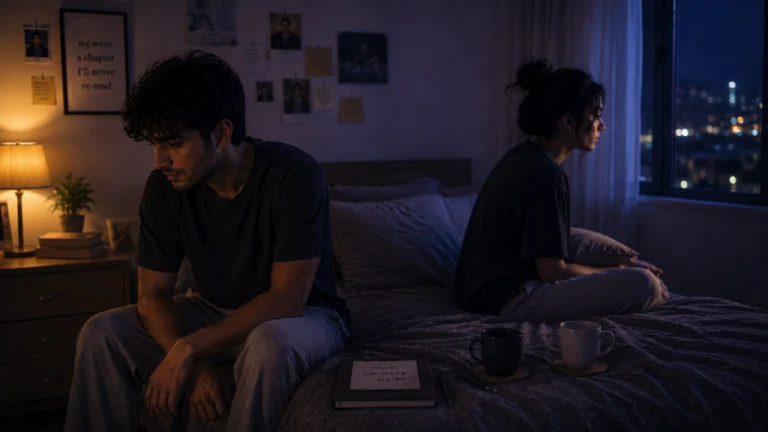

Feeling Lonely in a Relationship? Why Love Can Still Feel So Empty
Why Does Feeling Lonely in a Relationship Hurt So Much?
Maybe you are not technically alone.
Maybe you have someone to text, someone to call, someone whose name is attached to your life. Maybe people around you even assume you are lucky because you are “in a relationship.”
But inside, something feels painfully empty.
You may be sitting beside them and still feel far away. You may be talking every day and still feel emotionally untouched. You may be loved in words, but not held in the way your heart needs to be held.
And that is why feeling lonely in a relationship can hurt so deeply.
Because loneliness outside a relationship is painful, but loneliness inside a relationship feels confusing.
It makes you question yourself.
“Why do I feel this way when I have someone?”
“Am I being ungrateful?”
“Am I expecting too much?”
“Is something wrong with me?”
“Or is something missing between us?”
That confusion is heavy.
Because when you are single, loneliness has a clear shape. But when you are committed and still feel alone, the pain becomes harder to explain.
You are not just missing a person.
You are missing emotional closeness with the person who is already there.
Maybe You Are Together, But You Don’t Feel Emotionally Met
Maybe you still share updates.
You ask, “Have you eaten?”
They ask, “How was your day?”
You talk about work, college, plans, family, bills, reels, random things.
But somewhere, the emotional depth is gone.
There is no real check-in.
No soft curiosity.
No “Tell me what’s actually going on inside you.”
No feeling of being emotionally understood.
And maybe that is what is breaking you quietly.
Because you are not asking for a dramatic movie kind of love. You are not asking them to read your mind every second.
You just want to feel like your emotions matter.
You want to feel like when you are sad, they notice. When you are quiet, they care. When you are trying to explain your heart, they don’t treat it like a burden.
That is not too much.
That is emotional connection.
The Pain Is Not Always About Being Physically Alone
Sometimes loneliness in a relationship has nothing to do with how much time you spend together.
You can be in the same room and feel miles apart.
You can sleep on the same bed and still feel emotionally untouched.
You can talk all day and still feel like nobody really heard you.
That is because emotional loneliness is not about physical distance. It is about emotional absence.
It is the feeling that your inner world has no safe place inside the relationship.
You may be surrounded by their presence, but not by their warmth.
And maybe this is where the pain becomes sharper.
Because from the outside, the relationship looks fine.
But inside, you keep feeling:
“I am with someone, but I don’t feel held.”
“I am loved, maybe, but I don’t feel understood.”
“I have a partner, but I still feel emotionally alone.”
That pain deserves honesty.
Micro Takeaway
Feeling lonely in a relationship does not always mean the relationship is over.
But it does mean something important inside the connection needs attention.
Your heart is not creating drama.
It may be trying to show you where emotional closeness has started fading.
What Does Feeling Lonely in a Relationship Actually Mean?
Feeling lonely in a relationship usually means there is a gap between the relationship you are in and the emotional connection you need.
It does not always mean your partner is a bad person.
It does not always mean they do not love you.
But it often means that love is not being felt in a way that reaches you.
And that matters.
Because love is not only about commitment. It is also about emotional presence.
It Means You May Not Feel Seen
Feeling seen is not just about being noticed physically.
It means someone pays attention to your emotional world.
They notice when your energy changes.
They care when your voice feels different.
They ask questions instead of assuming.
They remember the things that matter to you.
They do not treat your emotions like interruptions.
When you do not feel seen, you may start shrinking.
You stop sharing small things.
You stop explaining your feelings fully.
You stop expecting them to understand.
You start keeping your sadness to yourself.
Not because you want distance.
But because you are tired of feeling like your heart is speaking to a wall.
It Means Emotional Intimacy May Be Fading
Emotional intimacy is the feeling of being close from the inside.
It is not just romance.
It is not just physical affection.
It is not just daily conversation.
It is the quiet safety of knowing:
“I can be honest here.”
“My feelings have space here.”
“My partner wants to know me, not just be with me.”
“I do not have to perform okayness all the time.”
When emotional intimacy fades, the relationship can continue on the surface.
You may still meet.
You may still talk.
You may still post pictures.
You may still say “I love you.”
But something feels missing.
The relationship starts looking alive from the outside while feeling emotionally tired from the inside.
And maybe that is exactly what you are feeling.
It Means Your Needs May Be Unspoken, Ignored, or Repeatedly Unmet
Sometimes loneliness begins because you have not clearly expressed what you need.
Maybe you expected them to understand automatically.
Maybe you hoped they would notice.
Maybe you stayed quiet because you did not want to sound needy.
But sometimes, loneliness continues because you did express it, and nothing really changed.
That is a different kind of pain.
Because then the loneliness is not just about misunderstanding.
It becomes about repeated emotional disappointment.
You may start thinking, “How many times do I have to explain that I need effort?”
And honestly, that question can hurt more than the original loneliness.
Example
You say:
“I feel distant from you lately.”
And they reply:
“But we talk every day.”
That response can feel frustrating because they are answering the practical part, not the emotional part.
Yes, you talk.
But do you feel close?
Yes, they reply.
But do they understand?
Yes, they are present.
But are they emotionally available?
There is a difference between having access to someone and feeling connected to them.
There is a difference between conversation and closeness.
There is a difference between being in a relationship and feeling emotionally chosen inside it.
Emotional Impact
When you keep feeling lonely in a relationship, you may slowly start doubting yourself.
You might feel unimportant.
You might feel unwanted.
You might feel like your emotional needs are too much.
You might feel guilty for wanting reassurance, warmth, or attention.
You might even start accepting less because asking for more feels embarrassing now.
And that is where loneliness becomes dangerous for your self-worth.
Not because you are weak.
But because when your needs are ignored for too long, you may begin to believe they do not deserve to be met.
Soft Reminder
Needing emotional presence does not make you too much.
It makes you human.
A relationship should not make you feel ashamed for wanting connection.
Signs You Are Feeling Emotionally Alone in Your Relationship
Sometimes you do not immediately know that you are lonely.
You just know something feels off.
The relationship is still there, but it does not feel the same. The warmth feels less natural. The conversations feel thinner. The effort feels one-sided. The silence feels louder.
Here are some signs you may be feeling emotionally alone in your relationship.
You Talk, But It Feels Surface-Level
You talk about what happened.
But not how it felt.
You talk about plans.
But not fears.
You talk about daily life.
But not emotional needs.
And slowly, conversations start feeling like updates instead of connection.
Maybe you miss the kind of conversations where time passed without you noticing. The kind where you felt known. The kind where you did not have to force depth because it came naturally.
Now, even when you speak, something feels unfinished.
Like your words are reaching them, but your emotions are not.
You Feel Like You Have to Beg for Attention
This one hurts quietly.
Because you may not literally beg.
But emotionally, it feels like you are always asking.
Can we spend time?
Can you listen?
Can you reply properly?
Can you show some effort?
Can you make me feel like I matter?
And after a point, even asking starts feeling humiliating.
Not because your need is wrong.
But because attention feels different when you have to repeatedly request it.
Love should not feel like you are standing outside someone’s emotional door, hoping they will finally open it.
You Miss How the Relationship Used to Feel
Maybe you miss who they were in the beginning.
The effort.
The curiosity.
The warmth.
The random messages.
The excitement.
The way they wanted to know every little thing about you.
And now, you keep comparing.
Not because you want to live in the past, but because the past reminds you of what connection used to feel like.
That comparison can make you feel lonely in the present.
Because you are not only missing them.
You are missing the version of the relationship where you felt emotionally safe and wanted.
You Feel More Peaceful Alone Than With Them
This is a very important signal.
Sometimes being alone feels better than being around someone who makes you feel emotionally invisible.
When you are alone, at least the loneliness makes sense.
But when you are with them and still feel lonely, your heart feels confused.
You may feel anxious around them.
You may feel heavy after talking to them.
You may feel disappointed even when nothing “bad” happened.
You may feel more relaxed when you stop expecting anything.
That does not always mean the relationship should end immediately.
But it does mean your body and emotions are noticing something.
You Stop Sharing Small Things Because Their Reaction Feels Empty
At first, you may have shared everything.
A random thought.
A small win.
A weird dream.
A bad mood.
A memory.
A fear.
A silly detail from your day.
But now you pause before sharing.
Because their reaction feels dry.
Maybe they say “hmm.”
Maybe they change the topic.
Maybe they do not ask more.
Maybe they make you feel like your emotional world is boring.
So you stop opening up.
Not all at once.
Slowly.
And one day you realize they no longer know the small parts of you.
That is often how emotional distance grows.
Not through one big fight.
But through many small moments where sharing did not feel worth it anymore.
You Feel Guilty for Wanting More
You may tell yourself:
“They are not cheating.”
“They are not abusive.”
“They are not doing anything huge.”
“They are busy.”
“They are trying in their own way.”
“Maybe I should be grateful.”
And yes, maybe they are not doing something obviously wrong.
But emotional loneliness does not always come from dramatic betrayal.
Sometimes it comes from quiet absence.
You can appreciate someone and still admit that you feel emotionally unmet.
You can understand their stress and still need connection.
You can love them and still feel lonely.
Both things can be true.
You Keep Wondering, “Am I Asking for Too Much?”
This question usually appears when your needs have been minimized too often.
You ask for attention and feel needy.
You ask for reassurance and feel weak.
You ask for time and feel demanding.
You ask for emotional closeness and feel dramatic.
But pause for a moment.
Are you asking for luxury?
Or are you asking for basic emotional connection in a relationship?
Because there is a difference.
Wanting your partner to care about your feelings is not too much.
Wanting emotional warmth is not too much.
Wanting to feel chosen, heard, and understood is not too much.
It only feels like too much when you are asking it from someone who keeps making it feel inconvenient.
Why Do I Feel Lonely in My Relationship?
If you are asking, “Why do I feel lonely in my relationship?”, the answer is usually not one simple thing.
Relationship loneliness often builds slowly.
It can come from emotional distance, repeated disconnection, lack of repair, unmet needs, or a pattern where one person keeps trying while the other avoids emotional effort.
Let’s understand the deeper reasons.
1. Emotional Connection Has Slowly Faded
In many relationships, disconnection does not happen suddenly.
It happens quietly.
One missed conversation.
One ignored emotion.
One unresolved fight.
One moment where someone needed comfort but received coldness.
One day where both people were too tired to care deeply.
And slowly, the relationship becomes functional but not emotionally alive.
You may still be together.
But the emotional thread between you feels weaker.
Why This Happens
Sometimes couples get used to each other and stop being emotionally curious.
They assume they already know everything.
They stop asking meaningful questions.
They stop expressing appreciation.
They stop noticing emotional changes.
They become partners in routine, but not partners in emotional presence.
This can happen in long-term relationships, live-in relationships, marriage, long-distance relationships, or even newer relationships where the effort faded too quickly.
Emotional Consequence
You may start feeling like the relationship is running on habit.
No connection.
You may think, “We are together, but do they still emotionally choose me?”
That question can create deep loneliness.
Micro Takeaway
Love needs presence, not just relationship status.
A relationship can exist and still feel emotionally empty if connection is not being nurtured.
2. Your Partner Is Present Physically, But Not Emotionally
This is one of the most painful forms of loneliness.
They are there.
But not really there.
They sit with you, but their mind is somewhere else.
They hear you, but do not emotionally listen.
They reply, but there is no warmth.
They spend time, but it feels like their heart is not involved.
You might feel silly explaining this to someone else because technically, your partner is “present.”
But emotional absence has its own pain.
What This Looks Like
They scroll while you talk.
They give short replies when you are trying to open up.
They avoid deeper conversations.
They do not ask how you are really doing.
They do not notice when you are emotionally low.
They treat time together like a task, not a connection.
And maybe the hardest part is that you cannot always prove this pain.
It is not always visible.
But you feel it.
Emotional Consequence
You may start feeling alone beside someone.
And that kind of loneliness can make you question the whole relationship.
Because the body is close, but the heart feels far.
3. Communication Has Become Practical, Not Emotional
Every relationship needs practical communication.
Who is coming when?
What needs to be done?
What happened today?
What are the plans?
Who is busy?
What should we eat?
But if the whole relationship becomes only practical, emotional intimacy starts drying up.
Because love cannot survive only on updates.
It needs depth.
It needs softness.
It needs emotional honesty.
Example
You talk about food, work, plans, bills, family, schedules, and daily tasks.
But not about:
How you are feeling.
What has been hurting.
What you miss.
What you fear.
What you need.
What has changed.
What you both want to rebuild.
When emotional conversations disappear, loneliness enters quietly.
Not because there is no communication.
But because there is no emotional connection inside the communication.
4. You Feel Unheard During Conflict
Conflict does not always destroy connection.
Unrepaired conflict does.
If every difficult conversation turns into defensiveness, blame, silence, anger, avoidance, or emotional shutdown, then slowly you stop bringing things up.
You learn that honesty costs too much.
So you stay quiet.
But silence does not remove loneliness.
It stores it.
Why Conflict Can Create Loneliness
When you try to explain your feelings and your partner only hears criticism, you feel misunderstood.
When you cry, and they get irritated, you feel unsafe.
When you ask for change, and they make it about your “overthinking,” you feel dismissed.
When every conversation becomes a fight, you stop expecting comfort from them.
And once you stop expecting comfort from your partner, the relationship starts feeling emotionally lonely.
Because where do you go with your pain if the person closest to you cannot hold it?
5. You Are Carrying the Emotional Effort Alone
A relationship becomes lonely when one person becomes the emotional engine.
You are the one who brings up problems.
You are the one who tries to repair.
You are the one who asks, “Are we okay?”
You are the one who notices distance.
You are the one who plans quality time.
You are the one who explains what needs to change.
You are the one trying to keep the connection alive.
At first, you may do it because you care.
But over time, it becomes exhausting.
What This Means
You are not just loving.
You are managing the emotional health of the relationship alone.
That is not partnership.
That is emotional labor.
And when emotional effort is one-sided, loneliness becomes natural.
Because you are not only missing connection.
You are missing teamwork.
Emotional Consequence
You may start feeling tired of being the only one who notices when something is wrong.
And honestly, that tiredness is valid.
A relationship should not survive only because one person keeps emotionally rescuing it.
6. Your Needs Are Being Minimized
Sometimes loneliness grows because every time you express a need, it gets reduced.
You say you need more time.
They say, “You are too needy.”
You say you feel distant.
They say, “You overthink everything.”
You say you want reassurance.
They say, “Nothing is wrong. Stop creating issues.”
You say you feel lonely.
They say, “Then what do you want me to do?”
And slowly, you start feeling ashamed for having needs at all.
Example Lines That Hurt
“You are too sensitive.”
“You always need attention.”
“You make everything emotional.”
“You are never satisfied.”
“I am doing enough. You just don’t see it.”
These lines may sound small, but when repeated, they can make you feel emotionally unsafe.
Emotional Consequence
You may start editing your emotions before expressing them.
You may make your needs smaller.
You may convince yourself that wanting love in a certain way is wrong.
And that is heartbreaking.
Because a healthy relationship should help you understand your needs, not shame you for having them.
7. You Have Outgrown the Old Dynamic
Sometimes feeling lonely in a relationship does not mean one person is evil.
Sometimes it means the emotional dynamic has not grown with you.
Maybe earlier, you accepted less emotional depth.
Maybe earlier, you did not know how to name your needs.
Maybe earlier, you confused attention with connection.
Maybe earlier, you stayed quiet to keep peace.
But now, you are more self-aware.
You want emotional maturity.
You want honest conversations.
You want mutual effort.
You want peace, not performance.
You want love that feels safe, not confusing.
And maybe the relationship is still operating at an old emotional level.
Psychology Layer
As people grow emotionally, their needs become clearer.
You may no longer feel satisfied with a relationship that only gives occasional affection but not consistent emotional safety.
You may no longer be able to ignore distance just because there is love.
This does not mean you have become demanding.
It may mean you have become more honest with yourself.
And sometimes that honesty reveals loneliness you used to normalize.
Is It Normal to Feel Lonely in a Relationship?
Yes, it can be normal to feel lonely in a relationship sometimes.
But it should not become your permanent emotional state.
Every relationship goes through seasons.
Stress happens.
Work gets heavy.
Family pressure comes in.
Mental health dips.
Communication becomes messy.
People get tired.
Life becomes overwhelming.
During those times, even loving couples may feel disconnected.
But there is a difference between a temporary phase and a repeated pattern.
Occasional Loneliness Can Happen
Sometimes your partner may be emotionally unavailable for a short time because they are dealing with their own stress.
Sometimes both of you may become distant because life is busy.
Sometimes closeness reduces because you have fallen into routine.
This kind of loneliness can improve when both people notice it and care enough to repair it.
The key is not perfection.
The key is willingness.
If both people can say, “We have been distant. Let’s come back to each other,” then loneliness can become a signal, not an ending.
Repeated Loneliness Should Not Be Ignored
If you have felt lonely for weeks or months, and nothing changes even after you communicate, then it needs deeper attention.
Repeated loneliness can slowly damage your confidence.
It can make you feel emotionally unwanted.
It can make you stop expecting love.
It can make you accept a relationship where your heart keeps waiting outside the door.
And that is not something you should normalize.
A relationship does not have to be perfect.
But it should not regularly make you feel invisible.
The Difference Between a Phase and a Pattern
| A Temporary Phase | A Deeper Pattern |
| Caused by stress, workload, health, or life pressure | Happens repeatedly even after you express your pain |
| Both partners are willing to repair | Only one person keeps trying |
| Emotional warmth still exists | You feel unseen most of the time |
| Conversations improve with effort | Conversations keep turning into silence, blame, or avoidance |
| You still feel cared for underneath the distance | You feel emotionally abandoned inside the relationship |
| Both people take responsibility | Your needs are constantly minimized |
If it is a phase, repair is possible with care.
If it is a pattern, you need honesty.
Because love without emotional presence can keep you attached, but it may not keep you emotionally nourished.
What to Do When You Feel Lonely in a Relationship
When you feel lonely in a relationship, your first instinct may be to panic.
You may want to confront them, withdraw, cry, overthink, test them, or pretend nothing is wrong.
But before reacting, pause.
Loneliness needs clarity.
Not drama.
Not silence.
Not self-blame.
Clarity.
Step 1: Name What You Are Actually Missing
“I feel lonely” is real, but it is also broad.
Try to understand what kind of loneliness you are feeling.
Are you missing time?
Warmth?
Reassurance?
Affection?
Deep conversations?
Effort?
Emotional safety?
Feeling chosen?
Feeling understood?
Sometimes you are not lonely because your partner is absent.
You are lonely because a specific emotional need is unmet.
Ask Yourself
Am I missing quality time?
Am I missing emotional reassurance?
Am I missing physical affection?
Am I missing deep conversations?
Am I missing effort?
Am I missing appreciation?
Am I missing feeling chosen?
Am I missing feeling understood?
When you name the real need, you can communicate better.
Not from panic.
From clarity.
Why This Matters
If you only say, “I feel lonely,” your partner may not understand what needs to change.
They may think spending more time is enough.
But maybe what you need is not more hours.
Maybe you need more presence in the hours you already have.
Maybe you need them to listen without scrolling.
Maybe you need them to ask how you are feeling.
Maybe you need warmth, not just availability.
Better Clarity Line
“I don’t just need more time. I need more emotional presence when we are together.”
This line is powerful because it explains the real wound.
Not “you never spend time with me.”
But “when we are together, I still do not feel emotionally close.”
That is more honest.
And harder to misunderstand.
Step 2: Notice Whether the Loneliness Is Situational or Repeated
Before deciding what it means, look at the pattern.
Is this loneliness new?
Has something recently changed?
Is your partner under pressure?
Are you both stressed?
Has there been a recent conflict?
Or has this been happening for a long time?
This matters because not every lonely season means the relationship is broken.
But repeated emotional absence should not be dismissed.
Situational Loneliness
Situational loneliness may happen because of:
Work stress
Exams
Family pressure
Health issues
Long-distance
Financial tension
Temporary burnout
Major life changes
In this case, the relationship may need reconnection, patience, and intentional effort.
But even then, your feelings still matter.
Stress may explain distance, but it should not become a permanent excuse for emotional neglect.
Repeated Loneliness
Repeated loneliness looks different.
You have explained yourself many times.
You have asked for effort many times.
You have cried over the same issue many times.
You have tried different ways to communicate.
You have waited.
You have adjusted.
You have understood them.
But your emotional needs are still not met.
This is where you need to stop asking, “How can I explain better?”
And start asking:
“Are they willing to understand?”
Because sometimes the issue is not your communication.
Sometimes the issue is their lack of emotional participation.
Step 3: Talk Without Accusing, But Don’t Shrink Your Need
When you feel lonely, it is easy to speak from hurt.
You may say:
“You don’t care.”
“You never make an effort.”
“You make me feel alone.”
“You have changed.”
These feelings may be valid.
But if you want a real conversation, try to speak from your experience instead of starting with blame.
This does not mean making your pain smaller.
It means making your pain clearer.
Conversation Script
“I don’t want to fight. I just want to share something honestly. Lately, I have been feeling lonely in this relationship, not because we are not together, but because I don’t feel emotionally close to you the way I used to. I miss feeling connected to you.”
This kind of sentence creates space.
It tells them the problem without attacking their whole character.
It also shows the real emotional need:
“I miss feeling connected to you.”
That line can open a softer conversation if the other person is willing.
Step 4: Ask for Specific Changes
This is where many people get stuck.
They share pain, but not the change they need.
And then they feel even more disappointed when nothing improves.
So be specific.
Not controlling.
Specific.
Better Than Saying “You Don’t Care”
Say:
“Can we spend 20 minutes without phones every night?”
“Can you check in with me emotionally, not just practically?”
“Can we talk about what has changed between us?”
“Can we both try to rebuild closeness instead of avoiding it?”
“Can we plan one intentional moment every week where we reconnect properly?”
“Can you listen first before explaining or defending?”
These are not dramatic demands.
They are practical invitations for emotional repair.
If someone genuinely wants to rebuild connection, specific requests help them understand how.
Step 5: Watch Their Response, Not Just Their Words
This part is important.
Because sometimes people say the right things in the moment.
“I’ll change.”
“I understand.”
“I didn’t know you felt this way.”
“I’ll do better.”
And maybe they mean it.
But real care shows up after the conversation.
Not only during it.
Green Responses
They listen without mocking you.
They ask questions.
They care that you are hurting.
They try to understand what loneliness means for you.
They take some responsibility.
They make consistent effort after the conversation.
They do not punish you for being honest.
They do not make you feel weak for having needs.
These are signs the relationship has repair potential.
Red Responses
They dismiss you.
They mock your emotions.
They blame you for feeling lonely.
They call you too sensitive.
They change for two days and then return to the same pattern.
They make you feel guilty for speaking.
They turn your pain into an argument about their inconvenience.
These responses matter.
Because if your partner cannot even care that you feel lonely, then the issue is deeper than distance.
It becomes emotional unwillingness.
Step 6: Rebuild Connection Through Small Emotional Habits
If both of you want to repair the connection, start small.
Do not expect one big conversation to fix months of emotional distance.
Connection usually returns through repeated emotional safety.
Small moments.
Consistent effort.
Gentle presence.
Real listening.
Emotional Check-In Habit
Ask each other:
“How are you really feeling today?”
Not “How was your day?”
That question often gets practical answers.
Ask something deeper.
“What felt heavy today?”
“What made you smile today?”
“Is there anything you needed from me this week?”
“Have you felt close to me lately?”
“What can we do to feel more connected?”
These questions may feel awkward at first if emotional distance has grown.
But awkward effort is still better than silent disconnection.
No-Phone Time
Even 20 minutes of real attention can change the emotional energy.
No scrolling.
No half-listening.
No distracted replies.
No checking notifications while someone is being vulnerable.
Just presence.
Because sometimes the relationship does not need more time.
It needs undivided time.
Appreciation Ritual
Every day or every few days, share one thing you appreciated.
It can be simple.
“I liked how you checked on me today.”
“I felt loved when you remembered that small thing.”
“I appreciate that you listened calmly.”
“I liked spending time with you without rushing.”
Appreciation softens emotional distance.
It reminds both people that the relationship is not only a place of complaints.
It can also be a place of noticing goodness.
Repair After Conflict
Do not just “move on” after fights.
Moving on without repair often creates hidden loneliness.
You may stop fighting, but the hurt remains.
Repair sounds like:
“I’m sorry I dismissed you.”
“I understand why that hurt.”
“I didn’t handle that well.”
“Can we talk about what we both needed in that moment?”
“I don’t want us to become distant after this.”
Repair brings emotional safety back.
Without repair, every conflict leaves a small crack.
And over time, those cracks become distance.
Step 7: Build a Life Outside the Relationship Too
This does not mean ignoring the problem.
And it definitely does not mean pretending you do not need your partner.
But your entire emotional world cannot depend on one person’s availability.
You need your own support system.
Friends.
Family.
Hobbies.
Work.
Rest.
Creative expression.
Personal growth.
A relationship with yourself.
Because when one relationship becomes your only emotional oxygen, every distance feels like survival panic.
Having your own life does not make you love them less.
It helps you stop abandoning yourself while trying to be loved.
A healthy relationship adds to your emotional world.
It should not become the only place where you search for your worth.
Common Mistakes When You Feel Lonely in a Relationship
When loneliness feels unbearable, people often react from pain.
That is human.
But some reactions can deepen the disconnection instead of healing it.
Let’s talk about them gently.
Mistake 1: Pretending You Are Fine
You may pretend because you do not want conflict.
You may pretend because you are tired of explaining.
You may pretend because you are scared they will call you dramatic.
You may pretend because part of you hopes they will notice without being told.
But pretending slowly creates emotional distance.
Because when you keep saying “I’m fine” while feeling hurt, your partner may never understand the depth of what is happening.
Why It Is Harmful
Silence may protect temporary peace.
But it does not create real closeness.
It often turns into resentment.
And one day, you may explode over something small because you have been carrying too much for too long.
Your feelings deserve expression before they become emotional exhaustion.
Mistake 2: Begging for Basic Effort
There is a painful difference between asking for connection and begging for basic care.
Asking is healthy.
Begging becomes harmful when you repeatedly ask for the same emotional effort and keep receiving the same emptiness.
You should not have to convince someone again and again that your loneliness matters.
Why It Hurts Your Self-Worth
When you keep begging for warmth, your self-worth slowly starts depending on their response.
If they give attention, you feel okay.
If they withdraw, you feel worthless.
That emotional cycle can make you forget that your needs are valid even when someone does not meet them.
Love should include willingness.
Not emotional bargaining.
Mistake 3: Testing Them Instead of Talking Clearly
Sometimes when you feel lonely, you may stop texting first.
You may become cold.
You may act distant to see if they notice.
You may post something emotional hoping they understand.
You may wait to see whether they care enough to ask.
This is understandable.
When you feel unseen, you want proof that you matter.
But testing often creates more confusion.
Example
You go quiet to see if they will ask what happened.
But they assume you need space.
Then you feel even more hurt.
They feel confused.
And the distance grows.
Emotional Consequence
Testing usually comes from fear.
But clarity comes from honest communication.
If you want to know whether they care, a direct conversation will reveal more than silent tests.
Because the right person may not read your mind perfectly.
But they will care when you speak.
Mistake 4: Blaming Yourself for Needing Connection
Maybe you keep thinking:
“I should be more independent.”
“I should not need so much.”
“Maybe I am too emotional.”
“Maybe I am ruining everything.”
But needing emotional connection in a relationship is not a flaw.
It is the point of being in a relationship.
Of course, no partner can meet every emotional need all the time.
But wanting warmth, presence, effort, and understanding is not unreasonable.
Reality Check
You are not weak for wanting to feel loved.
You are not clingy for wanting emotional closeness.
You are not dramatic for noticing distance.
You are not needy for wanting a relationship that feels like a safe place.
Please do not shame yourself for needing what healthy love naturally includes.
Mistake 5: Ignoring Repeated Emotional Neglect
This one needs honesty.
If you have expressed your loneliness many times and your partner keeps dismissing it, the issue may not be lack of awareness anymore.
It may be lack of willingness.
That is hard to accept because it hurts.
It is easier to think:
“Maybe I did not explain properly.”
“Maybe they will understand next time.”
“Maybe if I become calmer, prettier, better, less emotional, more patient…”
But love should not require you to become smaller to be treated with care.
Why This Matters
If nothing changes after repeated honest conversations, you need to stop measuring love only by words.
Look at behavior.
Do they care when you are hurting?
Do they make effort without being forced?
Do they listen when you share your needs?
Do they repair after hurting you?
Do they make the relationship feel emotionally safer over time?
If the answer is always no, your loneliness is giving you important information.
When Feeling Lonely Becomes a Serious Relationship Sign
Not every lonely moment means danger.
But some patterns should not be ignored.
Especially when loneliness starts affecting your peace, confidence, and emotional health.
You Have Communicated Many Times, But Nothing Changes
One conversation may not fix everything.
But repeated conversations with no change can become emotionally draining.
If you keep explaining the same wound and they keep treating it like a small issue, you may start feeling invisible.
At that point, you are not asking for perfection.
You are asking for effort.
And effort is not too much to expect in a relationship.
You Feel Emotionally Safer Away From Them
This is a serious sign.
If you feel calmer when they are not around, it may mean their presence has become emotionally stressful.
Maybe you are always waiting for disappointment.
Maybe you are afraid to express yourself.
Maybe you feel judged, ignored, or dismissed.
A relationship should not make your nervous system feel constantly unsafe.
Love should feel like a place where you can breathe.
Not a place where you have to hide your heart.
Your Partner Makes You Feel Guilty for Having Needs
If every emotional need becomes your fault, something is wrong.
You should be able to say:
“I need more closeness.”
“I feel lonely.”
“I miss us.”
“I want us to reconnect.”
Without being punished for it.
If they make you feel guilty for wanting connection, you may slowly stop expressing yourself.
And a relationship where one person cannot speak honestly becomes emotionally lonely by default.
You Are Always the One Repairing the Relationship
If you always initiate repair, the relationship can start feeling one-sided.
You apologize first.
You start the hard conversations.
You ask what is wrong.
You try to fix the mood.
You suggest solutions.
You carry the emotional weight.
But what about them?
Do they try too?
Do they notice when you are tired?
Do they come toward you emotionally?
Because repair should not be one person’s permanent responsibility.
You Feel More Like an Option Than a Partner
Maybe they make time when convenient.
Maybe they respond with warmth only when they feel like it.
Maybe they expect you to understand everything but rarely try to understand you.
Maybe they assume you will always stay, no matter how lonely you feel.
That can make you feel like you are present in their life, but not prioritized in their heart.
And that pain is real.
A relationship should not make you feel like you are waiting in line for basic emotional attention.
You Are Losing Your Confidence, Peace, or Self-Respect
This is where loneliness becomes more than sadness.
It becomes self-loss.
You start questioning your worth.
You start accepting emotional crumbs.
You start apologizing for needs you did not create out of nowhere.
You start feeling like love means waiting quietly for someone to finally care properly.
But love should not slowly erase you.
If staying connected to someone means disconnecting from yourself, something needs to change.
When Should You Walk Away From a Relationship That Makes You Feel Lonely?
This is not an easy question.
And no article can decide your relationship for you.
But it can help you see the signs more clearly.
Walking away is not always about lack of love.
Sometimes it is about accepting that love alone cannot carry a relationship where emotional presence, respect, and effort are missing.
Walk Away When Loneliness Becomes Your Normal
If loneliness has become the emotional background of your relationship, pause.
If you wake up lonely, sleep lonely, talk lonely, wait lonely, hope lonely, and still call it love, your heart may be exhausted.
A relationship should not make loneliness feel normal.
Every couple has distance sometimes.
But you should not feel emotionally abandoned most of the time.
Walk Away When They Refuse to Understand Your Pain
There is a difference between someone who struggles to understand and someone who refuses to understand.
Someone who struggles may still try.
They may ask questions.
They may listen.
They may mess up, but come back.
They may care about your experience.
Someone who refuses will dismiss, mock, blame, or avoid.
They will make your pain feel like an inconvenience.
If your loneliness is not important to them, that is important information for you.
Walk Away When You Keep Shrinking Yourself to Keep the Relationship
If you have to become less emotional, less expressive, less honest, less needy, less human just to keep the peace, ask yourself:
What version of me is this relationship requiring?
Because the right relationship may challenge you to grow.
But it should not require you to disappear.
You should not have to abandon your emotional truth to be loved.
Walk Away When Love Exists, But Emotional Safety Does Not
This is one of the hardest truths.
You can love someone and still not feel safe with them emotionally.
You can care deeply and still feel lonely.
You can have history and still feel unseen.
You can miss them and still know the relationship is hurting you.
Love is powerful, but it is not the only requirement.
A relationship also needs emotional safety, respect, effort, accountability, and care that can be felt.
Emotional Clarity Line
Sometimes the hardest truth is this:
You can love someone and still feel emotionally abandoned by them.
And admitting that does not make you disloyal.
It makes you honest.
Decision Signal
If the relationship repeatedly costs you your peace, voice, self-worth, and emotional health, then the question is not only:
“Do I love them?”
The question becomes:
“Is this relationship loving me back in a way I can actually feel?”
That question may hurt.
But it can also bring clarity.
Can a Lonely Relationship Become Close Again?
Yes, a lonely relationship can become close again.
But only when both people are willing to notice the distance and repair it.
One person cannot rebuild connection alone.
One person cannot carry emotional intimacy alone.
One person cannot keep warming a relationship where the other person keeps choosing emotional coldness.
Yes, If Both People Are Willing to Repair
A relationship can heal when both partners say:
“We have become distant.”
“I do not want us to stay like this.”
“I care about how you feel.”
“I am willing to change my behavior.”
“Let’s rebuild connection slowly.”
That willingness matters.
Not perfection.
Willingness.
If both people are emotionally honest, connection can return.
Maybe not exactly like before.
Sometimes better than before.
Because now the connection becomes more conscious, more mature, more intentional.
No, If Only One Person Keeps Trying
This part needs to be said with love.
If only you are trying, the relationship will keep feeling lonely.
You may improve your communication.
You may become more patient.
You may explain your needs more clearly.
You may give them space.
You may love harder.
But if they are not emotionally participating, you will still feel alone.
A relationship does not heal because one person suffers beautifully.
It heals because both people care enough to show up.
What Real Repair Looks Like
Real repair is not a two-day change after a big emotional conversation.
Real repair is consistent.
It looks like:
Listening without dismissing.
Checking in emotionally.
Making time without being forced.
Showing warmth in small ways.
Taking responsibility after conflict.
Changing behavior, not just saying sorry.
Asking what you need instead of assuming.
Making the relationship feel safe again.
You will feel the difference.
Real effort does not leave you constantly confused.
It gives your heart something steady to trust.
Final Thoughts: You Are Not Too Much for Wanting to Feel Loved
Feeling lonely in a relationship does not mean you are weak.
It does not mean you are dramatic.
It does not mean you are ungrateful.
It means your heart is noticing a gap between being with someone and feeling truly connected to them.
And that gap deserves attention.
Maybe the relationship needs a real conversation.
Maybe it needs emotional repair.
Maybe it needs more presence, more honesty, more effort.
Or maybe you need to finally admit that you have been feeling alone for too long.
Whatever the truth is, you do not have to shame yourself for wanting love that feels warm.
You do not have to convince yourself that emotional distance is normal just because the relationship still exists.
You are allowed to want a relationship where you feel seen.
Where your feelings are not treated like a problem.
Where closeness does not feel like something you have to beg for.
Where love is not just a label, but an experience your heart can actually feel.
Emotional Closure
Maybe what hurts most is not that you are alone.
Maybe what hurts most is that you expected this person to be your safe place, and now you feel lonely even with them.
That pain is real.
But your clarity can begin here:
You are not asking for too much.
You are asking to feel emotionally connected inside a relationship that is supposed to hold both people, not just exist on the surface.
If this helped you understand your relationship better, you may also want to read:
Partner Emotionally Distant: Why They Feel Far Away and What You Can Do
Because sometimes loneliness begins when one person is still reaching for closeness, while the other has slowly started pulling away.